




China's BEV Transition Separates Platinum & Palladium Market Outlooks, Challenging Traditional PGM Valuation



China's BEV transition weakens palladium demand while platinum supply deficits reshape PGM valuation and market outlooks.
- Chinese automakers produced 937,000 battery electric vehicles (BEVs) and 702,000 petrol cars in May 2026, marking the first month BEV output exceeded petrol production. Because gasoline vehicles account for most automotive palladium consumption, the production crossover reduces the metal's largest source of end-market demand.
- Global automotive palladium demand is targeting a decline of more than 5% in 2026, indicating that weaker gasoline vehicle production will continue reducing the metal's largest source of end-market demand even after prices have fallen more than 40% from their January high.
- The World Platinum Investment Council (WPIC) is targeting a fourth consecutive annual platinum market deficit in 2026, but platinum ETF holdings have declined to a two-year low of 3.07 million ounces following approximately 700,000 ounces of first-half outflows, suggesting tighter physical supply has yet to translate into stronger ETF demand.
- J.P. Morgan and Bank of America differ by $850 per ounce in their end-2026 palladium forecasts and by $1,200 per ounce for platinum, highlighting the wide range of expectations for both metals.
- A July 21, 2026 trade court appeal by a major producer over Russian palladium imports introduces a separate US supply risk that could affect domestic availability regardless of China's shift toward battery electric vehicles.
China's BEV Transition Reduces Automotive Palladium Demand, Weakening Long-Term Consumption
China's passenger vehicle market reached a turning point in May 2026 as BEV production exceeded petrol vehicle output for the first time, accelerating the long-term decline in autocatalyst demand. BEV output reached 937,000 units compared with 702,000 petrol vehicles, according to SFA Oxford. BEVs accounted for 41.8% of passenger car production, up from 32.6% a year earlier, while petrol's share fell to 31.3% from 44.9%, reinforcing the shift away from the vehicle segment that has historically driven palladium demand.

The May production crossover reflects a sustained shift in China's passenger vehicle market rather than a one-month anomaly. Over the first five months of 2026, petrol's share of passenger car production fell to 42.5% from 47.9%, while new energy vehicles (NEVs), comprising BEVs and plug-in hybrids, increased to 52.4% from 48.4%. Petrol vehicle production also declined 17% over the period and 32% year on year in May, a trend Heraeus attributes to the widening operating-cost advantage of electric vehicles over internal combustion engine vehicles rather than to a single policy change.
China's changing production mix has a greater impact on palladium than platinum because palladium demand is concentrated in gasoline autocatalysts, while platinum benefits from broader demand across diesel, hybrid, and industrial applications. Heraeus projects global automotive palladium demand will decline by more than 5% in 2026 as China's electrification trend continues and gasoline vehicle production contracts, suggesting weaker end-market demand will continue weighing on the metal despite its earlier price correction.
Palladium's Price Outlook Hinges on Demand Offsets Beyond Electrification
Spot palladium traded at $1,325.13 per ounce on July 22, 2026, recovering from its June low but remaining more than 40% below its January high. J.P. Morgan forecasts an average price of $1,350 per ounce in 2026, while Bank of America projects $2,200 per ounce, an $850 per ounce difference that underscores the uncertainty surrounding the metal's outlook. The divergence reflects contrasting expectations over whether China's transition to battery electric vehicles represents a temporary adjustment or the beginning of a sustained decline in palladium demand from gasoline vehicles.
Engineering Constraints & Export Demand Slow Palladium's Decline
Platinum and palladium can substitute for one another in autocatalyst formulations on a near one-to-one basis, making platinum's price advantage an incentive to reduce palladium loadings. However, substitution has progressed more slowly than the price gap alone would imply because changing catalyst formulations requires redesigning vehicle emissions systems rather than simply replacing one metal with another. Those engineering requirements continue to slow substitution, preserving a significant share of palladium demand despite platinum's cost advantage.
Palladium demand also remains supported by Chinese vehicle exports. Internal combustion, hybrid, and plug-in hybrid vehicles shipped to the European Union still require autocatalysts that meet stricter EU emissions standards, resulting in higher catalyst loadings than many other export markets. As a result, export demand partially offsets the impact of China's transition to new energy vehicles, slowing rather than reversing automotive palladium consumption.
Constrained Mine Supply Leaves Platinum Deficits Intact Despite ETF Outflows
Platinum supply remains insufficient to eliminate WPIC's forecast of a fourth consecutive annual market deficit in 2026. South African mine output fell 5.4% year on year in May, while the seasonally adjusted PGM production index declined 12.2% month on month to 91.8 from 104.6 in April. Because South Africa accounts for more than 70% of global platinum supply, continued production weakness limits the market's ability to increase mine supply and narrow the projected deficit.
The national production index, however, masks divergent performance across individual producers. Northam Platinum reported record fiscal 2026 output of 938.8koz on a 4E basis (platinum, palladium, rhodium, and gold), up 4.4% year on year, while Tharisa's second-quarter 2026 platinum output increased 22% year on year to 20.9koz. Although neither company's production growth is sufficient to eliminate the projected market deficit, the results show that supply growth is emerging at selected operations even as overall South African production remains weak.

WPIC data shows platinum ETF holdings fell to a two-year low of 3.07 million ounces by mid-2026 after roughly 700,000 ounces of net outflows during the first half, including 402,000 ounces, or 11.5%, between March and May as investors sold holdings to raise liquidity after losses in other asset classes. While J.P. Morgan expects platinum to average $1,800 per ounce by the end of 2026, Bank of America forecasts $3,000 per ounce in the fourth quarter, a $1,200 per ounce difference that reflects contrasting views on whether persistent supply deficits will eventually outweigh weak investment demand.
US Trade Case Could Tighten Palladium Supply, Creating a Defined Legal Catalyst
While China's electrification is reshaping palladium demand, US trade policy has introduced a separate supply-side uncertainty. On February 13, 2026, the US Department of Commerce issued a preliminary determination imposing a 132.83% antidumping duty on unwrought palladium imports from Russia. However, on May 29, 2026, the International Trade Commission (ITC) found that Russian imports had not caused sufficient harm to the US industry to support the case, preventing the preliminary antidumping duty from being finalized.
Sibanye-Stillwater appealed the ITC's ruling to the US Court of International Trade on July 21, 2026. The appeal matters because Stillwater, Montana, hosts the only primary palladium mine in the US, and the outcome could influence the competitive position of domestic palladium production if trade measures against Russian imports are ultimately upheld.
The appeal provides investors with a defined legal catalyst because the court will ultimately deliver a binary outcome. If the court overturns the ITC's finding, the antidumping case could proceed, increasing the likelihood of trade measures that reduce Russian palladium imports into the US. If the court upholds the ITC's ruling, the preliminary antidumping duty would remain unenforceable, leaving China's vehicle production and electrification trends as the primary drivers of palladium demand.
Constrained Platinum Supply Increases the Importance of New PGM Projects
The divergence between platinum and palladium is easiest to observe in producing mines but carries equally important implications for exploration-stage PGM projects. With few major greenfield PGM mines expected to enter production in the near term, exploration assets provide an early indication of where future supply growth may emerge as market conditions evolve.
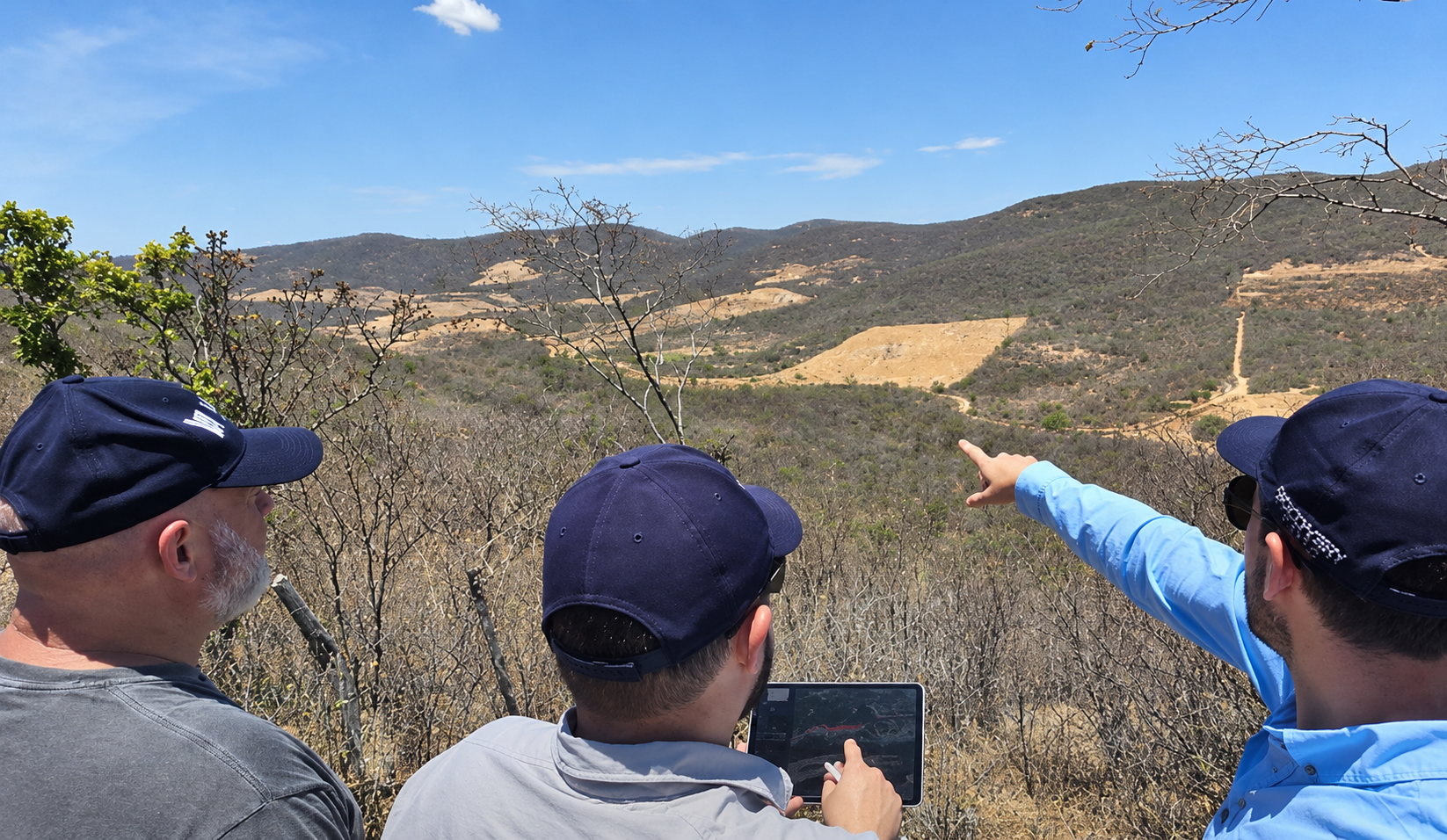
ValOre Metals holds 100% of the Pedra Branca PGE project in Ceará State, Brazil, which hosts an NI 43-101 Inferred Resource of 2.2 million ounces of platinum, palladium and gold across 63.3 million tonnes grading 1.08 grammes per tonne, effective March 8, 2022. The company says roughly 90% of global PGE reserves are concentrated in South Africa and that only two major greenfield PGE mines are expected to enter production in the near term, leaving few advanced PGM projects outside the dominant producing region. A PEA is targeted for the fourth quarter of 2026, while the 2026 exploration program remains at the pre-PEA stage.
Nick Smart, Chief Executive Officer of ValOre Metals, highlights the platinum supply inelasticity despite higher prices:
"Platinum mine production has declined over the past five years. In 2021, it peaked at just over 6 million ounces, and this year's forecast is around 5.5 million ounces. That's in the context of a metal price that has doubled over the past year. That tells you something about the inelasticity of supply and the difficulty of bringing new production into the market."
Diverging Supply & Demand Drivers Separate Platinum and Palladium Outlooks
Platinum and palladium have historically traded as a single PGM basket because of their shared supply base and overlapping automotive demand. Current supply, demand, and policy developments suggest that relationship could weaken through the remainder of 2026. Platinum continues to face a projected market deficit. Although Northam and Tharisa are increasing production, their output remains insufficient to eliminate the deficit, while continued ETF outflows indicate investment demand has yet to reflect tighter supply conditions.

Palladium faces declining automotive demand as China's BEV adoption reduces gasoline vehicle production, while the outcome of the US trade case could independently restrict Russian palladium imports into the US market. Key catalysts through the remainder of 2026 include the fourth-quarter Pedra Branca PEA, the US Court of International Trade's schedule for Sibanye-Stillwater's appeal, and the next South African mine production data.
The Investment Thesis for Platinum Group Metals
- WPIC's forecast of a fourth consecutive annual platinum market deficit contrasts with palladium, where China's BEV transition continues to weaken the metal's largest source of demand.
- The wide gap between J.P. Morgan's and Bank of America's 2026 price forecasts for both metals reflects continued uncertainty over whether current supply and demand trends will persist through the remainder of the year.
- A pending US trade court ruling on Russian palladium imports provides a defined legal milestone that could tighten US palladium supply independently of China's BEV transition.
- Projects containing both platinum and palladium are exposed to price assumptions for both metals, unlike single-metal platinum projects. Their forthcoming economic studies will reveal whether projected economics remain robust under diverging platinum and palladium price outlooks.
- Operator-level output growth in South Africa shows platinum production can continue expanding even as the national production index weakens, indicating that mine supply is responding to higher prices without eliminating the projected market deficit.
- Producers, developers, and explorers with exposure to both metals face different supply, demand and policy catalysts for platinum and palladium, meaning project valuations increasingly depend on separate assumptions for each metal rather than a single PGM price outlook.
Platinum and palladium have largely been valued together over the past decade because both depended on automotive catalysts for demand and Southern African mining for supply. Those shared market drivers are now diverging as China's BEV adoption reduces palladium demand faster than platinum demand, while the pending US trade court ruling on Russian palladium imports could tighten US supply independently of Chinese vehicle production. Both metals remain part of the same orebodies and production complexes, requiring project economics to use separate platinum and palladium price assumptions rather than a single PGM price outlook. The next round of project economic studies and the expected resolution of the US trade case over the next two quarters will indicate whether the two metals continue to diverge or begin responding to a common set of market drivers.
TL;DR
China's BEV transition is accelerating the decline in automotive palladium demand, while platinum continues to face persistent supply deficits driven by constrained South African mine production. Although platinum remains fundamentally tighter, weak ETF demand and wide analyst price forecasts highlight continued uncertainty for both metals. Meanwhile, a US trade case over Russian palladium imports introduces an independent supply catalyst that could further separate palladium's outlook from platinum's. As supply, demand, and policy drivers diverge, producers, explorers, and project developers increasingly need separate platinum and palladium price assumptions rather than treating them as a single PGM market.
FAQs (AI-Generated)
Analyst's Notes





Subscribe to Our Channel



.png)





Stay Informed


