




El Niño Tests Whether Industrial Demand Can Sustain Salt Prices, Resetting Market Expectations


El Niño will test whether industrial demand can keep salt prices resilient as weaker deicing demand challenges weather-driven pricing during the 2026-27 winter.
- The NOAA Climate Prediction Center (NOAA-CPC) assigns a 97% probability that El Niño persists through early spring 2027, replacing the weak La Niña conditions that lifted salt consumption during the 2025-26 winter and shifting attention to the 37% of US salt demand tied to highway deicing.
- US salt prices rose across every product category in 2025, including salt in brine, the feedstock for chlorine and caustic soda production that carries no direct weather exposure, indicating that industrial demand supported pricing even as deicing remained a major end market.
- China's industrial production rose 5.3% year over year in June 2026, while its chemicals sub-sector expanded by the same rate, supporting the USGS's 2026 outlook that rising Asian chlor-alkali and PVC demand will increase global salt brine consumption.
- Capital continued flowing into long-life salt projects and new solar salt capacity in 2025, reflecting investment in industrial demand that extends beyond seasonal deicing markets.
- Companies with the lowest exposure to a mild winter are not necessarily the largest producers but those whose cost structures and financing are supported by multi-year contracts and long mine lives, reducing their reliance on seasonal deicing demand.
El Niño Returns, Shifting the Outlook for Deicing Salt Demand
The NOAA-CPC El Niño-Southern Oscillation Advisory shows El Niño already underway, with a 97% probability the event persists through early spring 2027. The Centre for Climate System Research/International Research Institute (CCSR/IRI) multi-model ensemble shows 23 of 26 participating models projecting a very strong event, with a Niño 3.4 sea surface temperature anomaly of at least 2.0°C and a peak between October and December 2026.
NOAA-CPC's forecast of El Niño through early spring 2027 represents a reversal from the weak La Niña conditions that the USGS identified as the driver of stronger highway deicing demand during the previous winter. Highway deicing accounts for 37% of US salt consumption, and El Niño winters have historically produced below-average snowfall across the northern snowbelt states that generate most of that demand. The shift does not eliminate winter weather but changes the probability of freezing rain, sleet, and icing events, which drive municipal and state transportation departments to replenish salt inventories.
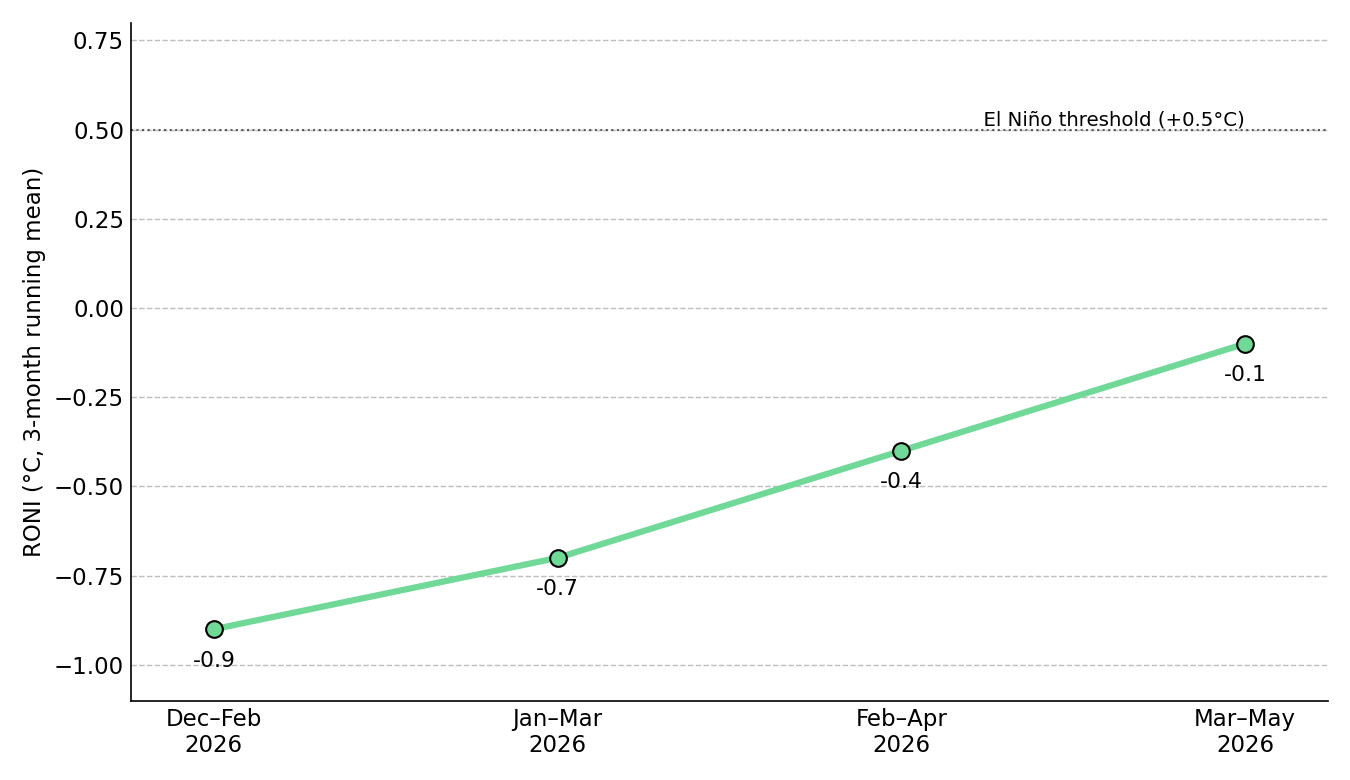
El Niño-Southern Oscillation (ENSO) probabilities are updated monthly by NOAA-CPC, meaning the forecast remains probabilistic and may change before the peak winter deicing season. Highway deicing demand remains the segment most exposed to changes in winter weather, while industrial salt demand is driven primarily by year-round chemical and manufacturing activity.
Industrial Demand Supports Salt Prices Despite Lower Volumes, Strengthening the Pricing Outlook
If highway deicing demand were the sole driver of salt pricing, a weak snowfall year would be expected to result in broad price weakness. USGS data show the opposite, with average unit values increasing across every major salt category in 2025. According to the USGS's Mineral Commodity Summaries 2026, rock salt rose to $54 per metric ton from $52.95, vacuum and open-pan salt to about $260 from $259.69, and salt in brine to $11 from $10.56.

Salt in brine has no direct exposure to highway deicing demand because it is used as the feedstock for chlorine and caustic soda production, with the USGS identifying the chlor-alkali industry as the largest end use of salt by value at 42% of US sales. Salt in brine prices also increased in 2025, matching the direction of price changes across weather-exposed salt categories. The broad increase across both industrial and deicing salt products indicates that factors beyond winter snowfall supported salt pricing during the year.
The USGS estimates apparent consumption at 57 million tons in 2025, below the 63.4 million and 62.3 million tons recorded in 2021 and 2022. Salt prices increased in 2025 even though apparent consumption remained below its earlier peak, indicating that pricing was supported by more than weather-related demand or a recovery in total volumes. Whether pricing remains resilient in 2026 and 2027 will depend in part on whether industrial demand from the chlor-alkali sector offsets any weakening in highway deicing demand.
China's Chlor-Alkali Growth & Raw Salt Decline Sustain the Industrial Demand Behind Salt's 2025 Price Gains
China's salt industry illustrates why industrial demand continued supporting salt prices despite weaker upstream production. China's raw salt production fell to 6.314 million tons in October 2025, down 1.8% year over year, and to 4.649 million tons in November, down 2.7%, according to China's National Bureau of Statistics. Over the same period, caustic soda production, made directly from salt brine, increased 3.5% year over year to 3.897 million tons in October and 4.6% to 4.012 million tons in November, highlighting continued downstream demand despite lower raw salt output. The trend extended into 2026, with China's industrial production growing 5.3% year over year in June, the chemicals sub-sector expanding at the same pace, and the manufacturing Purchasing Managers' Index remaining at 50.3 for a third consecutive month of expansion.
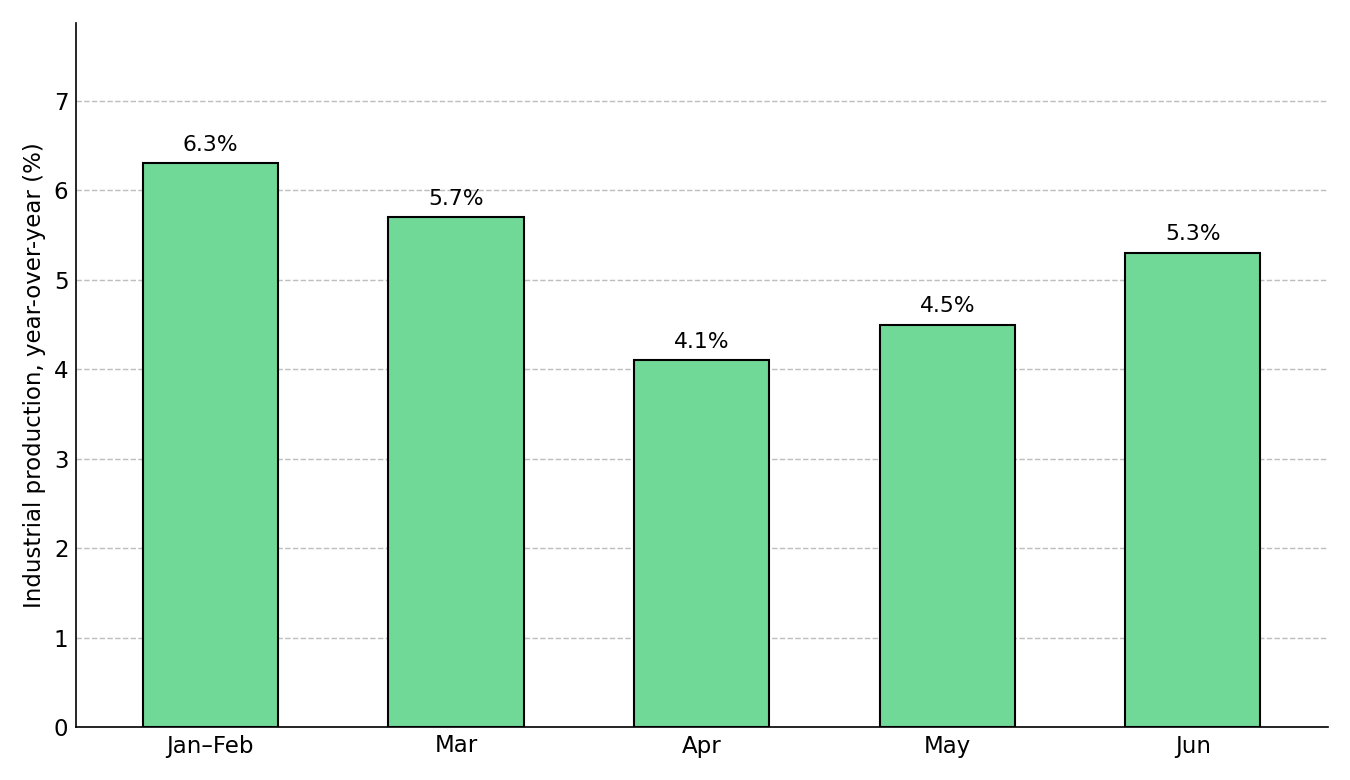
China's declining raw salt production has not slowed its chlor-alkali industry, helping explain why industrial salt demand remained strong despite tighter upstream supply. Chlor-alkali production depends on salt brine as its primary feedstock, and that demand continued even as China's raw salt output contracted for two consecutive reported months. China's caustic soda exports reinforce the same trend, with full-year 2025 exports reaching 4.10 million tons, up 33.6% year over year, after growing by as much as 41.5% through the first ten months of the year. Indonesia and Australia were the largest destinations for liquid caustic soda exports, while Vietnam was the largest market for solid caustic soda through October, showing that China is supplying a growing share of Asia's chlor-alkali demand alongside rising domestic consumption. The trend supports the USGS's 2026 outlook that rising Asian demand for caustic soda and PVC will drive global salt brine consumption.
A Weak Winter Tests Deicing Demand, Favoring Low-Cost, Long-Life Salt Projects
A weaker deicing winter is unlikely to affect every part of the salt market equally. The greatest financial impact is likely to fall on weather-dependent salt sales without the support of long-term contracts or low delivered costs, because lower deicing demand directly reduces seasonal sales volumes. Long-term contracts, competitive delivered costs, diversified industrial demand, and long-life project economics can reduce exposure to a weaker deicing season.
Atlas Salt's 2025 Updated Feasibility Study for the Great Atlantic Salt Project targets annual production of 4.0 million tonnes over a 25-year mine life, with an after-tax net present value (NPV), discounted at 8%, of C$920 million, a post-tax internal rate of return (IRR) of 21.3%, a 4.2-year payback period, and approximately C$188 million in after-tax free cash flow over the mine life. A 25-year mine life and a multi-year payback structure indicate that the project's economics are designed around long-term market demand rather than the outcome of any single winter. That positioning is consistent with the broader distinction between weather-driven deicing demand and the longer-term industrial demand that underpins much of the global salt market.
Nolan Peterson, Chief Executive Officer of Atlas Salt, outlines disciplined project scheduling to support financing:
"The schedule determines how quickly we can build the mine and where delays could occur. Sequencing the project efficiently allows lenders to provide capital and gives investors confidence that the project can advance without unnecessary delays. They do not want committed capital sitting idle because the project is delayed, so our focus is on keeping the project moving."
Export Development Canada has issued a non-binding Letter of Interest indicating its interest in providing up to C$150 million as Mandated Lead Arranger toward the approximately C$350 million-C$400 million of senior secured debt the company is arranging for the project. The Letter of Interest remains subject to due diligence, credit approval, and definitive agreements and does not constitute a financing commitment. Even so, an export credit agency evaluating financing for a 25-year salt project is consistent with investment decisions being assessed over long-term demand rather than the outcome of any single winter.
ENSO Updates & Deicing Data Test Salt Prices, Revealing Industrial Demand's Strength
The key question for the salt market is how much of 2025's price strength reflected favorable winter weather versus sustained industrial demand. The 2026-27 Northern Hemisphere winter will provide the first opportunity to assess the relative contribution of those demand drivers as weather forecasts, company operating results, and pricing data become available over the course of the season.
NOAA-CPC's monthly ENSO Diagnostic Discussions through the fourth quarter of 2026 will indicate whether the very strong El Niño scenario currently favored by 23 of 26 models remains the central forecast. Deicing volumes reported across the sector from the fourth quarter of 2026 through the first quarter of 2027 will indicate whether the forecast translates into weaker seasonal salt sales or whether municipal and state procurement remains resilient despite lower snowfall. If the forecast verifies and deicing volumes decline across the sector, the greatest financial impact is likely to fall on weather-dependent salt sales without the support of long-term contracts or low delivered costs.
The Investment Thesis for Deicing Salt
- Salt prices are no longer explained by winter weather alone, and the coming Northern Hemisphere winter will provide the first major test of that conclusion.
- A confirmed shift toward a strong El Niño represents a quantifiable risk to weather-driven deicing demand, and the impact will be measurable through scheduled company disclosures rather than inferred from market sentiment.
- Price gains across both weather-sensitive and weather-independent salt categories in 2025 indicate that pricing was supported by more than winter weather alone, reducing the likelihood that a weaker deicing season would affect blended realized pricing to the same extent as in a purely weather-driven market.
- Producer positioning matters more than commodity exposure alone in this environment, because long-term contracts, delivered-cost competitiveness, diversified industrial demand, and long-life project economics reduce sensitivity to a weaker deicing season.
- Development-stage projects evaluated over multi-decade project economics and supported by competitive delivered costs carry a different risk profile from producers whose weather-dependent salt sales rely more heavily on seasonal demand without long-term contract protection.
- Long mine-life projects supported by competitive delivered costs and advancing financing arrangements are less dependent on the outcome of any single winter than producers whose earnings rely more heavily on weather-driven deicing demand.
Salt prices strengthened in 2025 as favorable winter weather supported deicing demand while stronger Asian chemical manufacturing increased industrial salt consumption. Because both demand drivers occurred simultaneously, their relative contribution to pricing cannot yet be isolated with confidence. A strengthening El Niño provides the first opportunity to distinguish between them as monthly climate updates and company disclosures on deicing volumes become available through the 2026-27 winter. If pricing remains resilient despite weaker seasonal demand, the evidence would point to stronger underlying industrial consumption. If prices weaken alongside deicing volumes, weather-driven demand is likely to have been the dominant contributor. In that environment, producers and projects supported by diversified industrial demand, competitive delivered costs, and multi-decade project economics are likely to be less sensitive to the outcome of a single winter.
TL;DR
Salt prices rose across every major product category in 2025 despite lower apparent consumption, suggesting that industrial demand, particularly from chlor-alkali production, supported pricing alongside strong winter deicing demand. With El Niño expected to persist through early spring 2027, weaker snowfall could reduce highway deicing demand, creating the first clear test of whether industrial consumption alone can sustain salt prices. Investors should monitor ENSO updates, deicing volumes, and pricing trends to determine whether long-term industrial demand or seasonal weather remains the dominant driver of the salt market.
FAQs (AI-Generated)
Analyst's Notes





Subscribe to Our Channel





Stay Informed


