Energy Fuels Adds Magnet Manufacturing Through VAC Acquisition


Energy Fuels acquires VAC in a $1.9 billion deal, creating an integrated mine-to-magnet rare earth platform spanning Australia, the US, and Europe.
- Energy Fuels has agreed to acquire Vacuumschmelze GmbH & Co. KG (VAC) in a $1.9 billion transaction, combining Rare Earth Element production and processing with permanent magnet manufacturing.
- VAC generated $29 million in adjusted Earnings Before Interest, Taxes, Depreciation and Amortisation (EBITDA) in 2025 and reported more than 20% year-on-year growth in its order book into 2026.
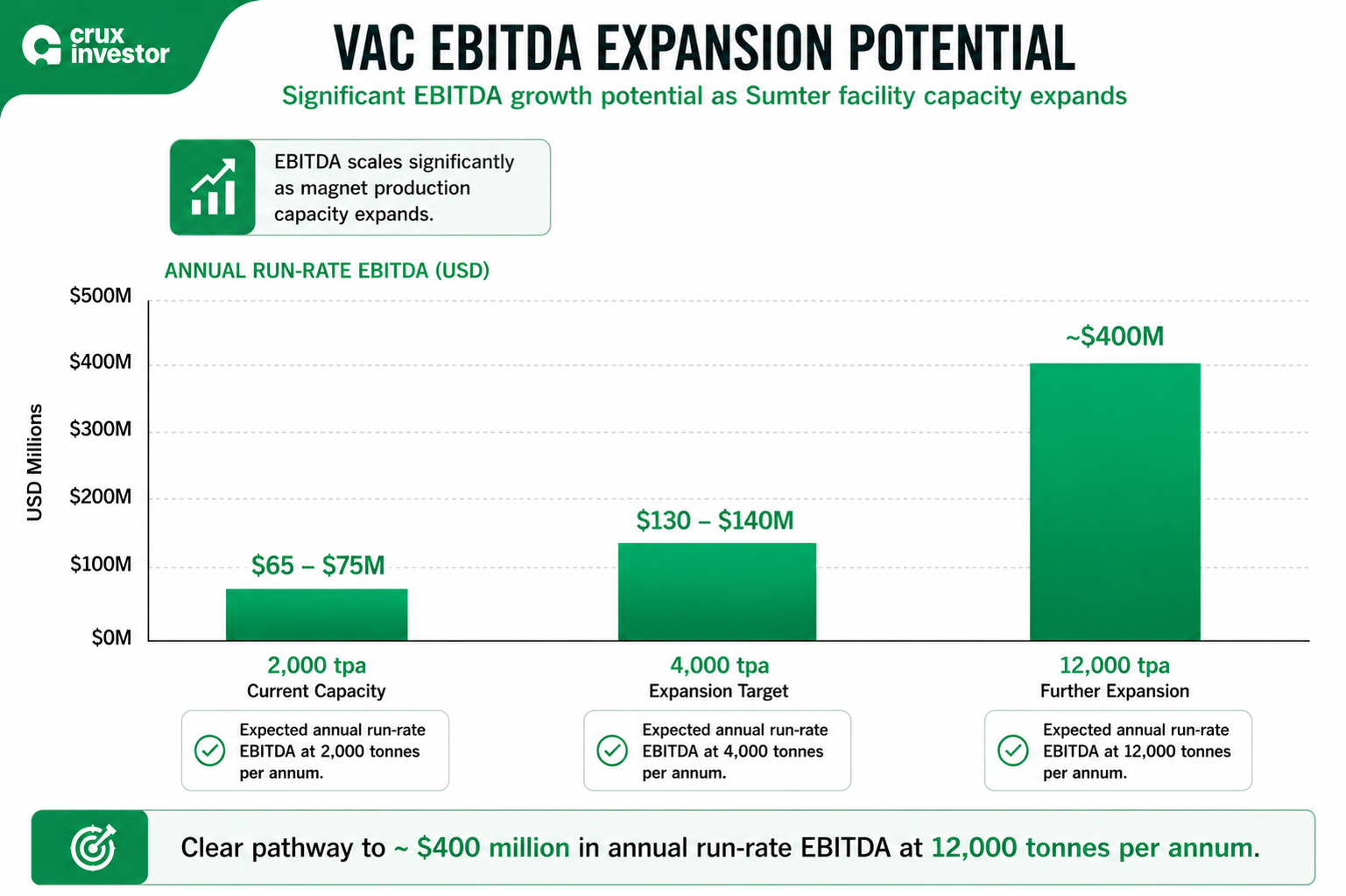
- VAC’s Sumter, South Carolina, magnet facility has a designed capacity of 2,000 tonnes per annum, with expansion plans to 4,000 and 12,000 tonnes per annum, which could increase annual run-rate EBITDA to approximately $400 million.
- Energy Fuels plans to supply Rare Earth Element oxides from its White Mesa Mill to support magnet production at VAC’s facilities, including the Sumter plant.
- The integrated supply chain is intended to connect monazite mining in Australia, processing in the United States, metal and alloy production in South Korea, and magnet manufacturing in North America and Europe.
A $1.9 Billion Mine-to-Magnet Transaction
Energy Fuels (NYSE American: UUUU | TSX: EFR) has agreed to acquire Vacuumschmelze GmbH & Co. KG (VAC) from Ara Partners in a $1.9 billion transaction combining $718 million in cash, 65.853 million Energy Fuels shares, and approximately $140 million in adjusted net debt, linking Rare Earth Element production with permanent magnet manufacturing across a multi-jurisdiction supply chain.
The transaction brings together Energy Fuels’ Rare Earth Element mining and processing assets with VAC’s downstream magnet manufacturing operations, extending the company’s activities from material production into finished component fabrication.
Energy Fuels Gains Exposure to Operating Magnet Manufacturing Cash Flow
VAC reported $29 million of adjusted Earnings Before Interest, Taxes, Depreciation and Amortisation (EBITDA) in 2025 and more than 20% year-on-year growth in its order book into 2026. The company has more than 100 years of manufacturing experience, more than 400 patents, and a customer base of more than 1,000 industrial buyers, with production carried out to customer specifications and long-standing design-in relationships with its largest accounts. The addition of VAC introduces operating cash flow from magnet manufacturing alongside Energy Fuels’ existing upstream Rare Earth Element production and processing activities.
Sumter Defines Downstream Capacity Expansion Pathway
VAC’s Sumter, South Carolina facility is constructed with a capacity to produce 2,000 tonnes per annum of Neodymium-Iron-Boron magnet block. Once production reaches this 2,000-tonne capacity, the facility is expected to generate approximately $65 million to $75 million in annual run-rate EBITDA.
Management is targeting expansion to 4,000 tonnes per annum without interrupting existing operations, with VAC estimating approximately $130 million to $140 million in annual run-rate EBITDA at that level. A further expansion pathway to 12,000 tonnes per annum is expected to support approximately $400 million in annual run-rate EBITDA.
White Mesa Mill Links Upstream Processing to Magnet Supply Chain
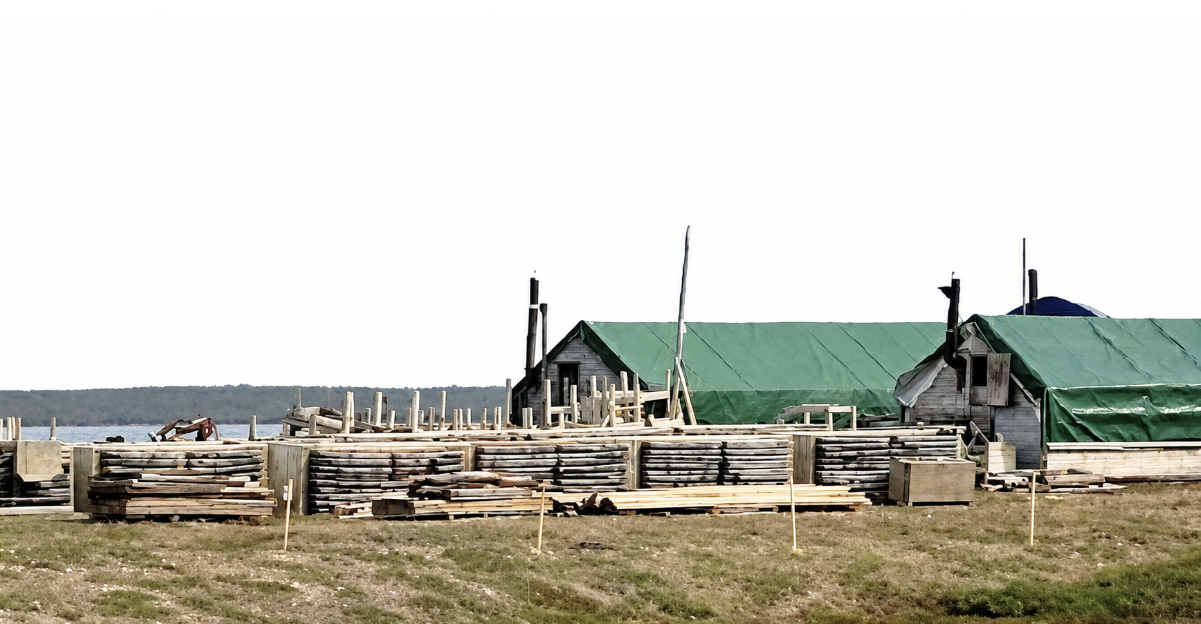
The White Mesa Mill in Utah processes monazite into separated Rare Earth Element oxides and is described as the only commercial-scale facility in the United States capable of this processing. A conditional $725 million loan commitment from the US Office of Strategic Capital supports Phase 2 expansion targeting up to 6,000 tonnes per annum of Neodymium-Praseodymium oxide, alongside production of Dysprosium and Terbium by mid-2029. The Sumter facility’s production is expected to be supported by Rare Earth Element oxides extracted from monazite processed at the White Mesa Mill.
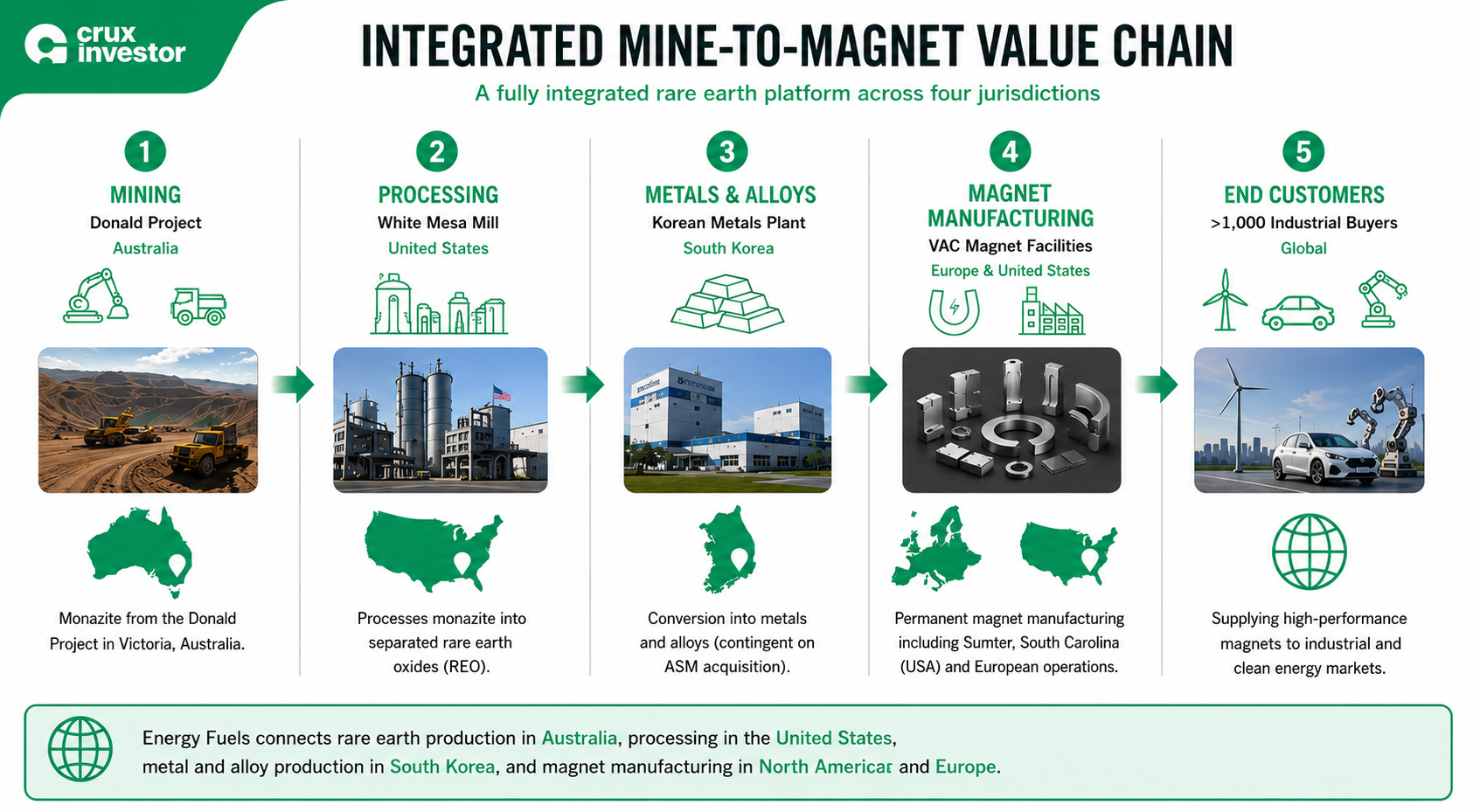
Global Supply Chain Integration Across Multiple Jurisdictions
The combined platform connects Rare Earth Element production in Australia, processing in the United States, metal and alloy production in South Korea, and magnet manufacturing in North America and Europe.
Monazite from the Donald Project in Victoria, Australia, is intended to supply White Mesa. Downstream conversion into metals and alloys at the Korean Metals Plant in Ochang is contingent on the completion of the Australian Strategic Materials (ASM) acquisition. Those materials are then used in VAC’s magnet manufacturing facilities, including its European operations and the Sumter facility in the United States.
Chief Executive Officer Mark Chalmers explained that management views vertical integration as critical to establishing a competitive Western rare-earth supply chain:
“To really compete with China, you have to have all those steps; you can't be missing a step in the middle of it. So we've been very focused on the integration at least through alloys, and we've got the hydromet step skills, the heavy mineral sand skills, the mining skills, and then the metal alloy skills. So we've done a lot, and I think what people are seeing is that we've got this critical mass with those steps, and they don't just happen overnight. You really have to acquire those skills; you can't just grow them organically because it'll take years.”
Closing Conditions & Development Milestones
The transaction is targeting completion in early 2027, subject to antitrust approvals, foreign investment review, and other customary governmental approvals. Energy Fuels is also progressing the completion of the ASM acquisition, advancing work related to the conditional US Office of Strategic Capital loan for White Mesa expansion, and continuing development activities at the Donald Project in Australia.
FAQs (AI-Generated)
Analyst's Notes





Subscribe to Our Channel



Stay Informed