Pursuit Minerals Targets Lithium Growth With 5,000-Tonne Rio Grande Sur Operation


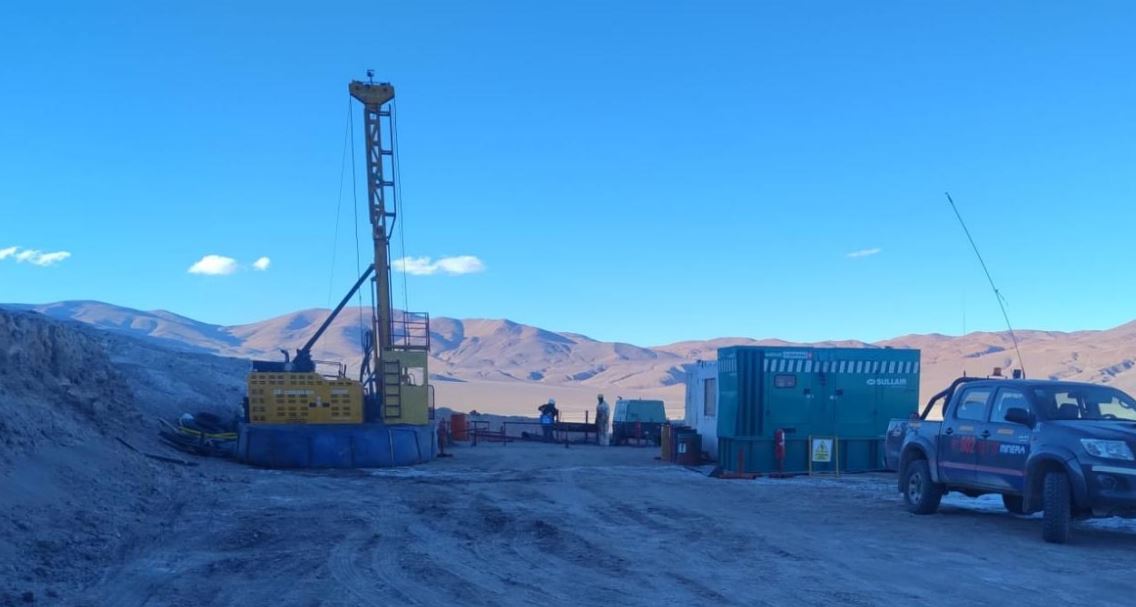
Pursuit Minerals (ASX:PUR) advances a low-capex Argentina lithium project and a newly mapped gold system, with drilling underway at both.
- Pursuit Minerals is progressing a low-capex, 5,000 tonne-per-annum lithium carbonate plant at its Rio Grande Sur project in Salta, Argentina, backed by a completed Pre-Feasibility Study and a pilot plant that has already produced 99.5%-purity lithium carbonate.
- Managing Director and CEO Aaron Revelle argues the lithium market is shifting from surplus to structural deficit as demand from electric vehicles and battery energy storage systems outpaces the 5-7 years typically needed to bring new supply online.
- Diamond drilling has commenced at the Mito target within Rio Grande Sur following a tenement acquisition from REMSA that added 1,362 hectares adjacent to the project, while Stage 2 Pre-Feasibility Study addendums assess larger lithium carbonate and lithium chloride production scenarios.
- Newly completed geological mapping at the Sascha Marcelina gold-silver project in Santa Cruz has defined five priority drill targets, with a maiden drilling programme expected to begin in the near term.
- The Company held cash of $3.068 million as at 30 June 2026, alongside a $4.82 million stake in London-listed Kendrick Resources PLC, against a market capitalisation of roughly $20 million.
Lithium juniors have had a rough few years. Prices that spiked above $80,000 a tonne in 2023 collapsed just as quickly, taking a wave of ambitious development plans down with them. Against that backdrop, Pursuit Minerals (ASX:PUR) is pitching a different kind of story: a small-capitalisation Argentine developer with a lithium project sized to be financeable rather than spectacular, sitting alongside a gold project that has just delivered its first fully mapped exploration model. Managing Director and CEO Aaron Revelle spoke about why he believes the company's approach suits a market moving from surplus back into deficit.
Pursuit's flagship is the Rio Grande Sur lithium brine project on the Rio Grande Salar in Salta province, part of Argentina's so-called Lithium Triangle. The company also holds the Sascha Marcelina gold-silver project in Santa Cruz province, in the gold-rich Deseado Massif alongside operations such as Cerro Negro and Cerro Vanguardia.
Rio Grande Sur's Economic Metrics
The Rio Grande Sur Pre-Feasibility Study targets an initial 5,000 tonne-per-annum lithium carbonate operation. Reported figures include a net present value of around $364 million, capital expenditure in the order of $120-157 million depending on financing assumptions, and an internal rate of return of approximately 22%. Revelle puts the C1 production cost at roughly $6,500/tonne of lithium carbonate, which he says places the project in the lowest quartile of the global cost curve and well below the $10,000-$20,000/tonne typical of hard-rock lithium producers landing product in China. The PFS assumed a long-term price of roughly $21,700/tonne as spot prices have run above $20,000/tonne for most of this year.
The payback period is around seven years, which Revelle says was a deliberate choice to fit standard five-to-seven-year debt covenants rather than the tightest number achievable.
"We can get more aggressive and obviously push the cash flow back and pay down more money faster, but having said that, it is acceptable. The 5-7 year terms are acceptable to debt financiers, and we've received term sheets with 5-7 years on them."
Overview and De-Risking
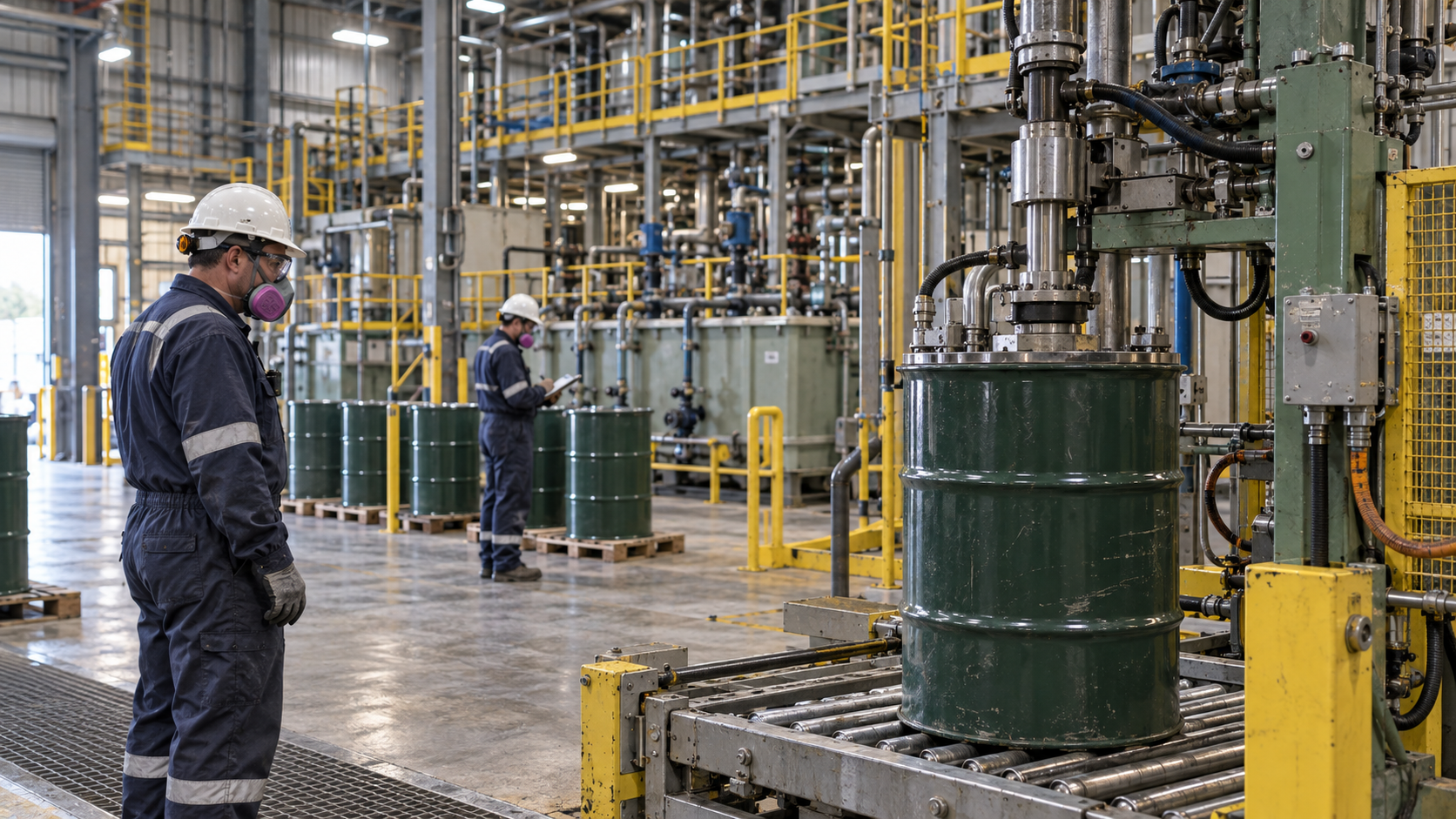
What differentiates Rio Grande Sur from many peers in Revelle's telling is that the flowsheet has already been proven in practice rather than left on the drawing board. Pursuit's pilot plant has produced 99.5%-purity technical-grade lithium carbonate from evaporated brine, and samples have gone out to prospective customers in Europe, the United States and Asia. The June 2026 quarterly report confirms the pilot plant is now being relocated on-site, with environmental permitting for that move expected to clear before August. Once operating on real site brine rather than trucked-in material, the plant is intended to validate the flowsheet under actual field conditions, including the lower boiling point of water at roughly 4,000 metres above sea level.
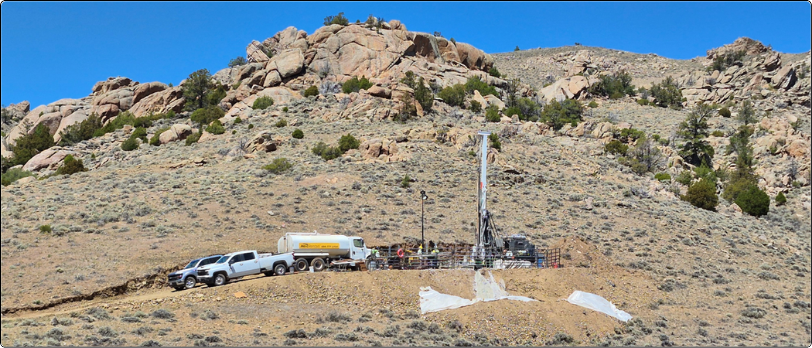
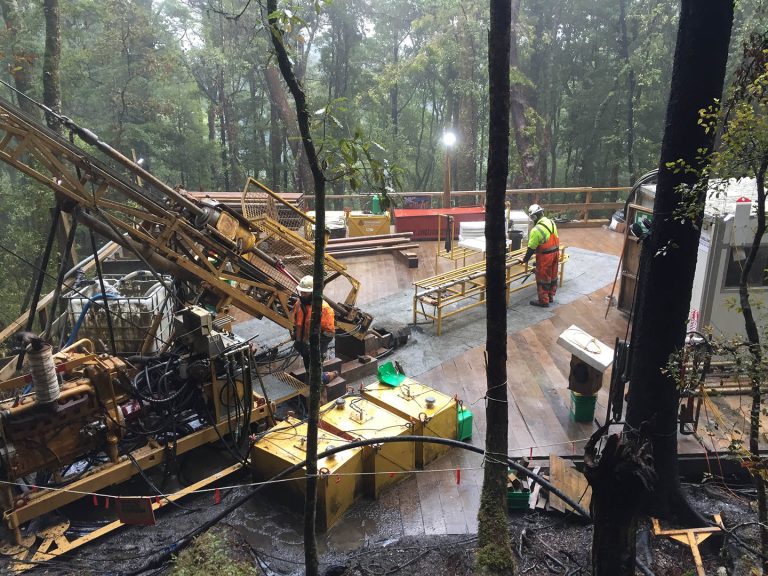
Rio Grande Sur was expanded during the June 2026 quarter through the acquisition of the Rio Grande I and Demasía Rio Grande I tenements from REMSA, adding around 1,362 hectares immediately adjacent to the Mito prospect and giving Pursuit 100% ownership of any mining rights generated there, with no residual royalty to REMSA. Diamond drilling began at Mito immediately after the June quarter ended, testing a basin-scale conductive anomaly identified through reprocessed CSAMT geophysics that extends from roughly 250 metres to beyond one kilometre below surface. The company's tenement package across Rio Grande Sur now covers approximately 10,595 hectares across seven tenements.
In parallel, Pursuit is progressing Stage 2 Pre-Feasibility Study addendums that assess larger-scale development scenarios for both lithium carbonate and lithium chloride output. Revelle says the lithium chloride option reflects direct interest from prospective offtake partners, since Asian refineries with strong midstream processing capacity often prefer chloride as an intermediate product. Both routes share the same upstream brine extraction, evaporation and impurity-removal circuits before diverging into separate downstream processing.
Financing and Development Strategy
Revelle was explicit that Pursuit's strategy is built around what a roughly $20 million market capitalisation company can realistically finance, rather than around outsized capital requirements that depend on a buyer with deep pockets showing up.
"We're not a $20 million market cap company saying, 'Hey, we need to raise a billion dollars to build this thing,' which is just never going to happen. It's not realistic and really affects your credibility"
That framing extends to the choice of a 5,000-tonne starting scale rather than the 20,000-100,000 tonne plants that dominate the industry. Revelle argues that smaller lithium brine operations carry meaningfully lower ramp-up risk than very large ones, pointing to Argosy Minerals' 2,000-tonne Rincon plant as a precedent for the market rewarding a "start small, scale later" strategy, even though much of that re-rating was later given back as lithium prices fell. Pursuit's plan is to attach an offtake partner to help define and fund detailed engineering for the initial 5,000-tonne stage, then use debt secured against that partner's product specification to fund construction, before self-funding equity for expansion once the base operation reaches cash flow, expected roughly four years into production.
Interview with Aaron Revelle, MD & CEO of Pursuit Minerals
Competitive Positioning
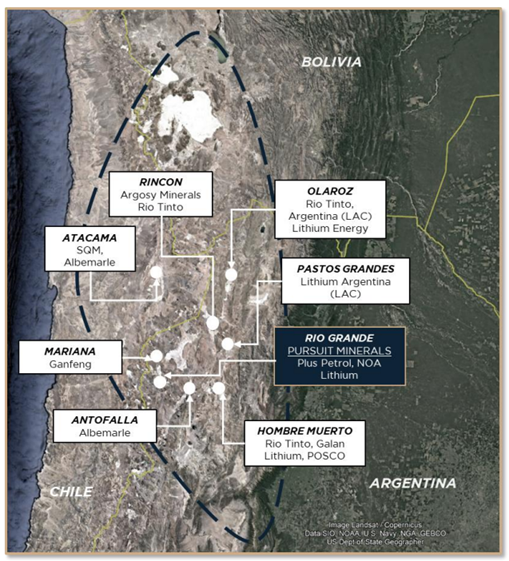
Rio Grande Sur sits within 10 kilometres of Ganfeng's producing Mariana project and close to Rio Tinto's Rincon and Olaroz operations, giving Pursuit what Revelle describes as proof that the surrounding geology works at scale. He argues land access on Argentina's remaining Puna salars is now scarce, with the majority of tier-one ground consolidated among majors such as Rio Tinto, Ganfeng, Arcadium/Rio Tinto's Hombre Muerto and Arcadium's Centenario, leaving only a handful of independent juniors, including Pursuit, Argosy Minerals and Galan Lithium, still holding meaningful positions.
Argentina's broader investment climate has also shifted. The June 2026 quarterly report notes the Argentine Chamber of Deputies approved reforms narrowing the scope of the Glacier Law, supported by the governors of the country's principal mining provinces, alongside the RIGI large-investment incentive framework. During the quarter, Argentina approved the US$9.7 billion Vicuña copper project between BHP and Lundin Mining, alongside multiple large-scale lithium expansions, including a US$1.17 billion increase in Cauchari-Olaroz capacity from 45,000 to 85,000 tonnes per annum and Rio Tinto's US$530 million Fenix expansion. Argentina's mining exports are forecast to reach a record roughly US$9 billion in 2026, up an estimated 49% year-on-year.
Sascha Marcelina Gold Project
Pursuit's second asset, Sascha Marcelina, moved from target generation to discovery-focused exploration when the company released the results of a project-wide geological mapping campaign covering 30 field days between March and May. The review defined a district-scale volcanic-hydrothermal system across five priority centres: Valdivia Brechón, Sascha, Estancia, Marcelina and Igloo, all interpreted as different structural levels of a single system centred on the Cerro Pellegrini rhyolitic dome complex.
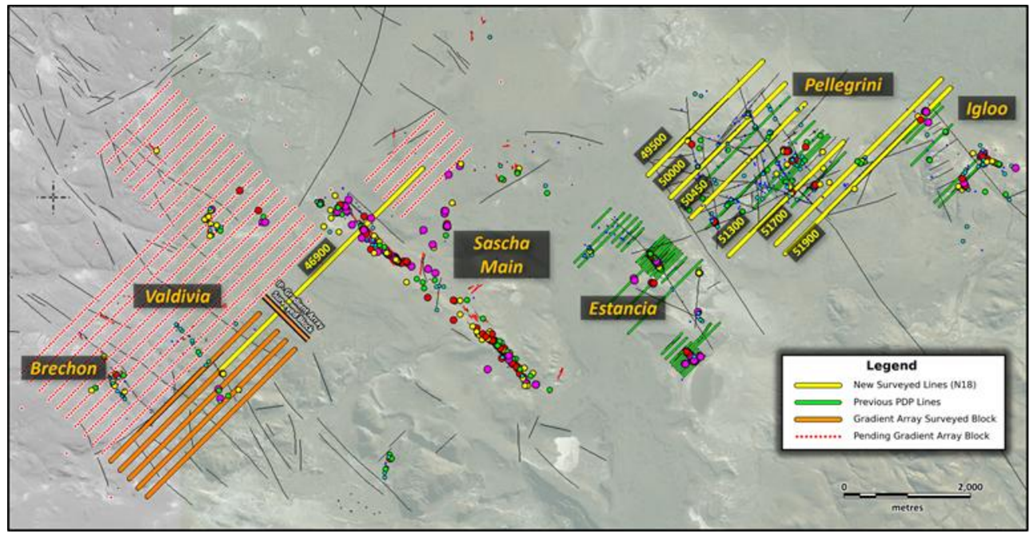
Sascha Northwest was confirmed as the highest-priority target within the 5.5-kilometre Sascha vein corridor, with mapping identifying a continuous mineralised structure over approximately 600 metres and historical drill intercepts including 0.27 metres at 10.74 g/t gold and 1.55 metres at 8.92 g/t gold. At Marcelina, historical drilling including hole PEL-DDH-005 returned 20.4 metres at 0.24 g/t gold and 39 g/t silver, with the Company's geological model interpreting the preserved silica cap at the site as evidence of a much larger concealed system rather than the target itself. An Induced Polarisation survey is being completed across the district ahead of a maiden drilling programme, with results expected before the end of August and drilling scheduled to begin from September 2026, targeting proposed holes REC-01 at Sascha Northwest and REC-03/REC-05 at Marcelina.
Investment Thesis for Pursuit Minerals
- Rio Grande Sur offers a financeable pathway to production at a roughly $20 million market capitalisation, built around a 5,000 tonne-per-annum starting scale rather than a capital-intensive mega-project.
- The project's flowsheet is already de-risked through pilot-scale production of 99.5%-purity lithium carbonate, a step many earlier-stage lithium developers have not reached.
- Reported C1 operating costs of roughly $6,500 per tonne place the project in the lowest quartile of the global cost curve, ahead of hard-rock competitors.
- Proximity to producing operations from Ganfeng and Rio Tinto within the same salar system provides geological validation and underlines the scarcity of remaining tier-one land positions in Argentina.
- Sascha Marcelina adds a second, uncorrelated catalyst path, with a freshly defined district-scale gold-silver target set and maiden drilling due to start imminently.
- Argentina's RIGI investment framework and recent Glacier Law reform have coincided with a wave of multi-billion-dollar project approvals from majors including BHP, Lundin, Rio Tinto and Ganfeng, supporting the broader financing and M&A backdrop Pursuit is operating in.
- Monitor the Company's cash position and any capital raising activity closely, given the gap between the $3 million cash balance and the scale of capital required to reach construction.
Macro Thematic Analysis
Lithium's last two boom-and-bust cycles were driven overwhelmingly by electric vehicle demand, a single narrative that could swing from euphoria to oversupply within a couple of years as new capacity caught up. Revelle argues the current cycle is different in kind, not just in degree.
"What we're seeing now is a return from surplus to deficit. However, unlike previous cycles, this is a structural deficit with increasing demand drivers that weren't present in previous cycles."
The case rests on timing and scale. Global lithium demand is forecast to roughly double, from around 1.5 million tonnes currently to more than 3 million tonnes by 2030, according to figures Revelle cited. A genuinely strong lithium project typically takes five to seven years to move from discovery through construction to a flawless ramp-up, and no major project has achieved a flawless ramp-up in the past decade. Meeting the demand growth effectively means doubling the output of existing giants such as SQM and Albemarle's Salar de Atacama operations, Rio Tinto's Olaroz and Phoenix projects, and Pilbara Minerals' Pilgangoora, at a moment when battery energy storage systems, rather than electric vehicles alone, are now estimated to account for roughly 30% of demand growth, alongside continuing EV adoption in China, Europe and North America and rising consumption tied to AI-linked data centre power infrastructure. That combination of a long project-development runway and a broader, more diversified demand base is the structural argument Pursuit is positioning itself against, with Rio Grande Sur intended to be in production before the tightest part of the forecast supply gap arrives.
TL;DR
Pursuit Minerals (ASX:PUR) is advancing the Rio Grande Sur lithium project in Salta, Argentina, a low-capex, 5,000 tonne-per-annum operation already validated by pilot-scale production of 99.5%-purity lithium carbonate, alongside newly mapped drill targets at its Sascha Marcelina gold-silver project in Santa Cruz. Drilling is underway at Rio Grande Sur's Mito target and a maiden Sascha Marcelina programme is due from September 2026. With cash of $3 million against a project requiring well over $100 million to build, financing progress, not just exploration results, is the key catalyst for investors to track.
FAQ (AI Generated)
Analyst's Notes





Subscribe to Our Channel
Stay Informed