F3 Uranium's New Leadership Makes Tetra Zone Top Priority


New F3 Uranium CEO Ross McElroy makes the Tetra Zone the priority, pitches the high-grade JR Zone to strategic partners and plans a 10:1 consolidation.
- Ross McElroy has taken over as CEO of F3 Uranium, with Dev Randhawa moving to Executive Chairman and Raymond Ashley as President and VP Exploration, leads the technical team.
- The JR Zone's 11.8 million lb Indicated resource at 4.41% U3O8 is sub-scale on its own, but could become satellite feed as mills and infrastructure arrive in the western Athabasca Basin.
- The Tetra Zone will absorb most exploration effort for the next 12 to 18 months as F3 searches for its high-grade core along an east-west trend.
- Fall drilling continues to late November and could reach 7,000 m, with the winter programme to be announced by December.
- A planned 10:1 share consolidation and an active search for strategic partners are the main corporate levers for closing the gap between strong uranium prices and weak equity valuations.
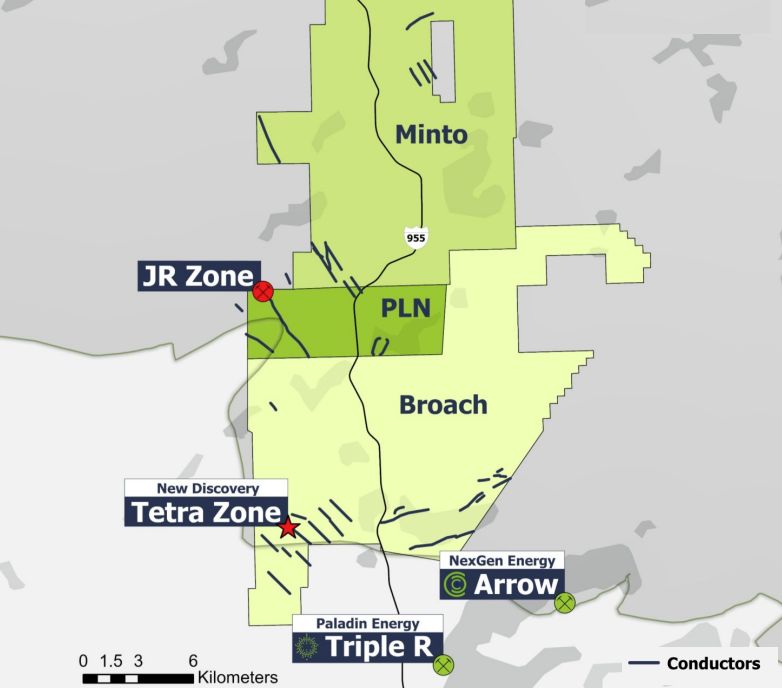
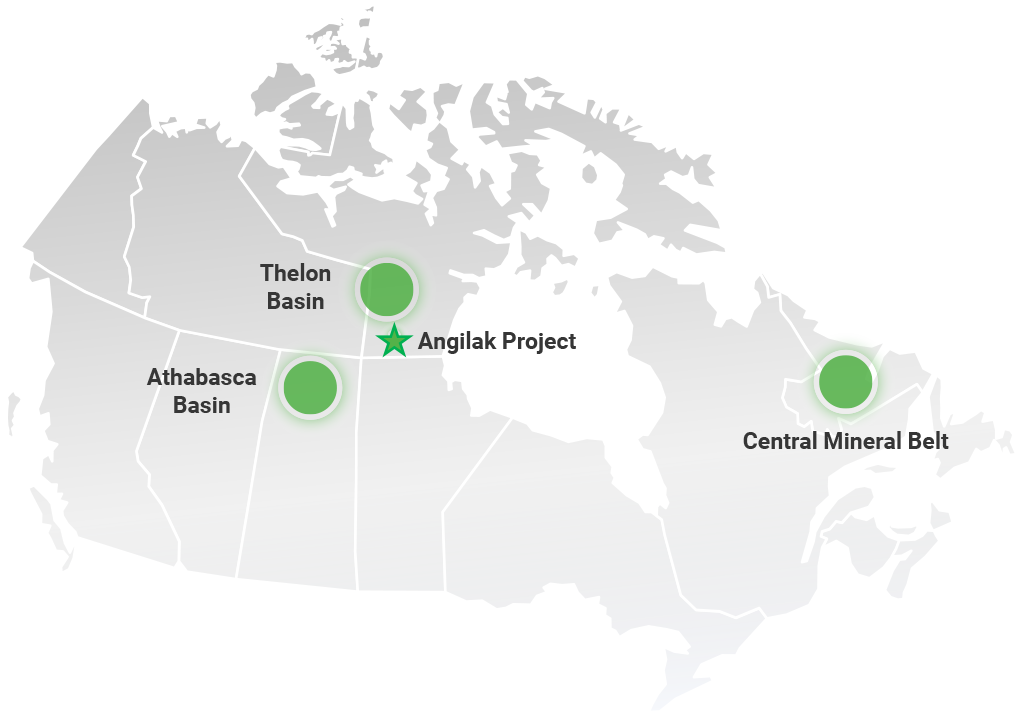
F3 Uranium Corp. (TSXV:FUU) is entering a new phase with a familiar face in charge. Ross McElroy, a geologist with almost 40 years in the uranium business, has stepped in as Chief Executive Officer. Co-founder Dev Randhawa moves to Executive Chairman. The change comes at an awkward moment for uranium equities. McElroy notes that term contract prices sit near all-time highs above $100/lb, with spot at roughly $90/lb, yet share prices across the sector have lagged the commodity. For F3, the central commercial question is how to turn an 11.8 million lb high-grade deposit and an early-stage discovery into an asset that a developer or acquirer would want to own. The company's Patterson Lake North (PLN) project sits in the western Athabasca Basin, where NexGen Energy and Paladin Energy are advancing the Arrow and Triple R deposits. That build-out could change the economics of smaller deposits nearby. McElroy's answer is to keep exploring, concentrate effort on the Tetra Zone and actively court strategic interest in the PLN land package.
A Leadership Reshuffle Built on Familiar Ground
McElroy and Randhawa have worked together for roughly 20 years. The pair co-founded Fission Uranium out of Fission Energy in 2012. McElroy was involved with the F3 vehicle from its spin-out until 2020, when he stepped off the board to focus on Fission Uranium. The sale of Fission Uranium to Paladin, agreed in 2024, made him available to return. Under the new structure, Randhawa steps away from day-to-day management and concentrates on networking and championing the company. Raymond Ashley, who was F3's original exploration manager now President and VP Exploration, focuses almost exclusively on the technical side. That shift follows the departure of VP Exploration Sam Hartmann at the beginning of September. McElroy runs corporate leadership and strategy while also contributing ideas on where to drill. He describes the three-way split as one that covers all bases.
High Grade JR Zone
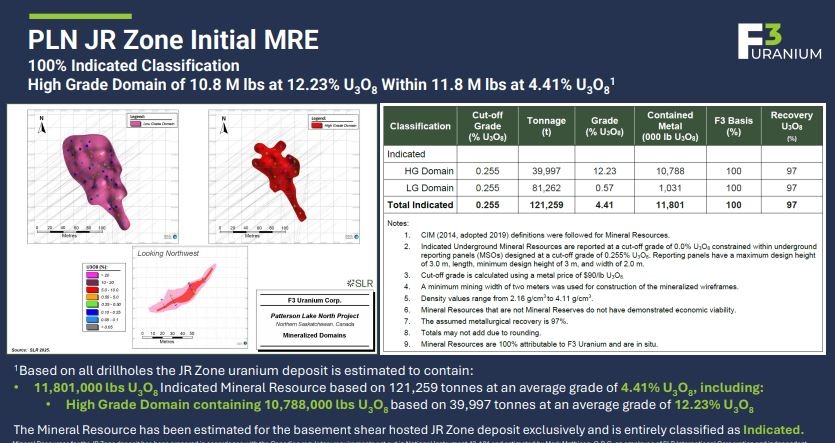
The JR Zone hosts an Indicated Mineral Resource of 11.8 million lb U3O8 at an average grade of 4.41%, according to the company's presentation. Within that sits a high-grade domain of 10.8 million lb at 12.23% U3O8. McElroy is candid about the limits. He believes JR has probably been delineated about as far as it will go as a single pod. On its own, he says, 12 million lb is a little shy of what is needed to justify advanced studies and an economic assessment. He does not see that as the end of the story. Athabasca Basin deposits typically occur as multiple pods along trend or at depth. McElroy would not be surprised if JR proved to be one of several pods on the north-south A1 conductor trend, and F3 will continue testing new targets there.
Location may matter as much as size. McElroy expects at least two mills to be built in the western basin to serve Arrow and Triple R, along with new roads and possibly an extension of the provincial power grid. With that infrastructure nearby, the critical mass a deposit needs to be economic falls. He sees JR becoming attractive as satellite feed for a neighbouring producer such as Paladin, or for a company looking to consolidate the district. A strategic partner, in his view, would be buying the potential to find more rather than JR alone.
Tetra Zone & the Search for the Core
The Tetra Zone, discovered in April 2025 on the Broach property about 13 km south of JR, is a separate discovery on a completely different trend. Discovery hole PLN25-205 returned 22.5 m at 0.26% U3O8, including 1.0 m at 2.50%. Follow-up hole PLN25-219A returned 3.0 m at 1.19% U3O8 within 25.0 m of composite mineralisation. McElroy acknowledges that F3 has yet to find more high-grade uranium at Tetra. Intercepts of 20 to 30 m of strong alteration and radioactivity, with high-grade pockets inside them, point to a system whose core has not yet been located. Setting out the company's priorities, McElroy set the tone:
"The real focus going forward and certainly for the next 12 to 18 months or so is going to be primarily focused on Tetra, looking at that [prospective] trend and seeing what it can deliver."
Summer step-out drilling intersected alteration without high-grade radioactivity. McElroy framed the results in terms of what drilling has revealed about the structural controls. The team initially expected mineralisation to follow the north-south conductors that host JR, a few kilometres to the north. Drilling instead pointed to an east-west control, parallel to the Patterson Lake South corridor that hosts Triple R and Arrow. McElroy explained a particular area with confluence of two primary orientations both of which are known to host high-grade mineralisation. He expects further step-outs to confirm that the east-west trend is the dominant control at Tetra.
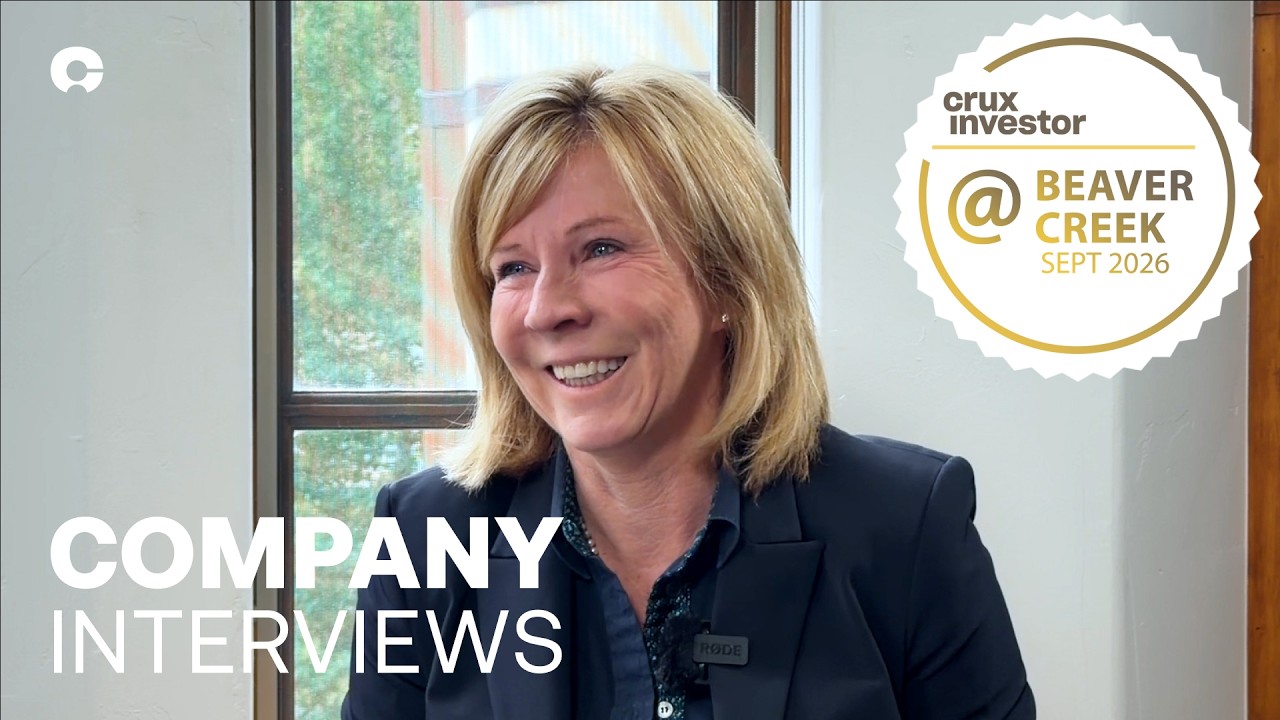
Interview with Ross McElroy, Director & CEO of F3 Uranium
Drilling Through to Freeze-Up
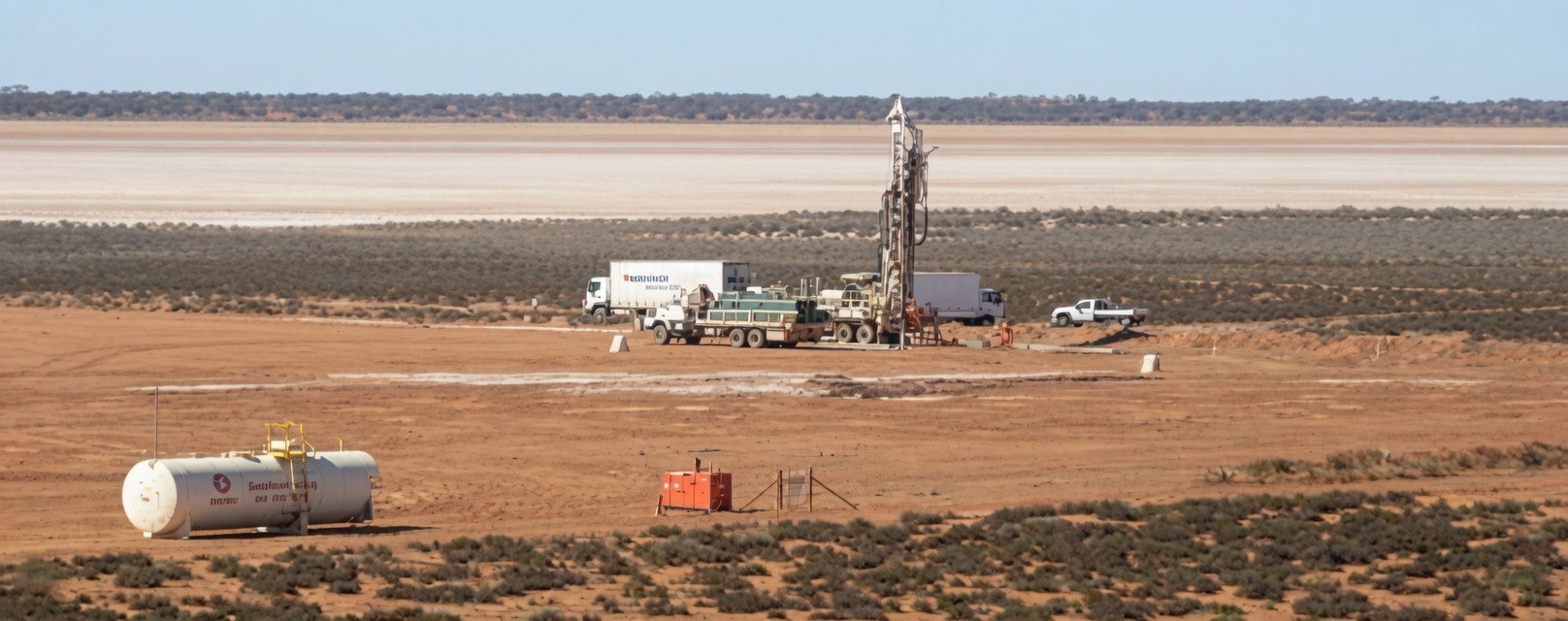
The summer-fall programme was originally planned at around 4,000 to 4,500 m. Rather than stopping, F3 will keep a single rig turning on exploration targets until about the end of November. At a rate of roughly 1,500 to 2,000 m a month, McElroy expects the programme to reach 5,000 to 6,000 m, possibly 7,000 m. Planning for the winter programme will take place by December. The company expects to announce its scope to the market that month, with drilling to start in January or February. McElroy was clear that there will be a winter programme, although its size has yet to be set. F3 reported cash on hand of $21.3 million as at 25 August 2026. Beyond Tetra, the company lists new drill targets on the A4 trend, the Broach Lake conductor and the B1 shear zone.
Consolidation & the Strategic Partner Question
McElroy sees a broader malaise in uranium equities rather than anything specific to F3. He describes the planned 10:1 share consolidation as a practical step. Roughly 750 million shares would fall to about 75 million, with a correspondingly higher share price. He believes that could help attract new investors and build institutional ownership. The larger lever is strategic interest. McElroy points to what F3 can offer a partner: the largest contiguous land package in the heart of the southwest Athabasca district at about 42,000 hectares, an Indicated resource at JR and a new showing at Tetra. Denison Mines is already a strategic investor through a $15 million convertible debenture agreed in 2023. McElroy says evaluating and attracting strategic interest will be a huge part of his job, while Ashley's team concentrates on finding deposits.
Investment Thesis for F3 Uranium
- F3 holds an 11.8 million lb Indicated resource at JR grading 4.41% U3O8, with a high-grade domain of 10.8 million lb at 12.23%.
- The Tetra Zone sits on a separate east-west trend parallel to the corridor hosting Triple R and Arrow, giving F3 a second, independent discovery.
- Management sees JR as potential satellite feed once neighbouring mills, roads and power reach the western basin.
- The return of Ross McElroy, who co-founded Fission Uranium, brings a team with a record of discovery and sale in the same district.
- Investors should monitor results from the extended fall programme, which could reach 7,000 m by the end of November.
- The December announcement of the winter programme scope is the next defined catalyst.
- Completion of the 10:1 consolidation and any strategic partnership announcement are further watch-items for a potential re-rating.
Macro Thematic Analysis
The uranium market presents a split picture. McElroy notes that term contract prices sit near all-time highs above $100/lb, with spot at around $90/lb. Equity valuations have not kept pace, and explorers in particular are trading at a discount to the commodity. That gap tends to close when discoveries or corporate transactions remind the market of the value of high-grade ounces in safe jurisdictions.
The Athabasca Basin in Saskatchewan remains the world's premier high-grade uranium district. Its southwest corner is shifting from an exploration story to a development one. NexGen's Arrow and Paladin's Triple R are moving towards production, and the infrastructure that follows changes the calculus for every explorer around them. McElroy put the opportunity in practical terms:
"So there'll be at least two mills built in that area. We'll see the provincial power grid find its way up into that area right where we are. We're in the heart of the activity with all that."
For deposits like JR, shared infrastructure lowers the threshold for economic viability. A small, very high-grade pod that would struggle to carry its own mill can look very different as trucked feed to a neighbour's plant. That dynamic also supports consolidation. Producers building capital-intensive mills have an incentive to secure additional feed nearby, and strategic investors are increasingly looking at land position as well as resources.
Demand-side drivers remain supportive. Reactor construction, utility contracting and growing interest in nuclear power for data centres all underpin long-term pricing. For F3, however, the macro case only translates into shareholder value if exploration delivers. A large land package, a funded drill programme and a district moving into production give it the platform to do so.
TL;DR
Ross McElroy has replaced Dev Randhawa as CEO of F3 Uranium, with Randhawa moving to Executive Chairman and Raymond Ashley leading the technical team. McElroy says the JR Zone's 11.8 million lb Indicated resource at 4.41% U3O8 is sub-scale as a standalone mine but could become satellite feed as mills, roads and power arrive in the western Athabasca Basin. The Tetra Zone, which sits on a separate east-west trend, will be the main focus for the next 12 to 18 months. Fall drilling runs to late November and could reach 7,000 m. A winter programme will be announced by December, and a 10:1 share consolidation is planned.
FAQ (AI-generated)
Analyst's Notes





Subscribe to Our Channel


Stay Informed