




24-Year Yield Highs Lower Gold’s Entry Price as Central Banks Buy



Inflation data and ETF flows could shape gold’s recovery, while royalty cash flow offers potential dividends during further price swings.
- Spot gold fell 0.3% to $4,127.87 an ounce on October 6 as 10- and 30-year US Treasury yields at 24-year highs raised the income forgone by holding bullion.
- The 10-year Treasury yield reached 5.34% on October 1, its highest since 2002, increasing gold’s holding cost because bullion pays no interest.
- Central banks bought a net 289 tonnes in the second quarter of 2026, five times of the first quarter’s revised 57 tonnes, supporting demand as gold retreated from January’s record.
- Global gold exchange-traded funds (ETFs) received $18 billion in August; gold now trades 6% to 12% below that month’s $4,400 to $4,692 range, potentially encouraging redemptions.
- A daily close below last week’s $4,111 low would indicate further price weakness; October 14 inflation data and the October 28 Fed decision could shift yields and gold demand.
24-Year High Treasury Yields Lower Gold’s Entry Price
Spot gold fell 0.3% to $4,127.87 an ounce as a stronger US dollar and Treasury yields at 24-year highs reduced bullion’s appeal. September payrolls rose 29,000 against a 90,000 forecast, while July and August were revised down by 60,000 combined, potentially limiting further Fed hikes and supporting gold.
The 10-year Treasury yield reached 5.34%, raising the interest income forgone by holding gold. Bullion trades about 26% below January’s record, offering a lower entry price for buyers able to withstand further losses.
Central Bank Purchases Absorb 289 Tonnes of Gold Supply
The Fed raised its target range by 25 basis points to 3.75%-4.00% and projected another hike this year, increasing the appeal of interest-paying assets relative to gold. Inflation and US fiscal concerns pushed longer-term yields higher, raising gold’s holding cost, while physically backed ETFs also charge fees. An 87% market-implied probability of a December hike leaves bullion exposed to further rate increases.
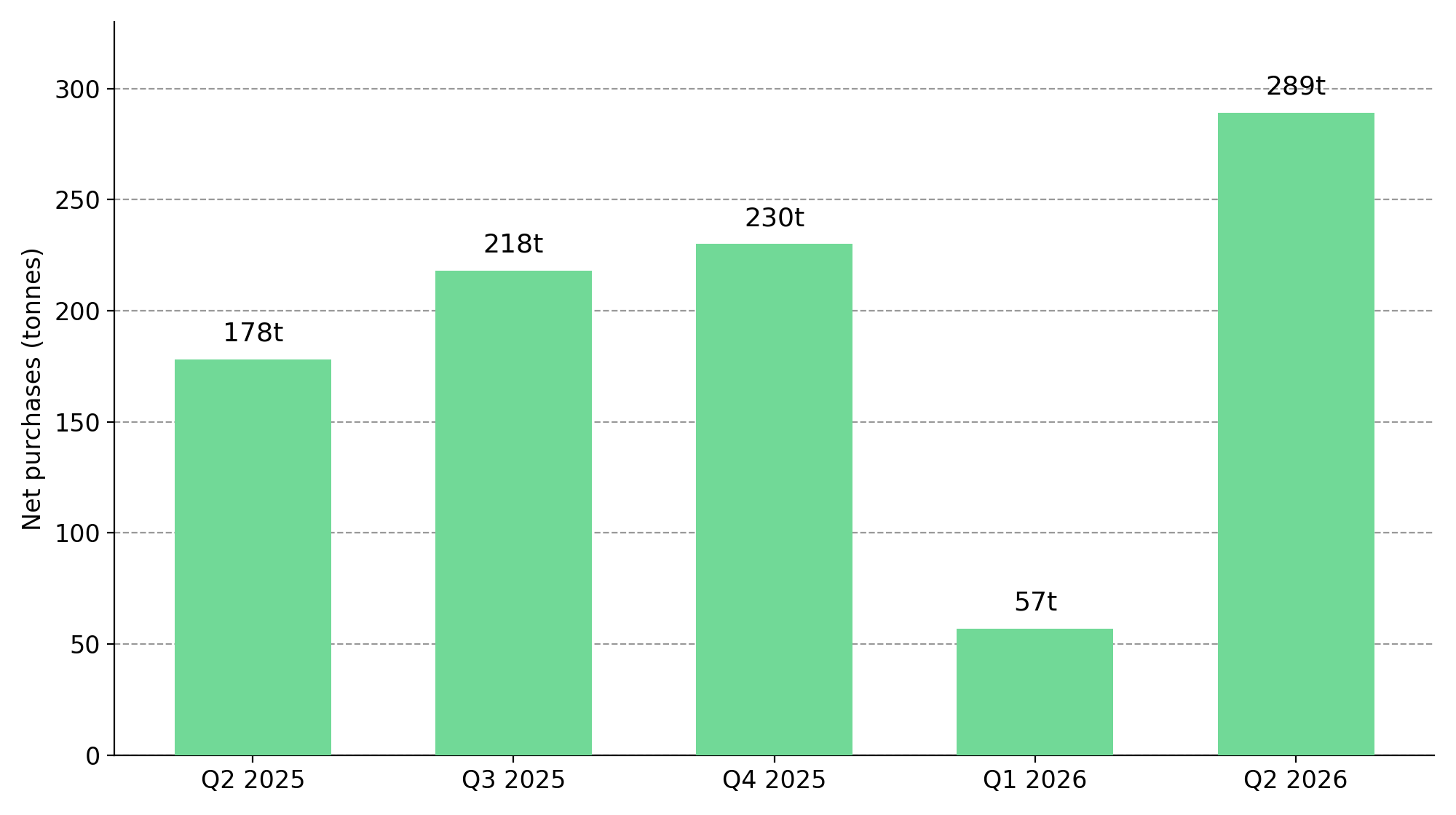
Central banks bought a net 289 tonnes in the second quarter of 2026, five times the first quarter's revised 57 tonnes, supporting demand as gold prices fell. China’s central bank added 20.2 tonnes in August, its largest monthly purchase since October 2023, providing additional demand during gold’s retreat from its record.
Softer Inflation Could Support Gold’s Recovery Toward $4,400
Central bank purchases are reported with a lag, limiting comparisons with daily ETF flows. Paul Brink, President and Chief Executive Officer of Franco-Nevada and WGC Chair, said rising central bank holdings underscored gold’s long-term role as a reserve asset.
Higher-than-forecast inflation on October 14 could support an October 28 Fed hike and keep 10-year yields above 5.3%, increasing gold ETF redemption risk. Gold trades 6% to 12% below August’s $4,400 to $4,692 range, potentially prompting withdrawals from funds that received $18 billion that month. Softer inflation and a Fed hold could lower yields and support a recovery toward $4,400.
September ETF holdings at or above August’s record 4,189 tonnes would indicate buying matched or exceeded selling during the month. A daily close below $4,111 would signal further price weakness; attributing that decline to ETF selling would require flow data.
Rates Above 5.3% Raise the Appeal of Gold Royalty Cash Flow
Physically backed gold ETFs pay no interest, while 10-year Treasuries yield above 5.3%, raising the income forgone by holding bullion. Gold trades about 6% below its $4,400 end-August price and 12% below August’s $4,692 high, leaving purchases near those levels at a loss.
Franco-Nevada’s royalty and streaming model generates cash flow from mine production while limiting direct exposure to operating costs. That cash flow can support dividends, although shareholder returns still depend on gold prices, mine performance, and equity valuations.
Central bank reporting delays make it difficult to assess official buying around a break below $4,111, limiting its usefulness as a trading signal. Sizing ETF exposure to withstand further losses can reduce the risk of having to sell during a drawdown.
What Sets Gold's Floor as Higher Rates Shift Ownership
Higher Treasury yields increase the income forgone by holding gold ETFs and could prompt redemptions. Central banks’ 289 tonnes of net Q2 purchases supported demand as prices fell, although those purchases do not establish a price floor.
Central banks’ annual net purchases since 2010 support gold’s long-term demand case. Lower prices offer a potential entry point for portfolios able to withstand further declines without relying on bullion for income.
Analyst's Notes





Subscribe to Our Channel










Stay Informed






















