Amazon’s Nuclear Deal Backs 190 MW Expansion, Supporting Future Uranium Demand


With reactor expansion targeting 2030-2032, uranium equity returns hinge on production costs, permits, financing, and delivery.
- Long-term artificial intelligence (AI) electricity agreements give reactor operators greater revenue certainty to support upgrades and longer operation, strengthening future uranium fuel demand.
- A 20-year power agreement announced September 30 supports approximately 190 megawatts (MW) of additional capacity at Calvert Cliffs, with the expansion targeting operation in 2030-2032.
- Buying existing nuclear electricity does not itself add generation. Reactor upgrades can increase fuel requirements, while approved operating-life extensions preserve demand for additional years.
- Producers can supply recurring fuel requirements, while developers and explorers must establish recoverable resources, viable production costs, and funding before their projects can generate operating revenue.
- The long-term uranium demand outlook is bullish where electricity agreements support additional reactor output or longer operation. For uranium equities, project costs, delivery schedules, and financing terms determine how much value reaches existing shareholders.
20-Year Power Deal Supports Reactor Expansion and Future Uranium Demand
On September 30, Amazon and Constellation announced a 20-year power purchase agreement (PPA) supporting expansion of Maryland’s Calvert Cliffs nuclear plant. The agreement provides longer-term revenue certainty to support reactor upgrades and efforts to secure another 20 years of operation. For uranium, additional reactor output could increase fuel consumption, while an approved operating-life extension would preserve fuel demand for more years.
AI Power Deals Support Reactor Upgrades & Future Uranium Demand
The International Energy Agency (IEA) identified PPAs covering 7.1 gigawatts (GW) between existing nuclear generators and AI-related companies from 2024 through the first quarter of 2026, as per its April 16 report. The IEA reported that most had received final investment approval and represented firm commitments to purchase existing output, restart reactors, upgrade plants, or extend operating lives. Buyer commitments lasting up to 25 years give generators greater revenue certainty to support these investments.
The 7.1 GW measures contracted power, not an equivalent addition to reactor capacity. Purchasing existing output does not itself increase generation or uranium consumption. Restarts and output upgrades can add fuel requirements, while approved operating-life extensions preserve demand beyond current license periods.
Constellation’s September 30, 2026 announcement describes a 20-year PPA covering 690 MW, including approximately 190 MW of additional generating capacity targeting operation in 2030-2032. The agreement supports more than US$3 billion in plant improvements and expansion, alongside efforts to renew operating licenses for another 20 years. Only the 190 MW addition represents new capacity that could increase uranium consumption; approved license renewals would extend the period of recurring fuel demand. Plant-specific fuel plans would be needed to quantify the associated uranium requirements.
Longer Reactor Operation Extends Uranium Demand for Producers
The US Energy Information Administration (EIA) explains that reactor operators typically replace about one-third of the core’s fuel every 12-24 months, creating recurring fuel requirements. Approved operating-life extensions preserve those requirements for additional years, supporting a longer potential market for uranium producers. Actual sales depend on separate fuel procurement contracts.
enCore Energy’s September 21 update outlined a proposed distribution of 35 million Verdera Energy shares, equivalent to approximately 0.18 shares per enCore share, subject to adjustment and exchange approvals. If completed, the distribution would give shareholders direct ownership in Verdera alongside their enCore holdings. enCore uses in-situ recovery (ISR) to extract uranium, with South Texas operations and a planned expansion pipeline spanning Alta Mesa East, Dewey Burdock, and Gas Hills, providing potential avenues for future production growth
Longer Reactor Operation Supports New Uranium Supply Development
Reactor upgrades targeting operation in the 2030s create a potential future market for uranium projects still completing studies and securing financing. Development studies must establish recoverable uranium, planned annual output, and construction and operating costs to assess potential returns at their assumed uranium prices.
Atomic Eagle began a review of its 60%-owned Madaouela uranium project in Niger on September 30, evaluating whether higher production rates and lower development and operating costs could improve project economics. The company is targeting an updated resource estimate in the fourth quarter of 2026 and, subject to its completion, a scoping study in the first quarter of 2027 to quantify potential economic improvements and guide future feasibility work.
Phil Hoskins, Chief Executive Officer of Atomic Eagle, discusses future uranium deficits and new production needs:
“The deficit, come the time that this project's capable of coming online, is going to be significant and people will be scrambling for new production assets.”
Future Fuel Demand Supports Uranium Resource Testing & Discovery
Closer-spaced drilling helps establish how much uranium a deposit contains and what it might cost to recover, according to the EIA. These estimates help determine whether a discovery warrants further spending on development studies.
IsoEnergy’s September 8 update reported its strongest radioactivity readings to date along the Hurricane South Trend, with elevated readings across 600 meters at Larocque East in Saskatchewan. These results support the potential to expand Hurricane’s existing indicated resource of 48.6 million pounds at 34.5% U3O8. Pending laboratory tests are the next milestone to establish uranium grades and, together with geological findings, guide drilling targets for 2027.
Supply Gaps Support Uranium Discovery Investment
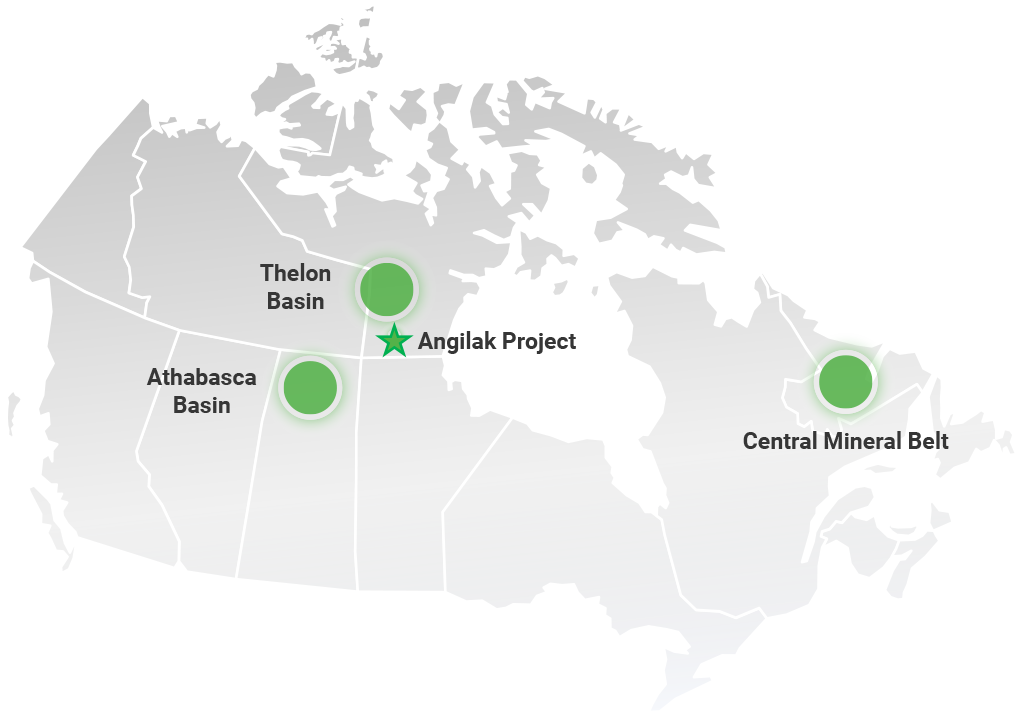
ATHA Energy’s September 8 update traced uranium mineralization over 1.45 kilometers at Rib North, up from 300 meters, within its 100%-owned Angilak project in Nunavut. All seven additional drill holes intersected mineralization, supporting the discovery’s potential scale, with further expansion possible in every direction. The company is targeting receipt of three-dimensional models from its aerial survey in the fourth quarter of 2026 to identify additional drilling targets and assess the broader project’s uranium potential. ATHA Energy Corp.
Troy Boisjoli, Chief Executive Officer of ATHA Energy, discusses declining production and scarce replacement uranium assets:
“You look at declining production rates going into the 2030 to 2040 decade, you look at the scarcity of assets that are backfilling those.”
AI Power Deals Support a Bullish Uranium Demand Outlook
The IEA projects global data-center electricity consumption at 950 terawatt-hours (TWh) in 2030, up from 485 TWh in 2025 and accounting for approximately 3% of global electricity use. Its projection shows electricity consumption by AI-focused data centers tripling over the same period. The uranium implication depends on how much electricity reactors supply and whether that requires additional output or longer operation.
Uranium projects require financing separate from the funding supporting reactor upgrades. Raising that capital through new shares can reduce existing shareholders’ ownership, making construction costs and financing terms relevant to the value retained per share.
The long-term uranium-demand assessment is bullish where PPAs support funded reactor upgrades or approved operating-life extensions, creating additional or longer-lasting fuel requirements. Assessing near-term price direction requires separate evidence of utility purchases and available uranium supply.
The Investment Thesis for Uranium
- Producers can serve recurring fuel requirements as reactors operate for additional years. Revenue and margins depend on delivered volumes, contract prices, and production costs.
- Developers can add future supply where studies demonstrate viable returns at stated uranium-price assumptions. Permits, construction funding, and realistic schedules determine whether that supply can reach the market.
- Developers can assess resource additions through laboratory-confirmed uranium grades and further exploration drilling. The economic benefit depends on whether those additions increase the uranium that future mine plans can profitably recover.
- Explorers need drilling to establish a discovery’s size, grade, and continuity before assessing development potential. Funding requirements and any new share issuance affect how far that work can advance and the ownership existing shareholders retain.
- Across all stages, approved permits, binding purchase contracts, and credible delivery schedules help substantiate projected uranium revenue. Valuations should account for remaining spending, financing requirements, and the time before sales can begin.
Long-term electricity contracts support uranium demand when they enable additional reactor output or approved operating-life extensions. Uranium equity valuations should reflect production costs, remaining funding requirements, and delivery schedules, including the effect of any new share issuance on existing shareholders’ ownership.
TL;DR
Long-term AI electricity agreements give nuclear operators greater revenue certainty to support reactor upgrades, restarts, and longer operation. These investments can increase uranium consumption or preserve recurring fuel requirements for additional years. The IEA identified agreements covering 7.1 gigawatts, but that represents contracted electricity rather than equivalent new reactor capacity. The long-term uranium demand case is bullish where contracts enable additional output or extended operation. For uranium equities, returns depend on production costs, recoverable resources, permits, financing terms, and delivery schedules. Near-term price direction requires separate evidence of utility purchases and available supply.
FAQs (AI-Generated)
Analyst's Notes





Subscribe to Our Channel










Stay Informed