




Fed Hike Bets Pressure Gold, Opening Lower Entry Prices as China Buys


Low-cost gold producers retain a margin cushion, supporting gradual purchases sized for further declines with exposure to a potential recovery.
- Spot gold fell 0.98% to $4,122.73/oz on October 7 as the dollar index rose 0.3% to 102.13, making gold more expensive for buyers using other currencies ahead of the Fed’s September minutes.
- Brent traded above $100 a barrel on October 7, adding inflation pressure, while CME FedWatch put December hike odds at 86%, increasing the appeal of interest-paying assets over gold.
- The People’s Bank of China added about 23 metric tons in September, its largest monthly purchase since October 2023 and 23rd consecutive month of buying, supporting demand during gold’s decline.
- Using the $1,785/oz Q1 2026 all-in sustaining cost in the WGC’s August 24 report, October 7 gold implies a $2,338/oz margin above sustaining costs: $1,925 after a 10% price drop or $3,228 at LBMA delegates’ $5,013 forecast, assuming unchanged costs.
- December hike odds below 50% on CME FedWatch after the October 27–28 Fed meeting would signal reduced rate pressure, potentially supporting gold and unhedged producer shares.
Dollar Strength Lowers Gold Entry Prices as China Buys
Spot gold fell 0.98% to $4,122.73/oz, while December US gold futures fell 0.91% to $4,149/oz. The dollar index rose 0.3% to 102.13 ahead of the Fed’s September minutes, making gold more expensive for buyers using other currencies.
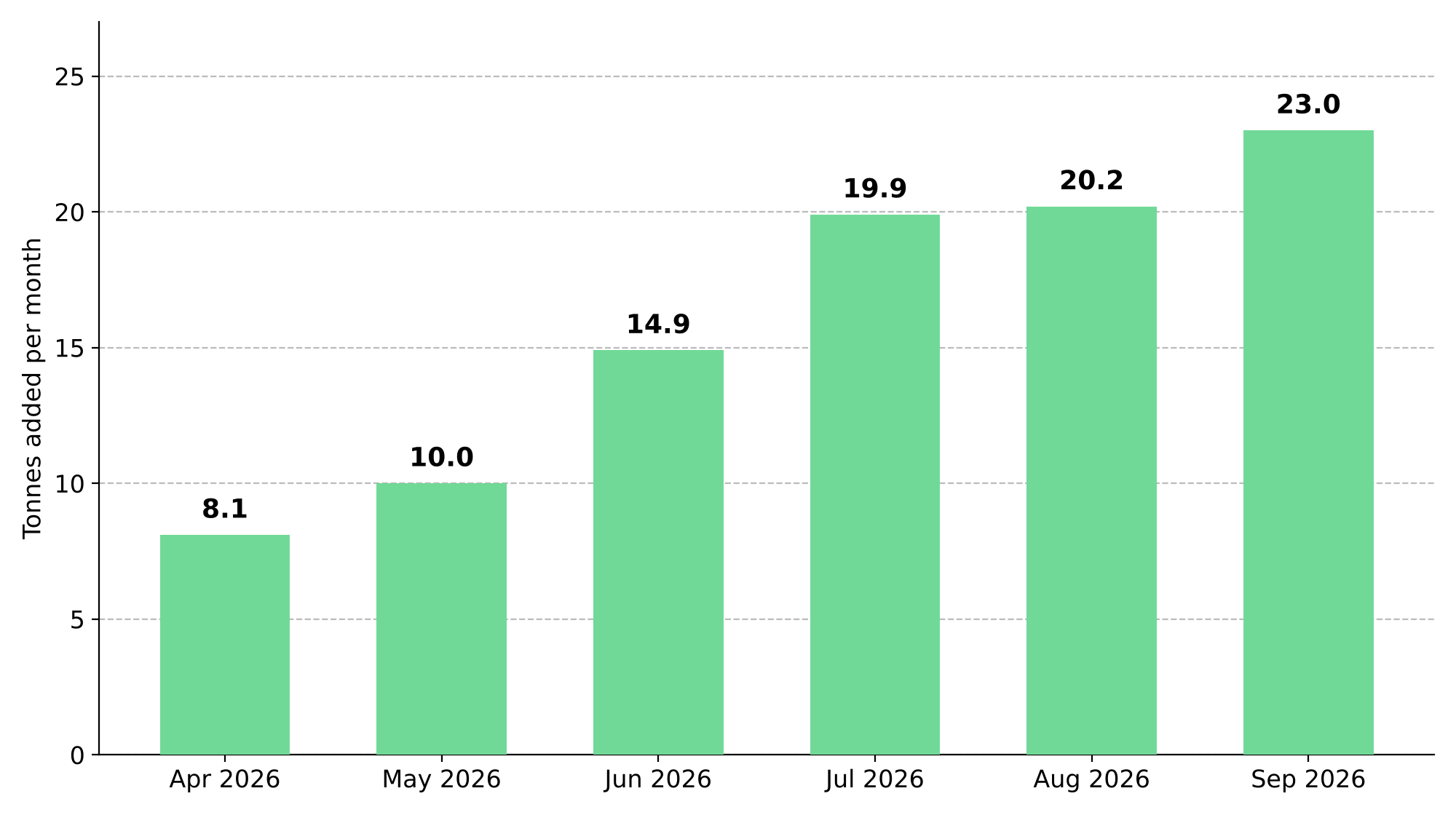
Gold trades 26% below January’s $5,595/oz high after falling more than 6% in September, offering a lower entry price as China continues buying. The People’s Bank of China (PBOC) added about 23 metric tons in September, its largest monthly purchase since October 2023, lifting reserves to 77.47 million fine troy ounces and supporting demand during the price decline.
$100 Oil Reinforces Fed Hike Bets, Raising Gold’s Holding Cost
Brent rose back above $100 a barrel on a storm threatening US oil-producing regions and Houthi attacks on Aden International Airport, Reuters reported. Higher fuel prices hold inflation above the Fed's 2% target, which led the Fed to raise rates in September for the first time since 2023. Each hike lifts the return on cash and Treasuries; the US 30-year yield hit a 24-year high on 7 October, per Reuters. Gold pays no coupon, so higher risk-free returns raise its holding cost.
The pressure stays because its source is political. The conflict that has unsettled energy markets and fed inflation for eight months has no settlement; US Vice President JD Vance told Reuters that Iran must meaningfully cut its enrichment capacity to end it. Fed guidance gives little anchor: Kansas City Fed President Jeff Schmid said rates still need to rise, while San Francisco Fed President Mary Daly tied the decision to whether inflation pressures fade.
Lower December Hike Odds Could Lift Gold Producer Margins
CME FedWatch puts October hike odds at 21.6% and December odds at 86%, keeping gold exposed to higher interest rates. Ricardo Evangelista, Director and Chief Executive Officer of ActivTrades, said uncertainty about the Fed’s decisions may discourage larger gold positions.
Using Metals Focus’s Q1 2026 average all-in sustaining cost (AISC) of $1,785/oz from the World Gold Council’s August 24 report, current gold prices imply a $2,338/oz margin above sustaining costs, 24% below the Q1 record. Assuming unchanged costs, a 10% gold decline to $3,710/oz would reduce that margin to $1,925/oz. A recovery to LBMA conference delegates’ $5,013/oz one-year forecast would lift it to $3,228/oz, illustrating producers’ sensitivity to gold prices.
December hike odds below 50% after the October 28 Fed statement would signal reduced rate pressure, potentially supporting gold and unhedged producer shares. PBOC reserve data due in early November will show whether China continued buying during October, providing a demand check before the December 8–9 Fed decision.
Mining Cost Inflation Favors Lower-Cost Gold Producers
Unhedged producers receive market prices, so gold declines reduce margins unless costs fall. Metals Focus reported a 16% year-over-year increase in Q1 AISC, while oil above $100 a barrel adds fuel-cost pressure. At current gold prices, a $100/oz decline cuts the margin above sustaining costs by about 6% at $2,500/oz AISC, versus 4% at the $1,785/oz industry average.
Aris Mining’s July 29 quarterly filing reported Q2 AISC of $1,986/oz at Segovia and no gold hedges, implying a $2,137/oz margin at current gold prices, assuming unchanged costs. Vivien Glass, Head of Supply Chain Integrity at the WGC, called for annual disclosure of doré shipment destinations to improve supply-chain transparency. Contract miners supplied 33% of Segovia’s Q2 mill feed, making traceability relevant to assessing its supply-chain risks.
A 10% gold decline would cut the industry-average margin by about 18% at unchanged costs, helping explain why producer shares can fall faster than bullion. Sizing gradual purchases to allow for the $3,710/oz scenario can reduce pressure to sell during further declines while retaining exposure to a recovery.
What Keeps Producer Margins Wide
Higher interest rates raise gold’s holding cost, while central-bank buying supports demand. The PBOC continued buying in September despite a $26.56 billion decline in its reported gold holdings’ value.
Gold’s October 7 price remains more than $2,300/oz above Metals Focus’s Q1 2026 average all-in sustaining cost, assuming unchanged costs. Cost control protects that margin, while disclosed gold shipment destinations help assess supply-chain risks.
Continued central-bank demand and this cost cushion support a case for gradual purchases of low-cost, unhedged producers, with positions sized to withstand further gold declines.
Analyst's Notes





Subscribe to Our Channel



Stay Informed






















