




Fed's Hawkish Hold Pushes Back Rate-Cut Expectations, Raising Financing Costs for Nickel & Lithium Projects



Fed's hawkish stance raises financing costs, making project readiness, rather than resource quality alone, the key differentiator across battery metals.
- The Fed held its policy rate at 3.5% to 3.75% for a fifth consecutive meeting on July 29, but a 9-3 vote, with three regional presidents dissenting in favor of a rate hike, and Chair Kevin Warsh's removal of forward guidance shifted market expectations away from rate cuts in the second half of 2026.
- The 10-year Treasury yield rose five basis points to 4.657% following the decision, increasing a key benchmark used to calculate the discount rates applied to multi-year nickel and lithium projects and reducing the present value of their future cash flows.
- Battery metals capital spending fell more than 20% in 2025, the steepest decline in over a decade, while lithium-focused companies cut spending by around 40%, showing that project funding had already weakened before the Fed's July 29 decision pushed financing costs higher.
- Developers with multi-lender financing processes already underway increasingly face financing timelines, rather than resource quality, as the primary constraint on reaching a Final Investment Decision (FID).
- Companies advancing resource definition, permitting, engineering, and procurement are better positioned to secure financing and maintain development momentum despite a higher-cost capital environment.
Fed's Hawkish Shift Pushes Treasury Yields Higher, Raising Discount Rates for Nickel & Lithium Projects
The Fed left its policy rate at 3.5% to 3.75% on July 29, 2026, the fifth consecutive hold. Three regional Fed presidents, Cleveland's Beth Hammack, Minneapolis's Neel Kashkari, and Dallas's Lorie Logan, dissented in favor of a 25-basis-point rate hike. Chair Kevin Warsh also removed forward guidance from the post-meeting statement, making the September Federal Open Market Committee (FOMC) meeting the next scheduled opportunity for markets to reassess the Fed's rate path.
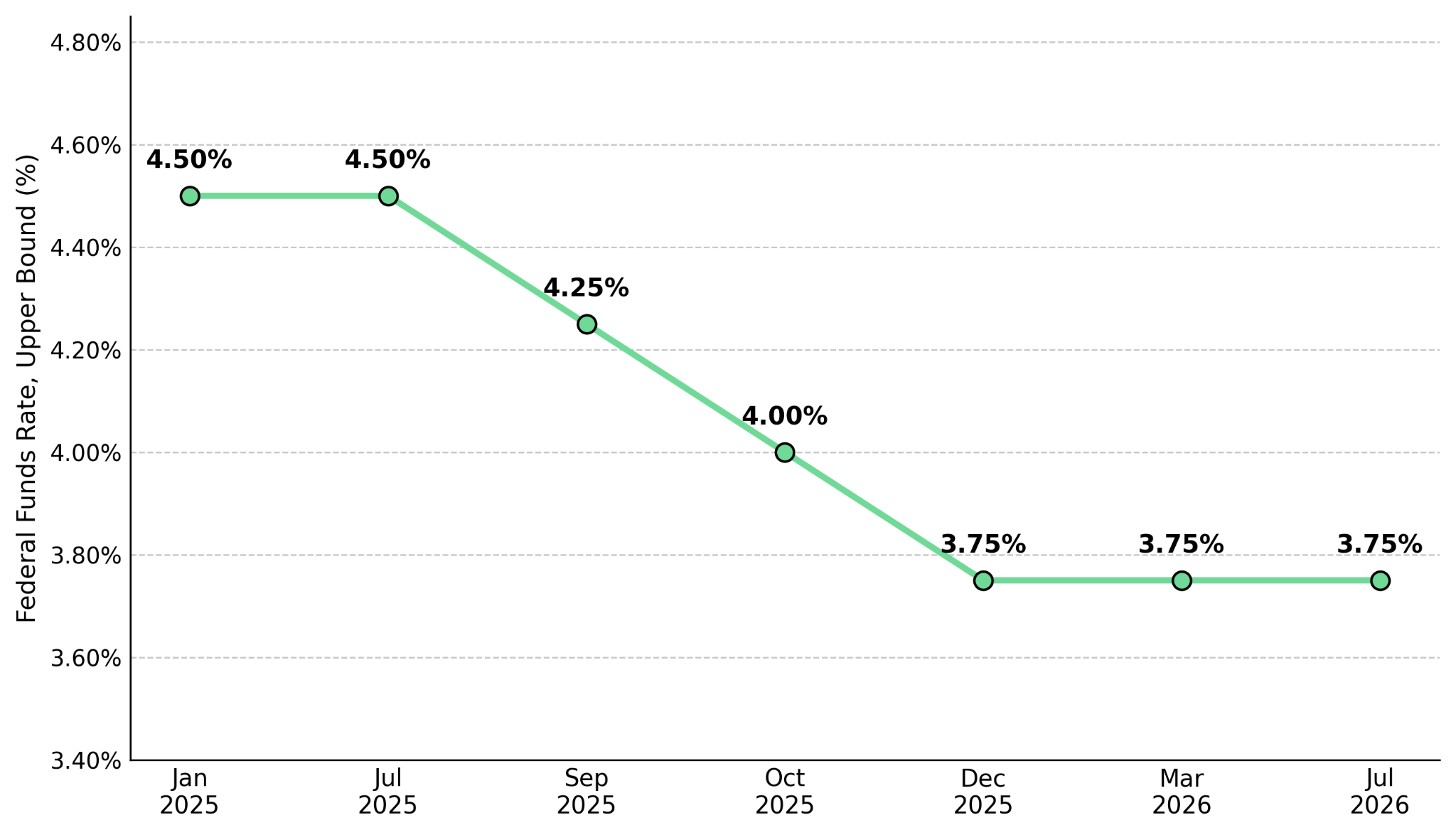
Markets entered 2026 expecting the Fed to begin cutting interest rates during the second half of the year. The 9-3 vote and the removal of forward guidance shifted expectations away from rate cuts toward the possibility of a year-end hike, prompting the S&P 500 to fall 0.6% and the 10-year Treasury yield to rise five basis points to 4.657% in the same session. The higher Treasury yield raised the discount rates applied to multi-year, capital-intensive mining projects, reducing project valuations and making construction financing more difficult to secure.
The Fed's hawkish stance also reflects concerns that higher energy prices could keep inflation elevated, with Middle East tensions adding to those risks. Companies can no longer assume the rate cuts previously built into their financing models, and the FOMC's decision to remove forward guidance increases uncertainty around future financing costs until at least its September meeting.
Higher Discount Rates Compress Project NPV, Increasing the Value of Financing Readiness
Every basis point added to the discount rate reduces the Net Present Value (NPV) of a pre-revenue mining project, and the effect compounds over the multi-year construction and ramp-up periods typical of nickel and lithium developments. Projects that secure financing before borrowing costs rise avoid locking in higher financing costs, making the timing of financial close an increasingly important determinant of project economics.
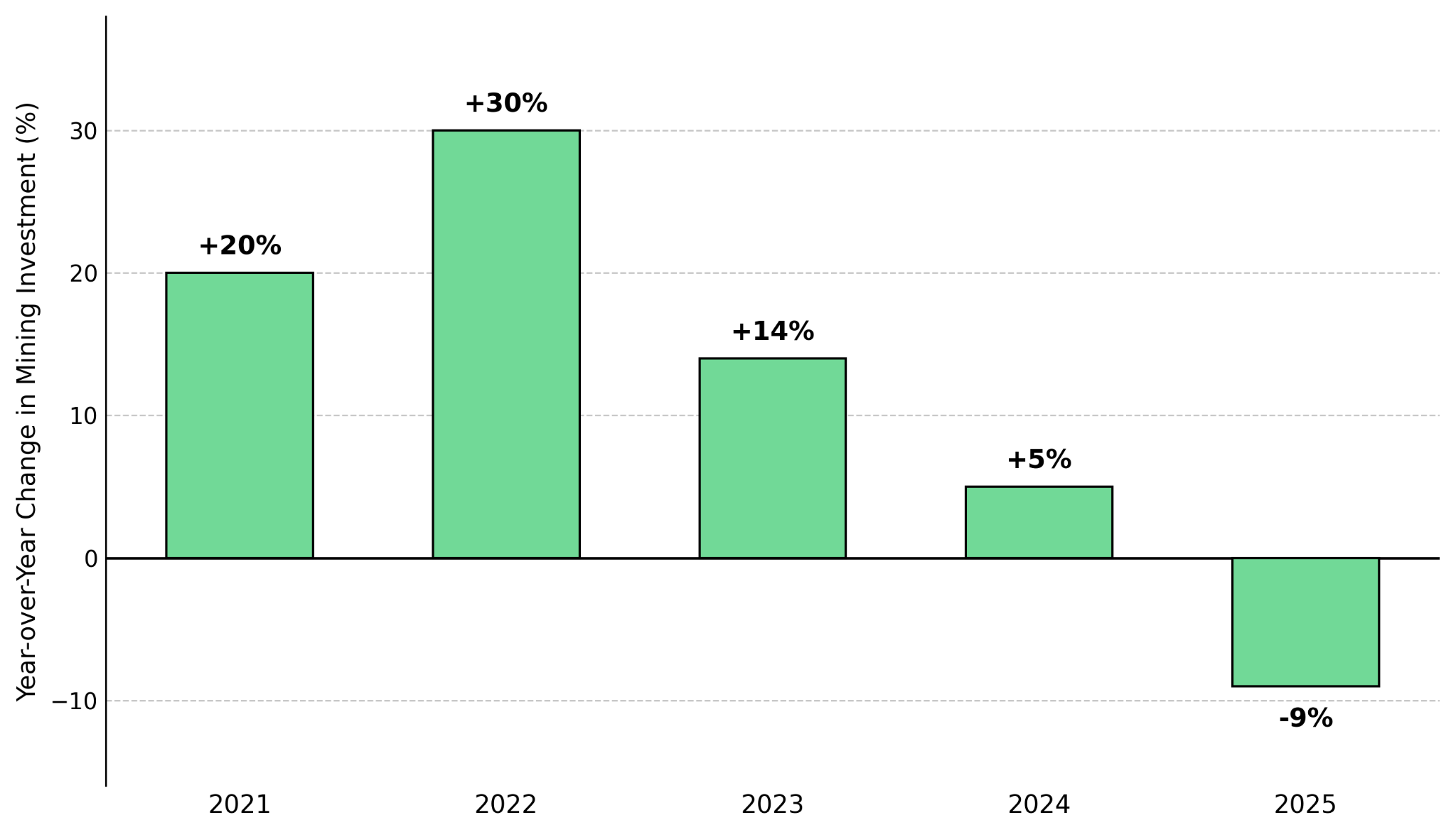
Higher financing costs are hitting a sector where capital spending has already declined. The IEA's Global Critical Minerals Outlook 2026 found that battery metals capital spending fell more than 20% in 2025, the steepest decline in more than a decade, while lithium-focused companies cut spending by around 40%. Lithium and nickel exploration spending also fell by roughly 45% in 2025. Because those spending cuts began before the Fed's July decision, higher discount rates are reinforcing existing financing constraints rather than creating a new shortage of project capital.
Projects furthest along in engineering, permitting, and lender engagement are better positioned to secure financing before borrowing costs increase further. Projects still in early-stage negotiations face a greater risk of reaching a FID under less favorable financing conditions, making financing readiness, rather than resource quality alone, the key factor determining which projects advance first.
Higher Capital Costs Shift the Advantage to Financing-Ready Nickel Projects
Nickel projects provide one of the clearest examples of how higher financing costs affect project development because large-scale sulfide operations typically require capital-intensive processing facilities, multi-stage permitting, and financing from multiple lending institutions before construction can begin. As financing costs rise, differences in project maturity become increasingly important in determining which developments continue advancing toward a FID.
Active Lender Engagement Signals Financing Availability, While Government Negotiations Determine FID Timing
Lifezone Metals is advancing financing for its Kabanga Nickel Project in Tanzania even as negotiations to amend its Framework Agreement with the Tanzanian government have progressed more slowly than planned, delaying the FID to the first quarter of 2027. Standard Chartered Bank is in late-stage negotiations for a potential equity investment, while the Societe Generale-led project financing process has selected pathfinder Development Finance Institutions and Export Credit Agencies across Africa, Europe, and North America, and the US Development Finance Corporation has completed due diligence for the project's political risk insurance. These milestones indicate that financing is progressing, with government negotiations remaining the primary factor delaying the FID.
Ingo Hofmaier, Chief Financial Officer of Lifezone Metals, explains why nickel supply concentration is becoming a concern:
"Nickel is a massive market, but it is very, very concentrated. If the development continues in Indonesia, you will have 75% to 80% of global production. From a US perspective, nickel is considered a critical material because of both energy security and supply chain criticality."
Resource Growth Continues Before Financing, Positioning Projects for Future Development
Canada Nickel completed the initial phase of resource definition across nine deposits in Ontario's Timmins Nickel District on July 23, 2026, reporting 4.36 billion tonnes of Measured and Indicated Resources grading 0.24% nickel, containing 10.29 million tonnes of contained nickel. The initial resource at its ninth deposit, Nesbitt, totals 176 million tonnes grading 0.23% nickel, while an updated estimate at Deloro increased Indicated Resources by 46% and Inferred Resources by 39% compared with the 2024 estimate. With a Preliminary Economic Assessment still to come and seven additional exploration targets yet to be tested, the company continues advancing resource definition and technical de-risking while financing decisions remain a future milestone.
Mark Selby, Chief Executive Officer of Canada Nickel, discusses Indonesia's growing influence over nickel supply:
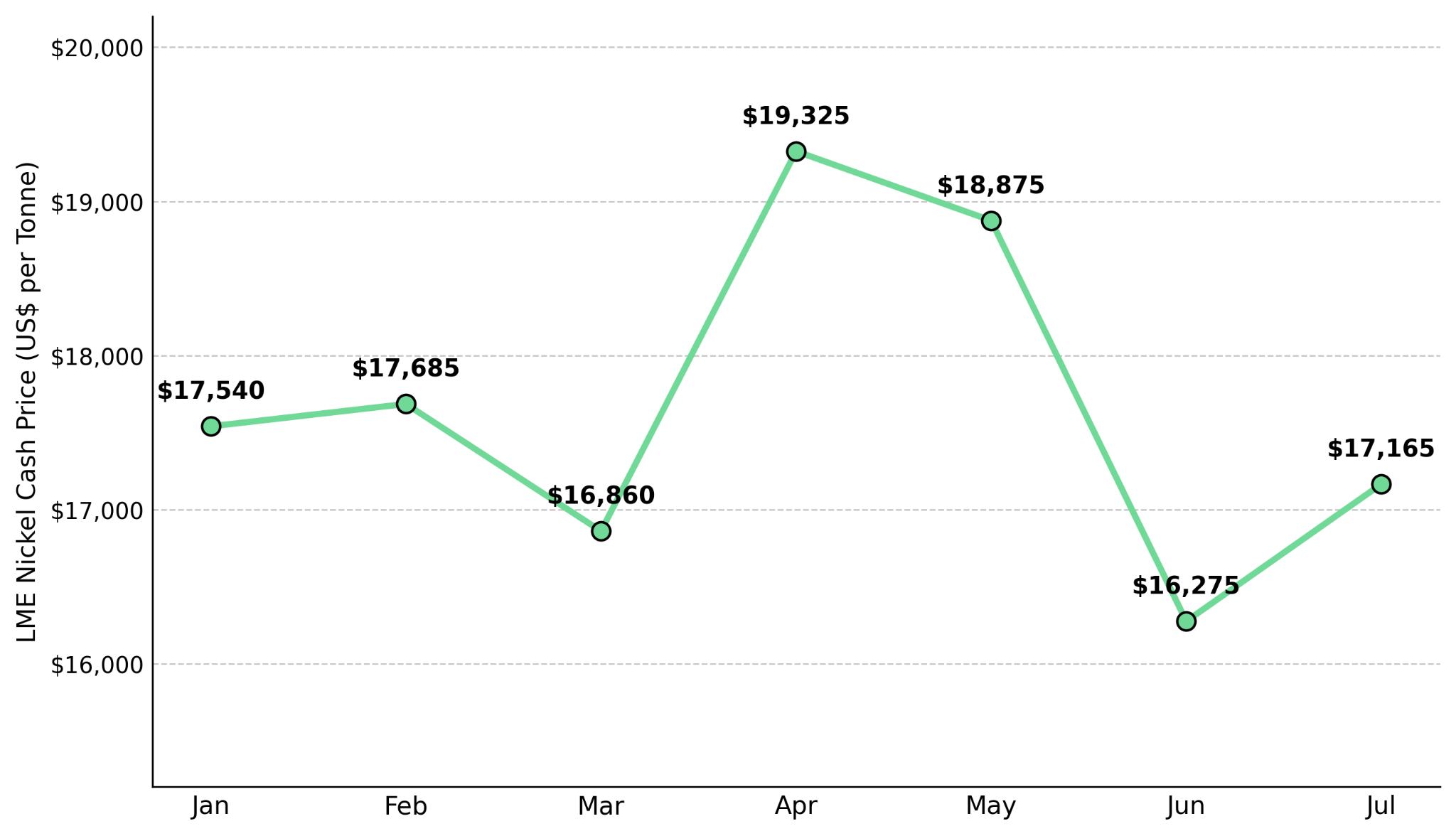
"The market's getting pretty close to balance, and as the year goes on that ore tightness is really going to work its way through the chain. Indonesia has really shifted the cost curve, and we should see prices well supported from this point forward. This is the beginning of the new normal in terms of the nickel market."
Government Tender Delays Highlight Non-Chinese Lithium Supply Constraints Despite Available Funding
Lithium projects face the same higher financing costs as nickel projects, but the primary constraint differs. Rather than securing capital alone, developers and buyers must also secure processed material outside a single country's control of the midstream supply chain, a challenge that persists even when government-backed financing is available.
Defense Department's Delayed Tender Highlights Persistent Non-Chinese Lithium Supply Constraints
The Defense Logistics Agency extended the bid deadline for its $300 million tender to purchase 16,167 tonnes of battery-grade lithium carbonate for what would be lithium's first inclusion in the National Defense Stockpile for a second time, from July 30 to August 5, 2026, because the US government has struggled to source qualifying material outside China's processing base despite already committing the funding. At the same time, the Guangzhou Futures Exchange opened its lithium carbonate contract to overseas traders on July 3, 2026, while Guangzhou lithium carbonate futures fell to a five-month low on July 21 as restarted Chinese mines increased expectations of a 2027 supply surplus. Although lithium carbonate prices in China are falling on oversupply concerns, Washington has yet to secure qualifying supply outside China's processing base, showing that supply chain concentration remains a separate constraint alongside higher financing costs.
Construction Procurement Advances Despite Weak Chinese Lithium Prices
Lithium Ionic has advanced its Bandeira Lithium Project in Minas Gerais, Brazil, through a series of construction readiness milestones since completing a Definitive Feasibility Study in September 2025. In June 2026, the company secured an 18-month lease for construction-phase water access, completed a refined life-of-mine plan validating the feasibility study, and tendered the project's main crushing units to five suppliers, with five proposals received and under evaluation. In July, it issued Requests for Quotation for its two underground mine portals to seven contractors. These procurement activities are driven by engineering completion and contractor engagement rather than short-term lithium price movements, allowing project development to continue as technical milestones are completed.
Blake Hylands, Chief Executive Officer of Lithium Ionic, explains why low-cost lithium supply will remain scarce:
"If you look at the projects that have been able to move forward in this space, it's these low-cost, high-quality producers in safe jurisdictions that can actually show that at a $600 all-in sustaining cost, even when pricing is dipping down to $800, $900, and it's $1,200 right now, these are projects that still work. We can bring supply to the market when others can't. Supply is falling away because many projects can't afford to come online, while demand continues to grow. That gap is going to be our massive advantage."
Three Upcoming Catalysts Will Test the Next Phase of Nickel & Lithium Market Conditions
The FOMC's September meeting will show whether the Fed reinforces or softens its July 29 hawkish stance, while any forward guidance, or its continued absence, will influence how project financiers assess interest rate risk into 2027. Indonesia's Energy and Mineral Resources Ministry is expected to communicate the outcome of its RKAB supplementary quota review following the July 31 application deadline, a decision that will influence how much of the current nickel supply premium persists regardless of financing conditions. The Defense Logistics Agency's revised August 5 tender deadline will test whether qualifying lithium supply can be secured outside China's processing base despite committed government funding.
Each of the three catalysts tests whether capital availability or physical supply is now the binding constraint on bringing new nickel and lithium supply to market. A hawkish outcome from the Fed in September would extend higher financing costs for companies still working through financing, a larger Indonesian RKAB quota would ease nickel supply constraints regardless of financing conditions, and a successful Defense Logistics Agency tender would show that qualifying non-Chinese lithium supply can be secured despite current supply chain constraints.
The Investment Thesis for Battery Metals
- A higher and less predictable policy rate raises the discount rate applied to multi-year, pre-revenue nickel and lithium projects, increasing the importance of securing financing before borrowing costs rise further.
- Companies with multi-lender financing processes already underway, including strategic equity, export credit-backed debt, and political risk insurance, are better positioned to secure financing before borrowing costs rise further, even where negotiations with host governments continue to determine the timing of a FID.
- Companies still building resource inventory in stable, low negotiation risk jurisdictions can continue advancing technical milestones before financing becomes the primary constraint on development.
- The Defense Logistics Agency's repeated extensions to its lithium procurement tender indicate that qualifying non-Chinese lithium supply remains scarce, regardless of financing conditions.
- Construction readiness milestones, including completed feasibility studies, secured site access, awarded engineering contracts, and active procurement, provide the clearest indication today of which projects are closest to construction once financing is secured.
- Producers, developers, explorers, and recyclers operating in low political risk jurisdictions with credible paths to permitting and construction are better positioned to advance projects than peers facing slower host government approval processes.
The Fed did not change nickel or lithium supply, demand, or project economics on July 29, but it reinforced a higher-cost financing environment by providing less policy guidance than markets had expected. For an industry already emerging from a multi-year capital pullback, higher financing costs increase the challenge for projects still working toward construction financing, while projects that have advanced permitting, financing, and procurement are better positioned to maintain development timelines. The broader takeaway is that higher financing costs are increasing the importance of permitting, financing, engineering, and procurement progress alongside resource quality. Companies that continue advancing financing, technical, and construction milestones are better positioned to sustain development through a higher-cost capital environment than projects that remain earlier in the development cycle.
TL;DR
The Fed's July 29 policy decision pushed Treasury yields higher, increasing discount rates and financing costs for capital-intensive nickel and lithium projects. With battery metals investment already weakened by sharp declines in capital spending, companies that have advanced financing, permitting, engineering, and procurement are better positioned to maintain project momentum than those earlier in the development cycle. The article examines how Lifezone Metals, Canada Nickel, and Lithium Ionic demonstrate different forms of project readiness, while the US government's delayed lithium procurement tender highlights persistent challenges securing non-Chinese battery-grade lithium supply despite committed funding. Upcoming Fed, Indonesian nickel policy, and US lithium procurement decisions will help determine whether financing conditions or physical supply become the primary constraint on future battery metals investment.
FAQs (AI-Generated)
Analyst's Notes





Subscribe to Our Channel








Stay Informed


