




First Mining Gold Nears Transformational Catalyst as Springpole EA Decision Approaches in Early 2026


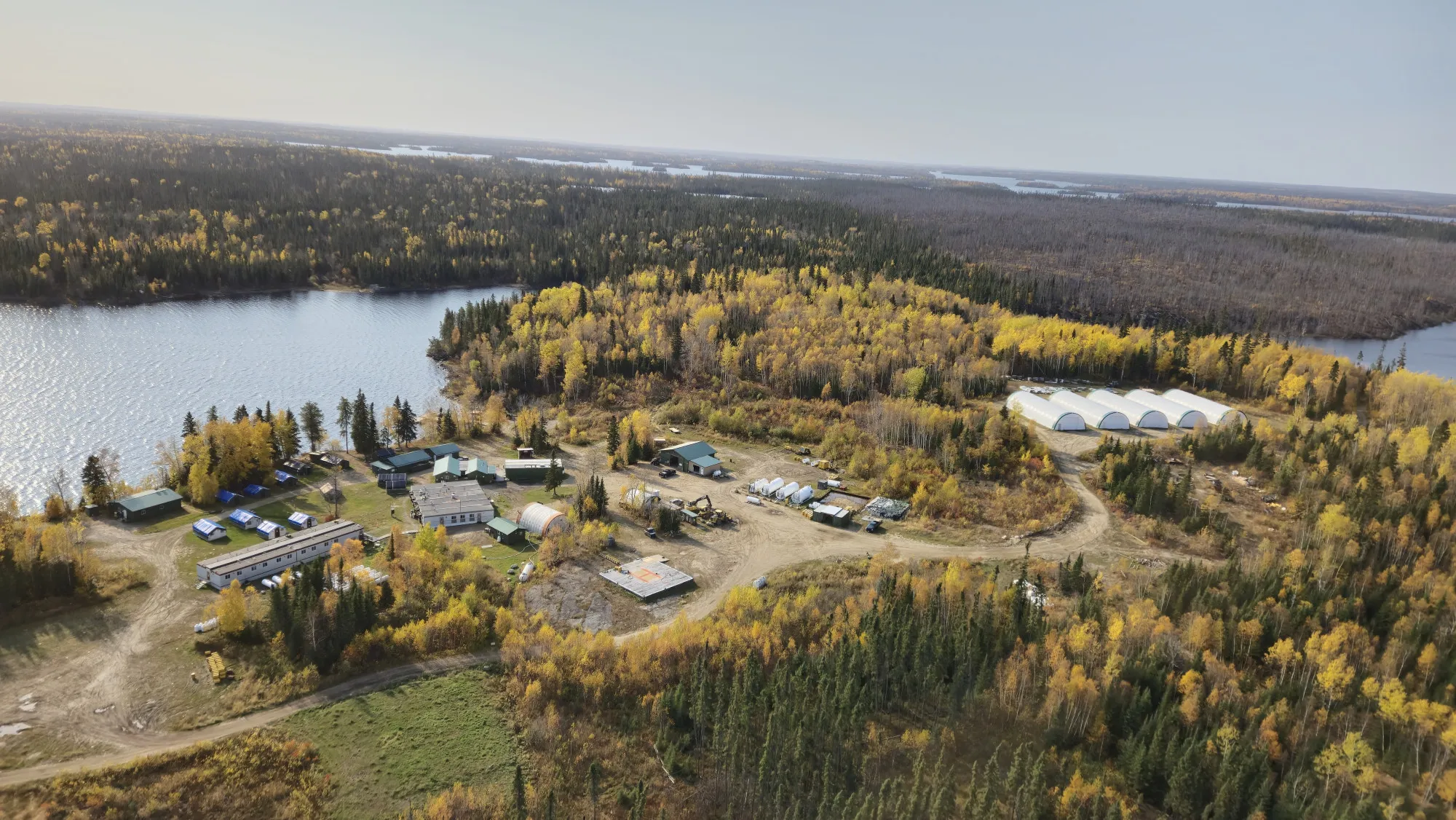
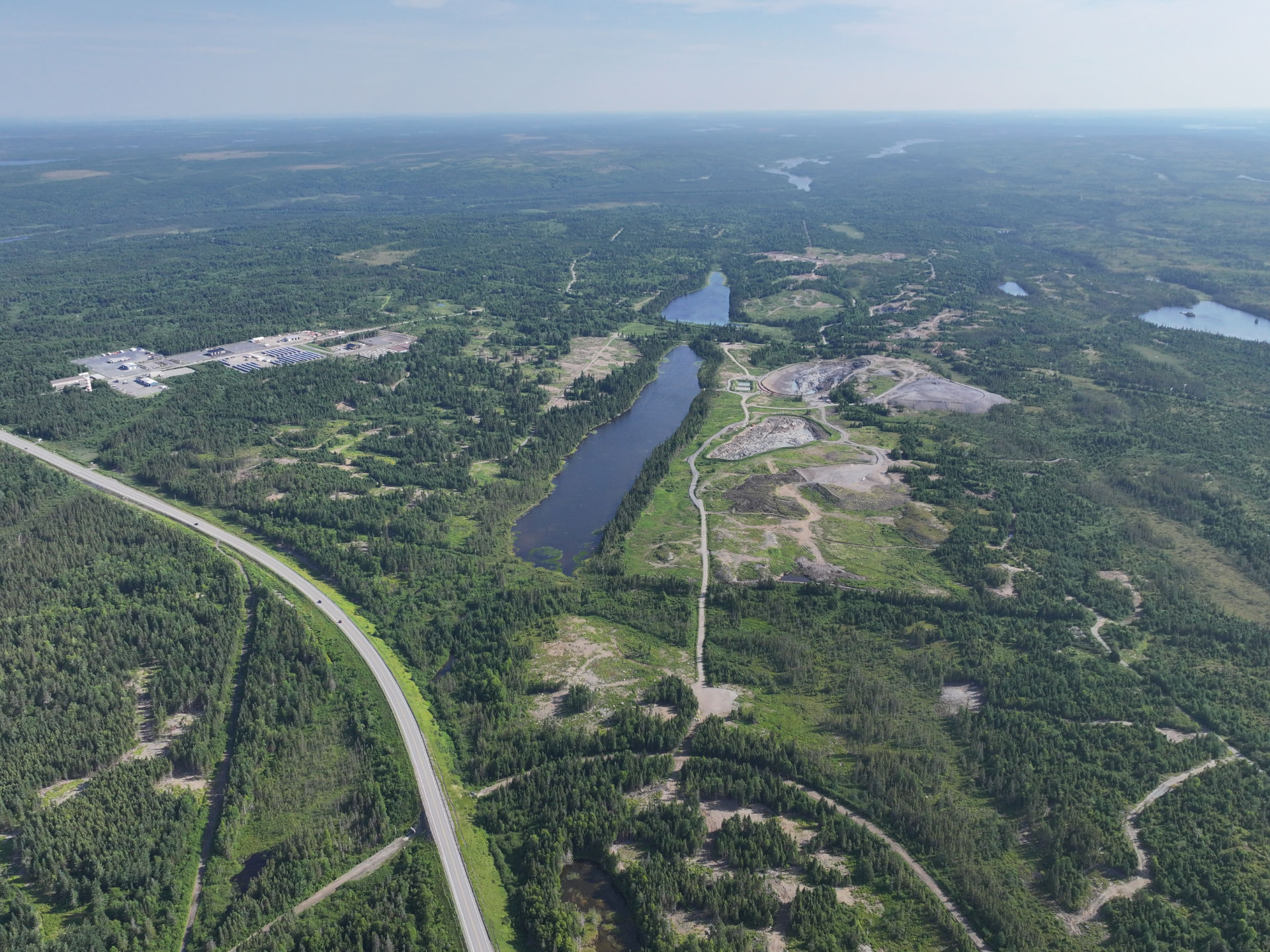
First Mining Gold develops Springpole (5M oz) and Duparquet (3.5M oz) in Canada, trading at $30/oz vs peers' $150-200/oz. Q1-Q2 2026 EA approval unlocks partnership value.
- First Mining Gold is developing two major Canadian gold projects: Springpole in Ontario (5M oz) and Duparquet in Quebec (3.5M oz M&I), trading at $30/oz versus peer average of $150-200/oz
- Springpole's environmental assessment approval expected late Q1/early Q2 2026 represents the company's biggest catalyst, unlocking perception that permitting a lake-based deposit is achievable
- Updated Springpole PFS shows $2.1B after-tax NPV at $3,100 gold; every $100 gold price increase adds $250M NPV, with spot case ($4,200) showing $3.8B NPV
- Company seeks industry partner for Springpole (targeting Gold Road-style 50% JV model), while maintaining full development control of Duparquet toward potential 2030-31 construction decision
- Recent portfolio monetization includes Cameron project partnership (retaining 48%) and 30% carried interest in high-grade Pickle Crow project with Firefly Metals
First Mining Gold finds itself at an inflection point as institutional investors increasingly recognize the scarcity value of large, advanced-stage gold projects in Canada. CEO Dan Wilton notes the company has moved "from this period of rampant active disbelief in what we're doing" to attracting dedicated gold funds as catalysts approach. The company's market capitalization recently crossed $250 million USD, putting it on institutional screening radars. With gold prices sustaining above $4,200 per ounce and the company trading at approximately $30 per ounce of resources compared to Canadian peers at $150-200 per ounce, First Mining presents a compelling valuation disconnect that management believes will narrow substantially following key 2026 milestones.
The Springpole Project: Economics and Environmental Assessment Timeline
First Mining's flagship Springpole project in Ontario represents one of the largest undeveloped gold deposits in Canada, containing approximately 5 million ounces. The recently updated prefeasibility study demonstrates robust economics with $1.1 billion upfront capital, a 41% internal rate of return, and $2.1 billion after-tax net present value at a conservative $3,100 gold price assumption. All-in sustaining costs are projected at $1,000 per ounce.
The gold price sensitivity is particularly striking. Wilton explains that "every hundred bucks the gold price goes up, that's $250 million of after tax NPV." At current spot prices of $4,200, the NPV increases to $3.8 billion - nearly doubling from the base case scenario. This leverage to gold prices occurs almost entirely on the upside, as "all the costs are identical."
The most significant near-term catalyst is the environmental assessment approval, which Wilton targets for "late Q1, early Q2" 2026 on the federal level, with provincial approval following "a couple of months after that." This represents the culmination of work that began in 2018, including the submission of a 15,000-page final environmental assessment in November of the previous year. The company has now largely completed the public comment and response period.
Addressing the Lake Perception Challenge
A persistent concern among investors has been Springpole's unique geological setting - the deposit sits "in the bay of a lake," creating perception issues around whether regulators would permit draining the lake. Wilton emphasizes there is "lots of precedent" for similar approvals and that the company has been "socializing this with levels of government and with the indigenous communities around the project since 2022."
The environmental assessment approval represents "the main government approvals for the concept of the development project," fundamentally addressing what has been the primary overhang on valuation. Restoration plans at the end of the project's life are "all part and financed in what you're doing," providing additional regulatory comfort.
External factors are also improving the permitting environment. Ontario has brought a large delegation to recent conferences, "talking about speeding up permitting in Ontario and talking about the importance of mineral development." Wilton notes that tariff concerns and broader economic factors have created "quite a shift in public perception and I'd say a shift in like public willingness to see the rapid advancement of development projects."
Development Strategy: The Gold Road Partnership Model
Unlike many junior developers, First Mining is transparent about its capabilities and limitations. When asked about the company's builder credentials, Wilton acknowledges: "We don't have the team right now that has built a lot of things." Instead, the strategy involves seeking an industry partner post-environmental approval.
The company explicitly models its aspirations on Australia's Gold Road Resources, which Wilton describes as "a pretty attractive, very similar project in Australia, 5 million ounce project, 300,000 ounce a year production." Gold Road brought in a partner to build the mine while retaining 50% ownership. "The partner then came to buy them three years later for $2.5 billion," providing a clear precedent for value creation through partnership rather than solo development.
Following environmental approval, Wilton anticipates "a couple of times that you might want to talk to the industry about maybe a willingness to partner with us." The timeline envisions feasibility study completion in late 2026, project financing discussions in 2027, and a construction decision in late 2027 or early 2028, followed by a 24-month build with some seasonal considerations for dike construction and dewatering.
Interview with Dan Wilton, CEO of First Mining Gold
Duparquet: High-Grade Development on an Independent Path
First Mining's second major asset, the Duparquet project in Quebec, offers different characteristics and a distinct development approach. The project contains 3.5 million ounces of measured and indicated resources plus 2.5 million ounces of inferred resources, making it "one of the highest grade open pits in Canada" with an average grade of approximately 1.35 grams per tonne.
The 2023 preliminary economic assessment outlined production of 230,000 ounces annually from a combination of open pit and underground mining, requiring upfront capital "a little bit more than $500 [million] US." Wilton characterizes this as "one of the most capital efficient projects I think that you could design that we've seen in the industry." The project benefits from exceptional infrastructure, sitting "in the middle of the Abitibi gold belt 50 kilometers down a paved highway to a smelter."
Unlike Springpole, First Mining intends to advance Duparquet independently through construction decision. The company drilled approximately 18,000 meters in the current year, "finding gold in every drill hole and expanding resources," with management seeing "a really clear line of sight on how that becomes something more like 10 million ounces."
Critical progress includes signing an agreement with the local community "to basically develop the town and develop the mine together" - described as "super important in Quebec" and initiating long-term environmental baseline data collection. By the end of 2026, Wilton expects sufficient information to update the prefeasibility study from its 2014 vintage, with feasibility study completion in 2027 and submission into Quebec's environmental assessment process. A construction decision could arrive in "2030, 2031."
Portfolio Monetization and Pickle Crow Optionality
First Mining has systematically monetized non-core assets to fund advancement of its primary projects while retaining strategic upside. The Pickle Crow project, now with Firefly Metals, remains 30% owned by First Mining, with 20% of that interest carried to a construction decision. Wilton describes it as containing "3 million ounces of one of the highest grade undeveloped gold projects in Canada," located in an area where historical mining produced "more than a million ounces at an average grade of 16 grams."
Regional developments enhance Pickle Crow's potential, particularly Orla Mining's acquisition of the Musselwhite mine from Newmont, located 150 kilometers north with available mill capacity. Firefly has discussed potentially spinning out Pickle Crow as a separate entity.
More recently, First Mining announced a partnership on the Cameron project with the Fiore Group. The partnership will raise $15 million, with First Mining receiving $5 million in cash and retaining 48% ownership plus board seats.
Industry Context: Scarcity Value of Shovel-Ready Canadian Projects
Wilton frames First Mining's value proposition within the broader context of project scarcity in Canada's gold sector.
"There's maybe three projects in Canada of size that you can get a shovel in the ground before 2030 and Springpole is one of those."
The fundamental tension in the Canadian gold industry is clear: major producers "all want to own a big mine in Canada, but none of them want to permit a big mine in Canada." This creates opportunity for companies like First Mining that have invested years in the permitting process. Springpole's eight-year environmental assessment journey (2018-2026) reflects both the challenges and the value creation inherent in navigating Canada's regulatory framework, particularly when working with Indigenous communities where "you can't legislate a time frame to build a relationship."
Valuation Perspective and 2026 Catalysts
The company's current valuation presents what management views as significant upside potential. Trading at approximately $30 per ounce in the ground versus Canadian peer averages of $150-200 per ounce, Wilton addresses investor concerns about missing the opportunity:
"People look at our stock price chart and they say, 'Well, clearly we've missed it, right? It's up 4x this year.' The reality is it's up from $7 an ounce to $28 an ounce, right? Like you haven't missed it."
The environmental assessment approval represents "the biggest catalyst that we will see in this company probably from the time that it was formed," primarily because it fundamentally alters perception about the project's executability. Combined with progress toward Indigenous community agreements, Wilton believes this "puts this project in a very very rare position in terms of its executability going forward. And that has value that has a lot more value than $30 an ounce in the ground."
The pathway from current valuations toward peer levels appears contingent on demonstrating that Springpole can achieve full permitting - a catalyst that should materialize within the first half of 2026, potentially driving significant revaluation as institutional investors reassess the project's risk profile and development probability.
The Investment Thesis for First Mining Gold
- Valuation Discount to Peers: Trading at ~$30/oz versus Canadian advanced-stage peer average of $150-200/oz, offering 5-7x rerating potential as permitting de-risks
- Exceptional Gold Price Leverage: Every $100 increase in gold price adds $250M to Springpole's after-tax NPV; at current $4,200 spot, NPV reaches $3.8B versus $2.1B base case
- Near-Term Binary Catalyst: Q1-Q2 2026 environmental assessment approval represents transformative milestone that addresses primary perception concern about lake-based deposit permitting
- Industry Partnership Optionality: Gold Road model (50% JV leading to $2.5B buyout) provides clear precedent for value crystallization through major miner partnership post-EA approval
- Scarcity Premium: One of only ~3 shovel-ready large-scale Canadian gold projects before 2030 in market where majors seek built assets without permitting burden
- Duparquet Upside: High-grade, capital-efficient Quebec project offers independent development path with 10M oz resource expansion potential, currently receiving minimal valuation attribution
- Portfolio Monetization: Systematic asset rationalization (Cameron 48% retained, Pickle Crow 30% carried interest) funds core development while preserving significant optionality
- Institutional Recognition Inflection: Recent $250M market cap threshold crossing and gold fund accumulation signals transition from retail-dominated to institutional ownership structure
Macro Thematic Analysis
The convergence of sustained elevated gold prices and acute scarcity of advanced, permitted large-scale projects in stable jurisdictions creates compelling conditions for developers like First Mining Gold. With gold sustaining above $4,200 per ounce, the economics of capital-intensive projects improve dramatically - Springpole's NPV nearly doubles from $2.1 billion to $3.8 billion between base and spot case assumptions. Simultaneously, major producers face a critical dilemma: they require large Canadian assets to maintain production pipelines but lack appetite for multi-year permitting processes.
This dynamic explains transactions like Fresnillo's $780 million Probe Gold acquisition and positions successfully permitted projects as premium assets. Ontario and Quebec's accelerated permitting rhetoric, driven by tariff concerns and economic nationalism, further enhances the regulatory backdrop. This scarcity, combined with First Mining's advanced permitting status and partnership optionality, positions the company to capture significant value as the gap between developer and operator narrows through strategic transactions.
TL;DR
First Mining Gold offers asymmetric upside through two large Canadian gold projects trading at $30/oz versus $150-200/oz peer multiples, with Springpole's Q1-Q2 2026 environmental approval representing a transformative catalyst that unlocks industry partnership opportunities. Exceptional gold price leverage ($250M NPV per $100 gold move) and project scarcity positioning in a market where majors seek permitted assets without development risk create multiple pathways to substantial revaluation toward Gold Road-style partnership outcomes.
FAQs (AI Generated)
Springpole's $1.1B capital requirement and 5M oz scale suit partnership with established operators, mirroring Gold Road's successful model. Duparquet's $500M+ capital efficiency and 3.5M oz resource align with First Mining's current capabilities and cash generation timeline.
The EA approval eliminates the primary perception concern about permitting a lake-based deposit, addressing investor skepticism that has kept valuation at $30/oz versus $150-200/oz peer levels. It proves regulatory feasibility and unlocks partnership discussions.
Development-stage assets capture full NPV expansion from price increases without operating cost inflation. Springpole gains $250M after-tax NPV per $100 gold move, with minimal downside cost exposure, offering pure price leverage.
The 15,000-page assessment submitted November 2024 has completed public comment periods. Eight years of stakeholder socialization, Ontario's permitting acceleration mandate, and clear precedents for similar approvals support the timeline.
The 30% ownership includes 20% carried interest to construction, eliminating capital burden while preserving exposure to 3M oz at 16g/t average grade. Proximity to Musselwhite's mill capacity and potential Firefly spinout create multiple value paths.
Analyst's Notes





Subscribe to Our Channel






Stay Informed






















