




Fitzroy Minerals: Operational Mitigation Protects Buen Retiro's July Data Cut-Off & October Permit Timeline



Fitzroy Minerals reroutes assays to SGS Santiago to protect Buen Retiro's July data cut-off and October 2026 permit timeline.
- Fitzroy Minerals has drilled 10,048 metres at Buen Retiro in 2026 as part of an expanded drill programme.
- Assay turnaround time at ALS Global has increased to 60 to 70 days due to laboratory congestion.
- Peruvian customs holds on cross-border pulp shipments have added a second, independent delay to sample delivery.
- Fitzroy is rerouting Pit Area samples to SGS Laboratories in Santiago and applying over-limit copper analysis to cut turnaround time.
- The company expects to resume mid-monthly assay reporting from July ahead of an October 2026 Environmental Permit Application (EPA).
Drilling Programme Scope at Buen Retiro
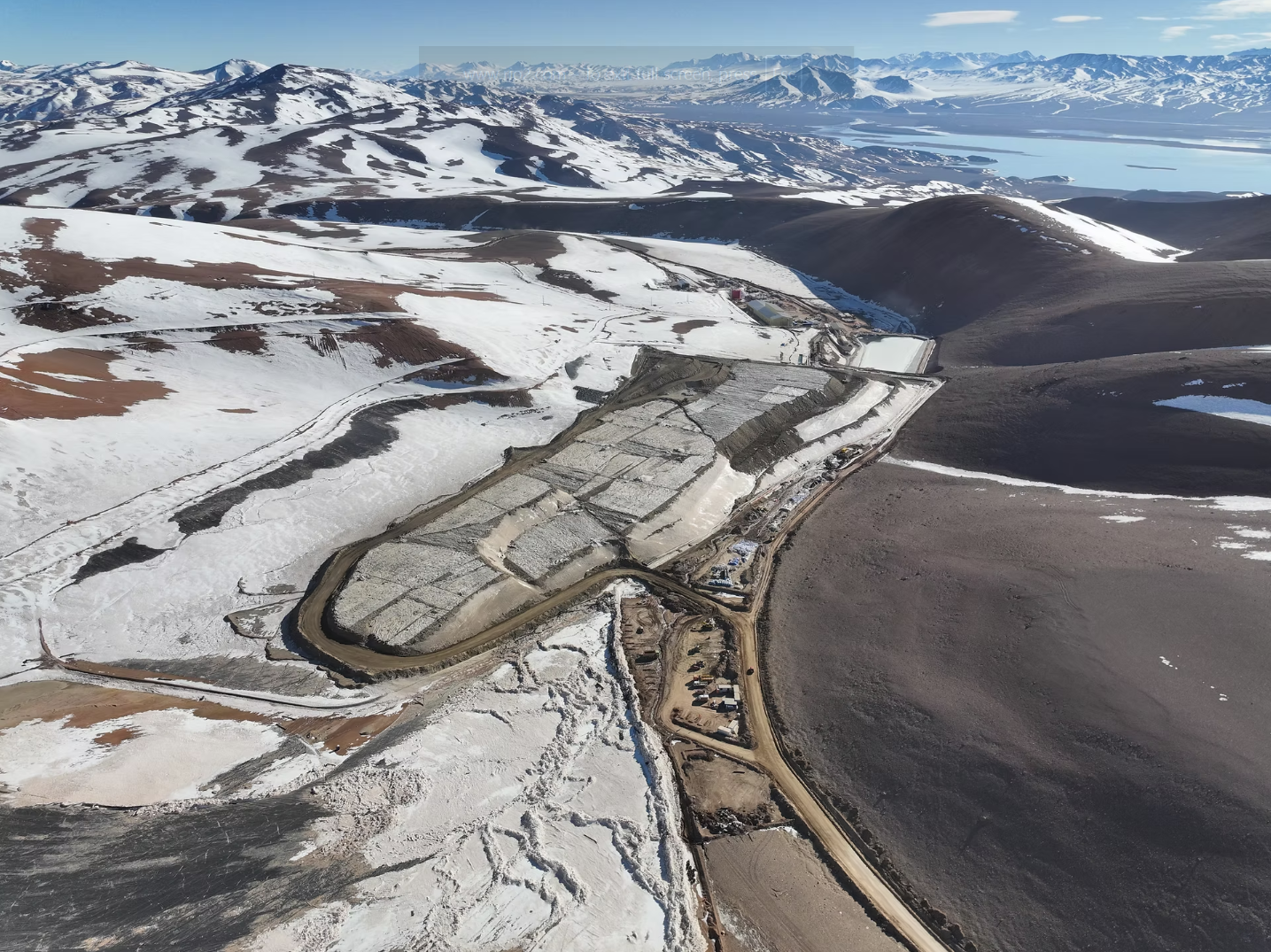
Sample volume moving through the assay pipeline at Buen Retiro, the flagship project of Fitzroy Minerals (TSX-V: FTZ | OTCQX: FTZFF | FSE: C3Y), has expanded twice within a single drilling season. The company has drilled 10,048 metres at the project so far in 2026, advancing well past the original 7,000-metre programme. That programme was widened to 10,000 metres after drilling continued to intersect shallow mineralised material, a result that justified additional metres rather than a change in target. Three diamond drill rigs are currently active on site.
A separate 5,000-metre programme is underway in the historical Pit Area, targeting copper oxide and mixed material, distinct from the resource-expansion drilling described above. This programme runs concurrently with the existing campaign rather than replacing it, meaning the total active rig count will move toward four once the Reverse Circulation rig arrives. Each rig generates samples that must undergo preparation and assay before the results can be incorporated into the resource model, and the Pit Area programme, in particular, has generated the copper-oxide material that is being redirected to an alternative laboratory.
The expansion reflects confidence in the deposit's continuity at shallow depth, but it carries a direct consequence for data flow. More metres drilled mean more samples requiring assay within the same window, and that volume has outpaced the laboratory network's capacity to process them. The bottleneck this creates is the subject of the following section.
Assay Lab Congestion & Border Delays
Two independent bottlenecks, not one, are slowing sample turnaround at Buen Retiro. The ALS Global laboratory handling Fitzroy's assays is experiencing severe congestion, and turnaround times for samples submitted there have increased to 60 to 70 days. A delay of that length would disrupt any drilling program generating samples at the rate described in the preceding section, and it is compounded by a second, structurally unrelated constraint further along the logistics chain.
Sample preparation for Buen Retiro is conducted in Copiapó, Chile, but the resulting pulps must then be transported across the border to Lima, Peru, where the ALS Global assaying takes place. Peruvian customs have delayed some of these pulp shipments at the border, introducing irregular, unpredictable delays rather than the fixed turnaround window quoted by the laboratory. A sample held at the border for an indeterminate period arrives at the laboratory later than scheduled and still faces the existing 60- to 70-day queue.
Mitigation Through SGS Santiago & Over-Limit Analysis
Fitzroy has split its mitigation response between where samples are sent and how they are processed upon arrival. Drilling samples from the Pit Area are being rerouted away from the congested Lima laboratory to SGS Laboratories in Santiago, Chile, which has offered substantially shorter turnaround times than ALS Global is currently providing.
The second workaround changes the assay procedure rather than the destination. Visibly high-grade samples, averaging 0.9% copper or higher, are being sent directly for over-limit copper analysis rather than passing through standard assay procedures first. Skipping the standard procedure for this subset of samples saves upwards of two weeks per batch, because high-grade material no longer needs to be screened through a process designed for lower-grade material before receiving the appropriate analysis.
Applied together, laboratory rerouting and procedural shortcutting are the basis for Fitzroy's expectation that it will publish a batch of drilling assays in late June and return to a mid-monthly reporting cadence from July onward. The Santiago route addresses the geographic bottleneck, and the over-limit shortcut addresses the procedural one; the company's stated timeline depends on both working simultaneously rather than either alone. Whether that cadence holds through the remainder of the programme depends on how much of the existing backlog can be cleared through Santiago rather than the still-congested Lima route.
In-Field Visual Grade Estimation & Qualified Person Oversight
While assay results are delayed, Fitzroy's geologists are characterising mineralisation in the field rather than waiting on the laboratory. Visual estimates are used to plan drill hole density and assess intercepts in real time, including a Core Quick Log visual estimate of 113 metres, averaging nearly 1.0% copper in a single drill hole. These estimates allow the technical team to keep directing the drilling programme without pausing for the assay turnaround described earlier in this article.
The estimates carry a known and tracked bias rather than an unquantified one. A historical comparison of visual estimates with actual laboratory results shows that the technical team tends to underestimate higher-grade copper intercepts by approximately 20-30%. The direction of that bias changes how the figures should be read: a visual estimate near 1.0% copper, such as the Core Quick Log result above, may understate rather than overstate the eventual assayed grade.
Dr. Scott Jobin-Bevans verifies the drill core logs against field geology and checks selected laboratory assay results against the reported drill core intervals, providing an independent check on both the estimation process and the assays upon their arrival. This oversight structure allows the visual estimates to serve as a working dataset for ongoing drill planning rather than a placeholder awaiting replacement. The figures themselves remain provisional regardless of the oversight applied to them, and the implications of that for the July data cut-off are addressed in the next section.
Data Cut-Off & Confirmation Dependencies
The end-of-July data cut-off for resource drilling at Buen Retiro is a deadline for compiling data, not a confirmation that the data is final. All length and grade figures derived from visual estimates, including the Core Quick Log result described above, remain subject to confirmation by final laboratory assays. Given the tracked underestimation bias in those visual figures, the eventual assay-confirmed numbers could move higher rather than lower once results are returned, which runs counter to treating the cut-off date as a ceiling on the resource.
Channel sampling introduces an additional layer of uncertainty rather than resolving this one. The technique was used alongside visual estimates to guide the immediate expansion of drilling in the Pit Area, but channel sampling is inherently selective. Selective sampling may not represent the average grade or continuity of the deposit's mineralisation, so results drawn from it cannot be extrapolated across the wider Pit Area zone without the same laboratory confirmation that the visual estimates require.
Both dependencies sit underneath the July cut-off. Unconfirmed visual estimates and selective channel sampling results both need to be replaced or validated by laboratory assay before the compiled dataset can support the next stage of project development. The cut-off date sets when the compilation happens, but the reliability of what is compiled still depends on how much of the assay backlog described earlier in this article has cleared by then.
Permit Application & PFS Timeline
The July cut-off is built to feed directly into Fitzroy's permitting and study timeline rather than to stand alone as a resource update. The cut-off provides time for assaying, modelling, and integration with initial mini-column metallurgical results expected in July, and all three streams feed into a single Project Development Plan. That plan is scheduled to serve as the basis for the Environmental Permit Application (EPA) due in October 2026, so it needs to be substantially complete well ahead of the submission date.
The sequence leaves limited room for delay at any stage. Laboratory rerouting through Santiago, over-limit analysis for high-grade samples, and Qualified Person verification of the visual estimates are each oriented toward keeping the Project Development Plan on schedule for an October submission rather than toward the drilling programme in isolation. If the data underlying that plan remains unconfirmed past the cut-off, the October date comes under pressure regardless of how well the mitigation measures have performed up to that point.
The Pre-Feasibility Study (PFS) is targeted for completion in the first quarter of 2027, a milestone that sits downstream of both the Project Development Plan and the permit application. Each of the preceding mitigation steps exists to protect the immediate permitting sequence, though the PFS has a longer data runway, as it is scheduled to incorporate additional column test results generated in the fourth quarter of 2026.
Investment Thesis for Fitzroy Minerals
- Fitzroy Minerals has drilled 10,048 metres at Buen Retiro in 2026, with the drill programme expanded twice in response to continued shallow mineralisation.
- Severe congestion at the ALS Global laboratory, combined with Peruvian customs holds on cross-border pulp shipments, has pushed assay turnaround out to 60 to 70 days and made sample delivery irregular.
- Rerouting Pit Area samples to SGS Laboratories in Santiago and applying over-limit copper analysis to high-grade material are expected to support a return to mid-monthly assay reporting from July.
- Visual grade estimates used to characterise mineralisation in the field carry a tracked underestimation bias of approximately 20% to 30% on higher-grade copper intercepts, meaning eventual assay results could move grades higher rather than lower.
- The end-of-July data cut-off depends on laboratory confirmation of both visual estimates and channel sampling results that remain unverified as of the cut-off date.
- The Project Development Plan, based on the July data, is scheduled to serve as the basis for an October 2026 Environmental Permit Application, ahead of a Pre-Feasibility Study targeted for the first quarter of 2027.
Fitzroy's operational response addresses both the geographic and procedural sources of assay delay at Buen Retiro, and the company's own forecast of a late-June assay batch and mid-monthly reporting cadence from July provides a near-term test of whether the mitigation is working. The October 2026 EPA and the first-quarter 2027 PFS both depend on provisional data, so the main risk to the stated timeline lies in how much of the assay backlog is cleared before the July cut-off rather than in the mitigation measures themselves.
TL;DR
Fitzroy Minerals' 2026 drilling programme at Buen Retiro has expanded twice in response to continued shallow mineralisation, lifting metres drilled to 10,048, while assay turnaround through ALS Global has extended to 60 to 70 days, and Peruvian customs holds have added further delay to cross-border pulp shipments. The company is rerouting Pit Area samples to SGS Laboratories in Santiago and applying over-limit copper analysis for high-grade material, measures expected to support a late-June assay batch and a return to mid-monthly reporting from July. Visual grade estimates used to bridge the gap carry a tracked underestimation bias of 20% to 30% on higher-grade intercepts, and both those estimates and selective channel sampling results remain unconfirmed ahead of the end-of-July data cut-off. That cut-off feeds a Project Development Plan intended to support an October 2026 EPA and a PFS targeted for the first quarter of 2027, making the assay backlog the determining variable for whether the stated timeline holds.
FAQs (AI-Generated)
Analyst's Notes





Subscribe to Our Channel











Stay Informed


