




New Platinum Supply Now Turns on Capital Raised Before the Study


Platinum and palladium run 500,000 to 700,000 ounces short, but the projects that could close the gap must fund their economic studies first.
- Around 90% of the world's platinum-group element (PGE) reserves are located in South Africa, and several major platinum operations have closed or been suspended since 2016.
- Platinum and palladium have been in short supply for several years, above-ground stocks have been cut by 42%, and coverage now stands at less than five months.
- Five PGE development projects outside the incumbent producing base range in stage from a resource estimate to a definitive feasibility study.
- A preliminary economic assessment (PEA) at Pedra Branca is targeted for the fourth quarter of 2026, ahead of licensing and an environmental impact assessment (EIA) in the first quarter of 2027.
- ValOre Metals held cash of under $0.8 million on August 1, 2026, against a study program extending into the first quarter of 2027.
A mineral resource is a geological statement. It becomes an investment case only once an economic study attaches a capital cost, an operating cost, and a production profile to it, and that study has to be paid for before it produces a single number.
For the platinum-group element (PGE) deposits the market is now counting on for new metal, the ordering creates a specific difficulty. Consecutive deficits have cut above-ground stocks by 42%, coverage now stands at less than five months, and several of the deposits that could cover that shortfall are held by companies that have not yet published economic studies.
The decisive question is therefore not whether the geology is there, but whether a company holding a defined resource and no published economics can raise the money that produces those economics, from a market pricing it on their absence.
Where New Platinum & Palladium Supply Would Originate
The reserve base capable of answering the deficit is concentrated in a single country, and the producing base drawing on it has been shrinking rather than expanding.
Around 90% of the world's PGE reserves are located in South Africa. Since 2016, several major platinum operations have closed or been suspended, so the tonnage feeding the market has contracted while concentration has held. Platinum and palladium have been short by 500,000 to 700,000 ounces over a multi-year period.
Demand has held its ground through the contraction. Automotive applications account for around 40% of total platinum demand and around 80% of all palladium and rhodium demand, and each hybrid vehicle uses 10% to 20% more PGEs than an internal combustion engine vehicle. Hybrids accounted for 20% of global new vehicle sales in 2025, compared with 55% for internal combustion engines and 25% for electric vehicles. Physical platinum bar and coin demand in China grew from nearly zero in 2019 to over 400,000 ounces in 2025, a source of consumption that was negligible at the start of the period.
The Study Sequence Between a Resource & a Development Case
Stage, not deposit size, distinguishes the projects that could bring new metal into production, and stage is a function of money spent on engineering.
Only two major greenfield PGE mines have near-term production. Separately, a small group of development projects spans the full range of study maturity. Stillwater West in Montana holds 2.0 million ounces of palladium and 1.3 million ounces of platinum across 254 million tonnes of inferred resource, grading 0.25 grams per tonne (g/t) palladium and 0.15 g/t platinum, at a 2023 resource estimate. Luanga in Pará State, Brazil, holds 10.4 million ounces of palladium equivalent in measured and indicated resource across 158 million tonnes plus 5.0 million ounces across 58 million tonnes of inferred resource, grading 2.01 to 2.04 g/t, and reached a preliminary economic assessment (PEA) in 2025. Waterberg in South Africa holds 23.4 million ounces of combined palladium, platinum, gold and rhodium across 246 million tonnes of proven and probable reserves grading 2.96 g/t, with a definitive feasibility study completed in 2024, and Marathon in Ontario holds 2.6 million ounces of palladium and 0.8 million ounces of platinum across 128 million tonnes of proven and probable reserves, with a feasibility study completed in 2025.
Reserve categories mark the point at which a deposit has been tested against a mine plan and an economic case, and reaching them is an exercise in engineering and capital. Firms are appointed, test work is commissioned, and the sequence advances at whatever pace the budget allows. The resource figures behind each of these projects are based on project-specific methodologies and assumptions and may not be directly comparable, which limits what a reader can conclude from the tonnages alone and leaves stage as the more informative marker.
Funding the Interval Before an Economic Study Exists
The developer least able to raise capital cheaply is the one furthest from the study that would justify a higher price for it.
A company with a defined resource and no published economics has to fund that study from equity issued without one. The absence of a capital cost, an operating cost, or a production profile is precisely what a larger investor waits for before assigning a value, so the shares that pay for the study are sold at a discount for the missing study. That is a different constraint from technical difficulty. It applies to a project with excellent metallurgy and to one with poor metallurgy in the same way, because it operates on the balance sheet, not on the orebody.
A published study calendar is not the same as a funded one, and the two are subject to very different disclosure standards. No cost, budget, or runway figure attaches to the resource update, the economic study, or the licensing step at Pedra Branca in Ceará State, Brazil. What appears instead is strategy: access to international capital markets through exchange listings, and ownership interests held by strategic equity partners. The most recent funding event on record is a CDN$2,000,000 convertible debenture completed on May 28, 2026, subscribed in full by an officer and director, for exploration at Pedra Branca, evaluation of acquisitions in Brazil, and general working capital. What the disclosure does not include is a figure for the study's cost, which means the schedule is testable but the budget behind it is not.
Pedra Branca on the Study Calendar
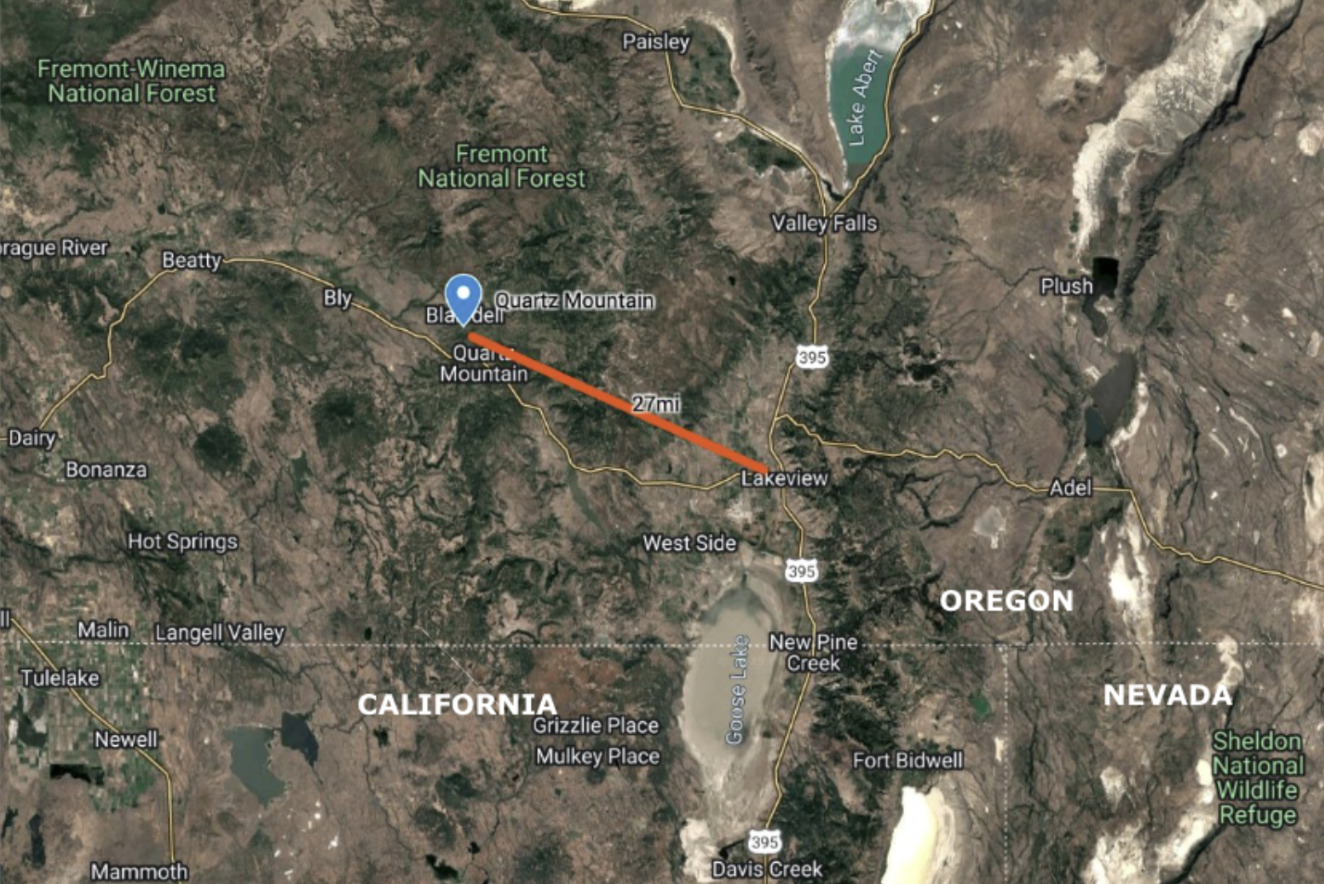
At Pedra Branca, the study calendar and the treasury that has to pay for it are both on record. ValOre Metals (TSXV: VO | OTCQB: KVLQF | FSE: KEQ0) holds the project on a 100% basis, a 51,096-hectare property in Ceará State. The inferred resource is 2,198 thousand ounces of two platinum-group elements plus gold in 63.6 million tonnes grading 1.08 g/t, released in 2022 with an effective date of March 8, 2022, across seven near-surface zones supported by more than 40,000 metres (m) of drilling. More than 6,000 m was added to five new exploration zones during 2023, all of it after that effective date and none of it within the current estimate.
Between 2020 and 2024, the company drilled 23,534 m and invested US$10 million in exploration, during which period the inferred resource doubled from 1.1 million to 2.2 million ounces, building on more than 30,000 m of prior drilling by historic operators. An engineering company was appointed for the economic study in the fourth quarter of 2025, alongside metallurgical test work intended to demonstrate favorable economics. The work now scheduled runs from resource updates in the third quarter of 2026, through publication of the PEA in the fourth quarter of 2026, to licensing and an environmental impact assessment (EIA) in the first quarter of 2027.
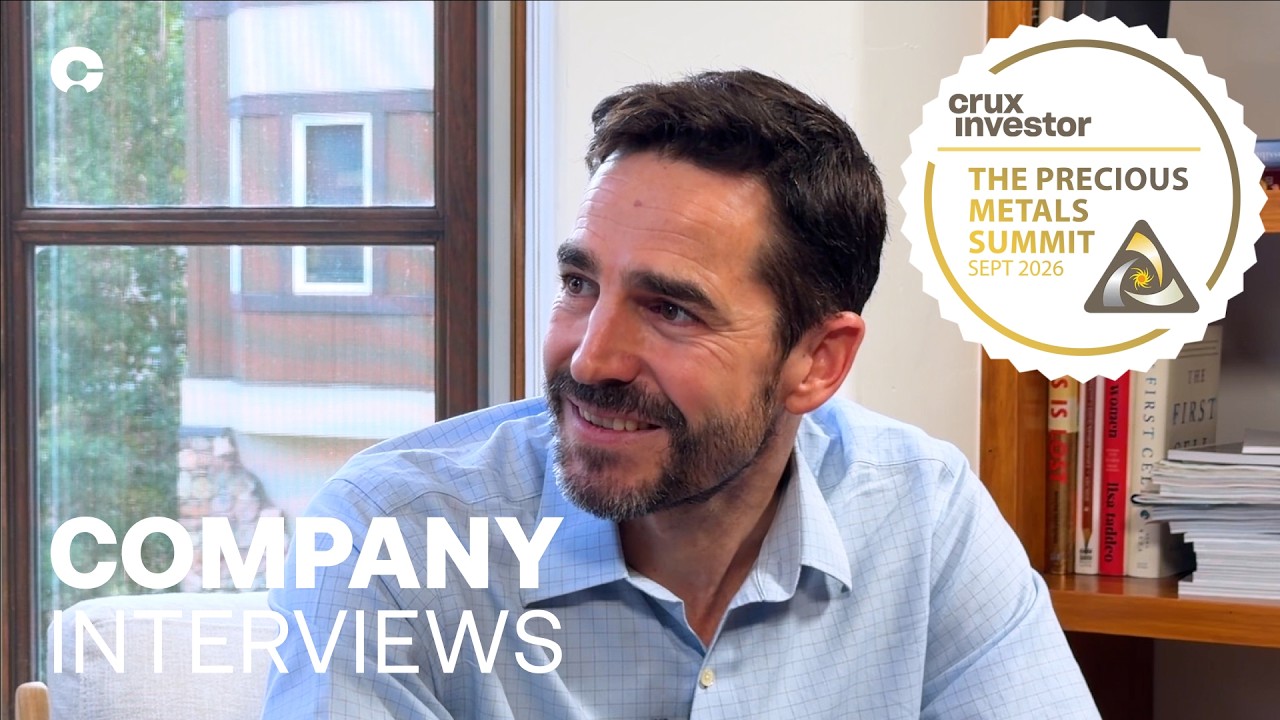
Vice President of Exploration of ValOre Metals Corp., Thiago Diniz, ties the current program to a single deliverable and a single deadline:
"We are currently busy working on a metallurgical program to deliver a preliminary economic assessment by the end of the year."
Against that program, the disclosed capital position on August 1, 2026, was a share price of $0.08, 255 million shares outstanding, a market capitalization of $20 million, and cash of under $0.8 million. Options over 20 million shares at $0.12 expire on October 12, 2030, and warrants over 29.2 million shares at $0.10 expire on October 8, 2027, giving 304.2 million shares on a fully diluted basis before any conversion of the May 2026 convertible debenture. Separately, ValOre becomes a shareholder of Future Fuels instead of holding the Saskatchewan uranium assets directly, and is not responsible for any obligations of Hatchet Uranium Corp., which pass to the amalgamated entity. A thin treasury ahead of a funding event is a stage most producers pass through rather than avoid. Serabi Gold passed through it and reached production, while the developers still approaching a first economic study have not.
Chief Executive Officer of Serabi Gold, Mike Hodgson, looks back at what the balance sheet used to hold before the company reached production:
"It's a different world. And I remember the days when we had one or $2 million in the bank and hopefully never see them again."
Cost of Capital by Jurisdiction
Location can affect the price a developer pays for capital, independently of the grade, tonnage, or study stage of what it is raising against.
Brazil's published profile as a destination for that capital has three parts. It ranks among the top 10 gold producers globally, producing around $3.8 billion annually and growing to more than $6 billion by 2030. Its regulatory frameworks support investment and streamline approvals. It graduates more mining engineers than the United States and Canada combined, and ValOre states that its projects are led by an all-Brazilian exploration, permitting, development, and operational team.
President and Chief Executive Officer of Cabral Gold, Alan Carter, separates the price of capital from the quality of the ground beneath it:
"So I think there's a whole bunch of factors that mean that there is no Brazil discount any longer. I think there are certainly other jurisdictions, notably in Africa, where it's much more difficult. If you say you've got a project in certain jurisdictions, then financing capital is going to be much more expensive to raise."
Two projects with identical resources and identical study stages can face different terms because of where they are, and for a developer funding an economic study from equity, that difference lands directly on how much of the company the study costs.
Industry Outlook
The deficit arithmetic assumes new metal eventually arrives. The deposits that would carry it have been found, drilled, and in two cases taken through to reserves, and the remaining technical questions are the kind that engineering firms answer for a fee.
What the arithmetic does not resolve is who pays that fee, and on what terms. A developer at the resource stage funds its first economic study using a share price set before that study exists, and the pre-study interval is therefore the point at which the pace of new supply is actually determined. Jurisdiction moves the cost of that capital. Metal prices move the appetite for supplying it. Neither is disclosed on the same schedule as the studies themselves.
For the market short of platinum and palladium, the practical consequence is that the timing of new supply is set some distance upstream of the mines. It is set in the financing that pays for the studies that make the mines financeable, and those are the events with no published date.
FAQs (AI-Generated)
Analyst's Notes





Subscribe to Our Channel






Stay Informed


