




32% Energy Price Rise Forecast Tests Battery Metals Margins, With Efficiency Limiting Exposure


Lower fuel and power use per unit sold can limit the impact of rising energy prices on margins, while co-product sales can offset some production costs.
- Lower fuel, electricity, and chemical consumption per unit sold limits the effect of input-price increases on nickel, lithium, and graphite margins.
- Sulfur supply disruptions can raise acid-leaching costs by restricting reagent availability, while regional electricity and fuel prices determine each project’s energy costs.
- Engineering and supplier quotations help developers and explorers refine construction budgets and operating-cost estimates, clarifying funding requirements before committing capital.
- Recovering additional saleable minerals through shared infrastructure can increase project value when the additional revenue covers the associated capital, processing, and delivery costs.
- Recycling margins depend on repeatable metal recoveries and the cost of feedstock, energy, chemicals, and waste treatment at the planned operating scale.
Energy and Chemical Costs Shape Processing Margins
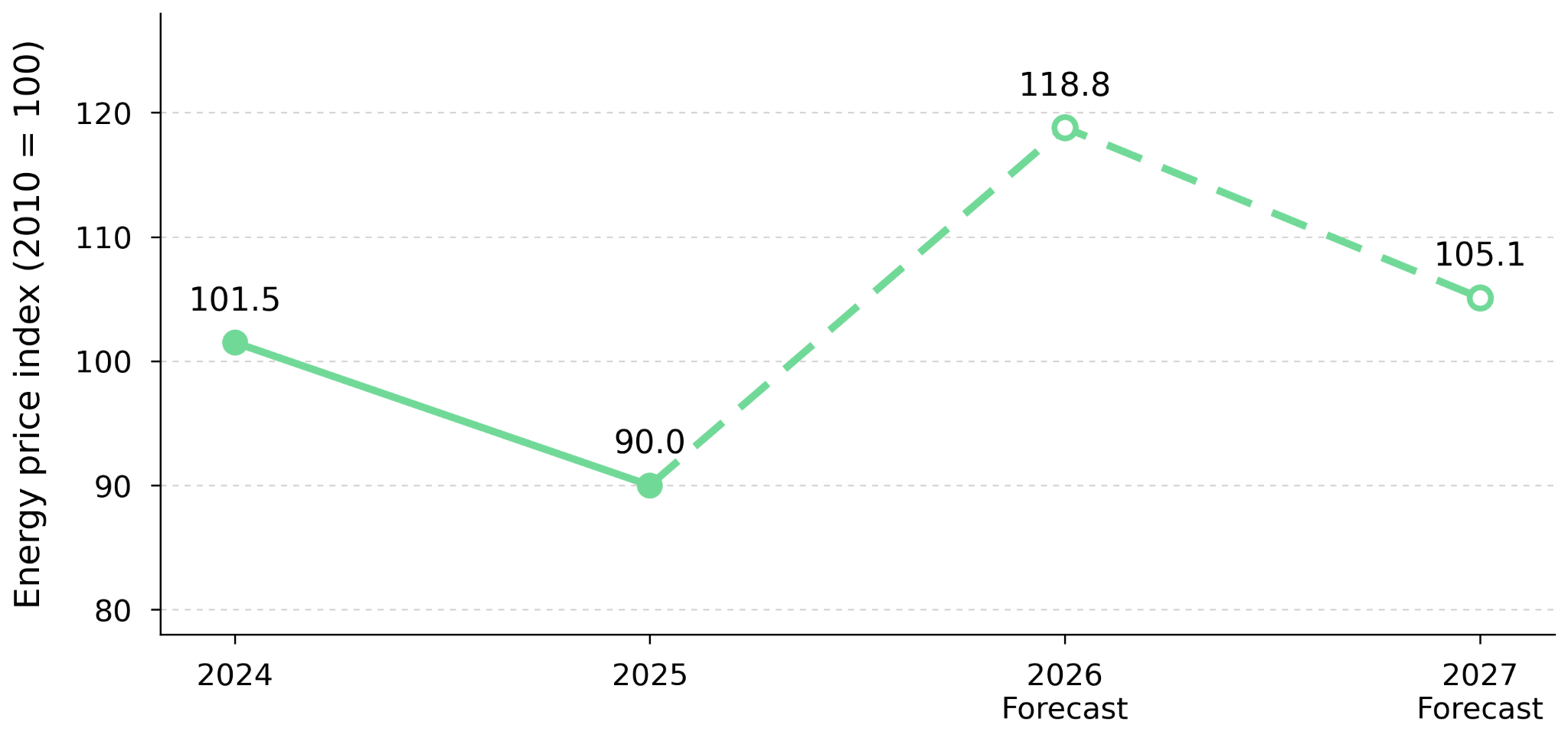
The World Bank’s October 28, 2026 Commodity Markets Outlook forecasts a 32% rise in energy prices in 2026, assuming no major intensification of conflicts affecting commodity supplies. For nickel, lithium, and graphite projects, lower fuel and power consumption per unit sold limits the effect of higher energy prices on projected margins. Engineering and supplier quotations help establish operating-cost estimates and construction funding needs before capital is committed.
The International Energy Agency (IEA) reported in its October 14, 2026 Oil Market Report that global diesel exports in September 2026 were 700,000 barrels per day below a year earlier. Exports from Russia and the Middle East fell by a combined 1.3 million barrels per day, partly offset by other suppliers. Diesel availability also depends on refinery output and export logistics, so recovering crude supply alone does not establish lower fuel costs for mines and freight operators.
The US Energy Information Administration (EIA), in its October 27, 2026 Gasoline and Diesel Fuel Update, reported tax-inclusive US on-highway diesel at US$6.352 per gallon on October 26, up approximately 2.8% from US$6.179 on October 12. Actual mine fuel bills depend on local purchasing terms and planned consumption, so this retail series indicates market conditions rather than delivered prices for the projects discussed.
Sulfur Disruptions Raise Acid Processing Costs
The IEA’s Global Critical Minerals Outlook 2026, published July 16, 2026, reports that the Middle East supplies approximately 25% of global sulfur, while around 50% of seaborne sulfur trade passes through the Strait of Hormuz. Sulfur is used to produce sulfuric acid for mineral processing, making acid costs sensitive to disrupted shipments. The report states that sulfur supply disruptions prompted China to curb sulfuric acid exports in May 2026, with higher acid prices increasing production costs for several critical minerals.
The IEA’s October 6, 2026 ASEAN Energy Security Review reports that Indonesia sources around 75% of its imported sulfur from the Middle East. Nickel plants using high-pressure acid leaching (HPAL) consequently face exposure to shipping disruptions and reagent-price increases, with the margin effect determined by purchasing terms and acid consumption per unit produced.
Processing Choices Shape Battery Metals Margins and Funding Needs
Project costs must be compared for the same product quality, processing stage, and included expenses before a lower estimate can establish a cost advantage. Lower electricity spending per unit of ore may not reduce costs per unit of saleable metal if less metal is recovered.
Co-Product Revenue Supports Nickel Margins as Input Costs Rise
Revenue from other recovered metals can offset part of a nickel project’s production costs. The contribution depends on how much of each product can be recovered and sold, and the additional expense required to produce it.
Canada Nickel has advanced Crawford’s plant engineering, grid connection design, and mining fleet procurement ahead of a construction decision targeted for the third quarter of 2027. Projected revenue from iron, chromium, and cobalt reduces estimated net nickel costs, broadening the revenue supporting Crawford’s development plan.
Mark Selby, Chief Executive Officer of Canada Nickel, explains how supply limits meet growing nickel demand:
“With Indonesia limiting supply going forward, and nickel demand growing at 5% plus a year, which is another almost 200,000 tons of nickel per year, we're in great shape.”
Lithium Processing Design Shapes Construction and Operating Costs
For lithium concentrate projects, processing design and existing infrastructure affect the capital needed to reach production and the operating cost of each unit sold.
Lithium Ionic is finalizing Bandeira’s engineering and progressing construction financing discussions with lenders and equity partners. Management says dense media separation (DMS) processing, existing roads, and secured power capacity help limit development and operating costs, supporting the projected margins used in those discussions.
Shared Infrastructure Can Add Revenue to Graphite Projects
Recovering another saleable product from shared processing streams can add revenue without duplicating mining costs, provided the additional income covers the recovery, delivery, and capital expenses.
Sovereign Metals’ October 30, 2026 quarterly report outlines a potential third revenue stream at Kasiya through rare earth recovery from its planned rutile and graphite operation. A preliminary scoping study puts the added capital at approximately US$29 million (±30%), with no additional mining required.
Sapan Ghai, Chief Commercial Officer of Sovereign Metals, explains the graphite market where Kasiya can compete with China:
“70% of our graphite is what's called refractory grade or industrial grade graphite that ends up lining the insides of your electric arc furnaces for smelting copper, steel, aluminum… Currently, it all comes from China and we can produce it at a lower cost than China today.”
Regional Energy Differences Make Cost Validation Central to Battery Metals Valuations
The World Bank’s October 2, 2026 Pink Sheet reports September natural gas prices averaging US$25.42 per million British thermal units (MMBtu) in Europe and US$2.95/MMBtu in the US. These regional benchmarks illustrate price differences, while local purchasing terms, delivery charges, and planned consumption determine a mine’s projected energy bill.
The World Bank’s October 28, 2026 Commodity Markets Outlook forecasts an 11.5% decline in its energy-price index in 2027, assuming no major intensification of conflicts affecting commodity supplies. The cash saved through lower input consumption depends on the price paid, so projected margins need to be tested under both higher and lower energy prices.
The Investment Thesis for Battery Metals
- Developers that quantify fuel, power, and chemical use and obtain supplier quotations can test projected margins and construction funding needs before committing capital.
- Explorers can use recovery tests, product specifications, and infrastructure requirements to estimate development costs and assess whether further spending is justified.
- Co-product recovery can increase project value when additional revenue covers the extra capital, processing, and delivery costs, with shared operating expenses counted once.
- Repeatable recoveries and measured input use at the planned scale help recyclers determine whether metal revenue can cover feedstock, processing, and waste-treatment costs.
- Producers and developers whose projected operating cash flow covers future capital spending under higher input costs can reduce additional financing needs once production begins.
Processing efficiency can strengthen long-term battery metals returns by preserving more cash for development and growth as input prices change. Shared infrastructure and additional product revenues can extend that advantage by generating more value from committed capital. The broader opportunity lies in projects that translate these operating advantages into cash generation across the commodity cycle, allowing development progress to build value while reducing future reliance on borrowing or share issuance.
TL;DR
Battery metals projects can preserve more cash by using less fuel, electricity, and chemicals per unit sold. Shared infrastructure can add revenue from other recovered minerals without duplicating mining costs, provided sales cover the additional capital, processing, and delivery expenses. Engineering and supplier quotations help define costs and funding needs before construction. Recycling margins depend on repeatable recoveries and measured operating expenses. The investment case rests on projected cash generation under both higher and lower input prices, with project comparisons using the same product quality, processing stage, and delivery basis.
FAQs (AI-Generated)
Analyst's Notes





Subscribe to Our Channel













Stay Informed


