Gold’s Rebound Favors Royalty Holders and Fuel-Hedged Miners as Costs Rise


.png)
Fed hike risk tests gold mining margins, making cash flow, debt and valuation key to identifying contrarian buying opportunities.
- Gold rose 1.3% to $4,156.58 per ounce on October 15, 2026, as the dollar and Treasury yields fell, reducing the appeal of interest-paying alternatives.
- September US inflation reached 3.7%, above the 3.6% forecast, in data released October 14, 2026, keeping further Fed hikes a risk to gold.
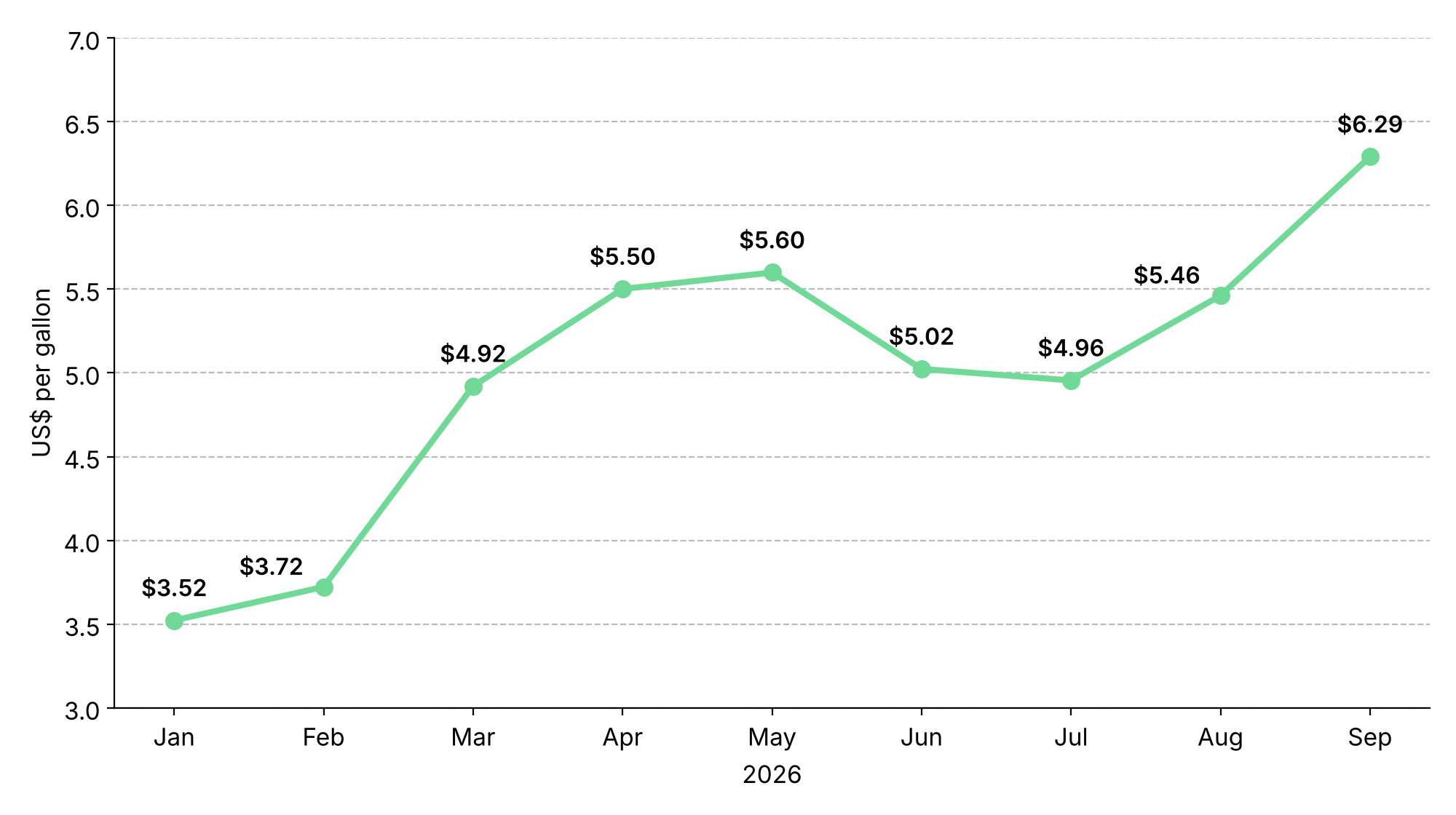
- EIA data released October 14, 2026, showed September diesel averaging $6.29 per gallon, 79% above January, increasing cost exposure at mines reliant on unhedged fuel.
- The World Gold Council’s August 24, 2026, Q1 cost report put average all-in sustaining costs at $1,785 per ounce; holding that benchmark unchanged leaves $2,215 per ounce at $4,000 gold, before costs excluded from AISC.
- The LBMA’s October 14, 2026, Q3 report recorded a July low of $3,978.55 per ounce, providing a downside test for valuations built around $4,000 gold.
Falling Treasury Yields Help Gold Rebound 1.3%
Gold recovered as a weaker dollar made bullion cheaper outside the US and lower Treasury yields reduced the income forgone by holding it. Mary Daly, San Francisco Fed President, said further hikes were probably needed but signaled no urgency to act in October, leaving room for gold to recover despite higher inflation.
That recovery remains sensitive to inflation data. Rhona O’Connell, Head of Market Analysis at StoneX, cautioned that annual producer price inflation matching the 5.4% forecast could push bond yields higher, renewing pressure on gold.
Higher Diesel Prices Favor Gold Mines With Fuel Protection
Diesel powers mine trucks and generators, so higher prices can reduce margins unless contracts, hedges or operating savings absorb the increase. US retail diesel prices indicate fuel pressure but do not measure individual mines’ delivered costs, which depend on location, taxes and purchasing terms.
The World Gold Council’s cost analysis identified royalties as the largest contributor to higher AISC, alongside fuel and supply costs. Its findings favor examining each producer’s cost breakdown before assuming that higher diesel prices affect every mine equally.
The World Gold Council’s cost analysis identified royalties as the largest contributor to higher AISC, alongside fuel and supply costs. Its findings favor examining each producer’s cost breakdown before assuming that higher diesel prices affect every mine equally.
Fed Hike Risk Makes Low-Cost Production More Valuable
Using the World Gold Council’s Q1 AISC benchmark unchanged, illustrative gold prices of $4,000 and $4,300 leave $2,215 and $2,515 per ounce above sustaining costs. These calculations measure price sensitivity, not forecast profit or free cash flow, and every additional $100 of AISC reduces that spread by $100.
The October 28 Fed decision can influence gold through yields and the dollar, while company reports reveal whether operating costs support those margins. Gold below the July LBMA low would weaken a valuation assuming $4,000 gold, although cash-flow risk still depends on each company’s costs, debt and spending.
Energy Inflation Strengthens the Case for Gold Royalties
Operations using less diesel have less direct exposure to diesel increases, although electricity prices and other costs still matter. Royalty and streaming contracts can limit direct operating-cost exposure, but mine disruptions can reduce their revenue.
Gold Fields’ August 11 trading statement estimated H1 AISC at $1,900 per ounce and maintained a full-year target of $1,800 to $2,000. That annual target requires checking second-half production and spending assumptions before treating it as evidence that higher fuel costs are covered.
Cost Control Decides the Next Mining Re-Rating
Gold’s October 15 rebound came from lower Treasury yields and a weaker dollar. With September inflation at 3.7%, Fed hikes remain a risk to gold. Mining costs have also climbed, and the World Gold Council found royalties, not diesel, led the rise in all-in sustaining costs.
A higher gold price does not flow straight to producer margins. Part of each price gain goes to royalty and streaming holders, and fuel, debt and capital spending claim more before free cash flow. Valuations built on the gold price alone overstate what producers keep.
Fuel exposure differs from mine to mine, so higher diesel prices do not hit every producer equally. A sector-wide markdown for energy costs ignores the difference, which places low-fuel, low-cost producers and royalty holders at the center of the contrarian opportunity.
Analyst's Notes





Subscribe to Our Channel




Stay Informed