




Gold's Structural Supply Deficit Drives Capital Toward Production-Ready Assets: What Investors Need to Know



Record gold prices drive capital toward production-ready assets as Perseus refinances $400M, P2 Gold advances Nevada project, Serabi controls costs, White Gold discovers high-grade core.
- Gold prices sustaining above $4,500 per ounce reflect structural factors including persistent central bank accumulation, robust Asian physical demand, and mine supply constraints from declining ore grades and extended development timelines, creating investment conditions distinct from cyclical price spikes.
- Institutional capital is increasingly flowing toward gold assets demonstrating clear production pathways and proven execution capability rather than pure resource scale, as evidenced by oversubscribed financings and favorable refinancing terms for companies with infrastructure access and realistic development schedules.
- High-grade underground gold operations are demonstrating superior cost containment during sector-wide inflation, with margin resilience derived from operational architecture rather than commodity price leverage alone, providing downside protection while maintaining upside participation.
- Technical de-risking through metallurgical advances, geophysical modeling, and systematic resource expansion is creating discrete valuation inflection points that allow investors to track development progress and adjust risk assessments as projects advance through permitting and feasibility phases.
- Jurisdictional positioning in established mining districts with existing infrastructure, supportive regulatory frameworks, and proven permitting pathways increasingly differentiates projects in capital allocation decisions, compressing development timelines and reducing execution risk compared to greenfield developments in frontier regions.
Gold's sustained rally above $4,500 per ounce has fundamentally altered the investment calculus for gold equities. While cyclical price spikes typically favour exploration-stage speculation, the current environment demonstrates distinct characteristics suggesting structural rather than temporary factors are at work. Central bank accumulation continues at multi-decade highs, physical demand from Asian markets shows no signs of abating, and mine supply growth faces material constraints from declining ore grades and lengthening development timelines.
The investment opportunity emerges from recognizing which assets can deliver production growth within timeframes that capture sustained high prices, while maintaining cost structures that preserve margins under normalized pricing scenarios. Recent corporate developments across the sector illustrate how companies are positioning for this reality.
Institutional Capital Formation Validates Asset Quality
Perseus Mining's successful refinancing and upsize to a $400 million revolving facility provides a benchmark for how institutional lenders view quality gold assets in proven jurisdictions. The facility's terms reflect Perseus's enhanced credit profile, combined with the company's $837 million net cash position as of September 2025, Perseus now commands over $1.2 billion in available liquidity.
This capital structure provides strategic flexibility that extends beyond maintaining existing operations. De Bruin emphasized:
"Perseus is fully funded to deliver on our 5 Year Outlook and pursue future growth opportunities whilst maintaining our commitment to return funds to shareholders via ongoing dividends and share buy backs."
The participation of eight international banks, including two new lenders in JP Morgan and Standard Chartered, demonstrates institutional confidence in West African gold production despite geopolitical concerns that have historically constrained capital to the region.
Capital Attraction Through Execution Clarity
The capital raising dynamics at development-stage companies further illustrate investor preference for execution visibility over exploration potential. P2 Gold's September 2025 financing demonstrated this principle directly. CEO Joe Ovsenek explained the oversubscribed response reflects investor focus on what Ovsenek characterizes as the market's current priorities:
"Investors aren't looking at how many ounces you have... How are you getting into production, how quickly can you get into production."
The November 2025 preliminary economic assessment outlines after-tax NPV of $942.9 million at 5% discount rate with 33.8% IRR, but investor attention centers on the $382.7 million preproduction capital requirement and 2028 production target supported by Q4 2025 water permit approvals and January 2026 feasibility study commencement.
Metallurgical advances provide additional de-risking that translates directly into margin improvement. The implementation of SART technology for oxide copper recovery represents what Ovsenek describes as the real game-changer for Gabbs. Ovsenek quantified the progression:
"Gold recoveries have gone from 78% to 85%. Copper recoveries, this is in the oxides, have gone from 54% to 67%."
White Gold Corp demonstrated similar capital attraction dynamics with its $23 million financing, enabling a 25,000-meter drill program that CEO David D'Onofrio characterizes as a dramatic shift from survival mode to systematic expansion. The financing deliberately included institutional investors to leverage their networks and potentially secure research coverage," signaling management's focus on closing valuation gaps as technical work validates the ultra-high-grade core economics.
Cost Insulation in Inflationary Environment
Underground gold operations face disproportionate exposure to cost inflation through labor intensity and energy requirements, making grade quality the primary determinant of margin resilience. Serabi Gold's nine-month results to September 2025 demonstrate this principle with particular clarity, reporting an AISC of $1,816/oz compared to $1,790/oz for the same period in 2024, representing an increase of approximately 1.5%. CEO Mike Hodgson attributes the performance to multiple factors working in combination:
"We've got this great economic tailwind, not just gold price. Gold price plus Brazilian exchange rate, the real to the dollar, that's really helped too."
However, the operational architecture matters more than external factors. Serabi's Palito Complex hosts M&I resources of 350,000 ounces at 9.9 g/t, while Coringa contains 179,000 ounces at 7.0 g/t. These grades exceed typical underground gold averages of 3-5 g/t globally, directly lowering cash costs per ounce through reduced mining, haulage, and processing requirements.
With EBITDA of $48.2 million and net cash of $33.0 million, Serabi maintains strategic optionality across exploration, expansion, and capital returns. Hodgson outlined the framework:
"After our 2025 financials come out, we are looking at capital returns for shareholders... We can fund all of that through cash flow. We can fund the plant growth out of cash flow when we come to do it."
West Red Lake Gold's Fork deposit demonstrates similar grade-driven economics in a different jurisdiction. The deposit contains indicated resources of 20,900 ounces grading 5.3 g/t with additional inferred resources of 49,500 ounces at 5.2 g/t. The deposit's proximity to existing Madsen Mine infrastructure creates optionality that transcends standalone economics. CEO Shane Williams noted:
"As an unmined and near-surface deposit sitting just 250 metres from Madsen, Fork offers a non-remnant zone of mineralization that could be accessed within a few months of development and sequenced into the mine plan with ease, providing additional optionality and ounces in the near term."
Technical De-Risking Creates Distinct Valuation Catalysts
Systematic technical work is creating measurable inflection points that allow investors to track projects advancing through development phases with reduced uncertainty. Astra Exploration's Phase II drill program at La Manchuria demonstrates how geophysical modeling, geological reinterpretation, and targeted drilling combine to validate and expand epithermal vein systems.
Exploration Director Diego Guido explained the technical progression as the capability of the geophysical model provides particular confidence for future drilling. Guido emphasized:
"The constructed 3-D geophysical model has demonstrated to be a powerful tool for targeting mineralized veins beneath surface. We will continue testing the model with more drilling inside the existing survey boundary, and will expand that survey to other areas of the project prior to restarting drilling."
White Gold's technical reinterpretation similarly created immediate value through identifying ultra-high-grade domains within existing resources. D'Onofrio explained the discovery emerged from comprehensive data review revealing that historical drilling by Underworld Resources (later acquired by Kinross) had never been fully analysed after the initial acquisition.
The work yielded material improvements in resource quality:
"We hired from Great Bear Resources' discovery team, identified an ultra-high-grade core containing 1.1 million ounces at approximately 3 g/t, with 700,000 ounces grading 5 g/t that remains open for expansion."
Additional efficiency gains emerged from historical core review:
"7,000 meters of drilling - 12% of the total 60,000 meters completed was never assayed, representing immediate opportunities for resource expansion without additional drilling costs."
Interview with David D'Onofrio, CEO of White Gold Corp.
Jurisdictional Positioning Determines Development Risk and Timeline
Infrastructure access and regulatory frameworks increasingly differentiate projects in capital allocation decisions. Canada's Yukon jurisdiction demonstrates how regional perception shifts create investment opportunities. White Gold's D'Onofrio noted the changing landscape:
"The same geological belts running from Alaska through Yukon into British Columbia have shown tremendous productivity in Alaska and BC, but the Yukon has been underexplored, with investment levels showing almost one-to-one correlation with discovery rates."
The Coffee project's advancement provides critical validation:
"Now owned by Fuerte Metals with backing from Agnico Eagle and Wheaton Precious Metals, the project has secured permits and is advancing toward production. The Tr'ondëk Hwëch'in First Nation has been supportive throughout the process, building on a century-long relationship with the placer mining community."
Interview with David D'Onofrio, CEO of White Gold Corp.
For West Red Lake Gold, Ontario's Red Lake district offers comparable infrastructure advantages with established regulatory pathways. Williams emphasized the district's productive history and modern relevance:
"The highly productive Red Lake Gold District of Northwest Ontario, Canada has yielded over 30 million ounces of gold from high-grade zones and hosts some of the world's richest gold deposits."
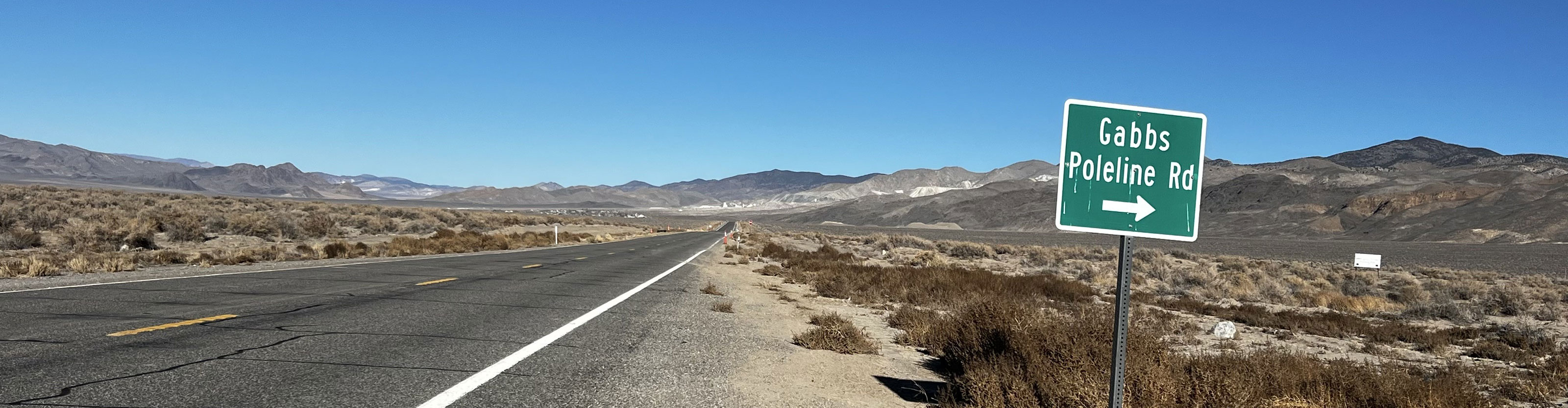
Nevada's established mining ecosystem provides advantages that compound through development phases from permitting through construction completion. P2 Gold's Gabbs project benefits from this positioning through multiple dimensions.
Grid power connection availability avoids diesel generation costs and associated fuel logistics. Water availability on-site addresses critical resource requirements without long-distance supply infrastructure. The project's location within the Walker Lane mineral trend creates ecosystem benefits from established service providers, equipment suppliers, and skilled labor pools that reduce mobilization costs and compress construction schedules.
What This Means for Gold Investors
The current gold environment differs from previous cycles through the convergence of sustained high prices, institutional capital availability for quality assets, and technical de-risking that creates measurable inflection points. Investors seeking exposure to gold's structural supply deficit should prioritize assets demonstrating execution clarity over pure resource scale.
Perseus Mining illustrates how operational consistency in proven jurisdictions attracts institutional support even in regions carrying geopolitical risk premiums. The company's ability to refinance on favorable terms while maintaining robust cash generation and shareholder returns demonstrates the market's appetite for reliable production growth.
Development-stage companies like P2 Gold and White Gold show how infrastructure positioning, metallurgical advances, and management track records can compress development timelines and reduce execution risk. The oversubscribed financings reflect investor recognition that projects with clear pathways to production offer superior risk-adjusted returns compared to pure exploration plays.
High-grade producers including Serabi Gold and West Red Lake Gold demonstrate margin resilience through cost structure advantages that persist across commodity cycles. The ability to contain AISC increases while expanding production provides downside protection that complements upside leverage to sustained high gold prices.
Technical de-risking through systematic exploration and resource definition, as demonstrated by Astra Exploration and White Gold, creates discrete valuation catalysts that allow investors to track progress and re-evaluate risk profiles as projects advance.
The investment opportunity in gold equities derives from identifying companies positioned to deliver production growth within timeframes that capture current pricing while maintaining operational characteristics that preserve value under normalized conditions. The recent corporate developments across producers, developers, and explorers illustrate how execution capability, jurisdictional positioning, and technical advancement are creating differentiated opportunities for investors seeking gold exposure beyond physical metal or major producers.
The Investment Thesis for Gold
- Structural supply deficit: Mine supply growth faces material constraints from declining ore grades, lengthening development timelines, and limited district-scale discoveries in Tier-1 jurisdictions, creating sustained support for prices above marginal cost curves
- Institutional capital formation: Oversubscribed financings and favorable refinancing terms demonstrate that quality assets with clear execution pathways attract capital even during broader equity market volatility, reducing financing risk for well-positioned companies
- Cost structure differentiation: High-grade underground assets provide natural margin protection through lower unit costs across mining, processing, and energy consumption, creating resilience during gold price normalization while maintaining leverage to sustained high prices
- Infrastructure-enabled execution: Projects in established mining districts with grid power, road access, and regulatory precedent command premium valuations through compressed development timelines and reduced capital intensity compared to greenfield developments
- Technical de-risking creates measurable catalysts: Metallurgical advances, geophysical modeling, and resource expansion provide discrete valuation inflection points that allow investors to track progress and adjust risk assessments as projects advance through development phases
- Jurisdictional positioning matters more than ever: Tier-1 mining jurisdictions with supportive regulatory frameworks, established permitting processes, and infrastructure access increasingly differentiate projects in capital allocation decisions, particularly as geopolitical risks affect traditional producing regions
- Management execution track records reduce development risk: Teams demonstrating successful advancement of projects through construction phases provide confidence that cost estimates, technical assumptions, and timelines reflect realistic rather than optimistic scenarios
- Self-funded growth preserves per-share value: Strong balance sheets and operating cash flow generation enable organic expansion without equity dilution, creating superior returns for existing shareholders compared to externally financed growth strategies
TL;DR
Gold's sustained rally above $4,500 per ounce reflects structural supply-demand imbalances rather than cyclical speculation, creating distinct investment opportunities across producers, developers, and explorers positioned to deliver near-term production growth. Institutional capital formation is validating asset quality through oversubscribed financings and favorable refinancing terms, with Perseus Mining's $400 million facility upsize demonstrating lender confidence in proven jurisdictions. High-grade underground assets are containing costs despite sector-wide inflation, with Serabi Gold's 1.5% AISC increase contrasting sharply with peer averages of 10-20%, while companies including P2 Gold, White Gold, West Red Lake Gold, and Astra Exploration are achieving technical de-risking through metallurgical advances, resource reinterpretation, and geophysical modeling that create measurable valuation catalysts. Infrastructure positioning in established mining districts including Nevada, Canada's Yukon, Ontario's Red Lake, and West Africa increasingly differentiates projects through compressed development timelines and reduced execution risk. The investment thesis centers on identifying companies demonstrating execution clarity, cost structure resilience, and jurisdictional advantages that enable production growth within timeframes capturing sustained high prices while preserving margins under normalized scenarios.
Frequently Asked Questions (FAQs) AI-Generated
The current environment demonstrates characteristics distinct from cyclical price spikes, including persistent central bank accumulation at multi-decade highs, sustained physical demand from Asian markets, and mine supply constraints from declining ore grades and lengthening development timelines. For equity investors, this suggests price resilience beyond temporary factors, creating opportunities in companies positioned to deliver production growth within timeframes that capture sustained high prices while maintaining cost structures that preserve value during price normalization. Institutional capital is responding by prioritizing assets with clear production pathways over pure exploration potential.
High-grade underground operations are containing all-in sustaining cost increases to approximately 1.5% year-over-year while many sector peers experience 10-20% AISC increases over the same period. Grade quality directly determines costs across mining, haulage, processing, and energy consumption—assets averaging 7-10 g/t require significantly less material movement and processing per ounce recovered compared to industry averages of 3-5 g/t. This cost structure advantage provides downside protection during gold price normalization while maintaining leverage to sustained high prices, creating margin resilience independent of commodity price movements.
Key inflection points include metallurgical testing demonstrating recovery improvements and processing route validation, permitting milestones such as water permits and mining plan approvals that determine development schedule credibility, resource expansion through systematic drilling that validates geological models and extends mine life, and financing success that demonstrates institutional confidence in project economics and management execution capability. Companies advancing directly to feasibility studies while achieving oversubscribed financings signal market recognition of execution clarity and reduced technical risk.
Established mining jurisdictions with existing infrastructure materially reduce both timeline risk and capital requirements through grid power access, road connectivity, established permitting frameworks, and service provider networks. Nevada's Walker Lane district, Canada's Yukon and Red Lake regions, and proven West African operations demonstrate how infrastructure positioning compresses development schedules and reduces execution risk compared to greenfield developments. Jurisdictions with regulatory precedent, supportive First Nations relationships, and proven permitting pathways command premium valuations as geopolitical risks affect traditional producing regions.
Management teams demonstrating successful advancement of projects through construction phases and into commercial production provide confidence that cost estimates, technical assumptions, and development timelines reflect realistic rather than optimistic scenarios. Key indicators include previous projects delivered on schedule and within budget, systematic approach to permitting and stakeholder engagement, ability to attract institutional capital on favorable terms, and operational discipline maintaining cost structure integrity during expansion. Teams with proven track records advancing projects from discovery to production in compressed timeframes (7-10 years) signal execution capability that reduces probability of cost overruns and schedule delays.
Analyst's Notes





Subscribe to Our Channel










Stay Informed






















