




Serabi Gold's Interim Results: What Recent Operating Performance Indicates About Cost Structure & Margin Stability


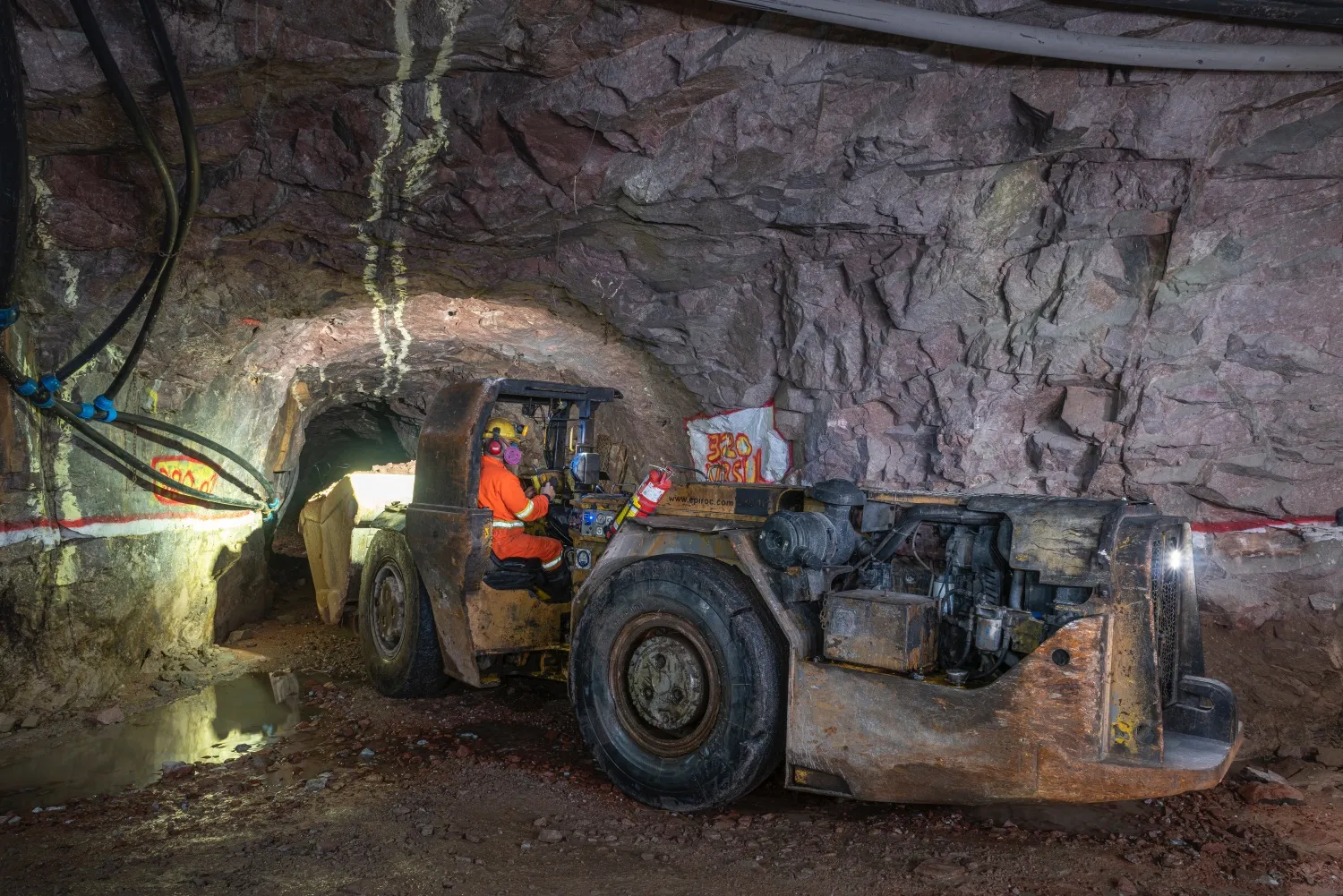
Serabi Gold's Q3 2025 results show AISC up just 1.5% amid sector inflation. High-grade Brazilian assets drive $48.2M EBITDA with pathway to 100,000 oz by 2028.
- Serabi Gold's nine-month results to 30 September 2025 demonstrate structural cost control rather than cyclical margin luck, with all-in sustaining costs rising only 1.5% despite inflationary pressure across the sector.
- High-grade underground assets at Palito and Coringa, averaging 9.9 g/t and 7.0 g/t respectively, provide natural cost insulation supporting margin durability at higher production rates.
- Record gold prices amplify cash flow, but operational discipline rather than price alone is driving EBITDA of $48.2 million and a net cash position of $33.0 million.
- Net cash generation materially reduces dilution risk and extends strategic optionality across exploration, expansion, and potential M&A.
- The results position Serabi as a self-funded, high-grade growth platform targeting 60,000 ounces by 2026 and evaluating a pathway to 100,000 ounces by 2028.
Why Cost Structure Matters More Than Gold Price in This Cycle
The current gold price environment has generated substantial margin expansion across the producer universe. However, the durability of that margin expansion varies significantly based on whether it derives from price leverage alone or from embedded operational characteristics that persist across commodity cycles.
Gold Price Volatility vs Structural Margin Control
Investors increasingly distinguish between producers benefiting from temporary price windfalls and those demonstrating stable all-in sustaining cost curves that protect margins under normalized pricing scenarios. The former category offers leverage to spot prices but exposes shareholders to margin compression when prices revert. The latter provides more predictable cash flow generation and capital allocation visibility.
This distinction has implications for valuation. Producers with demonstrated AISC stability tend to trade at premium multiples relative to peers with equivalent production profiles but more volatile cost structures. The market increasingly rewards operational predictability over pure commodity leverage.
Inflation, Energy & Labor Pressures in Underground Mining
Global cost inflation has affected underground gold operations disproportionately due to their labor intensity and energy requirements. Many producers have seen AISC drift upward by 10% to 20% over the past two years, compressing free cash flow margins despite higher realized gold prices.
Against this backdrop, producers that have contained unit cost increases while expanding throughput represent outliers in the current operating environment. The operational discipline required to achieve this outcome typically reflects grade management, processing efficiency, and infrastructure advantages rather than temporary factors.
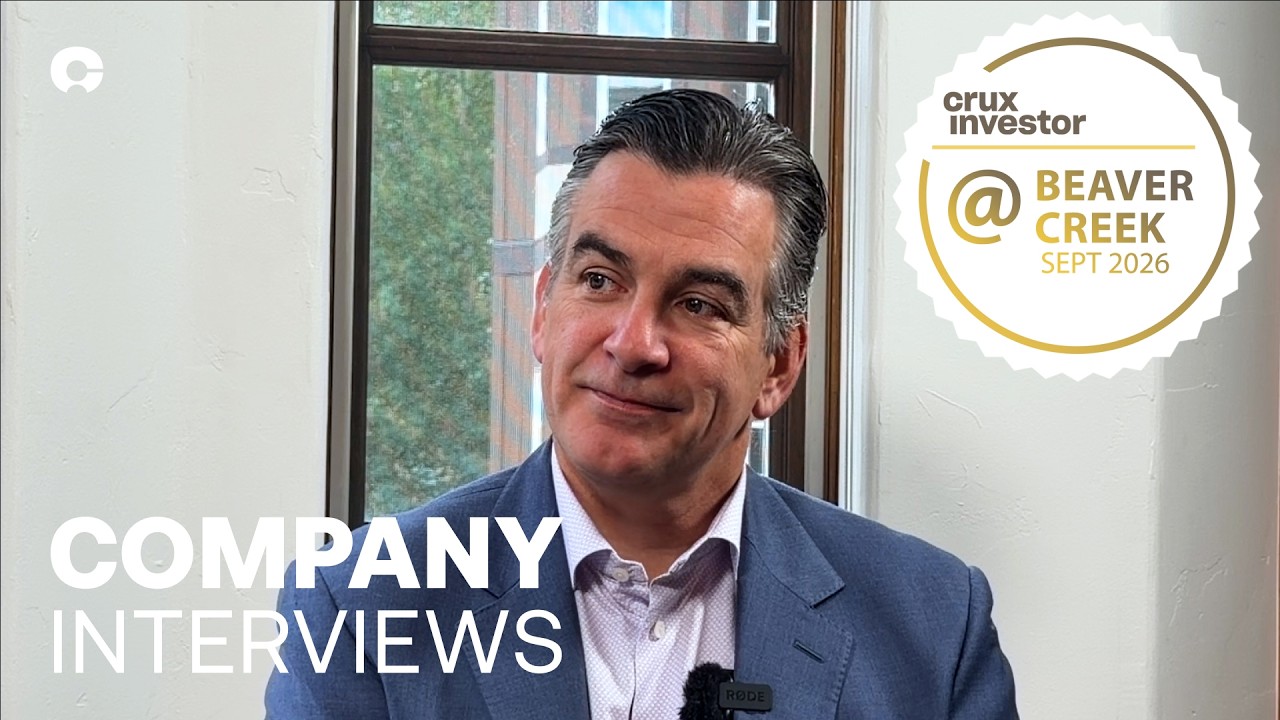
Mike Hodgson, Chief Executive Officer of Serabi Gold, speaking at the Beaver Creek Precious Metals Summit in September 2025, frames the company's current position in terms of multiple tailwinds working in combination:
"We've got this great economic tailwind, not just gold price. Gold price plus Brazilian exchange rate, the real to the dollar, that's really helped too."
Serabi's Interim Results as a Case Study in Cost Discipline
The company's nine-month operating performance to 30 September 2025 provides a measurable basis for evaluating cost structure resilience. The data points to a production model where volume growth has not introduced the inefficiencies that typically accompany scale expansion.
Production Growth Without Cost Creep
Serabi reported production of 32,634 ounces for the nine months ended 30 September 2025, with AISC of $1,816 per ounce compared to $1,790 per ounce for the same period in 2024, representing an increase of approximately 1.5%. This relationship contrasts with sector averages, where production expansion often correlates with rising unit costs as operations extend into lower-grade areas or encounter bottlenecks.
The company maintains 2025 production guidance of 44,000 to 47,000 ounces and reports it remains on track to achieve this target. The divergence between production gains and cost containment suggests efficiency improvements and grade optimization rather than simply pushing more tonnes through the system.
Ore Sorting & Grade Management as Cost Levers
The company's deployment of ore sorting technology represents a structural improvement in feed grade management. The ore sorter at Coringa has been operational for nine months as of September 2025, complementing the unit installed at the Palito Complex in 2019. By upgrading ore prior to milling, the operations reduce haulage and processing costs per ounce recovered while improving plant throughput efficiency.
The Chief Executive Officer explains the operational logic behind this approach:
"Our objective absolutely is to initially maximize production from our existing facilities… We're actually getting more out of that plant by high-grading it. We don't high-grade the mine. We take the ore out of the mine, we put it through ore sorters, so we're just upping that feed grade going into that plant, and that gets us to 60,000 ounces."
Margin Durability in a High-Gold-Price Environment
Current gold prices have expanded margins across the producer sector, but the sustainability of that expansion depends on cost structure characteristics that vary significantly between operations. Serabi's interim results allow for disaggregation of margin drivers.
EBITDA Expansion vs Price Windfall
The company's EBITDA of $48.2 million for the nine months ended 30 September 2025 reflects three distinct contributors: volume growth from increased throughput and grade optimization, cost stability from operational discipline and ore sorting efficiency, and price realization from favorable gold prices and currency movements.
While the gold price component is externally determined, the volume and cost components are operationally controlled. This means that a meaningful portion of current margin expansion would persist under lower gold price scenarios, providing downside protection that pure price leverage does not offer.
Sensitivity to Gold Price Normalization
High-grade underground operations generally exhibit more resilient economics under price stress than open-pit bulk mining operations. Serabi's Palito Complex hosts Measured and Indicated resources of 350,000 ounces at 9.9 g/t as of April 2025, while Coringa contains M&I resources of 179,000 ounces at 7.0 g/t as of April 2024. These grades exceed typical underground gold averages of 3 to 5 grams per tonne globally, translating directly into lower cash costs per ounce.
Balance Sheet Strength & Capital Allocation Optionality
The company's net cash position of $33.0 million as of 30 September 2025 and strong operating cash inflows create flexibility that many junior and mid-tier producers lack.
Net Cash as a Strategic Asset
Serabi's ability to fund operations, exploration, and expansion from internal cash flow reduces dependence on external capital markets. This independence allows management to pursue value-accretive investments without the timing constraints and pricing pressures that accompany equity raises.
Reduced Dilution Risk vs Peer Group
Organically funded growth preserves per-share value in ways that equity-financed growth often does not. For investors evaluating enterprise value per ounce or per-share net asset value, the distinction between internally funded and externally funded growth can significantly affect investment returns.
The Chief Executive Officer outlines the capital allocation framework:
"After our 2025 financials come out, we are looking at capital returns for shareholders... At the same time, we're always looking for M&A that makes sense. I think we always use this expression: disciplined approach. We can fund all of that through cash flow. We can fund the plant growth out of cash flow when we come to do it... "
Management has indicated that evaluation of capital returns is expected in the first quarter of 2026 following release of full-year 2025 financial results.
High-Grade Underground Assets & Structural Cost Advantage
Grade remains the most fundamental determinant of mining economics. Higher grades reduce the amount of material that must be mined, hauled, and processed to produce each ounce of gold, directly lowering unit costs across the operation.
Grade as the Ultimate Cost Hedge
The combined resource base includes M&I resources of 529,000 ounces and Inferred resources of 433,000 ounces across both operations. The grade advantage provides structural cost protection that persists regardless of external factors like energy prices or labor inflation.
Resource Conversion & Mine Life Sustainability
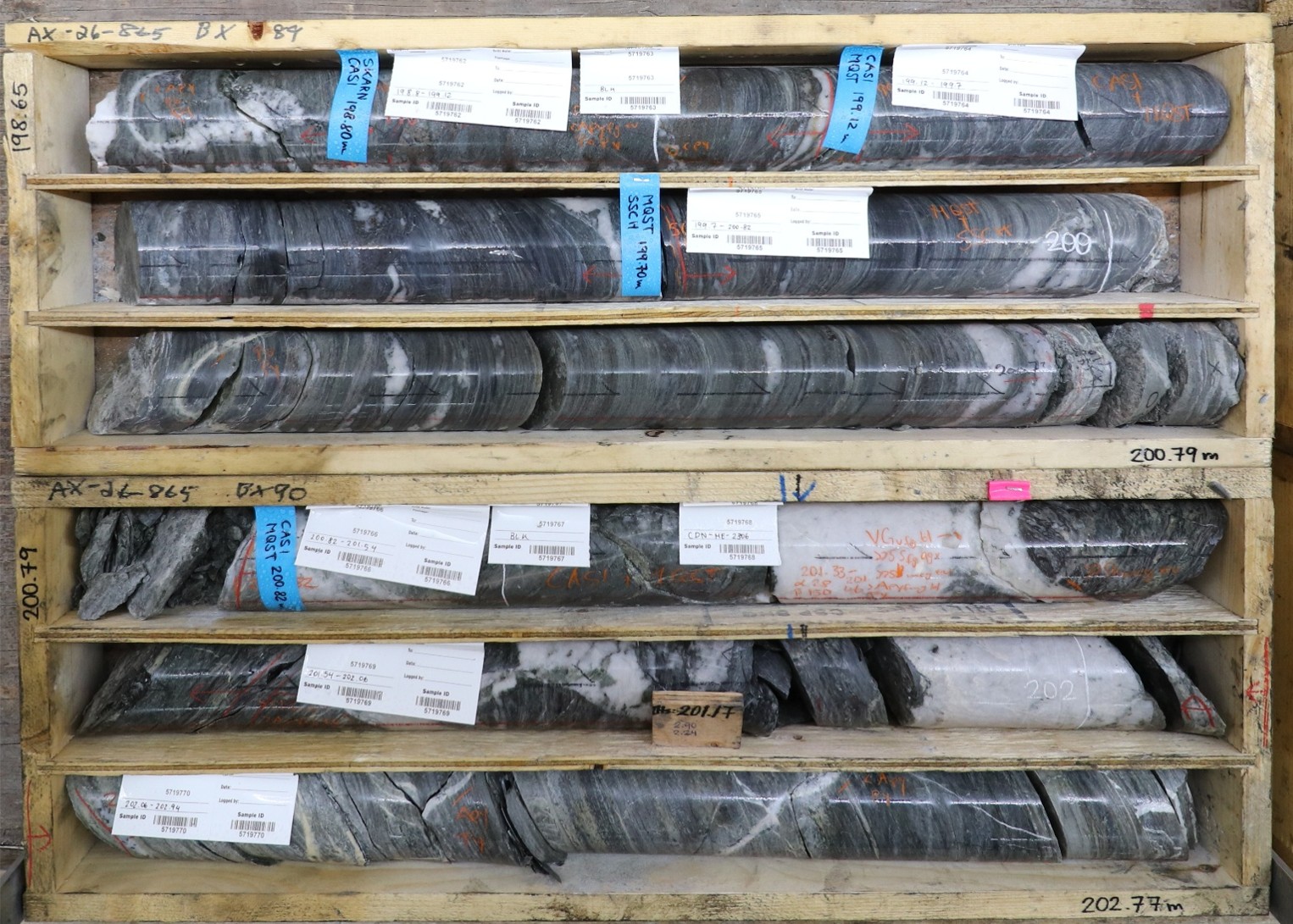
Ongoing drilling programs aim to replace depleted resources and extend mine life. The company is targeting approximately 30,000 meters of drilling in 2025 and 30,000 to 40,000 meters in 2026, with the objective of growing consolidated resources to the 1.5 to 2.0 million ounce range.
Hodgson describes the exploration strategy:
"We are drilling very ambitious brownfield exploration programs... We're aiming by the end of 2026 to have at least grown our resource from one to 1.5 million ounces."
Recent stepout drilling at Coringa has yielded encouraging preliminary results:
"Coringa is such an undrilled deposit. We're just drilling along strike in all the gaps. Some stepout drilling to the south, we found an entirely new body. It's like a repetition of the zone work that we had. It's like doubled the size."
These results remain preliminary pending updated resource estimates; the most recent published technical report for Coringa is based on April 2024 data.
Jurisdictional Context: Brazil's Evolving Investment Profile
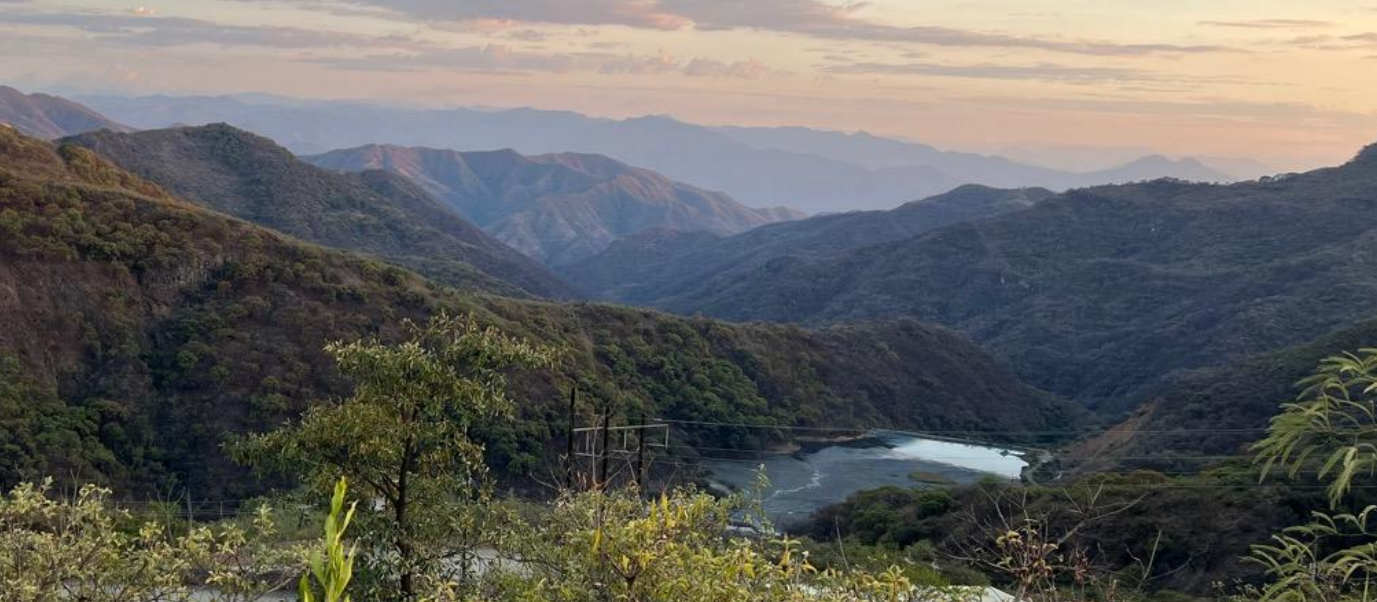
Serabi operates in Para State, which ranks second in Brazil for mining activity. The state currently offers development incentives resulting in an effective tax rate of 15.25%, supporting operational economics.
Infrastructure-Enabled Cost Efficiency
Established logistics infrastructure and permitting frameworks have supported operational consistency. Paved road access and grid power availability reduce the cost and complexity of underground mining operations compared to remote greenfield developments.
Growth Without Overreach: Scaling While Preserving Margins
Serabi's approach to growth emphasizes disciplined pacing that preserves cost structure advantages. The company is targeting a run-rate of 60,000 ounces by 2026, with Phase 1 capital requirements of less than $10 million.
Pathway to 100,000 Ounces
The longer-term pathway to becoming a 100,000 ounce producer involves release of a Preliminary Economic Assessment in 2027, with commercial production at that level targeted for 2028. The company already owns the core of a 750 tonnes-per-day CIP plant intended to facilitate processing capacity expansion.
Hodgson describes the strategic vision:
"What we want to do is build a 100,000 producer plus. We think we've got the two deposits that can deliver that… We will then go for plant expansion at Palito to sit alongside that, and the nice thing about that is we've got a lot of that plant already, so that is not an onerous capex either."
The Investment Thesis for Serabi Gold
- Structural cost control with AISC rising just 1.5% despite sector-wide inflation supports downside resilience even under normalized gold price scenarios.
- High-grade asset base with 9.9 g/t at Palito and 7.0 g/t at Coringa underpins margin durability across commodity cycles.
- Cash-backed growth with $33.0 million net cash as of 30 September 2025 reduces dilution risk and preserves per-share value accretion.
- Jurisdictional positioning in Para State with favorable tax treatment and established infrastructure supports long-term operational visibility.
- Embedded optionality from exploration targeting 1.5 million ounces by end of 2026 and phased expansion to 100,000 ounces provides upside participation without committed capital obligations.
- Scarcity value as one of few underground gold producers in Brazil may attract strategic interest from larger operators seeking operational expertise in the region.
What Serabi's Interim Results Signal for Investors
Serabi Gold's nine-month operating performance reflects more than favorable commodity prices. The relationship between production and cost containment, with AISC rising only 1.5% year-over-year, demonstrates operational architecture that should persist under varying gold price conditions.
The results validate a model where high grades, ore sorting technology, and infrastructure advantages combine to produce margin resilience that many peers cannot replicate. With $48.2 million in EBITDA, $33.0 million in net cash, and a credible pathway to doubling production by 2028, Serabi exemplifies how cost structure discipline increasingly defines gold equity outperformance.
TL;DR
Serabi Gold's nine-month results to September 2025 demonstrate structural cost discipline rather than mere gold price leverage. All-in sustaining costs rose just 1.5% year-over-year to $1,816/oz despite sector-wide inflation, supported by high-grade underground assets averaging 9.9 g/t at Palito and 7.0 g/t at Coringa. The company generated $48.2 million EBITDA and holds $33.0 million net cash, enabling self-funded growth without dilution. Management targets 60,000 ounces by 2026 and is evaluating a pathway to 100,000 ounces by 2028. Exploration programs aim to grow resources to 1.5–2.0 million ounces, while capital returns are under evaluation for early 2026.
FAQs (AI-Generated)
Serabi maintains 2025 production guidance of 44,000 to 47,000 ounces and reports it remains on track to achieve this target. The company is targeting a run-rate of 60,000 ounces by 2026.
The company deploys ore sorting technology at both Palito and Coringa operations to upgrade feed grade before milling, reducing haulage and processing costs per ounce. High-grade underground deposits also provide natural cost insulation.
As of September 30, 2025, Serabi holds $33.0 million in net cash and generated EBITDA of $48.2 million for the nine-month period, enabling internally funded growth without equity dilution.
The company targets 60,000 ounces annually by 2026 with Phase 1 capital under $10 million. A Preliminary Economic Assessment for 100,000-ounce production is planned for 2027, with commercial production at that level targeted for 2028.
Serabi is drilling approximately 30,000 meters in 2025 and 30,000–40,000 meters in 2026, aiming to grow consolidated resources from approximately 1 million ounces to 1.5–2.0 million ounces by end of 2026.
Analyst's Notes





Subscribe to Our Channel

Stay Informed






















