




Gold's Worst Quarter Since 2013: Fed Hike Bets Outweigh 45% Central Bank Buying Surge


Gold posts its worst quarter since 2013 as Fed hike expectations rise, while 45% of central banks plan to increase gold holdings, supporting demand.
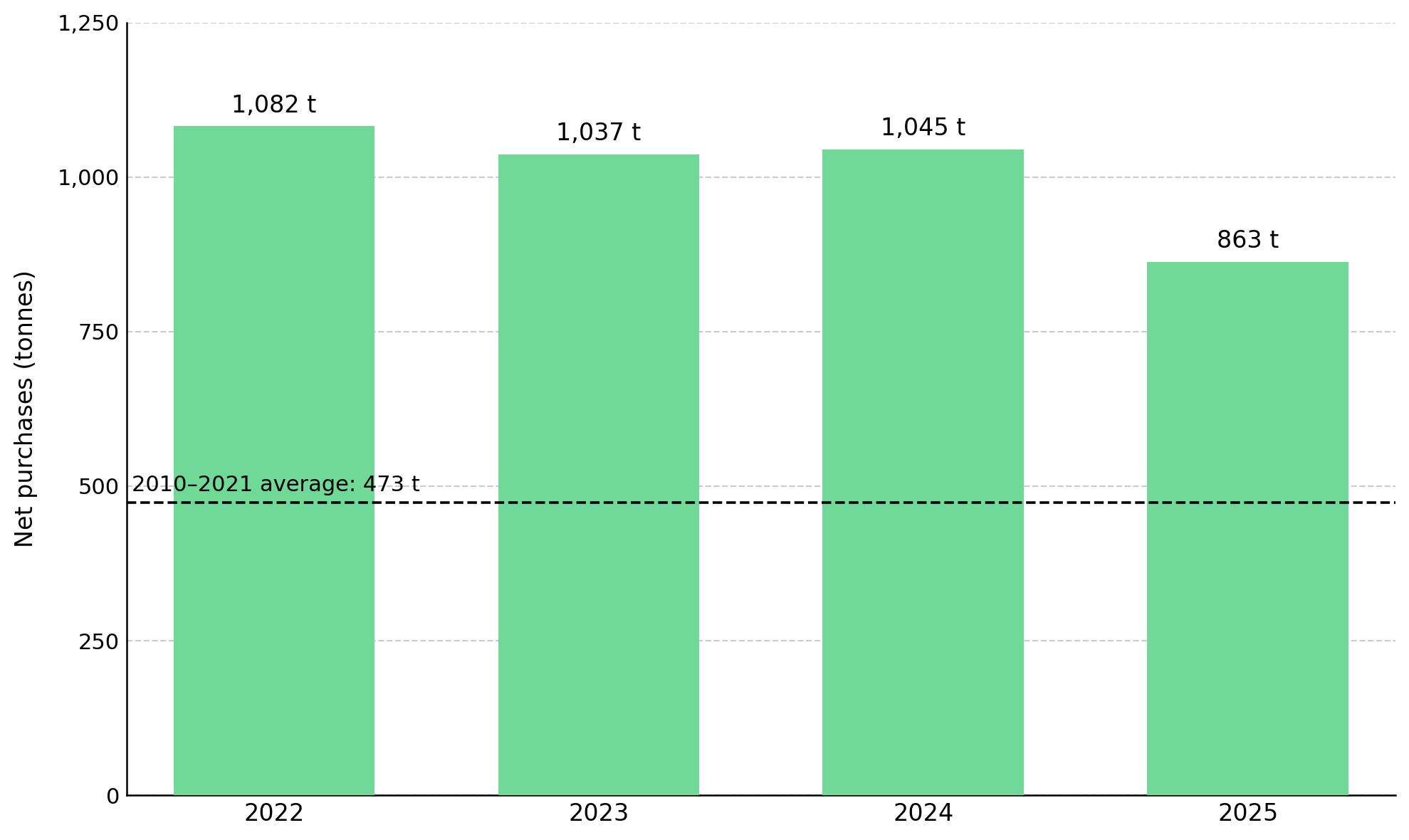
- The World Gold Council's 2026 Central Banks Gold Reserves Survey found a record 45% of reserve managers plan to increase their institutions' gold holdings over the next 12 months.
- Spot gold fell 11.2% in June to $4,026.17 per ounce and is on track for its biggest quarterly decline since 2013.
- A record 93% of central banks now hold gold, up from 81% last year, while a record 90% cite its crisis-period performance as a key reason for holding it.
- Markets price a 64% probability of a Fed rate hike in September and three rate hikes this year.
- The yen fell to 162.23 per dollar, its weakest level in 40 years, while the dollar gained 1.4% this quarter, contributing to gold's biggest quarterly decline since 2013.
Fed Rate Hike Expectations Drive Gold's Biggest Quarterly Decline Since 2013
Spot gold rose 0.2% to $4,026.17 per ounce but remained down 11.2% in June, putting it on track for a fourth straight monthly decline and its biggest quarterly loss since 2013. August gold futures traded at $4,040.60. Markets price a 64% probability of a September Fed rate hike and three rate hikes this year.
Gold's first quarterly decline since 2024 is also its largest since 2013, as a stronger dollar and higher US rate expectations reduce demand for the non-yielding metal. The dollar gained 1.4% this quarter, pushing the yen to 162.23 per dollar, its weakest level in 40 years, and contributing to gold's biggest quarterly decline since 2013.
Higher Real Yields Reduce Gold's Appeal Despite Inflation
Higher inflation, rising rate expectations, and a stronger dollar are offsetting gold's traditional bullish drivers. Higher real yields reduce gold's appeal because cash and bonds offer higher income than non-yielding bullion.
Gold requires lower real yields, a weaker dollar, or reduced expectations for Fed rate hikes to recover. OCBC strategist Christopher Wong said, "rallies are likely to fade." Markets have largely priced an October Fed rate hike, keeping pressure on gold until inflation or labor data change rate expectations.
Central Banks Plan Record Gold Purchases Despite Higher Rate Expectations
The World Gold Council's 2026 Central Banks Gold Reserves Survey found a record 45% of reserve managers plan to increase their institutions' gold holdings over the next 12 months. The survey also found a record 93% of central banks hold gold, up from 81% last year, while a record 90% cite its crisis-period performance as a key reason for holding it.
Market expectations have shifted from Fed rate cuts to rate hikes, reducing monetary policy support for gold. Zurich Insurance Group strategist Guy Miller said monetary policy support has "disappeared largely." BNP Paribas economist Isabelle Mateos y Lago's base case is for the Fed to wait until October, which could keep gold near $4,026 while central banks begin implementing the buying plans outlined in the World Gold Council survey.
Gold Miners Face Margin Pressure Despite Strong Central Bank Demand
Gold miners face margin pressure with gold near $4,026 after an 11.2% June decline. The World Gold Council's 2026 Central Banks Gold Reserves Survey found a record 93% of central banks hold gold, up from 81% last year, while a record 90% cite its crisis-period performance as a key reason for holding it.
Platinum and silver miners also face margin pressure, with platinum on track for its worst month since 2008 and silver for its sharpest monthly decline since 2011. Gold producers must keep all-in sustaining costs below current gold prices to protect margins if prices remain near $4,026. The World Gold Council also found that 57% of central bank gold is stored at the Bank of England, supporting long-term reserve holdings rather than short-term trading.
Fed Rate Hike Odds & Labor Data Will Drive Gold's Next Move
Markets price a 64% probability of a September Fed rate hike, while the dollar has gained 1.4% this quarter, increasing the opportunity cost of holding non-yielding gold. The timing of the next Fed rate move depends on upcoming economic data, with markets assigning a 64% probability to a September hike. OCBC's Christopher Wong said gold needs lower real yields, a weaker dollar, or reduced expectations for Fed rate hikes to recover.
Without those conditions, gold is likely to remain below its recent highs. The June ADP employment report and nonfarm payrolls are the next major catalysts. Weaker labor data could reduce expectations for a September Fed rate hike and support gold prices despite continued central bank buying.
Analyst's Notes





Subscribe to Our Channel





Stay Informed






















