




Salt Prices Rise 9% & Producer Margins Fall 25% Ahead of Bid Season


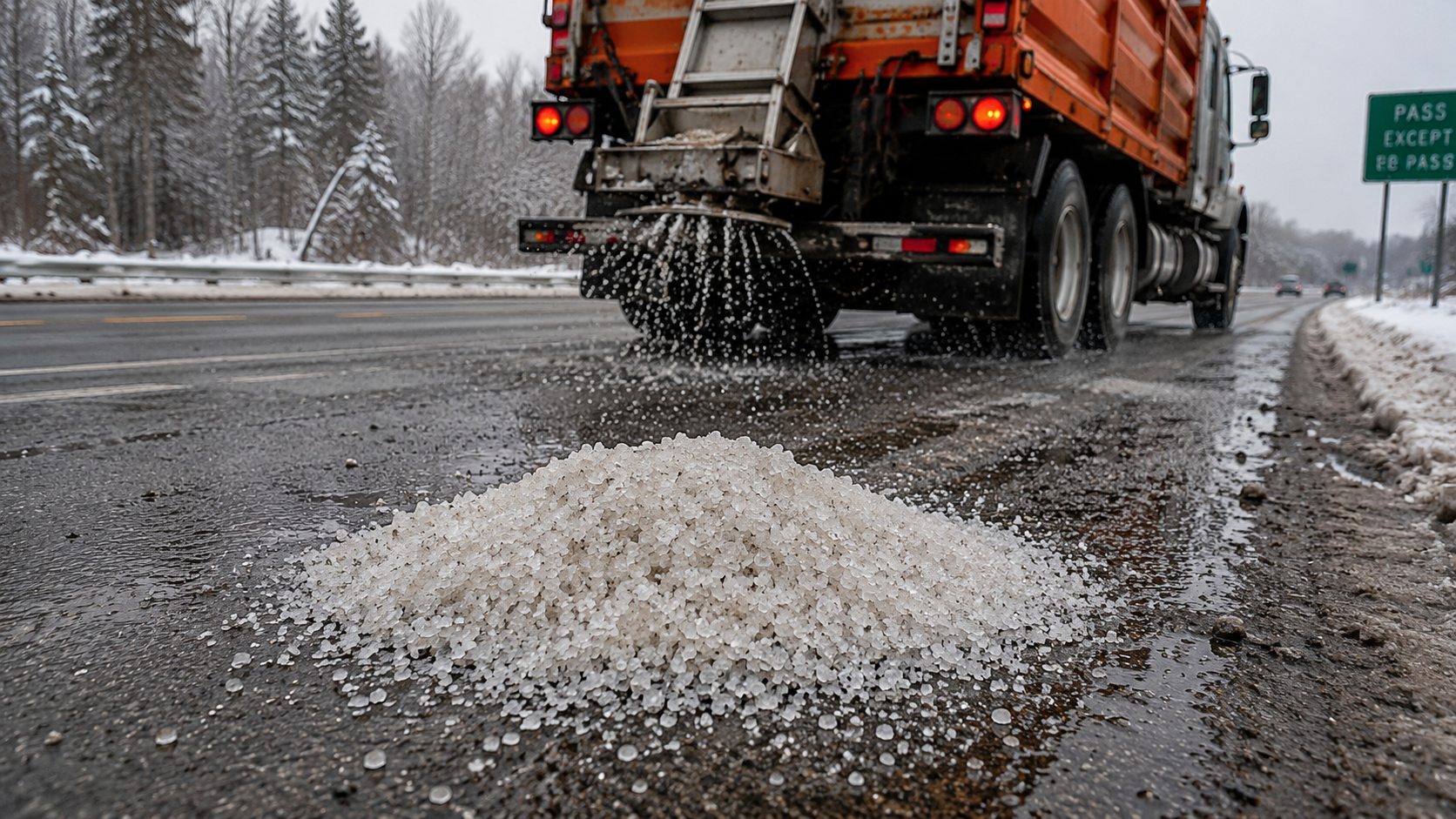
Salt prices rose 9% as producer margins fell 25%, while China supply risk and Newfoundland financing shape the next de-icing market catalysts.
- Salt segment operating income fell 25% to $21.2 million and adjusted earnings before interest, taxes, depreciation, and amortization (EBITDA) fell 15% to $38.9 million in the same quarter, as per-unit mining and distribution costs rose faster than realized pricing.
- Full-year 2026 salt segment adjusted EBITDA guidance was narrowed to a range of $225 million to $236 million from a prior $225 million to $240 million range.
- Typhoon flooding struck China's Shandong and Jiangsu coastal provinces in early August 2026, disrupting the brine fields and evaporation ponds that feed the country's largest chlor-alkali production base.
- Atlas Salt, a development-stage company, is advancing its Great Atlantic Salt Project toward construction in Newfoundland, targeting the same underserved North American corridor where pricing gains have outpaced producer margins.
Highway Salt Pricing Rises 8% & New Bids Set the 2026-27 Revenue Baseline
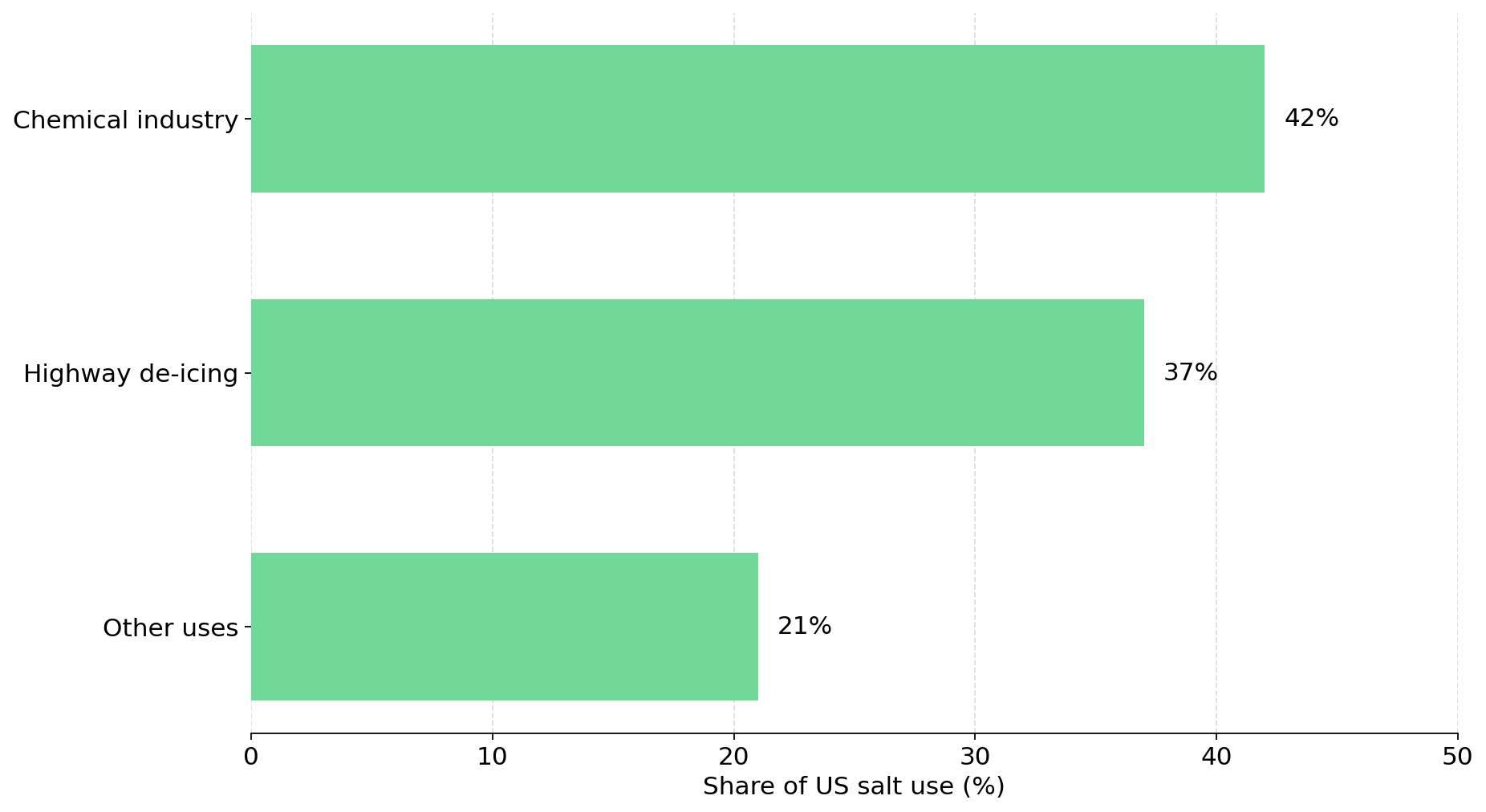
US and Canadian municipalities buy de-icing salt through competitive multi-year and seasonal supply tenders, and the pricing set in this bid cycle becomes the revenue baseline producers carry into the following winter. In its fiscal third quarter of 2026, Compass Minerals reported salt segment revenue of $173.9 million, up 5% year over year, on a blended average selling price increase of 9%, with highway salt pricing up 8% and consumer and industrial pricing up 6%. Total salt sales volumes fell 4% in the same quarter, meaning the revenue gain came entirely from price, not tonnage sold.
Edward Dowling, President and Chief Executive Officer (CEO) of Compass Minerals, characterized the 2026-27 highway deicing bid season as "very constructive" in the company's fiscal third quarter 2026 earnings release, pointing to year-over-year price improvement and tender growth across core US markets. That characterization matters because it sets market expectations for the next contract cycle before a single tender has been finalized, which is precisely the assumption the following section tests against the company's own cost data.
K+S AG reported that first-quarter 2026 de-icing salt sales volumes more than doubled year over year and raised full-year 2026 EBITDA guidance to €630 million to €730 million from €600 million to €700 million. K+S AG's volume growth provides a second producer data point for strong de-icing demand, supporting the demand backdrop behind Compass Minerals' higher highway salt pricing.
Per-Tonne Mining Costs Outpace Contract Prices & Compress Salt Margins
The same Compass Minerals quarter that produced a 9% pricing gain also produced a 25% decline in salt segment operating income to $21.2 million and a 15% decline in adjusted EBITDA to $38.9 million. The company attributed the gap to higher per-unit product costs and distribution costs, tied to elevated maintenance and labor spending at its mining operations. In practical terms, the cash cost of delivering each tonne of salt to the customer rose faster than the contract price charged for that tonne, so the margin on every incremental tonne sold narrowed even as the headline price improved.
Compass Minerals reduced net leverage to 2.8 times adjusted EBITDA from 4.3 times a year earlier, after retiring $150 million of notes due 2027, and S&P Global Ratings upgraded the company's corporate credit rating to B+ from B during the quarter. A credit desk reading this print sees an improving capital structure with a specific, verifiable leverage reduction; an equity desk reading the same print sees a segment where pricing power has not yet translated into profit growth, and both readings are correct at the same time.
Compass Minerals narrowed full-year 2026 salt segment adjusted EBITDA guidance to $225 million to $236 million from $225 million to $240 million, cutting the upper end by $4 million even as it raised full-year volume guidance. The lower EBITDA guidance ceiling despite higher volume guidance shows that stronger pricing and volumes have not yet translated into higher salt segment profitability.
Typhoon Flooding Disrupts China's Coastal Salt Belt & Raises Near-Term Supply Risk
Typhoon Dolphin made landfall in Zhejiang province on August 9, 2026, with sustained winds near 151 kilometers per hour, then moved north, dropping heavy rainfall across Shanghai, Jiangsu, Anhui, and Shandong. Shandong is China's largest caustic soda and brine-salt producing province, and its coastal brine fields and evaporation ponds feed the chlor-alkali complex that co-produces chlorine and caustic soda from salt. The storm hit during what is normally a peak seasonal production window for solar evaporation output in the region.
Shanghai's two main airports cancelled roughly 943 flights, close to 40% of scheduled capacity, and Beijing activated a Level II flood-control emergency response. Neither figure is a production-loss number, but both point to disrupted logistics across the same coastal corridor that normally moves brine salt and chlor-alkali products to port.
Elevated Middle East naphtha and ethylene costs, tied to Strait of Hormuz tensions, have been shifting Chinese polyvinyl chloride production toward the coal- and limestone-based carbide route and away from the naphtha-based ethylene route, which changes which producers are pulling brine-salt feedstock independent of the flooding. No Chinese production-loss figure for Shandong or Jiangsu has been published as of this writing, so this should be read as an operational risk to monitor rather than a confirmed output reduction.
New De-Icing Salt Supply Advances Toward an Underserved North American Corridor & Tests the Financing Window
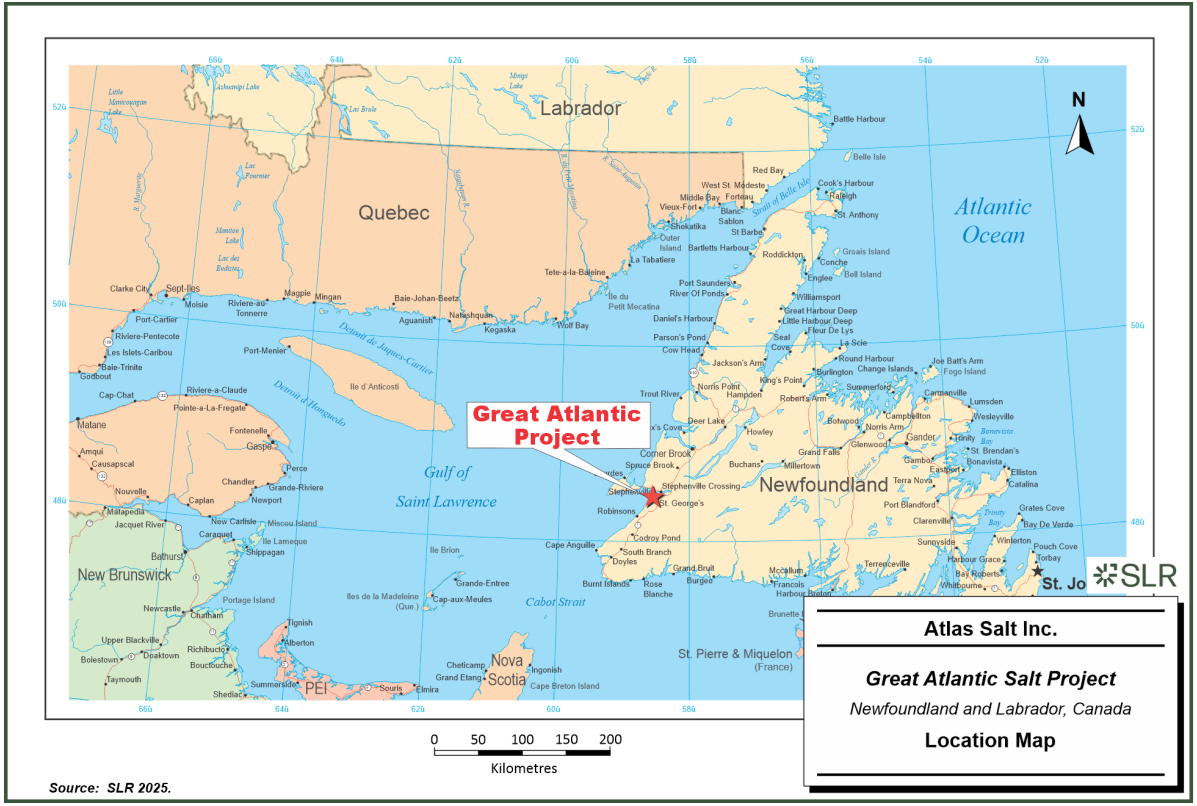
Atlas Salt is a development-stage company with no reported production or segment revenue, distinct from producers such as Compass Minerals and K+S AG. Its Great Atlantic Salt Project, on the west coast of Newfoundland and Labrador, is targeting steady-state production of 4.0 million tonnes of salt per year over a 25-year mine life. A feasibility study completed September 30, 2025, estimated an after-tax net present value of 920 million Canadian dollars at an 8% discount rate (NPV8%), an after-tax internal rate of return of 21.3%, and a payback period of approximately 4.2 years.
Export Development Canada, or EDC, issued a non-binding Letter of Interest on July 23, 2026, for up to C$150 million toward the project's C$350 million to C$400 million financing requirement, leaving C$200 million to C$250 million to be funded from other sources. The Letter of Interest is not a loan and remains subject to due diligence, internal credit approval, and definitive agreements before any financing can be committed. An earthworks contractor has been mobilized at the site since early May 2026, while the Town of St. George's Development Permit issued April 30, 2026, covers the approved Early Works construction program.
Nolan Peterson, President and Chief Executive Officer of Atlas Salt, described the project's purpose in terms of the same regional supply gap now visible in Compass Minerals' pricing data:
"We're developing the Great Atlantic Salt Project on the west coast of Newfoundland, aiming to supply de-icing road salt to critically underserved markets in the northeast US and eastern Canada and the Atlantic provinces."
Bid Season Results & Chinese Output Data Will Confirm or Break the Salt Margin Thesis
Four data points would change the reading of this thesis. If Compass Minerals' per-unit mining costs stabilize or decline in its fiscal fourth quarter 2026 results while blended pricing holds near current levels, the margin-compression story weakens and the segment reverts to a straightforward pricing-power narrative. If Chinese authorities publish a Shandong or Jiangsu production-loss figure that turns out to be small in tonnage terms, the typhoon disruption should be read as a logistics delay rather than a supply event.
If EDC's Letter of Interest lapses without progressing to credit approval, or if Atlas Salt's remaining financing gap of roughly 200 million to 250 million Canadian dollars fails to attract additional lenders within the current construction timeline, the underserved-corridor supply response is delayed and the project's cash runway becomes the relevant variable to track. If the winter outlook published by the National Oceanic and Atmospheric Administration's Climate Prediction Center points to a mild winter across the northeastern US and eastern Canada, the "very constructive" bid season characterization should be tested against finalized tender volumes rather than management commentary alone.
Atlas Salt's financing remains uncommitted, leaving the project exposed to construction, permitting, and funding risks that established salt producers do not face at the same development stage. The C$150 million figure represents the maximum amount under the non-binding Letter of Interest, not capital already committed or raised.
The Investment Thesis for Salt
- Highway and municipal de-icing salt pricing power is now confirmed by more than one North American and European producer in the same reporting window, which gives the pricing trend two independent data points rather than one isolated result.
- The margin compression showing up in producer earnings this quarter is a cost-structure issue tied to mining, maintenance, and distribution spending, not a demand-side weakness, and that distinction changes how the next several quarters should be modeled.
- A development-stage project targeting the same underserved North American corridor carries feasibility-study economics with a defined net present value, internal rate of return, and payback period, though none of its financing requirements is yet secured.
- Flooding-driven supply risk in China's coastal salt belt and the North American cost story are unrelated events occurring in the same reporting window, a reminder that salt trades as a set of regional markets rather than a single global price.
- The next confirmable checkpoints are the finalized 2026-27 highway bid tender results, fourth-quarter cost data from established producers, and any progression in export credit agency due diligence tied to new supply entering construction.
- A nine percent pricing gain that produced a twenty-five percent decline in segment operating income is not a contradiction; it is a cost problem sitting inside a pricing win, and the coming bid season will only resolve it if producers show they can carry that pricing through to the operating line rather than pricing higher again.
Salt pricing power is real across North American and European producers this quarter, but Compass Minerals' 25% decline in segment operating income shows that pricing alone has not yet solved a rising per-tonne cost problem, while a separate typhoon-driven supply risk in China and a development-stage financing process in Newfoundland remain the two events most likely to move the picture before year end.
TL;DR
Salt pricing remains firm, with Compass Minerals reporting a 9% blended price increase and 8% higher highway salt pricing, while K+S AG more than doubled de-icing salt volumes. However, Compass Minerals' salt segment operating income fell 25% as mining, maintenance, and distribution costs rose faster than realized pricing. Typhoon Dolphin has added near-term logistics and supply risk across China's coastal salt belt, although no confirmed regional production loss has been reported. In Newfoundland, Atlas Salt is advancing a 4.0 million-tonne-per-year project, but C$200 million to C$250 million of its financing requirement remains unfunded. Bid results, producer costs, Chinese output data, and project financing are the next key checkpoints.
FAQs (AI-Generated)
Analyst's Notes





Subscribe to Our Channel





Stay Informed


