




Group Eleven Strikes High-Grade Zinc-Lead in Stonepark Step-Out


Group Eleven Resources hits high-grade zinc-lead 550m from Stonepark resource in Ireland; C$18M cash funds 70,000m drill program across two projects.
- Group Eleven Resources announced a new high-grade intercept at its Stonepark deposit in Ireland, located 550 metres from the existing resource 2.8 metres grading 8.3% zinc and lead, including 1 metre at 22% zinc and lead, within a 15-metre zone of brecciated alteration.
- Stonepark already hosts an NI 43-101 resource of roughly 5 million tonnes at approximately 11% zinc and lead, sitting about 1 kilometre from Glencore's 45-million-tonne deposit and 20 kilometres from Group Eleven's higher-profile Ballywire discovery.
- Management describes the new intercept as a potential new mineralised zone or "pod," noting it is the first meaningful hit at this distance from the resource in nine drill holes since the project was acquired in 2017.
- The hole was also drilled to test a deeper copper-silver target beneath Stonepark for the first time; those assay results are still pending.
- Following a C$12 million bought-deal financing in March, the company holds C$18 million in cash, supporting a two-year, 70,000-metre drill program split between PG West/Ballywire (51,000 metres) and Stonepark (15,000 metres).
Group Eleven Resources (TSXV:ZNG) is an exploration-stage company focused on zinc-lead mineralisation in the Limerick area of Ireland, a region with a long history of producing zinc-lead discoveries that have advanced into mines. The company holds two primary areas of interest: Ballywire, a fast-growing discovery roughly 20 kilometres south that has been the company's main focus in recent years, and Stonepark, an existing resource area to the north that sits adjacent to Glencore's Pallas Green deposit.
CEO Bart Jaworski discussed a new drill result at Stonepark that stepped out 550 metres from the known resource and intersected zinc-lead mineralisation. This matters to investors because Stonepark has seen limited step-out exploration to date, and a confirmed new zone of mineralisation at distance from the current resource could materially expand the deposit's overall tonnage.
The Stonepark New Discovery
The hole in question intersected a 15-metre zone of alteration and brecciation, a rock texture the company associates with favourable mineralizing conditions. Within that zone, the company reported roughly one metre of massive to semi-massive sulfides across two intervals, aggregating 2.8 metres grading 8.3% zinc and lead, including a higher-grade interval of about 1 metre at 22% zinc and lead.
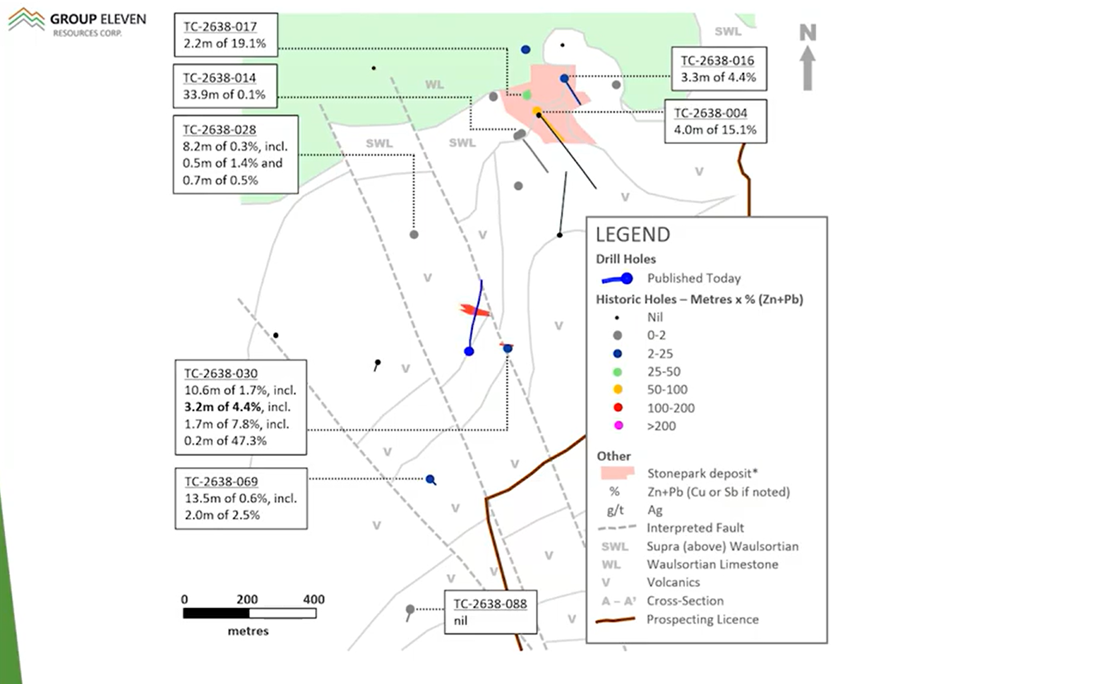
A secondary, 16-metre zone of partial replacement associated with calcite veins was also noted nearby. A historical hole located roughly 150 metres from the new intercept had previously shown some mineralisation, but to a lesser degree, reinforcing management's view that this result represents an improvement on prior step-out attempts.
Geological Setting and Regional Comparisons
Stonepark sits approximately one kilometre from Glencore’s Pallas Green deposit, which hosts 45 million tonnes grading 8.4% zinc and lead and is described as part of the same geological system. Jaworski framed the scale of the opportunity directly:
"This is a 5 million ton story right next door to a 45 million ton story, pretty much touching part of the same geological system. We're just basically have found potentially a new pod, a new zone of mineralization."
Context of Stonepark's Existing Resource Base
Stonepark’s current resource, per an April 2018 NI 43-101 technical report, is split across three areas: Stonepark North at approximately 3.9 million tonnes grading 12.1% zinc and lead, Stonepark West at approximately 1 million tonnes grading 9.3%, and the main Stonepark zone at roughly 0.5 million tonnes grading 8%. Combined, this totals approximately 5 million tonnes at roughly 11% zinc and lead. Jaworski noted that historical drilling around the periphery of the resource has produced encouraging but unconfirmed hits, and that the company’s exploration strategy since acquiring the project in 2017 has prioritised finding new discoveries over infill or step-out drilling at Stonepark specifically.

Jaworski also drew comparisons to other Irish deposits such as Lisheen, Galmoy, Silvermines, Tynagh, and Gortdrum, which vary widely in size and grade, and to Tara Deep, a deeper deposit reported at around 30 million tonnes and roughly 9% combined zinc and lead. By contrast, the new Stonepark intercept sits at an estimated 300-400 metres depth, which Jaworski characterised as comparatively shallow.
Financial Position and Drill Program Going Forward
Group Eleven completed a bought-deal financing that raised C$12 million, leaving the company with approximately C$18 million in cash. This funds a planned 70,000-metre drill program over the next two years, with 51,000 metres allocated to PG West (which hosts Ballywire) and 15,000 metres allocated to Stonepark.
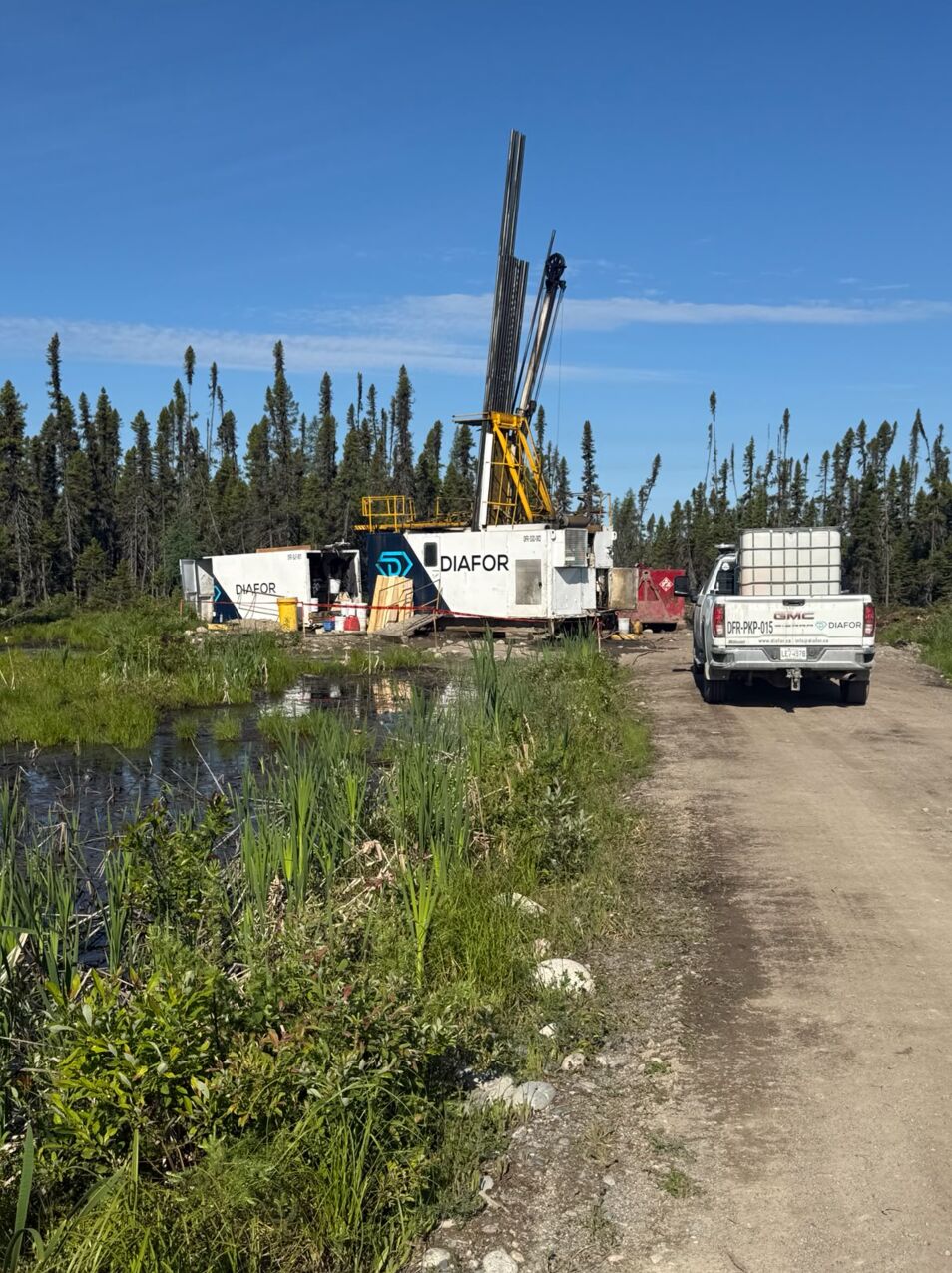
The company is currently executing the first phase of Stonepark drilling, a 2,700-metre program, of which the recent result is a part of. Management indicated that the drill program allocation at Stonepark may be revisited following this result, pending board approval, to allocate additional holes near the new discovery area.
Interview with Bart Jaworski, CEO of Group Eleven Resources
Management's Perspective on Next Steps
Jaworski was candid that further drilling is required before drawing firm conclusions about the extent of the new zone, noting that assay results from a deeper copper-silver target at the same hole are still pending. He indicated that a rule of thumb in the Irish zinc-lead mining context is that a deposit needs to reach approximately 10 million tonnes at 10% zinc and lead, combined with existing regional infrastructure (roads, rail, ports, and proximity to European smelters), before serious consideration of moving toward production. Jaworski gives a brief for the company's next steps:
"Clearly at Ballywire, there's something significant going on there. Stonepark, as we've now showed this morning, there's a new ray of light , a new big shot in the arms."
Stonepark's current 5-million-tonne resource, together with the new discovery and its proximity to Glencore's larger deposit, keeps the project in an exploration and resource-expansion phase rather than a development-ready stage. The company reiterated that its primary focus for the broader 15,000-metre Stonepark program remains the area south of the Limerick Volcanic Complex, though some additional holes near the new discovery are now under consideration.
The Investment Thesis for Group Eleven Resources
- New discovery potential at Stonepark. A high-grade intercept 550 metres from the existing resource - the strongest step-out result in nine holes since 2017 - suggests the possibility of a new mineralised zone that could add tonnage beyond the current ~5 million tonne resource.
- Proximity to a much larger deposit. Stonepark sits roughly 1 kilometre from Glencore's 45-million-tonne Pallas Green deposit, within the same geological system, offering a scale comparison that underscores regional exploration upside.
- Untested deeper copper-silver target. The same hole tested for copper-silver mineralisation beneath Stonepark for the first time; pending assay results represent an additional catalyst independent of the zinc-lead result.
- Well-funded exploration program. A C$12 million March financing leaves the company with C$18 million in cash, funding a fully mapped 70,000-metre, two-year drill program across both Stonepark and PG West/Ballywire.
- Favourable regional infrastructure. Ireland's existing roads, rail, ports, and proximity to European smelters lower the tonnage and grade thresholds needed for eventual production relative to remote jurisdictions.
- Multiple projects, multiple catalysts. Ballywire remains the company's flagship and fastest-growing discovery, with a maiden resource targeted within 12–18 months, while Stonepark now offers a second area of exploration news flow.
- Historical exploration upside remains open. Peripheral drill holes around the existing Stonepark resource have shown encouraging but unconfirmed hits, indicating the deposit is not considered closed off to further expansion.
- Precedent for value creation in the sector. Management points to the Arizona Mining/South32 transaction, a 100-million-tonne, 10% zinc-lead deposit acquired for over US$2 billion as an example of the value that can be created in this style of deposit, while acknowledging Group Eleven is not yet at that scale.
Group Eleven’s news reflects a broader theme in base-metals exploration: the search for high-grade zinc-lead systems in jurisdictions with existing infrastructure rather than remote frontier settings. Ireland’s Limerick area has historically produced multiple discoveries - Lisheen, Galmoy, Silvermines, and Tara among them - that reached production without requiring the scale needed in more remote regions, because roads, rail, ports, and smelter access are already in place. As global demand for zinc and silver-adjacent battery and infrastructure metals persists, exploration success next to known, sizeable deposits like PG carries outsized relevance.
TL;DR
Group Eleven Resources reported a new high-grade zinc-lead intercept 550 metres from its existing Stonepark resource in Ireland, its best step-out result since acquiring the project in 2017. The discovery sits near Glencore's much larger deposit, and a deeper copper-silver target at the same hole remains untested with assays pending. Backed by C$18 million in cash following a March financing, the company is running a 70,000-metre, two-year drill program across Stonepark and its flagship Ballywire project. Management frames the result as an early-stage but potentially significant addition to Stonepark's roughly 5-million-tonne resource base.
FAQs (AI-Generated)
Analyst's Notes





Subscribe to Our Channel





Stay Informed


