




Higher Rates Lower Gold Entry Prices, Favoring Funded Projects



Gold could test $4,000 below $4,100, while a break above $4,275 could signal recovery. Funding through first production helps limit dilution risk.
- Spot gold rose 0.3% to $4,122.99 an ounce on October 8 after hitting its lowest level since August 5, despite pressure from a stronger dollar and higher US Treasury yields.
- The Fed’s September 16 hike to 3.75%-4.00% partly addressed energy inflation, raising the interest income forgone by holding gold.
- CME FedWatch put December hike odds at 85% on October 8, leaving gold exposed to further pressure from higher rates.
- Lower gold prices and higher borrowing costs strain developers needing construction funding, favoring producers with sufficient operating cash flow.
- Chris Weston, Head of Research at Pepperstone, identified a break above $4,275 as a signal for a more positive gold outlook.
Higher Treasury Yields Lower Gold Entry Prices
Spot gold rose 0.3% to $4,122.99 an ounce after hitting a two-month low, despite pressure from a stronger dollar and higher US Treasury yields. December gold futures rose 0.18% to $4,147.90, while silver fell 2.2% to $58.85 an ounce.
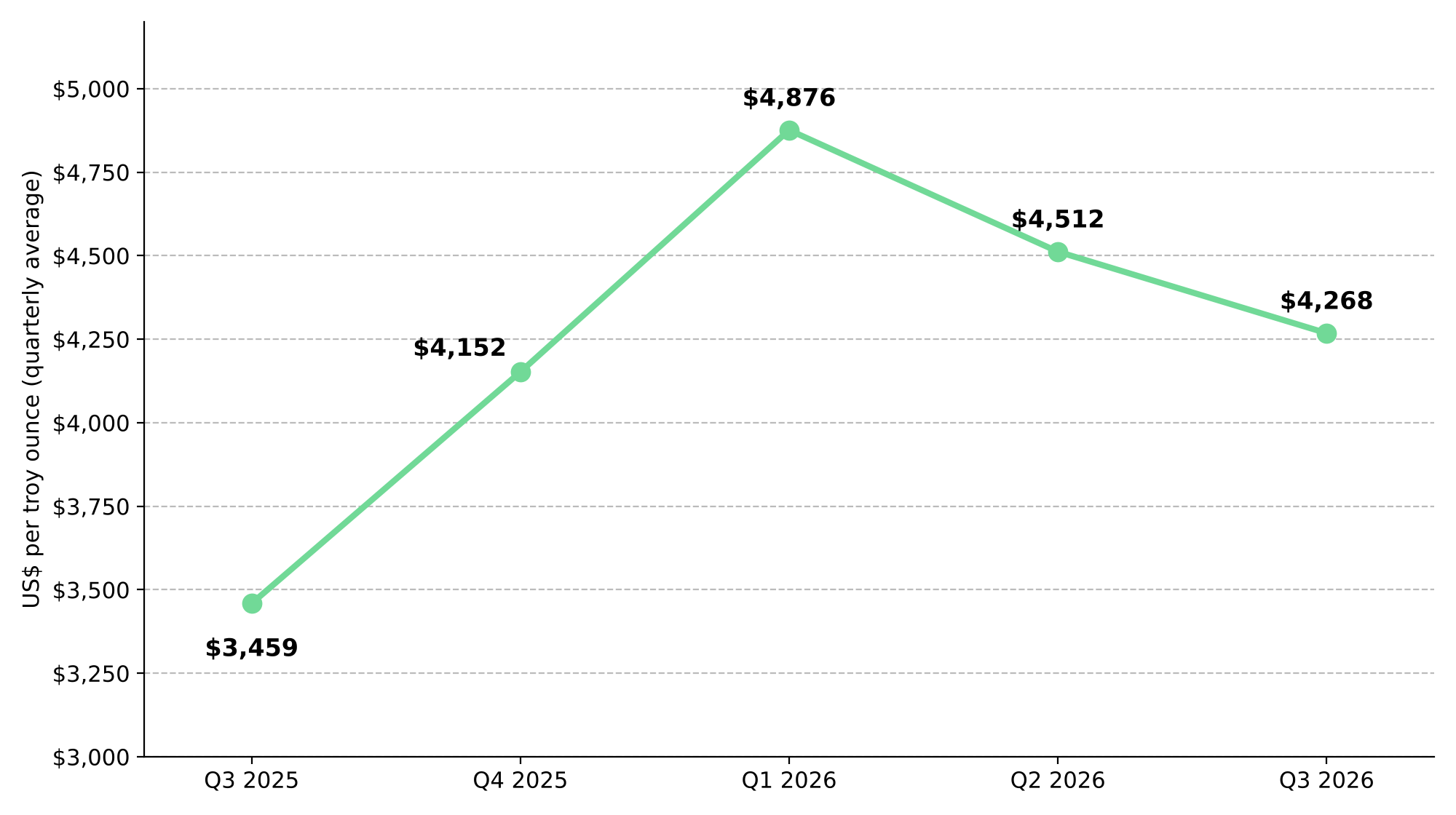
The World Bank’s October 2 Pink Sheet put gold’s third-quarter average at $4,268 an ounce, 12.5% below the first-quarter average of $4,876. Spot gold now trades 15.4% below that first-quarter average, offering a lower entry price while higher yields increase the interest income forgone by holding bullion.
Hormuz Disruption Supports Fed Tightening That Pressures Bullion
Hormuz shipping fell to a two-month low, threatening a route that carried roughly a fifth of global oil and gas supply before the war. Dated Brent had held above $100 a barrel, adding to inflation pressure. The Fed raised rates 25 basis points to 3.75%-4.00%, citing elevated inflation and increasing the interest income forgone by holding gold.
The Fed’s September minutes show that some participants backed the hike to contain energy price shocks, while others cited inflation driven by demand. Restored Hormuz flows could reduce energy inflation and support gold, but demand-driven inflation could justify further hikes and limit its recovery.
85% December Hike Odds Keep Gold Exposed to Rate Pressure
CME FedWatch put October hike odds at 21.6% and December odds at 85%, leaving gold exposed to higher rates. Lukman Otunuga, Senior Research Analyst at FXTM, said a sustained break below $4,100 could open a path toward $4,000.
A December hike could pressure gold if Treasury yields and the dollar remain firm. Chris Weston, Head of Research at Pepperstone, argued that concerns about government finances and currency purchasing power could instead support gold despite higher long-term yields.
Developers needing construction funding face higher borrowing costs when floating-rate loan benchmarks rise, while lower gold prices can weaken equity valuations and increase dilution. A gold recovery could support those valuations. Weston identified a break above $4,275 as a signal for a more positive gold outlook.
Higher Borrowing Costs Favor Gold Projects With Secured Funding
World Bank Pink Sheet data put gold’s third-quarter average at $4,268 an ounce, 24% above the 2025 average of $3,442, supporting revenue for unhedged producers. Developers needing construction capital face higher interest costs when floating-rate loan benchmarks rise, while weaker equity valuations require more shares to raise the same amount.
Construction funding secured through first gold reduces dependence on future financing. Fixed-rate debt locks the agreed borrowing rate, while unfinished funding packages remain exposed to changing rates and equity valuations.
December hike odds of 85% leave a 15% chance of no increase, making funding resilience more useful than a single rate forecast. A later share-price recovery does not reverse dilution from an earlier equity raise. Favoring developers funded through first gold reduces financing risk while retaining exposure to a gold recovery.
Fed Policy Now Sets the Price Reference for Gold Developers
Higher rates pressure gold by increasing the interest income forgone and can raise financing costs for developers needing construction capital.
Lower gold prices create potential entry opportunities in producers with sufficient operating cash flow and developers funded through first gold, whose reduced need for new financing limits borrowing and dilution risks. If financing constraints delay new mines, fully funded developers could also benefit from tighter future gold supply.
Analyst's Notes





Subscribe to Our Channel




Stay Informed






















