



China's Export Pause Leaves Battery Metal Diversification a G7 Priority


China’s export pause leaves G7 diversification priorities intact as rising demand and public funding commitments support alternative battery-metal supply.
- China’s suspension of selected additional export controls runs through January 10, 2027, while the Group of Seven (G7)’s November 11 declaration maintains policy support for diversifying battery-metal supply.
- The International Energy Agency (IEA) reports that dominant refining countries supplied more than 75% of refined-output growth between 2023 and 2025, leaving buyers dependent on the same countries for most additional supply.
- Global battery demand grew more than 35% to exceed 1.5 terawatt-hours (TWh) in 2025, expanding demand for lithium used in electric vehicles and stationary storage.
- The US Geological Survey (USGS) projects natural-graphite production capacity will grow 20% by 2030. With China supplying more than 70% of current output, developing capacity elsewhere would broaden buyers’ sourcing options.
- The IEA’s Global Critical Minerals Outlook 2026 reports approximately US$65 billion in public-finance commitments from advanced economies in 2025, more than four times the 2023 level, expanding pledged funding for mineral supply projects.
G7 Sourcing Priorities Support Traceable Alternative Supply
China’s Ministry of Commerce (MOFCOM) announced on November 9 that selected additional export controls would remain suspended from November 11 through January 10, 2027. The extension postpones additional requirements affecting certain lithium batteries, graphite materials, and rare-earth-related products, preserving access to those materials under the existing export rules.
The G7’s November 11 declaration calls for diversified critical-mineral supply chains to reduce dependence on dominant suppliers. Its June framework identifies lithium and nickel as the first two minerals for coordinated traceability work, helping buyers establish where materials originate and assess alternative sources. Together, these commitments support the identification and development of supply outside established production centers.
In its November 10 analysis, the Organization for Economic Co-operation and Development (OECD) reported that more than 60% of surveyed companies cited customer demand or brand reputation as their main reason for adopting traceability systems. Adoption reached 92% among traders and 55% among miners. These findings give prospective suppliers a commercial reason to document where their material is mined and processed, helping buyers assess whether purchases meet their sourcing requirements.
Refining Concentration Supports Investment in Alternative Supply
The IEA’s Global Critical Minerals Outlook 2026 reports that dominant refining countries supplied more than 75% of refined-output growth between 2023 and 2025, led by Indonesia for nickel and China for other key energy minerals. Excluding rare earths, the average share held by the largest refining country rose from 70% to 72%, increasing buyers’ dependence on existing supply centers as production expanded.
Outside dominant supplying countries, planned production capacity for cathodes, a core battery component, represents only about one-third of projected lithium mining capacity. This gap makes access to chemical processors and battery manufacturers important to converting additional mine output into future sales
Under the IEA’s Stated Policies Scenario (STEPS), base-case supply from existing and announced projects covers approximately 68% of primary lithium requirements and 92% of primary nickel requirements in 2035, after accounting for recycled supply and refining losses. These modeled shortfalls support further investment in mining and processing projects capable of supplying the remaining demand within that period.
Refining Cost Gaps Support Shared Funding for Alternative Supply
The IEA estimates that refining projects outside dominant supplying countries face capital costs 20% to more than 150% higher and operating costs approximately 50% higher than projects in leading producer countries. Using existing infrastructure can limit construction spending, while competitively priced feedstock can help control operating costs, improving the economics of alternative supply.
Critical minerals account for approximately 25% of battery-cell costs but only around 3% of the price of an average electric vehicle (EV), according to the IEA. In its modeled scenario, tripling battery-mineral prices would raise final EV and storage-system prices by approximately 5%. This smaller effect on finished-product prices provides a basis for manufacturers and governments to share the cost of diversified supply through purchase agreements and project financing.
Battery Demand Growth Expands the Market for New Lithium Supply
Global battery demand grew more than 35% in 2025, exceeding 1.5 terawatt-hours, while lithium demand increased approximately 25% annually over the preceding two years, according to the IEA. Serving that expanding market through a broader supply base gives practical importance to lithium projects advancing construction preparations alongside long-term customer agreements.
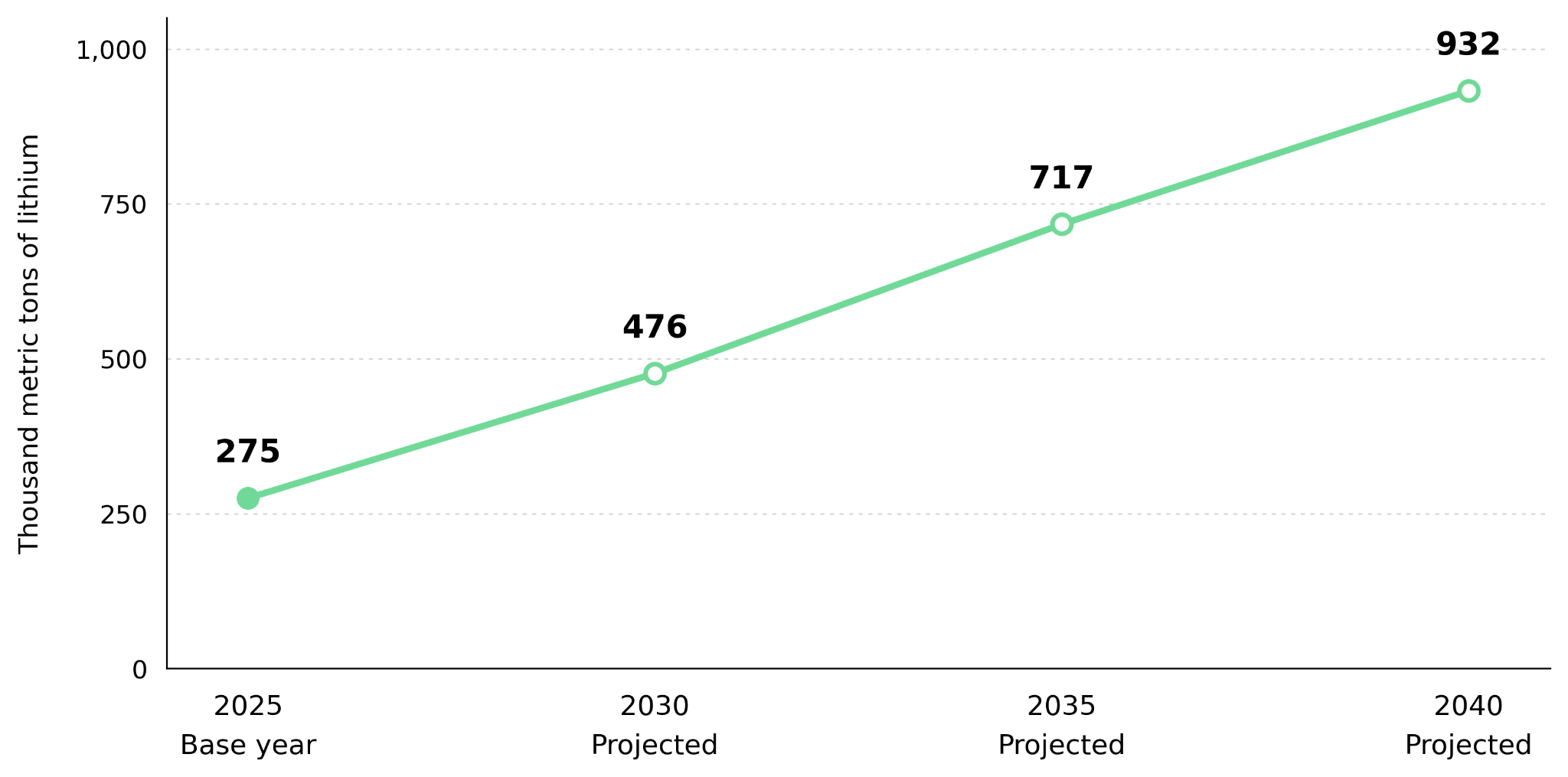
Lithium Ionic Corp. reported approximately 65% engineering completion at Bandeira and placed its first long-lead equipment order, advancing preparations for construction. Its November presentation also confirms binding five-year sales agreements covering approximately 170,000 tonnes of lithium concentrate annually. Together, these milestones strengthen construction readiness and provide clearer visibility over future sales.
Blake Hylands, Chief Executive Officer of Lithium Ionic Corp., highlights sustained growth in the electric vehicle market:
“I like pointing at EVs because a 10%-15% growth year-over-year is enormous… It's one of the fastest-growing industries in the world and it's brand new.”
China’s Graphite Dominance Increases the Need for Alternative Supply
More than 70% of natural-graphite supply is concentrated in China, while global production capacity is projected to grow 20% by 2030, according to the USGS. Turning that expansion into more diverse sourcing options requires new projects to connect planned output with customers and development financing.
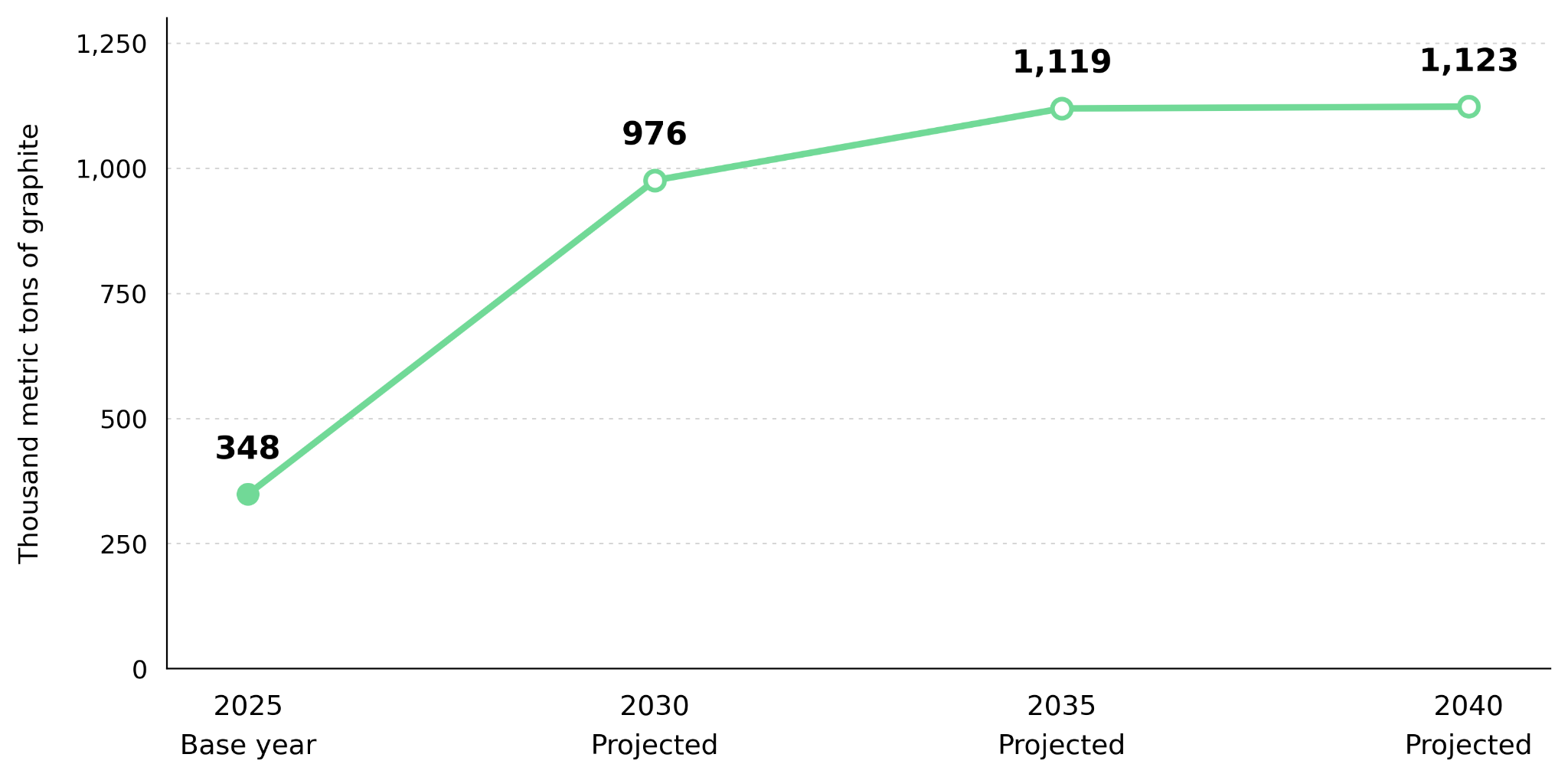
Sovereign Metals is advancing graphite sales discussions toward binding agreements while collaborating with the International Finance Corporation (IFC) on Kasiya’s development financing strategy. Its October 30 report outlines planned annual graphite production of 275,000 tonnes over an initial 25-year mine life. Securing customers and progressing financing would strengthen the commercial foundation for bringing that long-term supply into production.
Sapan Ghai, Chief Commercial Officer of Sovereign Metals, links industrial graphite demand to alternative supply opportunities:
“So, as long as we're processing and refining… they'll need that graphite and we can provide that. Currently, it all comes from China and we can produce it at a lower cost than China today.”
Public Finance Commitments Broaden Funding Options for New Supply
Battery-metal capital spending fell more than 20% in 2025, according to the IEA, increasing the importance of sustained funding for alternative supply. For prospective nickel suppliers, financing flexibility supports continued work with commercial partners and funding providers toward a construction decision.
Canada Nickel extended the repayment deadline for its existing US$27.78 million Auramet loan to February 9, 2027, while advancing discussions with potential buyers, joint venture partners and government funding programs. The extension provides additional time to assemble Crawford’s financing package as the company works toward a construction decision in 2027.
Public-finance commitments for critical minerals in advanced economies reached approximately US$65 billion in 2025, more than four times the 2023 amount, according to the IEA. Equity investments provide project capital, while guarantees protect lenders against specified losses, helping projects assemble construction financing. These tools give governments a direct means of supporting the additional production capacity required to diversify supply.
G7 Diversification Supports Investment Beyond China’s Export Pause
China’s November 9 decision keeps selected additional export controls suspended through January 10, 2027, while the G7’s November 11 declaration maintains policy support for developing alternative critical-mineral supply. Dominant refining countries supplied more than 75% of refined-output growth between 2023 and 2025, showing why broader sourcing requires investment in production outside those countries.
Battery demand grew more than 35% in 2025, while advanced economies committed approximately US$65 billion in public finance for critical minerals, combining a larger market for battery materials with more pledged funding for additional capacity. Projects that connect competitive production costs with customer agreements and construction financing can turn that demand and policy support into saleable nickel, lithium, and graphite supply.
The Investment Thesis for Battery Metals
- Developers can advance defined resources through engineering, permitting, and construction toward revenue-generating battery-metal production outside dominant supply centers.
- Explorers can expand the resource base for diversified supply by identifying deposits and demonstrating that their minerals can be processed into products buyers need.
- Long-term customer agreements can provide visibility over future sales, helping projects secure financing for additional production.
- Competitive operating costs can protect future margins, while access to existing infrastructure can reduce construction spending and funding requirements.
- Public equity participation and loan guarantees can share financing risks, helping alternative supply projects attract private capital.
Battery-metal diversification connects manufacturers’ need for reliable supply with the development of new nickel, lithium, and graphite projects. Customer agreements and access to processing capacity give future output a route to market, while competitive costs and disciplined spending support margins. The long-term investment case rests on converting the G7’s sourcing priorities into commercially viable production and future cash flow, giving diversification an economic purpose that extends beyond individual trade announcements.
TL;DR
China’s suspension of selected additional export controls runs through January 10, 2027, while the G7 continues to support alternative battery-metal supply. Refining remains concentrated, and battery demand grows more than 35% in 2025, strengthening the case for new lithium, nickel, and graphite projects. Public-finance commitments reached approximately US$65 billion in 2025, expanding pledged support for development. The commercial opportunity centers on developers and explorers that can connect resources with processing capacity, customer agreements, and financing. Competitive costs and disciplined construction spending remain central to converting that opportunity into future sales and cash flow.
FAQs (AI-Generated)
Analyst's Notes


Subscribe to Our Channel







Stay Informed


