




Inside the Grade Gap Between Brimstone and Vortex


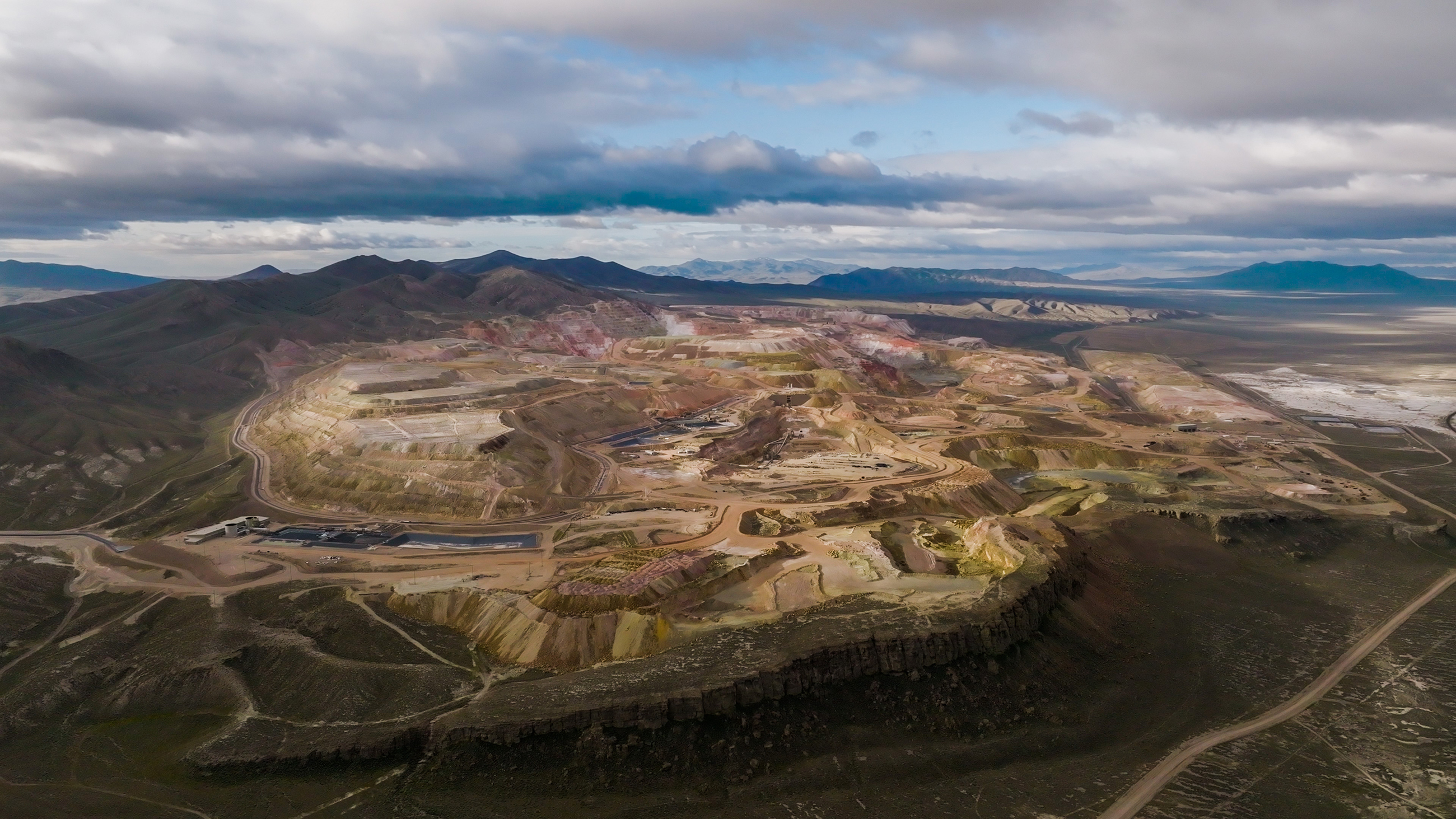
Hycroft's two high-grade silver systems differ in tonnage, grade, geometry, and what remains to be drilled. Brimstone and Vortex, side by side.
- Hycroft's high-grade silver sits in two separately defined systems, Brimstone and Vortex, reported side by side at the same cutoff grade.
- Brimstone holds 3.2 million tonnes measured and indicated, grading 269.54 grams per tonne (g/t) silver.
- Vortex holds 14.9 million tonnes on the same basis, grading 130.14 g/t silver and 0.543 g/t gold.
- Brimstone runs a silver to gold ratio of 3,000:1, against 600:1 at Vortex.
- Brimstone's remaining question is depth, while Vortex remains open to the west.
Hycroft Mining Holding Corporation (NASDAQ: HYMC) describes Brimstone and Vortex as a pair. They sit within the same northern Nevada deposit, they are drilled under one programme, and the company material names the Brimstone and Vortex silver systems together as a single value driver. The table that reports them is less symmetrical. Compared at an identical cutoff grade, the two differ in tonnage, silver grade, gold grade, and the amount of lower-confidence material behind each.
Two Systems Inside One Deposit
Brimstone and Vortex are high-grade silver domains contained inside a far larger low-grade system. Hycroft is a past heap leach operation in northern Nevada now advancing towards processing sulphide mineralisation, and its 2026 resource estimate, effective January 21, 2026, at US$3,100 per ounce for gold and US$36 per ounce for silver, carries 1.53 billion tonnes at 0.333 grams per tonne (g/t) gold and 11.42 g/t silver in the measured and indicated categories. That amounts to 16.4 million ounces of gold and 562.6 million ounces of silver, with a further 5.0 million ounces of gold and 132.8 million ounces of silver classified as inferred. Those resources are not reserves, and detailed economic considerations have not been applied to them.
Inside that envelope, a separate table isolates the high-grade silver-bearing domains at a cutoff of 68.57 g/t silver. That cutoff applies only to those domains. The wider resource is reported at US$2.07 to US$4.00 per tonne for heap-leach material and US$18.44 per tonne for mill feed, so the two sets of figures are not interchangeable. The effective date sets the limit of what the high-grade numbers describe: the estimate predates the drilling carried out through 2026 and captures both systems as they stood at the start of the year.
Tonnage, Grade & Confidence at the Same Cutoff
At the 68.57 g/t silver cutoff, Brimstone carries 3.2 million tonnes measured and indicated, grading 0.368 g/t gold and 269.54 g/t silver, for 38 thousand ounces of gold and 27.7 million ounces of silver. Vortex carries 14.9 million tonnes on the same basis, grading 0.543 g/t gold and 130.14 g/t silver, for 261 thousand ounces of gold and 62.5 million ounces of silver. Together, the two domains hold 18.1 million tonnes at 0.512 g/t gold and 154.71 g/t silver.
The confidence categories separate them further. Vortex adds 3.3 million tonnes of inferred material grading 0.475 g/t gold and 125.20 g/t silver. Brimstone adds 13,000 tonnes. Almost everything defined at Brimstone already falls into the measured category, at 2.9 million tonnes grading 286.35 g/t silver, with only 299,000 indicated tonnes at 106.62 g/t silver following.
Geometry & the Silver-to-Gold Split
The two systems occupy different shapes. Brimstone runs about 380 metres (m) down dip and about 250 m north to south. Vortex runs about 1 kilometre east to west and about 500 m down dip.
Their metal mixes diverge as sharply. Brimstone carries a silver-to-gold ratio of 3,000:1; Vortex, 600:1. The grades behind those ratios account for the split: Brimstone holds the higher silver grade and the lower gold grade, while Vortex reverses that relationship.
Management describes Vortex as defined by breccia, broken rock carrying visible silver in the cut core. The alteration across the deposit is an epithermal system with heavy clay in its upper part, and most of the ore is hosted in more silicified hard rock, with rock strength improving below roughly 200 to 300 m.
Two Different Exploration Problems
What remains unknown about each system points in a different direction. At Brimstone, the open question runs downwards.
Vice President Exploration of Hycroft Mining, Alex Davidson, is direct about which way the Brimstone question runs:
"The challenges that we're facing with the Brimstone are deep. So we're going to keep pushing those holes deeper and farther to the west."
At Vortex, the remaining ground lies sideways. Davidson frames that position differently:
"On the Vortex side, that is still well open to the west. We know that there's a unique opportunity north and south along the central fault zone."
Vortex extends north, south, and west, and the high-grade mineralisation across both systems remains open along trends and at depth. The drilling reflects that division. Management says the hole underway at the north end of the Brimstone pit was planned to about 600 m and was about 500 m down at the time, oriented back to the south to cross the east-to-west structure that controls the mineralisation at depth. Holes are drilled one at a time, interpreted, then offset if the result is promising, with the controlling structure validated from the logged hole before the next collar is positioned.
Access, Sequencing & the 2026 Programme
Conceptual underground access reaches the two systems at different points. It annotates 275 m at Brimstone and 425 m at Vortex, with 950 m marking the horizontal distance between them rather than any depth. Engineering analysis for a decline is underway, with that work targeted for the second half of 2026, and Hycroft is targeting an evaluation of a potential high-grade mining scenario that includes the design of an exploration decline to support future underground mining, improve drilling efficiency, and reduce costs. Mining options remain a large open-pit, a high-grade underground operation, or a hybrid in which high-grade underground complements the pit.
The 2025 to 2026 drill programme covers approximately 26,000 metres of core drilling aimed at expanding both systems, and management says it runs year-round. Additional core rigs are targeted for the second half of 2026. Where the rigs point is where the two systems separate again.
Exploration Manager of Hycroft Mining, Justin Davenport, is precise on where they were pointed:
"This is one of the two core rigs we have on site. The other two drills are working on Vortex at the moment."
Management says high-grade silver gives flexibility to move higher-grade material earlier in mine life.
What Still Has to Be Drilled
Neither system is finished. Management describes both as a long way from being fully understood and fully developed, and says the work ahead will take considerable further drilling and time. Hycroft places the opportunity in its early phases, with a great deal still in the ground.
The scale of what is untested sits behind that. The current resource covers less than 15% of the land position, the system remains open, and mineralisation has been identified outside the resource boundary. The drilling method sets the pace at which any of it converts, because each hole has to be logged and its structure confirmed before the next one is placed.
Brimstone's open question is depth. Vortex's is how far west the system runs.
FAQs (AI-Generated)
Analyst's Notes





Subscribe to Our Channel


Stay Informed






















