Why ATHA Energy's Stock Diverged From Uranium's Equity Pullback


ATHA Energy's stock resilience reflects a 24-month exploration runway and Angikuni's distinct geology as uranium equities pull back despite rising prices.
- In 2026, uranium prices have risen, with the spot price climbing toward multi-decade highs, while many uranium developer equities have pulled back.
- ATHA Energy's capital structure helps explain that resilience: a C$63 million financing completed in the first quarter of 2026 funds roughly 24 months of exploration, removing any near-term need to raise capital in a weak market.
- ATHA's August 2026 corporate presentation lists a share price of C$1.02 as of July 31, 2026, a basic market capitalization of C$343 million, an enterprise value of C$320 million, and 351.6 million basic shares outstanding.
- A second, technical factor: management describes the Angikuni Basin's geological setting as more analogous to a lode gold system than to typical Athabasca Basin hydrothermal uranium deposits, a characterization absent from ATHA's prior public disclosure.
- Assay results from the first batch of 2026 drilling remain outstanding, with a lab turnaround of 6 to 8 weeks from core delivery. Continued drill results are expected from 3 active rigs through year-end.
Uranium prices are climbing. Many uranium developer equities are not. ATHA Energy Corp. (TSXV: SASK | FRA: X5U | OTCQX: SASKF) sits on the right side of that gap, and the reason is not sentiment. Two verifiable facts, one financial and one technical, show up in the company's own disclosure rather than in management commentary alone.
The Balance Sheet Argument Holds Up on the Numbers
The financial case does not depend on taking management's word for it. ATHA closed a C$63 million financing in the first quarter of 2026, funding a 24-month exploration runway. The company's August 2026 corporate presentation confirms what that raise left behind: a share price of C$1.02 as of July 31, 2026, a basic market capitalization of C$343 million, an enterprise value of C$320 million, and 351.6 million basic shares outstanding. That structure removes any near-term need to return to equity markets, the mechanism that forces many exploration-stage companies to price a raise into weakness and compound it.
Chief Executive Officer and Director of ATHA Energy, Troy Boisjoli, described the mechanism directly:
"We raised $63 million in the first quarter of this year, and that was designed to, one, give us a runway of capital to execute a significant work plan and get us through a critical milestone, but two, the underlying effect of that is we're relatively insulated from quarterly volatility, meaning we don't have to go back to the market in the near term."
Insulation from quarterly volatility depends on that runway holding. It is not permanent, and it protects ATHA with less force as the funded period runs out.
The 'Decoupling as Opportunity' Framing Is Common & Not the Real Signal
Every uranium executive presiding over a sector pullback has an incentive to call it a buying opportunity rather than a warning sign. Boisjoli's framing fits that pattern: he pointed to the spot price climbing toward multi-decade highs even as many uranium equities move the other way, reading the gap as an opportunity rather than evidence of a deteriorating sector. That view is not unique to ATHA and, on its own, carries limited evidentiary weight for investors evaluating a specific company.
The balance sheet mechanism is different, and harder to dismiss as sentiment. A company that does not need to raise capital in a weak market is not forced to sell shares at depressed prices, a structural difference from developers still dependent on near-term financing. That distinction, not a view on where the sector is headed, is the more useful basis for separating ATHA's equity performance from the pattern it sits inside.
A Technical Wrinkle That Has Not Featured in ATHA's Prior Disclosure
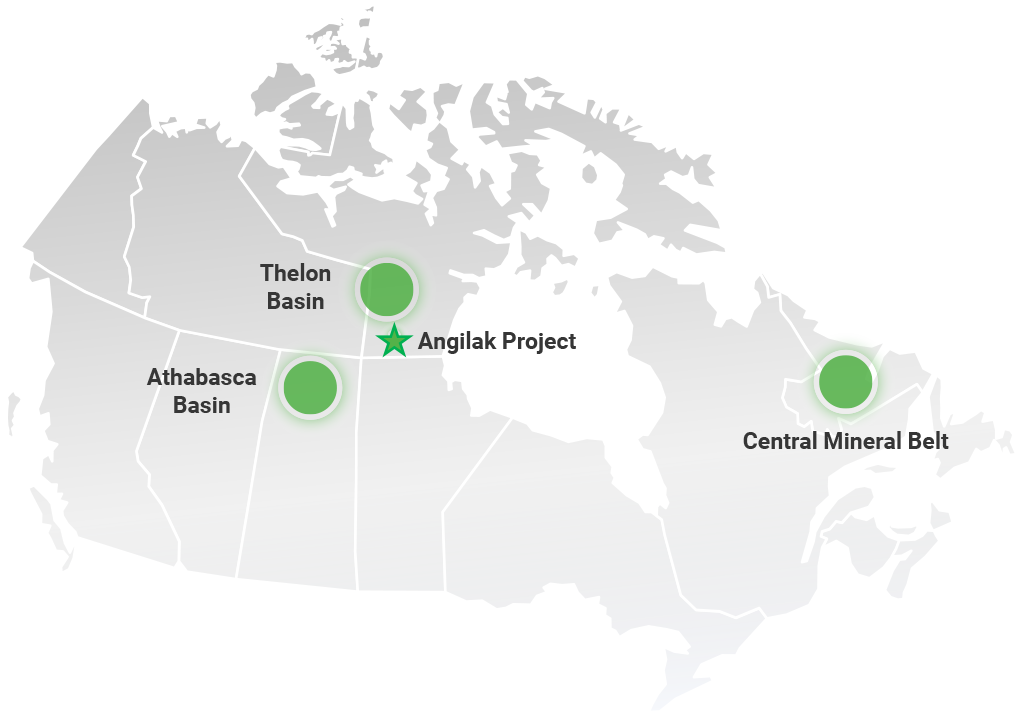
Aside from the financial argument, ATHA's technical characterization of the Angikuni Basin system introduces a variable that is absent from prior public commentary on Lac 50 and the Mineralized RIB Corridor. Management's frame of reference includes Boisjoli's prior role as chief geologist at Cameco's Eagle Point operation and Vice President of Exploration Cliff Revering's background as chief geologist at Cigar Lake, two mines the company lists among Canada's largest uranium mines and deposits. Against that experience, management describes Angikuni's mineralization style as structurally distinct.
Boisjoli explained the comparison:
"We're hitting large-scale graphitic, sulfidic structures that are localizing mineralization, with tens to hundreds of meters of alteration surrounding them. It's indicative of a very large system, and it's actually unique, because the geologic setting, how it's characterized, is more analogous to a lode gold system than a typical hydrothermal uranium system you'd see in the Athabasca Basin."
If accurate, that comparison carries a real investment implication: lode gold systems and hydrothermal uranium deposits typically follow different patterns of continuity and grade distribution, which would change how exploration results at Angikuni should be read against the Athabasca Basin benchmarks investors already know.
No mineral resource estimate has been published for the Mineralized RIB Corridor, and the only disclosed conceptual figure at Angilak remains the Lac 50 Deposit exploration target of 60.8 million to 98.2 million pounds of uranium oxide, which the company states is not National Instrument 43-101 compliant and carries no assurance that further exploration will define a resource. The lode gold characterization is a geological framework, not a resource claim, and has not been tested against a published resource model.
What This Means for Investors
ATHA's divergence from the broader uranium equity pullback rests on evidence that predates any single quarter of sentiment. One pillar is financial: a financing structure that removes near-term dependence on capital markets, as verified in ATHA's own capital structure disclosure. The other is technical: a characterization of the Angikuni system that, if it holds up under further drilling, would distinguish the project's geological behavior from the Athabasca Basin deposits most investors use as a reference point. Assay results from the first batch of 2026 drilling remain outstanding, with a typical lab turnaround of 6 to 8 weeks from core delivery. With 2 of 3 active rigs at the Mineralized RIB Corridor against 1 at Lac 50, drill news flow should arrive more frequently from RIB through year-end. Those results, not management's read of sector sentiment, will determine whether the balance-sheet insulation and technical differentiation continue to justify ATHA's separation from the broader uranium equity pattern.
FAQs (AI-Generated)
Analyst's Notes





Subscribe to Our Channel




Stay Informed