Integrated Uranium and Rare Earth Model Drives Energy Fuels’ $10B Ambition


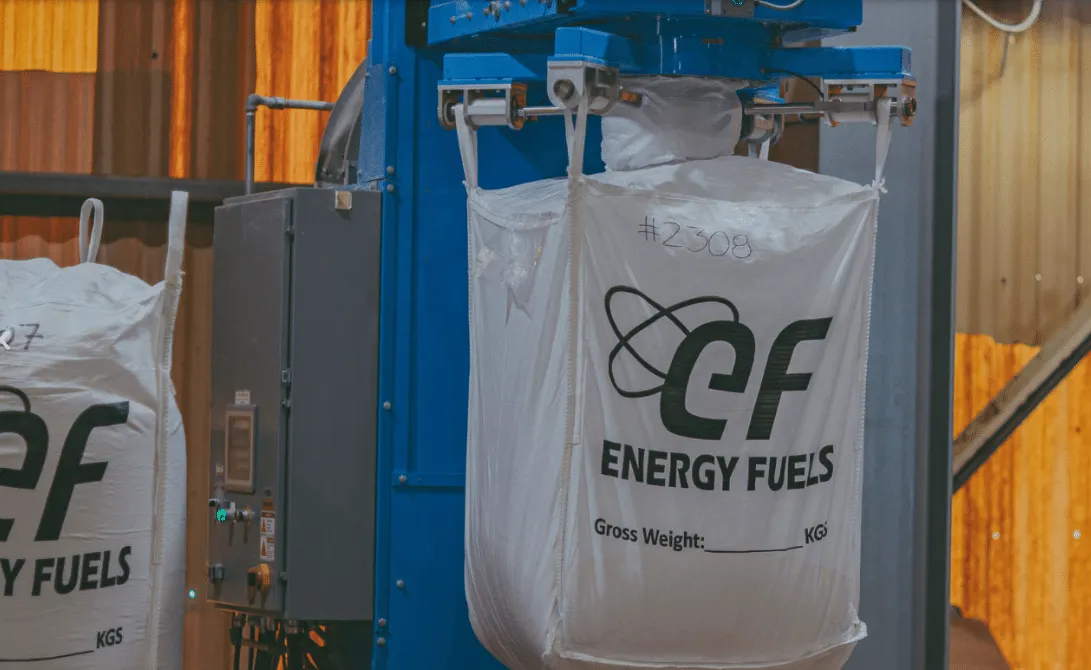
Energy Fuels is building a fully integrated US critical minerals hub spanning uranium and rare earths, with $1B in capital and a $4B NPV project pipeline targeting 2028–30 revenues.
- Energy Fuels (NYSE:UUUU) is constructing the only fully integrated critical minerals supply chain in the Western world, spanning uranium mining, rare earth processing, and metal alloy production across assets in the United States, Australia, and Madagascar.
- The company's uranium division is the highest of any US-based producer, currently guiding for up to 2.5 million pounds of production, providing near-term cash generation to fund its rare earth build-out while uranium prices continue to firm on structural supply-demand deficits.
- A Goldman Sachs-arranged convertible note at just 0.75% interest has pushed Energy Fuels' deployable capital to nearly $1 billion, materially de-risking a previously questioned $2 billion total build-out requirement and attracting renewed institutional confidence.
- The company's rare earth strategy is anchored by a monazite processing pathway that delivers both light and heavy rare earth elements including those critical for permanent magnets in electric vehicles and defence system.
- CEO Mark Chalmers will transition to an exclusive consultant role on 15 April 2026, with Ross Papu assuming the CEO position, while Chalmers affirmed his continued involvement in the company's global strategy and expressed strong conviction that Energy Fuels' best days remain ahead.
Energy Fuels has spent the better part of five years assembling what its management describes as the only fully integrated critical minerals company in the Western world. The company spans uranium mining, rare earth processing, and heavy mineral sands, all anchored by the White Mesa Mill in Utah. With a market capitalisation of approximately $5 billion and a stated ambition to reach $10 billion or more, the company is positioning itself as a cornerstone of the United States' response to Chinese dominance in critical mineral supply chains.
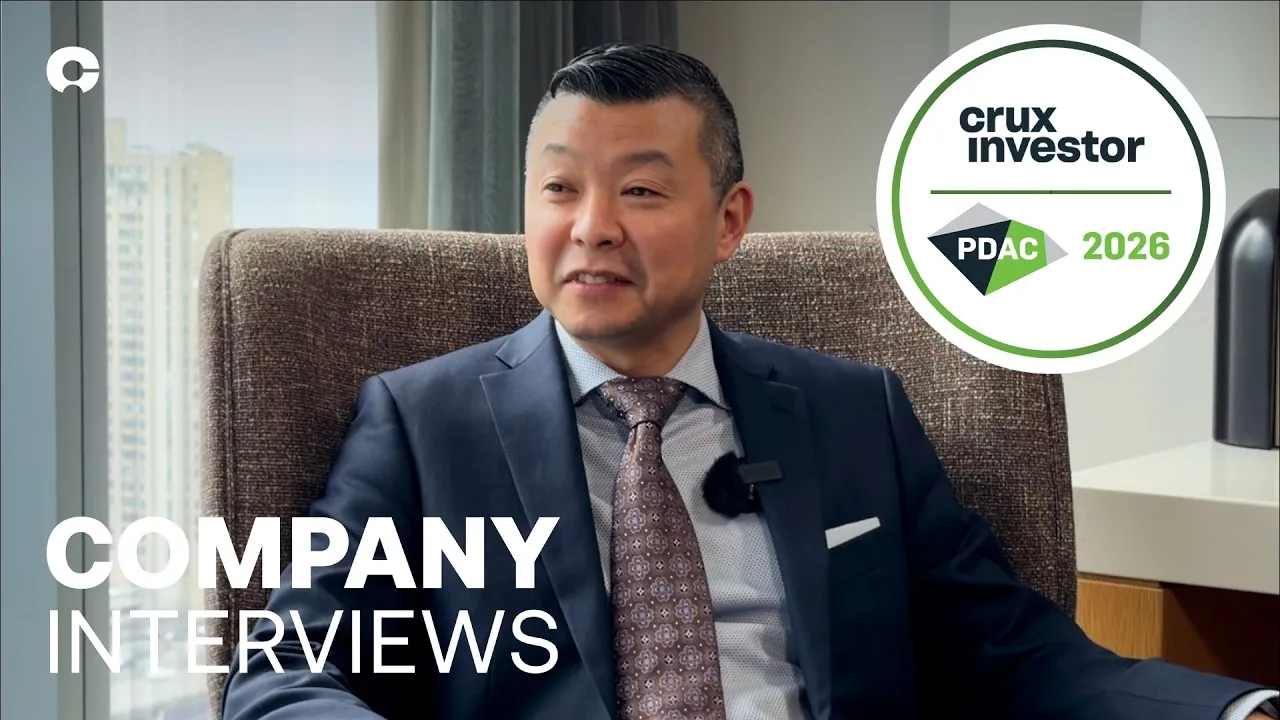
Speaking at PDAC 2026 in Toronto, President and CEO Mark Chalmers provided a detailed update on the company's strategic progress, financing capacity, production outlook, and leadership transition.
The Integrated Model: Why Vertical Integration Matters
The central argument underpinning Energy Fuels' strategy is that fragmentary approaches to rare earth supply chains cannot deliver the scale, speed, or cost competitiveness required to challenge China. While numerous junior companies have attempted to address individual links in the rare earth chain (mining, separation, or alloying), Energy Fuels has pursued end-to-end integration from ore to metal alloys.
The company's rare earth pathway runs from its Donald Project in Victoria, Australia through the White Mesa Mill where it processes monazite, and ultimately to refined rare earth oxides and alloys. The acquisition of Australian Strategic Materials (ASM) added the final alloy production step, completing a chain that few Western companies have assembled.
Chalmers was direct about the importance of this completeness:
"To really compete with China, you have to have all those steps. You can't be missing a step in the middle of it. We've been very focused on the integration at least through alloys and we've got the hydrometallurgy skills, we've got the heavy mineral sand skills, mining and the metal alloy skills."
The skills required at each stage of the chain take years to develop organically, which is why Energy Fuels has pursued acquisitions rather than organic growth to close capability gaps quickly. The company's rare earth processing covers both light and heavy rare earth elements sourced from monazite. Energy Fuels has also developed an Imerys-compatible (IMR) circuit at White Mesa to broaden its feedstock optionality to include ionic clay sources, further differentiating its processing capability.
The Donald Project and Phase Expansion Roadmap
The most immediate catalyst on the rare earth front is a Final Investment Decision (FID) on the Donald Projec. Chalmers confirmed the project is shovel-ready and that the company hopes to enter construction in 2026, with the mine expected to deliver a material volume of monazite to the White Mesa Mill once operational.
Beyond the Donald Project, Energy Fuels is executing a phased rare earth expansion at White Mesa. Phase One involves the addition of a heavy circuit and an IMR circuit. Phase Two for which permitting documents have already been submitted involves a standalone processing plant that would take the company to a scale comparable to Lynas Rare Earths, producing both light and heavy rare earth oxides. The subsequent step, covered under an existing scheme document with ASM, takes the company through to alloy production.
A feasibility study has also been completed on the Vara Mada (previously Toliara) Project in Madagascar, a large-scale heavy mineral sands deposit. Combined with the Phase Two rare earth expansion, Chalmers cited a net present value of close to $4 billion across the two projects, with combined EBITDA potential of $800–$900 million per year at steady-state production.
Interview with Mark Chalmers, President & CEO of Energy Fuels Inc.
Uranium: The Revenue Bridge
While rare earths represent the long-term value proposition, uranium is the company's current revenue driver and cash generator. Energy Fuels issued production guidance of up to 2.5 million pounds of uranium for the current year, the highest guidance of any US-based producer, at what management describes as a competitive cost structure.
Uranium prices have firmed over the past 18 months amid growing recognition of a structural supply-demand deficit, driven by reactor restarts, new build programmes, and limited new mine supply globally. Energy Fuels benefits from this environment through its existing production capacity and a portfolio of conventional and in-situ recovery (ISR) assets across the American Southwest.
Chalmers characterised uranium as a genuine business in its own right, not simply a legacy asset being wound down to fund rare earth ambitions. The uranium operation generates cash that helps fund the rare earth build-out without excessive dilution, providing a degree of financial self-sufficiency that peers focused solely on rare earths cannot replicate.
Financing: Goldman Sachs and the Path to $2 Billion
A persistent investor concern over the past 18 months has been whether Energy Fuels could realistically finance a build-out estimated at approximately $2 billion. That concern has shifted materially following the company's Q42025 completed convertible note arranged by Goldman Sachs, executed at a rate of just 0.75% and completed within one week of the decision being made.
The transaction pushed the company's deployable capital to approaching $1 billion against a $5 billion market capitalisation and has been interpreted by management as a signal that institutional capital markets now regard the $2 billion target as achievable. Chalmers noted:
"I think that's a big reason why that we've had to re-rate in our stock because people are seeing that two billion is achievable by Energy Fuels to build out a world significant, low-cost critical mineral company but also including uranium."
Beyond equity and convertible markets, Energy Fuels is also in dialogue with offtake partners seeking non-Chinese supply, exploring floor price arrangements that would provide revenue certainty; and engaging with both the US and Australian governments as potential sources of concessional financing or supply agreements. The company has maintained that government support is beneficial but not essential to its business case.
Competitive Positioning and Market Opportunity
Chalmers addressed the competitive landscape directly, comparing Energy Fuels to the currently the highest-profile US rare earth company (MP Materials) and the beneficiary of significant government and corporate (Apple) investment. He noted that while Energy Fuels' market capitalization is approximately half that of MP Materials, the two companies occupy complementary rather than competing positions: MP Materials focuses on bastnäsite, which does not contain heavy rare earths, while Energy Fuels' monazite-based processing delivers both light and heavy rare earth elements the latter being particularly important for permanent magnets used in electric motors and defence applications.
Asked whether any competitor could rapidly replicate Energy Fuels' integrated model, Chalmers was sceptical, noting that the skill sets required across the full chain from heavy mineral sands mining through hydrometallurgy to metal alloying take years to acquire and cannot be assembled quickly without significant acquisitions and execution risk.
The Investment Thesis for Energy Fuels
- Unique integrated model: Energy Fuels is the only Western company with demonstrated capability across the full rare earth value chain from mining through to metal alloys, a position that is structurally difficult and time-consuming to replicate.
- Dual commodity exposure: Investors gain simultaneous exposure to uranium (near-term revenue, firming price environment) and rare earths (longer-dated but potentially transformative value creation), without having to choose between the two themes.
- Monazite advantage: Processing monazite rather than bastnäsite gives Energy Fuels access to both light and heavy rare earth elements, including neodymium, praseodymium, dysprosium, and terbium critical inputs for permanent magnets used in EVs, wind turbines, and defence systems.
- Improving capital position: With nearly $1 billion in deployable capital and Goldman Sachs support at favourable terms, the $2 billion financing requirement is increasingly within reach via a combination of equity markets, offtake agreements, and government programmes.
- Offtake and government tailwinds: Structural demand for ex-China rare earth supply from OEMs and Western governments is increasing. Energy Fuels is well-positioned to be a primary beneficiary of US and Australian critical mineral policy, with potential for concessional financing and supply agreements.
- Near-term catalysts: FID on the Donald Project and construction commencement in 2026; Phase One circuit additions at White Mesa; Phase Two permitting outcomes; uranium production delivery against guidance.
- Revenue ramp timeline: Investors should note that full rare earth revenue generation is not expected until 2028–2030. The current investment case requires confidence in the company's ability to execute its build-out over a multi-year horizon. This is a medium-to-long-term position, not a near-term earnings story.
Macro Thematic Analysis: The Ex-China Critical Minerals Imperative
The structural backdrop against which Energy Fuels is building its business is one of the most consequential supply chain challenges facing Western economies. China currently dominates rare earth processing at virtually every stage from mining and separation through to metal and alloy production accounting for an estimated 85–90% of global rare earth processing capacity. This dominance is not accidental; it reflects decades of deliberate industrial policy, subsidized production, and tolerance for environmental costs that Western jurisdictions have not replicated.
The challenge is not simply one of mining. Multiple separation, processing, and alloying steps lie between ore in the ground and a magnet-grade alloy, and each step requires specialised chemistry, equipment, and engineering capability. Western attempts to rebuild these capabilities have largely stalled at the separation stage, leaving downstream steps as persistent bottlenecks.
Government funding has flowed to individual fragments of the chain, but without an integrated solution, individual investments risk stranding without a complete pathway to end product. The market is beginning to recognise that integration is the prize.
The strategic consequences of this concentration have moved from academic concern to policy priority. The US, Australia, Canada, the EU, and Japan have all identified rare earth supply chains as critical vulnerabilities, particularly in the context of permanent magnet production for electric vehicles, wind turbines, and defence platforms. The rare earth elements required for high-performance permanent magnets, notably dysprosium and terbium among the heavies, and neodymium and praseodymium among the lights, cannot currently be sourced at scale from non-Chinese supply chains.
TL;DR
Energy Fuels is at an inflection point. The company has moved beyond concept and into execution on one of the most ambitious critical minerals strategies in the Western world assembling a fully integrated rare earth supply chain at a time when demand for ex-China supply has never been higher. Uranium revenues provide a credible bridge to rare earth cash flows, the balance sheet has been materially strengthened, and institutional interest evidenced by Goldman Sachs' involvement has grown sharply. The leadership transition introduces a degree of uncertainty, but Chalmers' continuing consultancy role and the maturity of the team being built around the strategy provide some reassurance. The key variables for investors to monitor are the pace of Donald Project construction, White Mesa expansion milestones, uranium price dynamics, and the terms of any government or offtake arrangements that materialise over the next 12–18 months.
Frequently Asked Questions (FAQs) AI-Generated
Energy Fuels is the only Western company with demonstrated capability across the entire rare earth value chain — from heavy mineral sands mining and monazite processing through to separated oxides and metal alloys. Most competitors occupy a single segment of that chain. This end-to-end integration is the core of its competitive positioning and the primary reason it is attracting attention from governments and institutional investors.
Monazite contains both light and heavy rare earth elements, whereas bastnäsite — the feedstock used by US peer MP Materials — contains predominantly light rare earths. Heavy rare earths, particularly dysprosium and terbium, are essential for high-performance permanent magnets used in electric vehicles, wind turbines, and defence applications. Processing monazite gives Energy Fuels access to a more strategically valuable and complete rare earth profile.
Management has guided that full rare earth revenues are expected to ramp from approximately 2028 to 2030. In the interim, uranium production — guided at up to 2.5 million pounds for the current year — provides the primary revenue base. The two flagship projects, Phase Two rare earth expansion and the Vera (formerly Toliara) heavy mineral sands project, carry a combined NPV of close to $4 billion and a combined EBITDA potential of $800–$900 million per year at steady-state operation.
The company recently completed a Goldman Sachs-arranged convertible note at 0.75% interest — closed within one week — bringing deployable capital to nearly $1 billion against a $5 billion market capitalisation. Additional financing levers include offtake agreements with floor price structures for non-Chinese rare earth buyers, and potential concessional support from the US and Australian governments. Management regards the $2 billion target as achievable through a combination of all three channels.
Mark Chalmers, the architect of Energy Fuels' integrated critical minerals strategy, will transition to exclusive consultant with Ross Bhappu becoming CEO. Chalmers has been explicit that he will remain actively involved in the company's global strategy under a formal agreement. While any founder transition carries execution risk, the depth of the team being assembled and Chalmers' continued engagement are intended to provide strategic continuity.
Analyst's Notes





Subscribe to Our Channel

.jpg)











Stay Informed