IsoEnergy’s Funded Tony M Restart Anchors a Disciplined Growth Strategy


.webp)
IsoEnergy: world's top-grade uranium deposit, $150M cash, US mine restart underway, 6x oversubscribed raise, NexGen-backed, Canada/US/Australia diversified platform.
- IsoEnergy is a diversified uranium developer, explorer, and near-term producer operating across Canada, the US, and Australia - jurisdictions the company deliberately chose by design, and which have proved to be among the world's most favourable for uranium.
- The company's recent $50 million capital raise attracted over $300 million in demand - more than six times oversubscribed - from 45 global institutional investors, many of them new to IsoEnergy, signalling a dramatically broadened institutional appetite for quality uranium names.
- Hurricane, IsoEnergy's flagship Athabasca Basin deposit, is the highest-grade uranium resource in the world at 34.5% grade and 48.6 million pounds; it straddles a property boundary with Cameco-Orano's Dawn Lake, whose operators have publicly confirmed high-grade mineralisation analogous to Cigar Lake and McArthur River on their side.
- IsoEnergy's portfolio sequencing strategy - advancing Tony M first, then Daneros and Rim, then Australian assets - allows the same core technical team to move expertise from project to project, addressing the critical global scarcity of experienced uranium mining professionals.
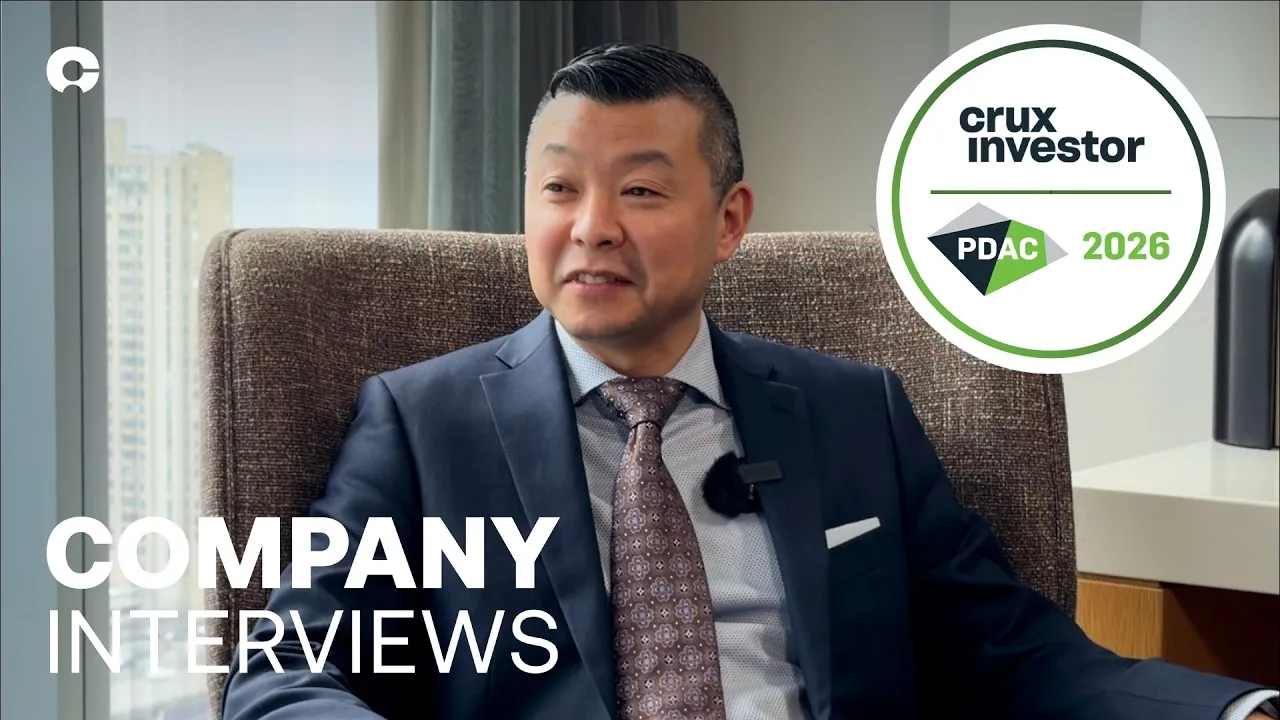
IsoEnergy (TSX:ISO | NYSE:ISOU) CEO Philip Williams sat down at PDAC 2026 - the world's largest mining conference, which this year drew a record 45,000 attendees - to discuss how the company is positioned across its multi-jurisdiction portfolio and what investors should understand about its strategy, capital structure, and near-term milestones. The conversation covers the evolution of institutional interest in uranium, the quality and upside of IsoEnergy's core assets, its philosophy on contracting and capital allocation, and the macro conditions shaping the sector.
A Different Market in 2026
Williams opened with an honest assessment of recent market conditions. While the uranium sector has broadly trended positively over the last five years, he acknowledged that 2025 was a tougher year for uranium juniors, with the market "whipsawing around." The mood at PDAC 2026, however, felt materially different.
"This year, it feels like we're in a much better place. Globally, it just seems to me like people are getting it and the interest is palpable in uranium."
Williams observed that the sector is beginning to stratify - separating larger, better-capitalised names with strong management teams and quality jurisdictions from smaller, less differentiated companies. While new uranium companies continue to list publicly, he does not believe the market is back to the frenetic pace of 2006–07 when "a new uranium company was being formed every other day." What he does see is a gradual market movement toward quality: better management, better jurisdictions, and better projects. He also suggested that new and interesting stories are beginning to emerge at the larger end of the spectrum, something he is watching closely.
Institutional Capital: A Structural Shift
Perhaps the most instructive part of the discussion for investors was the contrast Williams drew between the capital markets environment of 2020, when Consolidated Uranium was founded, and today. In 2020, the only investors willing to back a uranium consolidation vehicle were a small, dedicated group of uranium specialists. Most of them told Williams his business plan was not achievable, yet funded it anyway because they had nowhere else to go. There were no generalists, no multi-commodity resource funds, and no global institutions writing large cheques.
That world no longer exists. When IsoEnergy went to raise $50 million earlier in 2026, the book attracted over $300 million in demand - more than six times oversubscribed. "There were 45 different institutional investors that came into that financing. Lots of new names. At least half them were new names," Williams said. These were global institutional investors seeking to deploy significant capital into a sector they now understand and believe in. Williams was careful to note that IsoEnergy's scale and track record enable it to attract a calibre of investor unavailable to smaller names, but said the financing is "instructive to what's happening in the space" more broadly.
Building the Portfolio: Jurisdiction, Sequencing, and Asymmetric Upside
Williams described IsoEnergy's portfolio construction as deliberate on two levels. First, the company chose Canada, the US, and Australia - all strong jurisdictions at the country level. Second, within those jurisdictions, the company selectively entered sub-regions that were less in favour, where asset quality and the prospect of asymmetric returns justified taking on incremental sub-jurisdictional risk. Those projects typically require less active capital and management attention, providing portfolio optionality without straining resources.
The broader strategic logic is sequencing. Rather than advancing multiple projects simultaneously - which would require enormous simultaneous capital deployment and an impossibly large skilled team - IsoEnergy stages projects so that each one can absorb the full technical attention of its core team before the next one is activated. In Utah, Tony M goes first, then Daneros, then Rim Mine. Once those operations are running steadily, the technical team's development expertise migrates to the Australian assets. "It's walk before we run," Williams explained, noting that the team envisages roughly 80 to 100 people at the Tony M project at full development - a realistic and manageable number that can then be built upon.
Interview with Philip Williams, CEO, IsoEnergy Ltd.
Hurricane: The World's Highest-Grade Uranium Deposit
The Hurricane deposit at IsoEnergy's Larocque East property in the Athabasca Basin of Saskatchewan remains the company's most compelling exploration asset. Discovered in 2018 and subject to an initial resource estimate published in 2022, Hurricane holds 48.6 million pounds of U₃O₈ at an average grade of 34.5% - the highest-grade uranium resource in the world.
The deposit crosses a property boundary, with Cameco and Orano's Dawn Lake project on the adjacent side. Williams noted that Dawn Lake's operators have stated in their most recent annual MD&A that they are encountering high-grade mineralisation at the tenor, size, and scale of existing Athabasca Basin mines - specifically analogous to Cigar Lake and McArthur River, the two largest uranium mines in the world, each producing approximately 18 million pounds per year with long production durations. Williams was direct about what this means: there is likely more to be found on IsoEnergy's side of the border, and the company intends to find it. The company began a winter drill program of just over 5,000 metres with two rigs and has since decided to expand it from 12 to approximately 15–16 holes. "We're not going to leave any stone unturned on that project," he said, noting that he was "very encouraged" by what the program has produced, though unable to pre-disclose results.
One key geological nuance Williams explained is the exceptional density of high-grade uranium mineralisation in the Athabasca Basin. High-grade lenses of 5 to 10 million pounds can hide between drill holes spaced at what would be considered sterilised distances in any other uranium district. A drill hole can exit a high-grade zone within two feet. This means that Hurricane's current resource is almost certainly not the full picture, and that methodical close-spaced drilling has real potential to add material pounds to the resource.
Tony M Mine: Path to Near-Term US Production
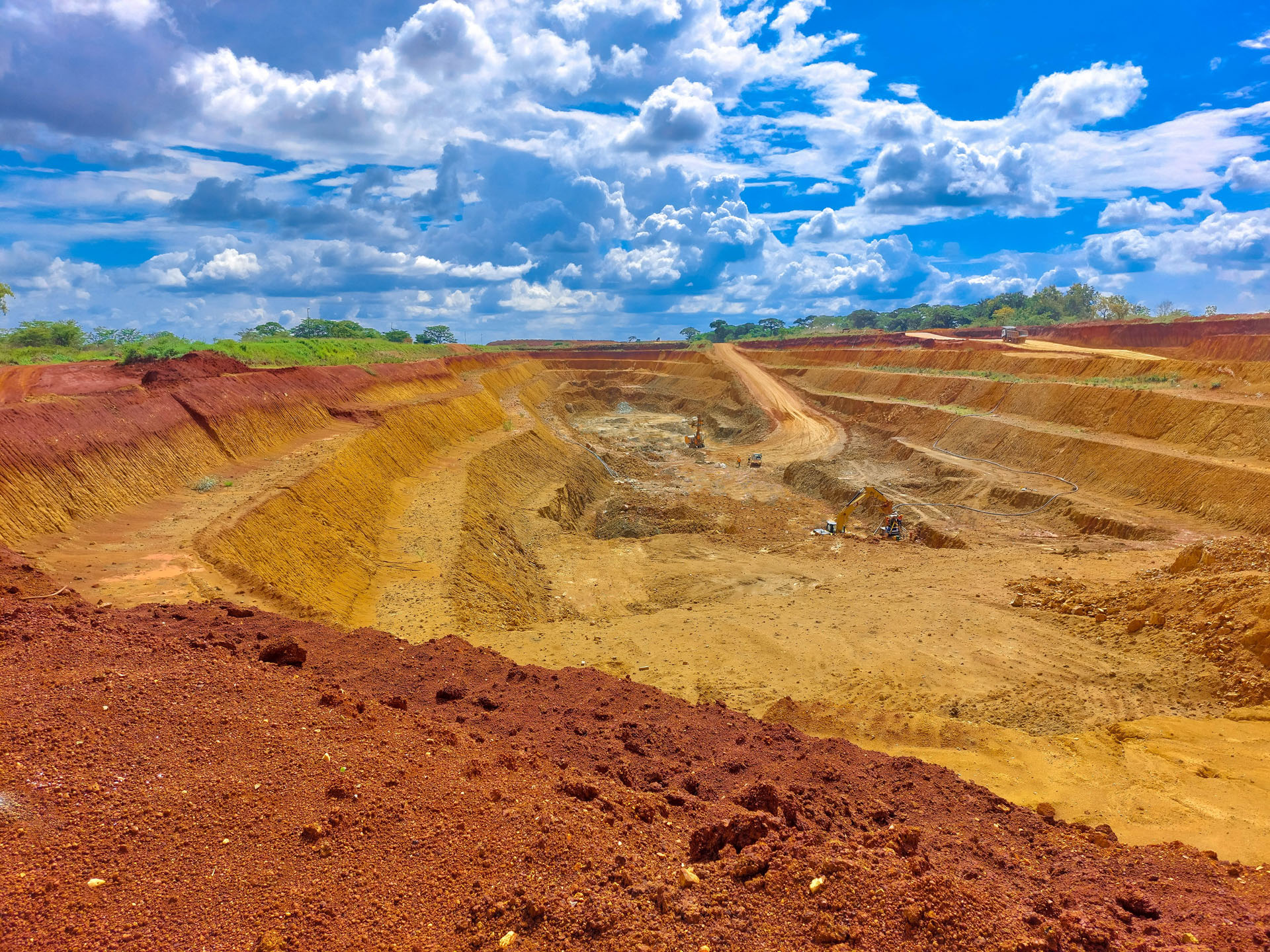
The Tony M Mine in Utah is IsoEnergy's most advanced near-term production asset. The company is currently conducting a bulk sample program underground, which is providing the data needed to reconcile the geological model with the mine plan, establish mining rates, and confirm costs - all the inputs required to make a fully informed final investment decision on mine restart. Williams confirmed that, with the approximately $150 million in cash on its balance sheet, the company is fully funded for that decision and the subsequent restart without needing to take on debt or sign contracts from a position of necessity.
Williams described the broader Utah strategy clearly: Tony M begins first and will take a couple of years to ramp. As that operation matures, Daneros and Rim come online - with each project building on the team, infrastructure, and operational knowledge established by its predecessor. Eventually, the development team's attention shifts to Australia. This is a coherent industrial logic, not merely a financial one. Skilled uranium mine developers and operators are, in Williams' own words, "very hard to find," and having the flexibility to move technical expertise sequentially rather than diluting it across simultaneous projects is a genuine competitive advantage.
Government Capital and the Critical Minerals Tailwind
A significant development Williams highlighted was the active and visible presence of US government agencies at a major institutional mining conference in Florida in late February 2026. Representatives from the Department of War, the Department of Energy, the Export-Import Bank (EXIM), and the Development Finance Corporation (DFC) were all in attendance - presenting on stage and holding meetings. Williams had not seen this at the same conference in prior years.
"They sat up on stage and basically advertised themselves: come talk to us, we have money to deploy in critical minerals."
The natural bias of these agencies is toward American projects, and IsoEnergy has a direct seat at that table with its Utah and Virginia assets. But Williams also identified Australia as a potential beneficiary through the forming US-Australia critical minerals partnership. He suggested this partnership could become a catalyst for IsoEnergy's Australian assets and could encourage the Australian government to take a more supportive posture toward uranium development domestically. The participation of utilities and technology companies - which Williams described as "the next wave" of capital entering the uranium space - adds further structural depth to institutional demand. He specifically noted that North American and European utilities may be behind the curve relative to countries actively building new nuclear capacity, and that catching up will require more active engagement with uranium producers.
The Investment Thesis for IsoEnergy
- World-class deposit with open resource: Hurricane is the highest-grade uranium deposit on earth at 34.5% grade and 48.6 million pounds - the deposit remains open at depth and along strike, with an active drill program underway
- Near-term production at low incremental capex: Tony M Mine is a permitted, past-producing asset undergoing bulk sampling ahead of a final restart decision - no greenfield construction risk, infrastructure already in place
- ~$150 million cash, fully funded: The company is funded for the Tony M production decision and Hurricane drill expansion without needing new equity or debt, providing both financial stability and contracting flexibility
- Six-times-oversubscribed capital raise: Over $300 million in demand from 45 global institutional investors for a $50 million raise signals deep institutional conviction and a broadened shareholder base
- Staged portfolio sequencing: Tony M → Daneros → Rim in Utah, then Australian assets - a disciplined approach that manages both capital deployment and the scarce resource of experienced uranium mine builders
- Government capital access: US government agencies are actively deploying capital in critical minerals; IsoEnergy's Utah, Virginia, and Australian assets are directly positioned to access this funding channel
- Contracting from strength: Low capex restart model means IsoEnergy can select contract terms based on value maximisation, not financial necessity - avoiding the mistakes of prior cycle producers
- 2026 described as a "tremendous year": Multiple catalysts converging - Hurricane drill results, Tony M production decision, and a record-attendance PDAC confirming sector momentum
Macro Thematic Analysis
The uranium market in 2026 is structurally different from prior cycles. Demand for nuclear power is accelerating across electricity grids, data centres, and national energy security programmes, while supply has been structurally underfunded for over a decade following Fukushima. New institutional capital - generalists and multi-commodity funds previously absent from the space - is now actively seeking the highest-quality uranium names, concentrating capital in companies with proven management and tier-one assets. Governments are no longer passive; the US is deploying agency capital into critical minerals with urgency. The weight of this demand against constrained supply points to a sustained higher price environment. As Williams put it:
"When you look at demand doubling or more by 2040 and no real understanding of where the supply is coming from - prices, I think, do have to stay higher for longer in order to incentivise that."
TL;DR
IsoEnergy is a fully funded, multi-jurisdiction uranium developer with the world's highest-grade deposit at Hurricane, a near-term production restart advancing at Tony M in Utah, and a $50 million capital raise that attracted over $300 million in demand from 45 global institutions. With approximately $150 million in cash on its balance sheet, NexGen Energy as a 30% anchor shareholder, and a deliberately sequenced portfolio spanning Canada, the US, and Australia, the company is structurally positioned to maximise the value of every pound it produces rather than rushing to production on unfavourable terms. Multiple near-term catalysts - Hurricane drill results, a Tony M production decision, and the closing of the Australian acquisition - make 2026 a pivotal year for the company.
FAQ (AI-Generated)
The raise was opportunistic, capturing exceptional institutional demand. It adds balance sheet depth and flexibility across Hurricane drilling, Tony M restart, and the Australian acquisition - without creating financial pressure on any single project.
The bulk sample program is currently generating the geological and cost data needed. Once studies are complete, the company can roll straight into a production decision, subject to market conditions, fully funded from existing cash.
At 34.5% grade and 48.6 million pounds, it is the highest-grade uranium resource in the world. Its adjacent neighbour, Dawn Lake, has independently confirmed similar high-grade mineralisation, pointing to basin-scale potential.
The company believes premature fixed-price contracts cost producers significant value when uranium prices spike - as seen in prior cycles. With low restart capex and no debt requirement, IsoEnergy can negotiate from strength, not necessity.
Experienced uranium mine builders are globally scarce. Sequencing projects allows IsoEnergy's technical team to focus expertise at each stage rather than diluting it - reducing execution risk and staffing costs across the portfolio.
Analyst's Notes





Subscribe to Our Channel











Stay Informed