LOTUS Resources Delivers First High-Grade Ore at Kayelekera, Reports 70.1 klb Production



LOTUS reports December quarter results with first ore delivery at Kayelekera, 70% acid consumption reduction at Letlhakane, and A$56.2 million cash position
- First high-grade ore delivered from Kayelekera mining pit to run-of-mine pad following commencement of production blasting in November 2025
- Produced 70.1 thousand pounds of uranium oxide concentrate with processing operations impacted by sulphuric acid supply constraints during November and December
- Letlhakane metallurgical testwork by ANSTO indicates approximately 70% acid consumption reduction compared to previous flowsheet, with 6-8% lower uranium extraction
- Phase 1 infill drilling at Letlhakane completed with 4,423 metres across 71 holes in Serule West area, with updated Mineral Resource Estimate expected mid-2026
- Cash balance of A$56.2 million at 31 December 2025, with additional A$7.2 million equipment finance facility drawn post-quarter
LOTUS Resources Limited (ASX:LOT) is an Australia-based uranium producer with operations in Africa. The company holds an 85% interest in the Kayelekera Uranium Mine in Malawi, which restarted production in August 2025, and 100% ownership of the Letlhakane Uranium Project in Botswana. Kayelekera hosts current Mineral Resources of 40.1 million tonnes at 510 parts per million and Ore Reserves of 15.9 million tonnes at 660 parts per million. The mine historically produced approximately 11 million pounds of uranium between 2009 and 2014. Letlhakane hosts a Mineral Resource of 142.2 million tonnes at 363 parts per million.
Kayelekera Operations and Production Results
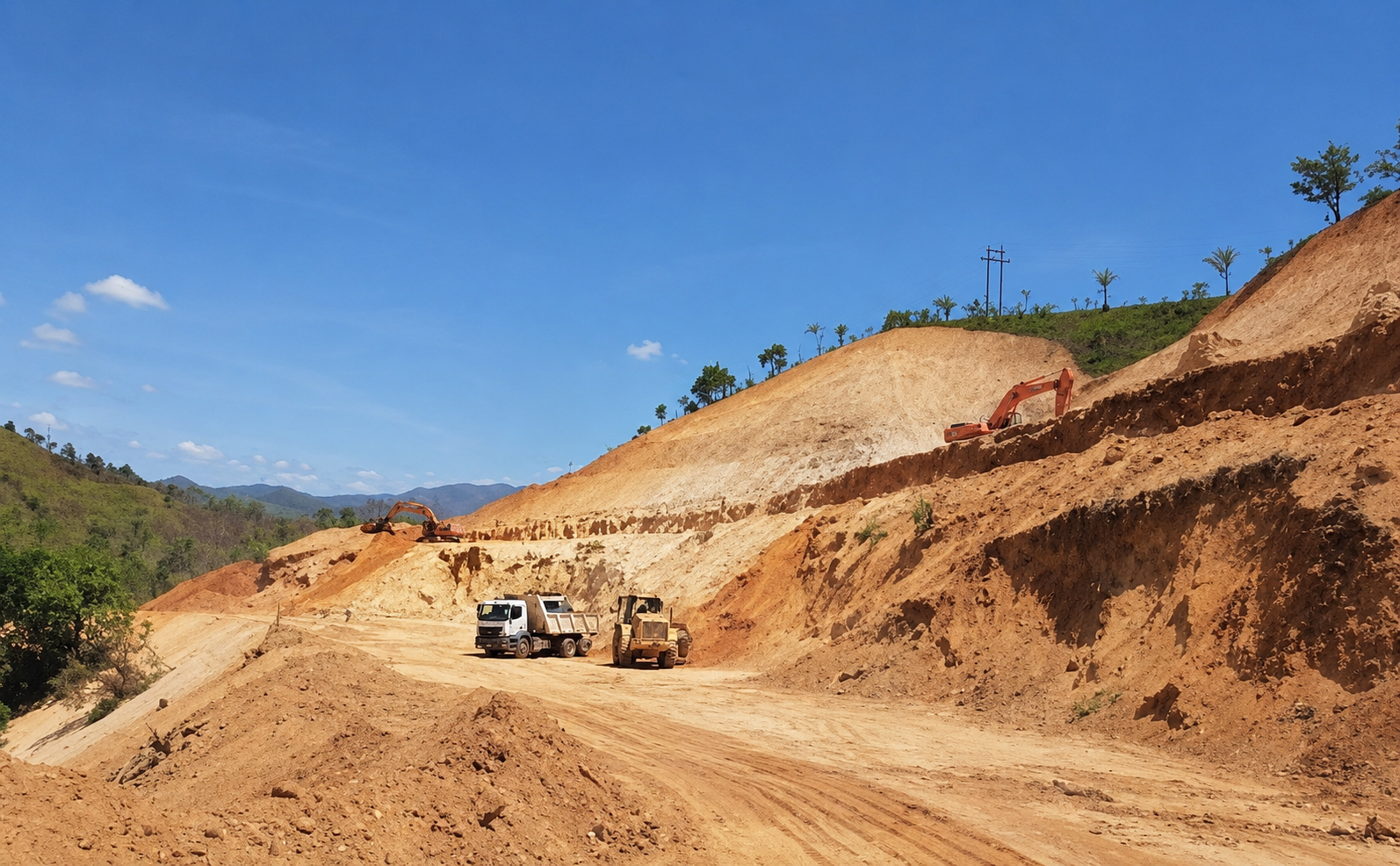
The December quarter saw the delivery of first high-grade ore from the mining pit to the run-of-mine pad following four production blasts. Total material movement reached 276.9 thousand tonnes, comprising 11.8 thousand tonnes of ore at 612 parts per million grade and 265.0 thousand tonnes of waste. Mining activities focused on establishing mining fronts, resulting in a strip ratio above the projected life-of-mine ratio of approximately 1.8. At quarter end, ore stockpiles totalled approximately 1.4 million tonnes at 695 parts per million average grade, with 156 thousand tonnes of high-grade material at 917 parts per million immediately available to the plant.
The operation produced 70.1 thousand pounds of uranium oxide concentrate during the quarter. Processing totalled 85.5 thousand tonnes at a mill head grade of 1,081 parts per million with uranium recovery of 82.1%. During a 15-day continuous operation period in November, the processing plant achieved 18.2 hours per day uptime, milling throughput averaged 138 tonnes per hour with maximum hourly throughput of 172 tonnes per hour (70% and 88% of nameplate milling throughput respectively), and preliminary recovery averaged approximately 83%.
Sulphuric acid availability disrupted production during November and December due to production challenges at Zambian supply sources. The company has established supply contracts with three parties and is sourcing additional supplies from South Africa alongside Zambia. The acid plant rebuild remains scheduled for commissioning and production during March 2026, with first sulphur delivered to site. Since the mid-January restart, mill throughput of 113 tonnes per hour (approximately 57% of nameplate level) has been maintained with 22 hours daily run time. The company now expects steady-state operational production rates of approximately 2.4 million pounds per annum to occur in the second quarter of calendar year 2026 when the acid plant is fully operational. Product qualification with converters is progressing with results expected in February 2026, with first shipment forecast for the second quarter of calendar year 2026.
Letlhakane Project Metallurgical Testwork and Drilling Programme
Metallurgical testwork by the Australian Nuclear Science and Technology Organisation (ANSTO) indicates potential for approximately 70% reduction in acid consumption compared to the previous project flowsheet, at the cost of 6-8% reduction in uranium extraction. ANSTO completed four column leach tests under various acid concentration conditions. The testwork applied a two-stage leaching process where high acidity is only used in the second stage, compared to the previous high acidity leach approach that averaged approximately 40 kilograms of acid per tonne of ore.
The testwork programme generated pregnant leach solution with sufficiently low acidity (less than 15 grams per litre) to be purified and concentrated with ion exchange technology at ANSTO facilities, which was then precipitated to produce uranium concentrate product. Based on these results, the processing flowsheet can be simplified by removing solvent extraction. CM Solutions has been engaged to construct a dynamic model of the heap leaching system for scale-up and process balance generation, with outputs to be used for project progression and larger scale testwork design.
Phase 1 of the infill drilling programme was completed in late 2025, focusing on the Serule West area with 63 reverse circulation holes and eight diamond core holes totalling 4,423 metres at an average hole depth of 62 metres. The drilling programme primarily aims to upgrade Inferred Mineral Resources (approximately 50% of total resource in Gorgon and Serule West areas) to Indicated and Measured status. Assay results from Phase 1 drilling are still to be received. Phase 2 completion is expected in early 2026 following the seasonal wet period. Once the full 13,500-metre programme is completed, results will be incorporated into an updated Mineral Resource Estimate around mid-2026. Orelogy has been engaged to review mining costs and scheduling to balance strip ratios against processing costs and heap leach head grades.
Financial Position and Capital Deployment
LOTUS reported cash of A$56.2 million as at 31 December 2025, down from A$96.7 million at 30 September 2025, excluding restricted cash of US$10.0 million held as environmental bond collateral. Net cash used in operating activities was A$1.5 million, primarily related to corporate and administrative expenses including staff costs. Exploration and evaluation expenditure at Letlhakane totalled A$1.3 million. Property, plant, equipment and assets expenditure associated with the Kayelekera accelerated restart amounted to A$39.3 million.
The company has an equipment finance facility of US$8.5 million with First Capital Bank, which provides funding for 70% of mobile equipment costs and 80% of light vehicles and buses. As at 31 December 2025, US$2.6 million had been drawn. Following quarter end, an additional US$4.8 million was drawn, bringing total drawdowns to US$7.4 million. The facility has a five-year term from first drawdown in October 2025 with monthly repayments and no principal or interest repayments in the first six months. The floating interest rate is SOFR plus a premium, currently less than 10% per annum.
The company is considering additional financing alternatives including prepayment and inventory financing structures which would enable monetisation of product during the delivery period. With 90% of 2026 contracted commitments of 1.0 million pounds scheduled for second-half deliveries, these structures would address working capital requirements. The term uranium price increased to US$87 per pound at quarter end. The company states it sees value in preserving uncontracted pounds and building inventories given current uranium pricing conditions.
Near-Term Operational Milestones
The acid plant rebuild is scheduled for commissioning and production commencement in March 2026, with mechanical and electrical completion now exceeding 90%. Product qualification with converters is progressing with results expected in February 2026, a requirement for commencing the permitting process for first product shipment. Tailings storage facility embankment raises for Phases 1A and 1B are underway. The grid connection project has detailed design and procurement advanced with construction teams mobilised during the quarter, targeting completion by end of calendar year 2026.
At Letlhakane, Phase 2 drilling will resume following the wet season to complete the full infill programme. The operation recorded no lost time injuries during the quarter, with operations on track to reach two million person-days without lost time injury by end January 2026.
Analyst's Notes





Subscribe to Our Channel



Stay Informed