




Cabral Gold Pours First Gold, Charts a Dated Path to Phase 2 Hard Rock


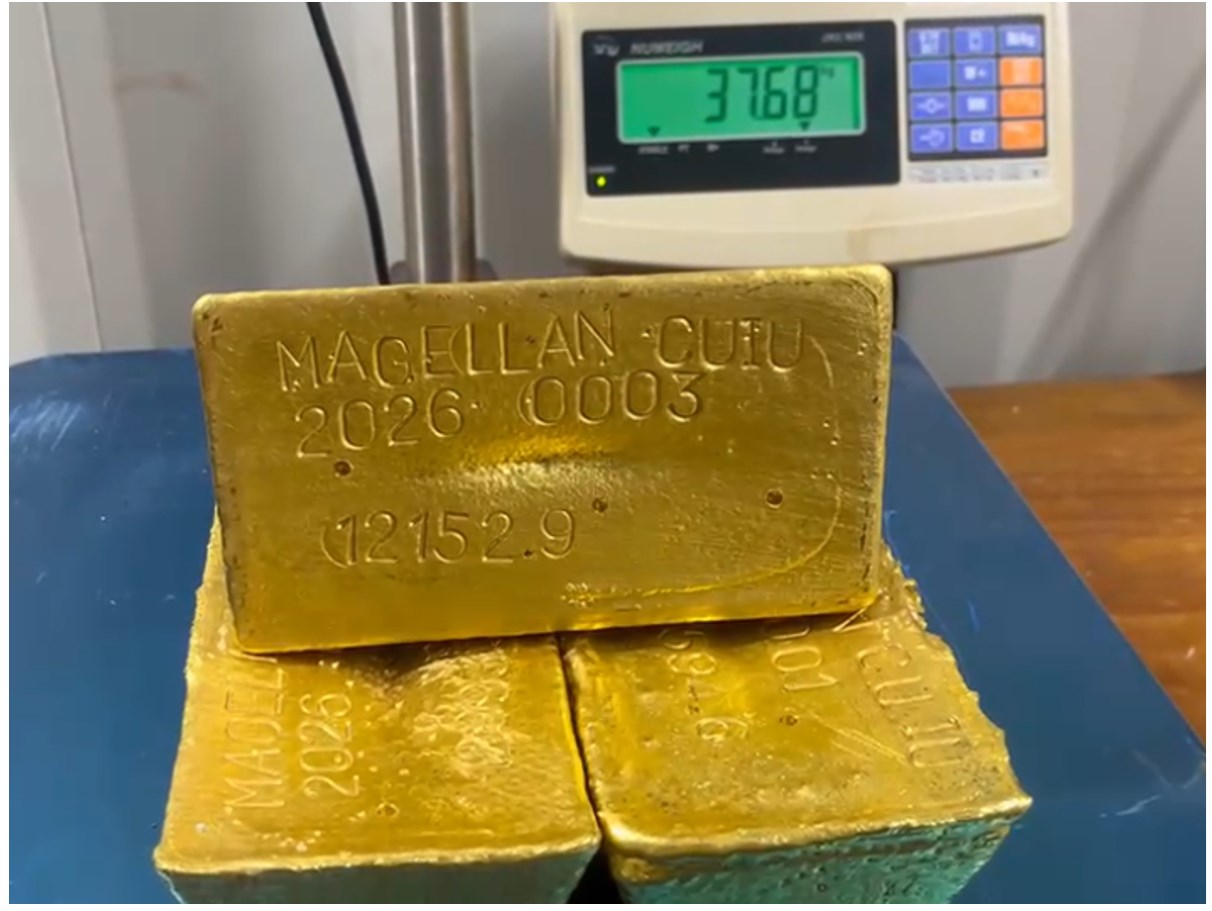
Cabral Gold pours 1,130 ounces at Cuiú Cuiú ahead of schedule, targeting commercial production in 2026 and a Phase 2 hard rock PEA in 2027.
- Cabral Gold poured its first gold on September 10, 2026, producing approximately 1,130 ounces at the Phase 1 Cuiú Cuiú heap leach mine in Brazil, roughly 6 weeks ahead of schedule.
- The company is currently mining under a trial mining license capped at 500,000 tons of ore and expects to secure the Operating License for its Full Mining License, covering 1 million tons, within the next 2 months.
- Management will not issue 2026 production guidance during ramp-up but is targeting formal guidance for 2027, with commercial production internally benchmarked at approximately 60% of design throughput.
- Life-of-mine all-in sustaining costs (AISC) are targeted at approximately $1,210 per ounce against a current gold price of approximately $4,300 per ounce, with initial annual production of approximately 25,000 ounces.
- Three-quarters of the gold in Cabral's resource base sits in hard rock material beneath the oxide caps now being mined, and a Preliminary Economic Assessment on that Phase 2 hard rock operation is targeted for the first half of 2027.
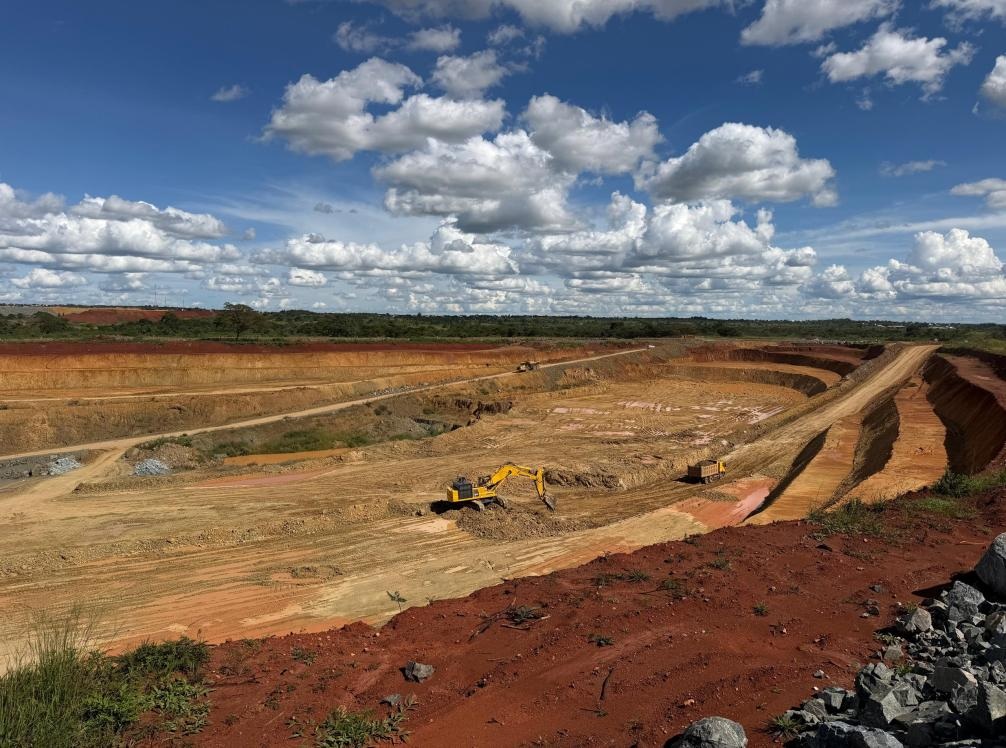
Cabral Gold Inc. (TSXV: CBR | OTCQX: CBGZF) has poured its first gold at the Phase 1 heap leach mine in its Cuiú Cuiú district in Pará state, Brazil, becoming the newest producing gold mine in the country. The pour, confirmed in a September 10, 2026 announcement, arrives about 6 weeks ahead of the company's own construction schedule. What makes this update more than a construction milestone is the detail management has now provided on what comes next: a specific, dated sequence of steps to upgrade the mining license, define commercial production, and ultimately unlock the much larger hard rock resource beneath the oxide material now being processed.
What Has Happened
The September 10 announcement confirmed a first gold pour of approximately 1,130 ounces, produced as the wet processing circuit nears completion. The dry circuit, covering ore handling through to heap stacking, was fully commissioned in July 2026. The wet circuit's final major component, the adsorption, desorption and recovery (ADR) plant, was assembled in Perth, Australia, shipped to site, and is now installed, with electrical work approximately 90% complete at the time of the interview.
Cabral has also cleared its remaining near-term permitting steps ahead of the pour. The company holds the Operating License needed to run the Phase 1 operation and has received Brazilian military authorization to transport cyanide, and has taken delivery of an initial shipment of approximately 20 tons of sodium cyanide. The gold produced in the first pour reflects that the wet circuit's leaching and recovery stages are already operational. Cabral is now targeting a stacking rate of 3,000 tons of ore per day and commercial production by the end of 2026.
From a Trial Permit to the Full Mining License
The Operating License Cabral holds today covers only a trial mining license, which caps processing at 500,000 tons of ore. The 2025 Pre-Feasibility Study (PFS) underpinning Phase 1 contemplates a full-scale operation processing 1 million tons, requiring a separate Operating License tied to the company's Full Mining License. That Full Mining License itself, the broadest and most involved permitting step in Brazil, was granted earlier in 2026 after an 8-year process.
With the Full Mining License already secured and a trial operation already built and running, the corresponding Operating License is expected to follow quickly, targeted for approval within the next 2 months. That upgrade would remove the 500,000-ton processing ceiling and align Cabral's regulatory position with the PFS-scale operation investors are already valuing the company against.
Defining "Commercial Production"
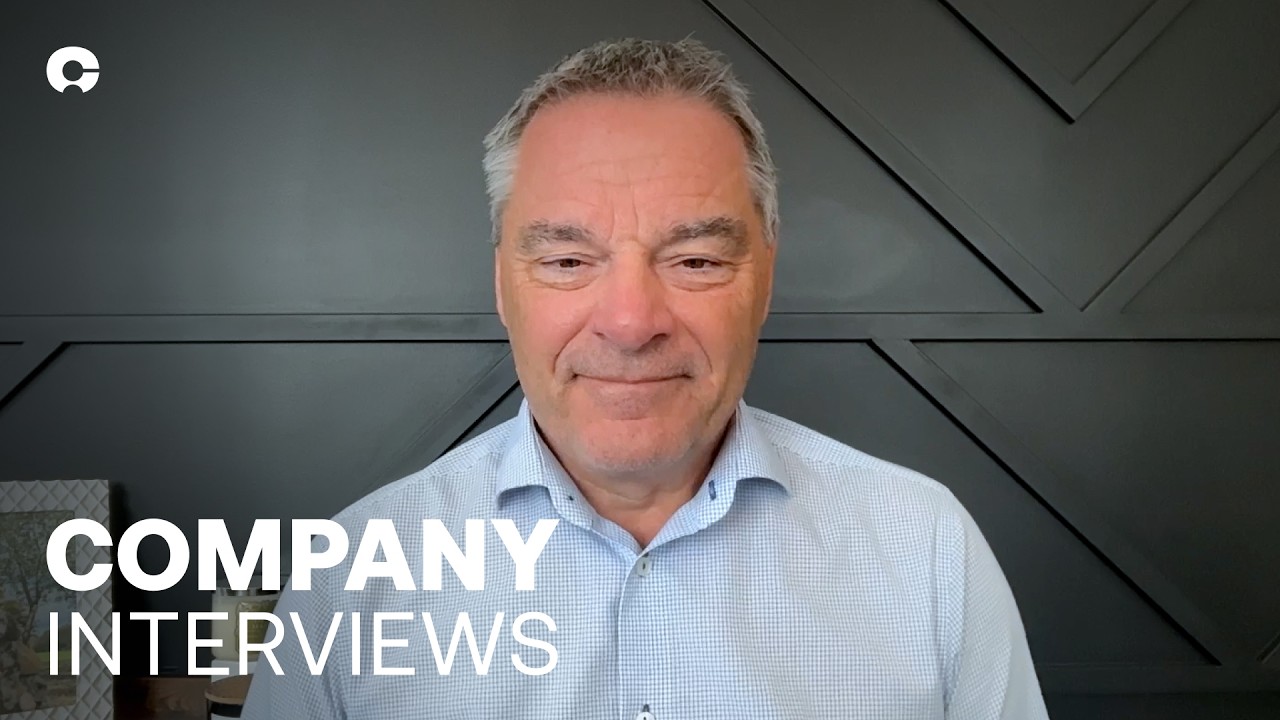
President and Chief Executive Officer of Cabral Gold, Alan Carter, was explicit that formal production guidance will wait until the ramp-up stabilizes:
"We will probably, for 2027, almost certainly we'll issue guidance. We probably won't for 2026 during the ramp-up period. There are just too many variables."
That leaves investors without a numeric production target for the balance of 2026, an intentional gap given the number of moving parts in a first-time ramp-up.
Instead of guidance, management pointed to a specific operational threshold: commercial production is generally defined as around 60% of design throughput, and Cabral plans to issue a news release once it reaches that level, expected sometime in the fourth quarter of 2026. Reaching that threshold will mark the next step beyond the pour, converting Cabral's commissioning success into sustained operations.
The Cash Flow Math Behind the Pour
The July 2025 PFS, prepared by Ausenco Brazil, modeled initial capital expenditure of $37.7 million and life-of-mine all-in sustaining costs (AISC) of $1,210 per ounce. Cabral expects to land close to that capital figure despite the accelerated construction timeline; being 6 weeks early involved some incremental costs to move equipment and labor to site faster, offset by earlier cash flow. Initial annual production is expected at approximately 25,000 ounces, against a current gold price of approximately $4,300 per ounce.
That margin, together with the $45 million strategic placement with Alpayana closed in August 2026, will fund Cabral's next phase while limiting reliance on further dilutive financings. The separate $45 million gold loan that financed construction, signed in November 2025, carries a 39-month term, with the first interest payment due at the end of 2026 and the first payment including principal due at the end of March 2027. Carter said the pace of repayment acceleration will depend on how quickly the ramp-up generates cash, with management targeting at least $50 million in annual cash flow once the operation stabilizes.
The Real Prize Is Still Underground
Cabral describes Cuiú Cuiú as a two-stage development: Phase 1 mines near-surface, weathered oxide material to depths of approximately 60 meters, while the larger opportunity, Phase 2, targets the unweathered hard rock beneath it. Three-quarters of the gold ounces in Cabral's current resource statement sit in that hard rock material, and only 3 of the 5 oxide deposits the company has identified were included in the PFS, leaving further resource growth still to be defined through additional drilling.
Carter connected the strategy to a deliberate avoidance of repeated dilutive financing rounds:
"The hamster wheel being you raise money, you dilute the structure, you drill, you come back a year later or 9 months later, and you go to the market with no control over what your share price is and your cost of capital."
That strategy is already producing results at the target level. Cabral's most recent Jerimum Cima result, reported August 27, 2026, returned 8.9 meters at 5.8 grams per tonne (g/t) gold, including 1.8 meters at 28.4 g/t, and identified a new mineralized zone parallel to and south of the target's main zone, still open along strike and at depth. That result builds on an earlier Jerimum Cima intercept of 9.5 meters at 87.4 g/t gold in March 2026, while high-grade drilling at the separate Machichie NE target has returned 11 meters at 33 g/t and 12 meters at 27.7 g/t.
What to Watch Next
Several dated checkpoints will test whether Cabral's stated timeline holds. The Operating License upgrade to the Full Mining License is targeted within approximately 2 months. An updated global resource estimate, incorporating infill drilling now underway at the Machichie deposit 500 meters north of the currently mined MG deposit, is targeted by the end of 2026. If that resource base grows meaningfully, management intends to launch a Preliminary Economic Assessment on the Phase 2 hard rock operation in the first half of 2027, followed by pre-feasibility and feasibility studies.
Commercial production, defined at approximately 60% of design throughput, is expected during the fourth quarter of 2026, with formal 2027 production guidance to follow once the ramp-up stabilizes. Cabral currently employs approximately 312 people across production and construction, and more than 100 on the exploration side, running 6 drill rigs across a district management describes as containing 6 known gold deposits and approximately 50 peripheral targets still to be tested.
FAQs (AI-Generated)
Analyst's Notes





Subscribe to Our Channel






Stay Informed






















