Niger's Mining Convention Reset: A Financing Template for Africa's Expropriated Uranium Assets



Niger’s Madaouela uranium deal sets a financing template for recovering expropriated African mining assets through staged payments, equity dilution, and state carry.
- Niger's 2024 withdrawal of the Madaouela uranium permit, followed by a negotiated mining convention reached in 2026, offers a rare, fully disclosed template for recovering an expropriated African mining asset without international arbitration.
- Free-carried (15%) and contributory (up to 25%) government equity interests are standard under Nigerien mining law, meaning any negotiated return has to work around, rather than eliminate, state equity participation.
- The template that emerged pairs staged cash payments with a dilution formula for unfunded government equity, an interest-free capital carry, and explicit clarification of operational control and offtake rights.
- Atomic Eagle Limited's Madaouela agreement illustrates the mechanics in practice: a 60% to 40% ownership split, US$5 million payments at permit grant and construction start, and a US$40 million interest-free carry toward the government's equity contribution.
- Strategic, state-backed capital, including US Development Finance Corporation interest in Global Atomic Corporation's Dasa project, is emerging as a parallel financing route for Niger-based uranium development alongside traditional debt and equity.
When a Government Takes Back a Mining Permit, What Happens Next?
Expropriation, a government seizing or canceling a previously granted mining right, puts a developer in a narrow set of positions. The standard response is international arbitration: a legal process that can resolve the dispute, but typically takes years, costs significant capital, and pulls management attention away from actually advancing the asset.
Niger's 2024 withdrawal of the Madaouela uranium mining permit initially followed this pattern. The permit holder commenced arbitration proceedings, which were paused in February 2025 once Niger signaled a willingness to negotiate a return of the asset instead. Formal talks progressed from there: an initial meeting with Niger's Minister of Mines in January 2026 led to a signed mining convention roughly 7 months later, a considerably faster outcome than the years of arbitration or comparable negotiations elsewhere typically require.
That negotiated outcome offers a working template for how a state and a developer can divide risk, capital, and control when recovering an expropriated asset.
The Legal Starting Point: Government Equity Is Not Negotiable, Its Terms Are
Free-carried and contributory government equity interests are written into Nigerien mining law, not imposed as one-off negotiating demands. A 15% free-carried interest, where the state holds equity without paying for it, applies by default. A separate provision allows the government to acquire a contributory interest of up to 25%, funded by the state itself. Together, these can put up to 40% of a project's equity in government hands before any negotiation begins.
That legal baseline shapes every recovery negotiation in the jurisdiction. A developer cannot negotiate away the government's equity right; it can negotiate how that equity is funded, diluted, and governed. Niger's uranium sector also carries the weight of an established production history: the SOMAIR operation has produced more than 178 million pounds historically, and the COMINAK operation has produced 165 million pounds, meaning any new agreement is read against decades of precedent for how the state has structured its role in uranium projects.
What the Negotiated Template Actually Contains
The convention pairs three mechanics to divide risk and capital between the state and the developer. Staged cash payments tie Atomic Eagle's (ASX: AEU | OTCQX: AEUXF) financial commitment to specific milestones: permit grant and construction start, rather than a single upfront sum. A dilution formula addresses the risk that government equity, once granted, goes unfunded: if the state doesn't contribute its share of project capital, its stake dilutes below the legal ceiling. An interest-free capital carry also lets Atomic Eagle fund a portion of the government's equity contribution without cash changing hands or triggering tax consequences, providing additional compensation to the government on top of the staged cash payments.
Alongside these financial mechanics, the emerging template treats governance and offtake as items to be resolved explicitly rather than left to inference. Operational control, decision-making authority, and rights to sell production are spelled out across the constitutional, contractual, and shareholder documents governing the new joint entity, closing gaps that could otherwise be read to favor the state well beyond what either side intended.
What Still Doesn't Get Resolved
None of these mechanics eliminate execution risk. Clear documentation reduces the chance of disputes arising from inconsistent terms, but it doesn't guarantee smooth cooperation once a government and a developer are operating a project together day to day. Whether a single favorable convention signals a genuine shift in a jurisdiction's investment climate, or reflects the specifics of one company and one negotiation, is also not something a single case can answer.
Two further gaps are structural rather than case-specific. A government's relationship with legacy, larger-scale operators already established in the jurisdiction typically remains separate from any new entrant's agreement, and unresolved tension there can still weigh on the broader investment picture. And while a dilution formula addresses what happens if the state doesn't fund its equity stake, it doesn't answer whether the government has the fiscal capacity to fund that stake in the first place. That capacity is only tested once real capital calls begin.
Madaouela: The Template in Practice
Atomic Eagle Limited's recovery of the Madaouela uranium project shows these mechanics in action on a specific asset. The new Niger entity is split 60% to Atomic Eagle and 40% to the government, comprising the standard 15% free-carried interest plus up to 25% contributory interest, with a dilution formula reducing the government's stake if it doesn't fund its share of capital. Atomic Eagle will pay US$5 million within 30 days of the exploitation permit being granted, a further US$5 million at the start of construction, and will carry up to US$40 million of the government's future equity contribution interest-free.
The agreement also resolves an offtake ambiguity that, read literally under prior law, could have entitled the government to as much as 90% of production; Atomic Eagle instead retains largely unfettered rights over its 60% share and a right of preemption over the government's 40%. Atomic Eagle retains operational control across all budgets and work programs, with no unanimous-consent requirements to slow decisions.
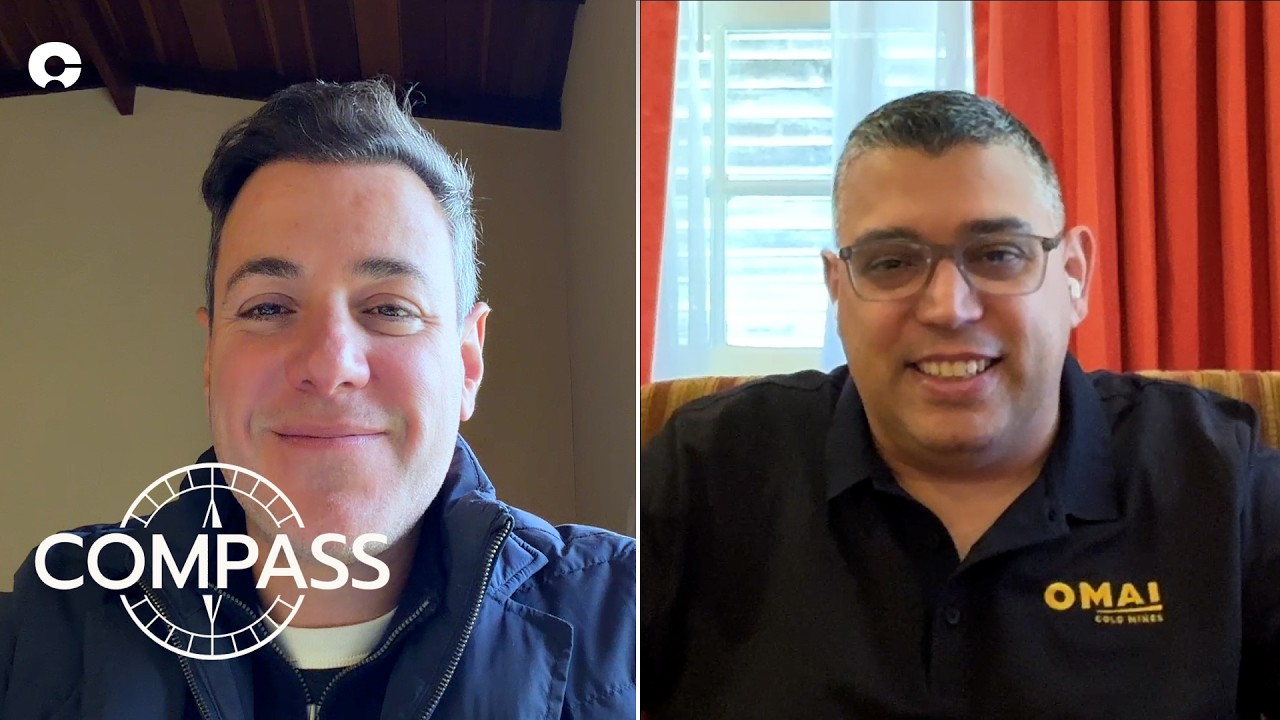
Chief Executive Officer of Atomic Eagle, Phil Hoskins, described the outcome:
"It is all very clear that we have complete operational control explicitly for all matters, all budgets, all work programs, and there are no sort of special majority decisions requiring unanimous consent."
Hoskins believes the convention also leaves little room for the dispute to resurface:
"Very rarely does a company in a country spend the time to come together with an outcome in mind and then very quickly do a U-turn down the track, unless one of the parties just absolutely doesn't do what they said."
That view gets tested as they update studies, re-permit, and finance. The scale at stake explains why pursuing this route mattered. Madaouela carries a foreign mineral resource estimate of 116.5 million pounds of uranium oxide at 1,282 parts per million, twice the size and roughly 4 times the grade of Atomic Eagle's other asset, the fully permitted Muntanga project in Zambia, which holds a 58.8 million pound Joint Ore Reserves Committee (JORC) resource at 309 parts per million.
Niger Isn't the Only Test Case
Niger's uranium sector is already producing a second data point beyond Atomic Eagle. Hoskins noted that the US Development Finance Corporation has been examining debt financing for Global Atomic Corporation's Dasa project, treating regulatory questions as secondary to commercial export arrangements. That signals that capital sources motivated by energy security, rather than project-level cash flow alone, are willing to engage with Niger-based uranium development even as the jurisdiction works through its post-expropriation recovery.
Set against Zambia, a stable, mining-friendly jurisdiction with a favorable tax regime where Muntanga sits fully permitted, Niger's negotiated-recovery path looks less like a template for stable jurisdictions and more like a specific response to elevated political risk: one that trades a share of equity and a slower start for restored access to a large, high-grade asset.
What This Means for Other Expropriated Assets
The Madaouela case doesn't answer whether Niger's approach will hold for the next developer that walks through this process, but it does leave behind a documented set of terms rather than an untested theory: staged payments, a dilution mechanism for unfunded government equity, an interest-free carry facility, and explicit governance and offtake clarification. Other juniors holding expropriated or disputed assets in similar jurisdictions now have a reference point for what a negotiated recovery can look like, and what it costs. As strategic capital continues to show interest in African uranium independent of conventional project economics, negotiated recovery along these lines may increasingly compete with arbitration as the default response to expropriation.
FAQs (AI-Generated)
Analyst's Notes





Subscribe to Our Channel










Stay Informed