




Oil's 3% Drop Ignores a 1.8 Million Barrel Deficit & a Depleting Reserve Buffer



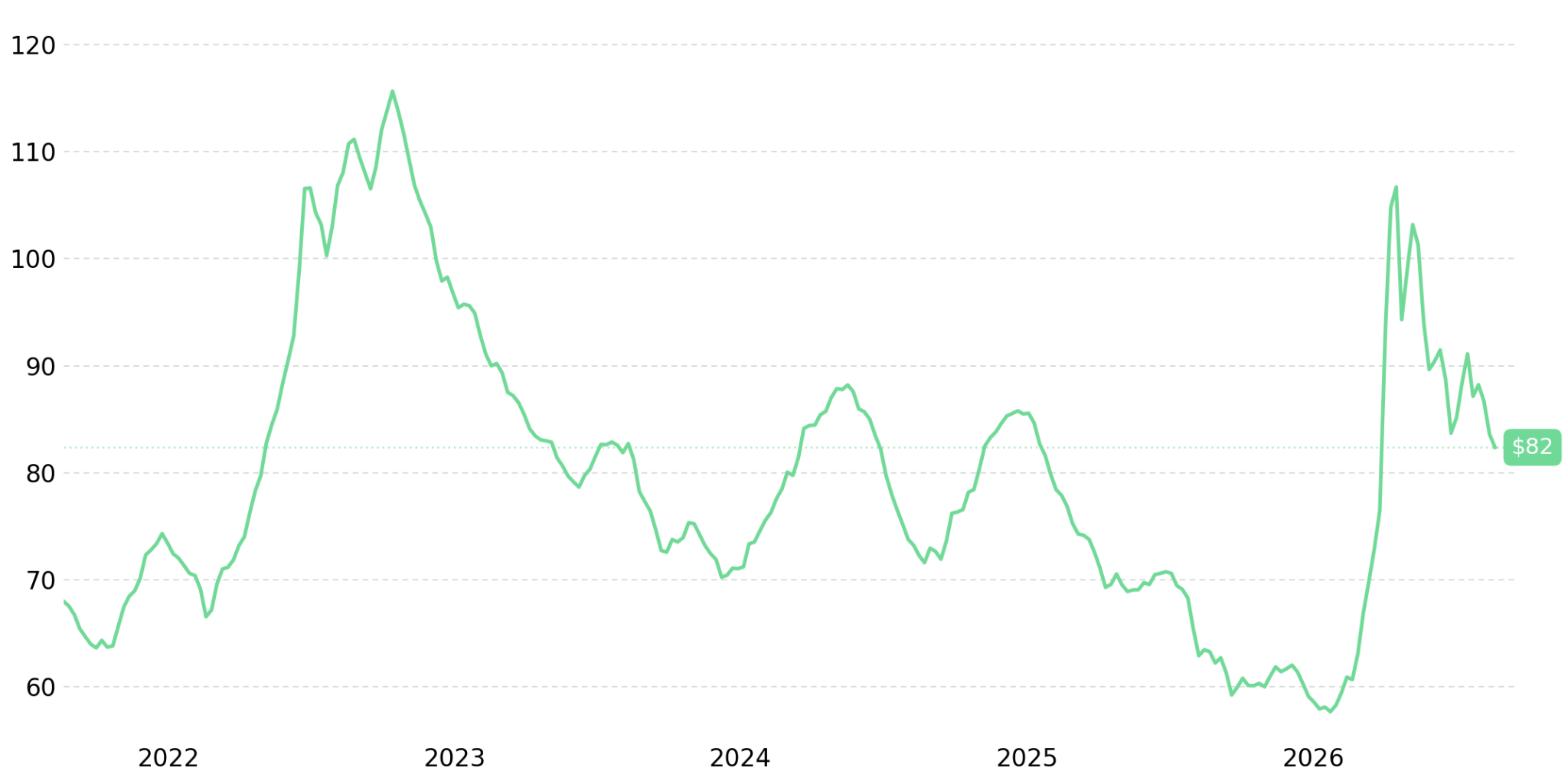
WTI fell 3.45% to $82.08 on Iran sanctions, but the IEA projects a 1.8 million bpd deficit and the US SPR sits at a 44-year low of 293.4M barrels.
- West Texas Intermediate (WTI) crude fell 3.45% to $82.08 a barrel on August 25, 2026, its lowest level since August 17, as traders read new US sanctions on Iran as less dangerous than a military strike.
- The International Energy Agency (IEA) now projects a third-quarter supply deficit of 1.8 million barrels per day (bpd), more than double its estimate from a month earlier.
- The US Strategic Petroleum Reserve (SPR) stands at 293.4 million barrels, its lowest level since January 1982 and just 41% of capacity, even as commercial crude stocks posted a 17.4 million barrel build in the week to August 7, 2026.
- WTI has coiled into an ascending triangle since March 2026, with sellers defending $93.60 twice; a close above the level points toward $100, while losing the rising trendline support would signal the deficit narrative has failed.
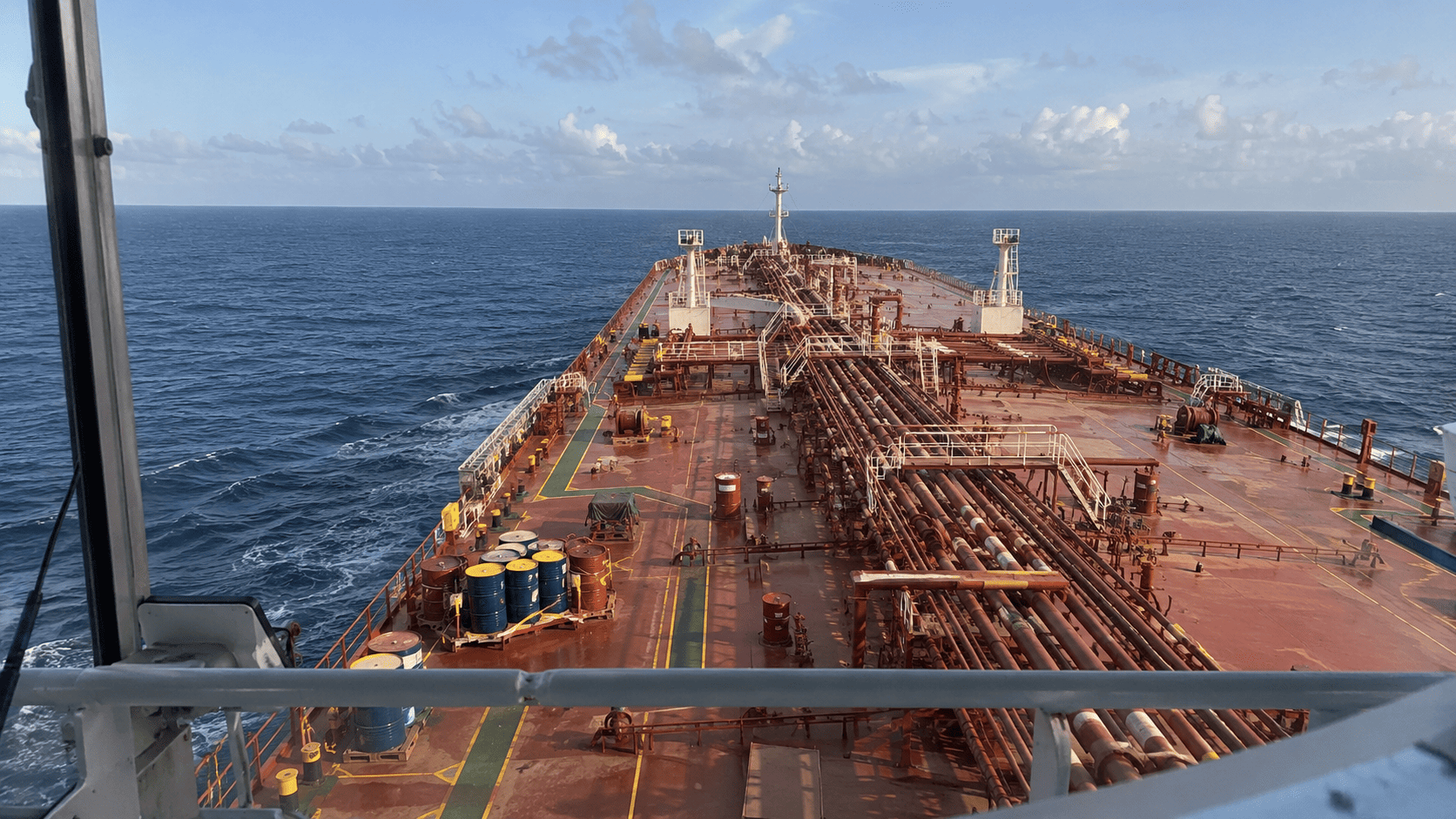
- Only two tankers transited the Strait of Hormuz on August 24, 2026, the lowest daily tally since early May, even as the price action suggests the market is discounting the closure entirely.
Iran Sanctions Trigger a 3.45% Sell-Off While the Strait Stays Shut
Treasury Secretary Scott Bessent announced expanded sanctions on Iran on August 24, 2026, targeting oil smuggling, ship registries, front companies and swap lines, without naming the countries that would face penalties, Reuters reported. The market's reaction was to sell: Brent crude dropped 3.33% to $89.10 a barrel, and WTI fell 3.45% to $82.08, both hitting one-week lows, as Saxo Bank's Ole Hansen told Reuters the announcement was less forceful than some traders had priced in.
The Strait of Hormuz, through which roughly one-fifth of global oil consumption typically passed before the US-Israeli war with Iran began on February 28, 2026, has now entered its sixth month of effective closure. The 60-day memorandum that offered a formal path to reopening lapsed on August 17, 2026, and Washington declined to renew it. Only two tankers crossed the strait on August 24, 2026, the lowest daily count since early May, and a tanker was struck by an unidentified projectile near Oman's Ash Shishah on August 25, 2026, according to the United Kingdom Maritime Trade Operations (UKMTO). None changed because a sanctions list dropped a day earlier.
Where the Deficit Is Actually Coming From
The demand-destruction argument, that $85 oil and $4-a-gallon gasoline in the US are already curbing consumption, is the wrong line to read, the CME Group newsletter argues. The Organization of the Petroleum Exporting Countries (OPEC) has cut its 2026 demand growth forecast to 580,000 bpd, a fourth consecutive reduction, while the IEA trimmed a further 510,000 bpd, leaving demand contracting outright by 1.6 million bpd. Yet the IEA cut its supply estimate harder, by 1.7 million bpd for the third quarter alone, which is why the projected quarterly deficit widened to 1.8 million bpd, more than double the prior month's estimate.
Supply-side offsets are already close to exhausted. The US Energy Information Administration (EIA) forecasts record 2026 production of 13.8 million bpd, the most bullish of its eight monthly outlooks this year, rising to 14.15 million bpd in 2027. But OPEC+ approved only a final 188,000 bpd increase for September, the last scheduled for the year, having already unwound close to all of the 3.5 million bpd in cuts it announced in 2023. Many members cannot reach their existing quotas, and the EIA sees OPEC spare capacity falling toward 600,000 bpd by the end of 2027, against a historical norm above 3 million bpd.
The Buffer That Is Actually Empty
The 17.4 million barrel commercial crude build in the week to August 7, 2026, the largest of the current run, looks like slack in the system. It is not: the SPR fell 6.1 million barrels over the same week, meaning the tanks are filling because the reserve is being drawn down, not because new barrels are arriving, per the CME Group newsletter. The SPR now sits at 293.4 million barrels, 41% of capacity and the lowest since January 1982. Global stocks overall have drawn 410 million barrels since late February 2026. Once that cushion is gone, price becomes the only mechanism left to ration the shortfall.
The product market shows the strain more clearly than crude. Russia's export ban on gasoline and diesel runs to the end of January 2027, and US drivers are paying $4.05 a gallon for gasoline and $5.45 a gallon for diesel, up 47% over the past year. On the charts, WTI's ascending triangle has held resistance at $93.60 on two prior tests since the March 2026 spike; a close above that level targets $100, while a break of the rising trendline would be the signal that the deficit thesis is losing.
Why It Reaches Beyond the Barrel
The oil deficit is also showing up in bond and equity markets. The 30-year Treasury yield printed 5.31% on August 17, 2026, its highest in 19 years and up from 4.63% before the war, a move tied in part to fuel-driven inflation pressure. A doubling of the Treasury's long-dated buybacks on August 19, 2026, shaved 10 basis points off the long bond, but those purchases do not begin until September 9, 2026, and must be funded by borrowing elsewhere. The Nasdaq-100 stalled at 30,000 on the higher discount rate rather than on earnings.
Japan shows the same mechanism amplified: the Nikkei 225 has fallen 17.4% from its late-June 2026 record of 73,007, and losing 65,000 would put the August low back in play, per the CME Group newsletter, as a 30-year-high 10-year Japanese government bond (JGB) yield and $85 oil both weigh on a market that imports nearly all its energy.
A 3% pullback driven by a sanctions announcement, against a backdrop of a widening physical deficit and a reserve buffer near a 44-year low, reads as a repricing of geopolitical risk, not of the deficit itself.
Analyst's Notes





Subscribe to Our Channel





Stay Informed


