




P2 Gold & Gabbs: Technical De-Risking & Optimized Development Sequence Drive the Pathway to Feasibility


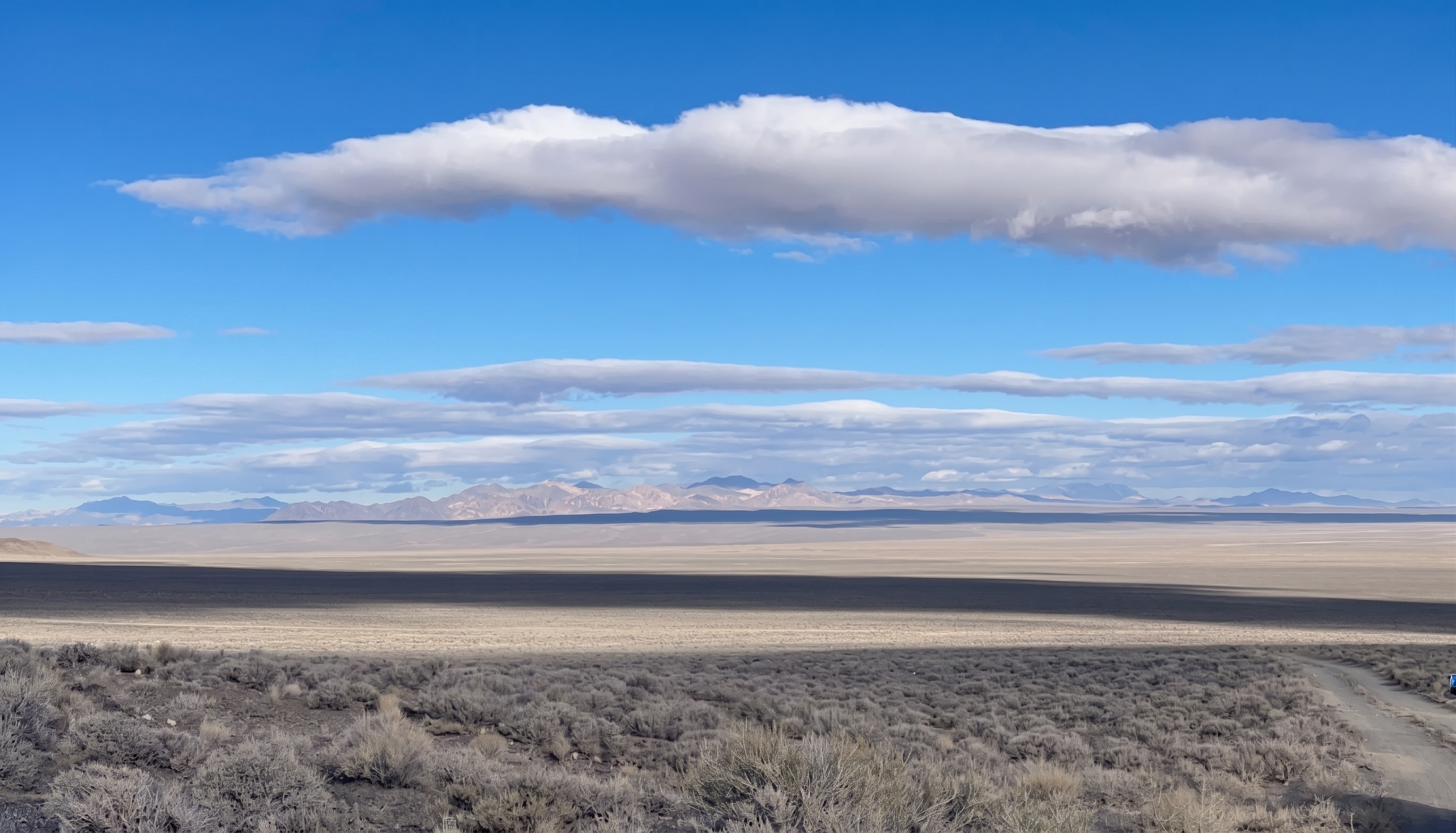
P2 Gold is advancing its Gabbs Project in Nevada toward a fourth-quarter 2026 feasibility study, systematically de-risking its metallurgy, water rights, and infrastructure.
- P2 Gold Inc. is advancing its wholly owned gold-copper Gabbs Project in Nevada toward a feasibility study (FS) targeted for completion in the fourth quarter of 2026.
- An infill program at the Lucky Strike Zone has extended a southwest-thickening western core, intersected by a reverse circulation hole returning 158.50 meters, grading 0.37 grams per tonne of gold and 0.16% copper.
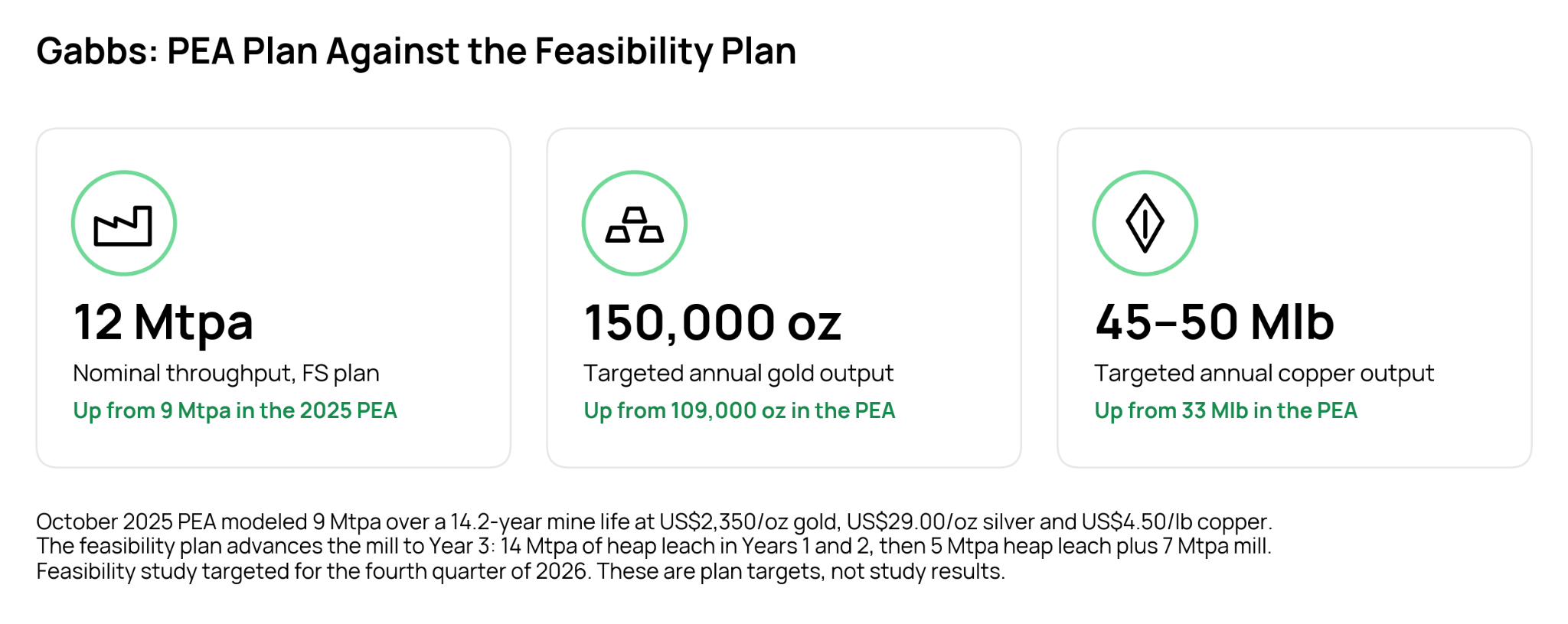
- The updated development plan targets annual production of 150,000 ounces of gold and 45 to 50 million pounds of copper, up from 109,000 ounces of gold in the 2025 preliminary economic assessment (PEA).
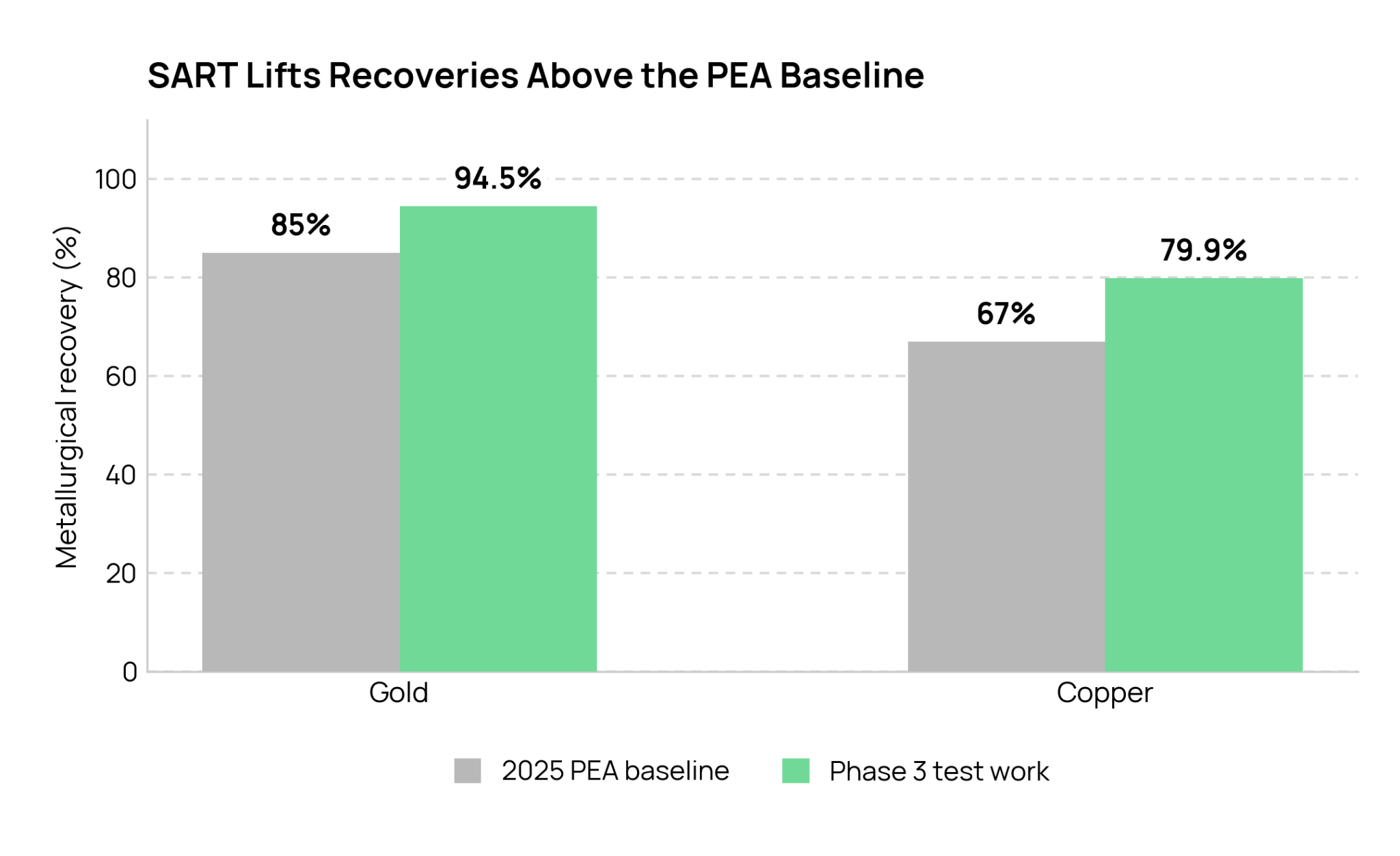
- The implementation of a modern sulphidization, acidification, recycling, and thickening (SART) plant has chemically resolved the complex copper-gold metallurgical association, delivering gold recoveries of 94.5% and copper recoveries of 79.9%.
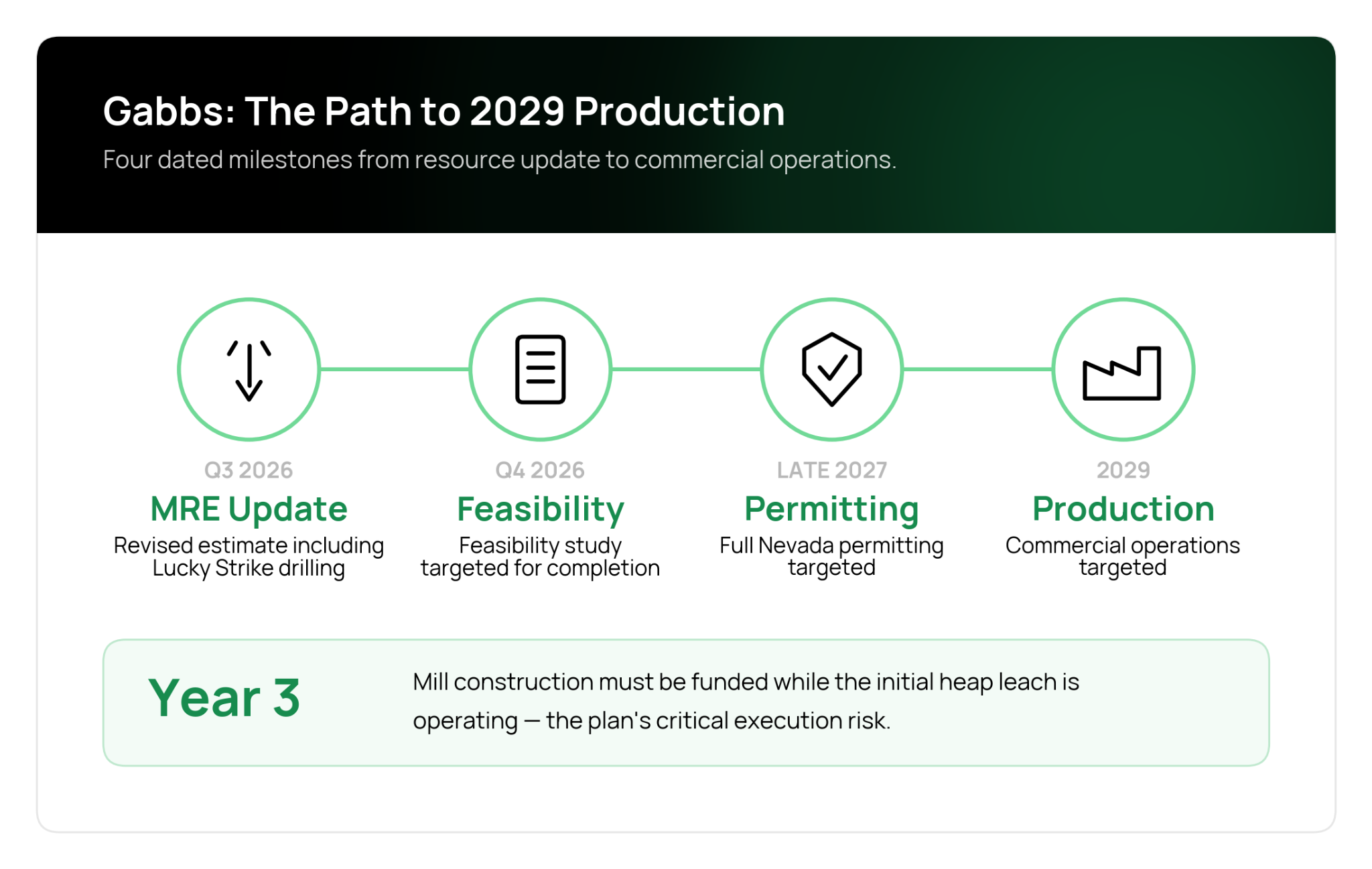
- With fully purchased water rights, an on-site power substation, and local paved highway access, the project leverages pre-existing infrastructure to target full permitting by the end of 2027 and commercial production by 2029.
Southwest Drilling Intersects Broad Gold-Copper Mineralization
P2 Gold Inc. (TSXV: PGLD | OTCQB: PGLDF) reported technical results on August 12, 2026, from ten reverse circulation (RC) and four diamond holes on the western Lucky Strike Zone. Drilling outlined a southwest-thickening western core, supporting the third quarter of 2026 resource update.
A southwest-trending hole intersected 79.25 meters grading 0.78 grams per tonne gold and 0.29% copper from 89.92 meters downhole, with a higher-grade core of 21.34 meters grading 1.28 grams per tonne gold and 0.34% copper from 92.96 meters downhole. Another step-out returned 158.50 meters grading 0.37 grams per tonne gold and 0.16% copper from 83.82 meters downhole, with 67.06 meters grading 0.49 grams per tonne gold and 0.18% copper from 96.01 meters downhole. Additional holes returned 121.92 meters grading 0.47 grams per tonne gold and 67.06 meters grading 0.78 grams per tonne gold.
Mineralization Controls & Deposit Geometry
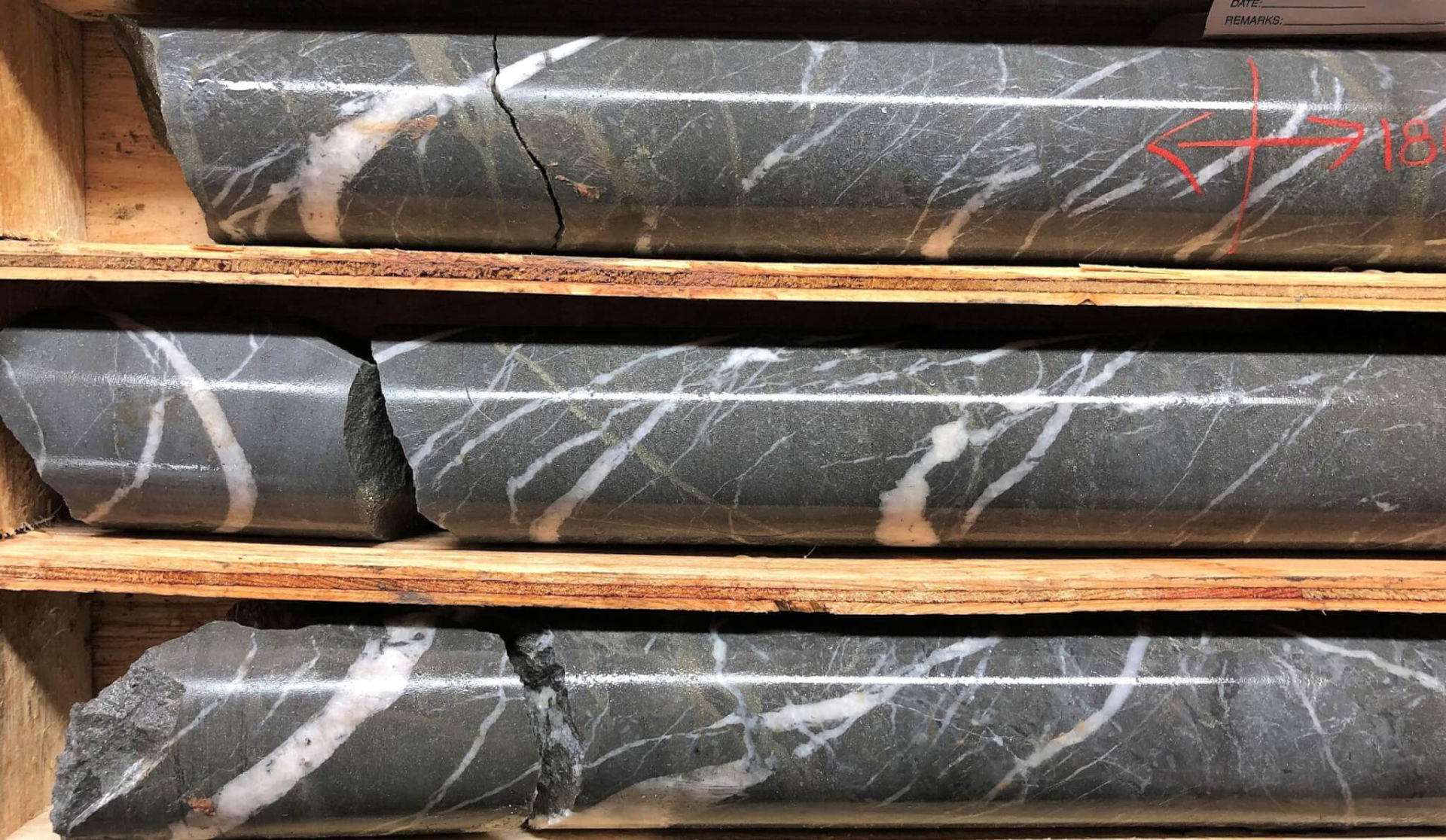
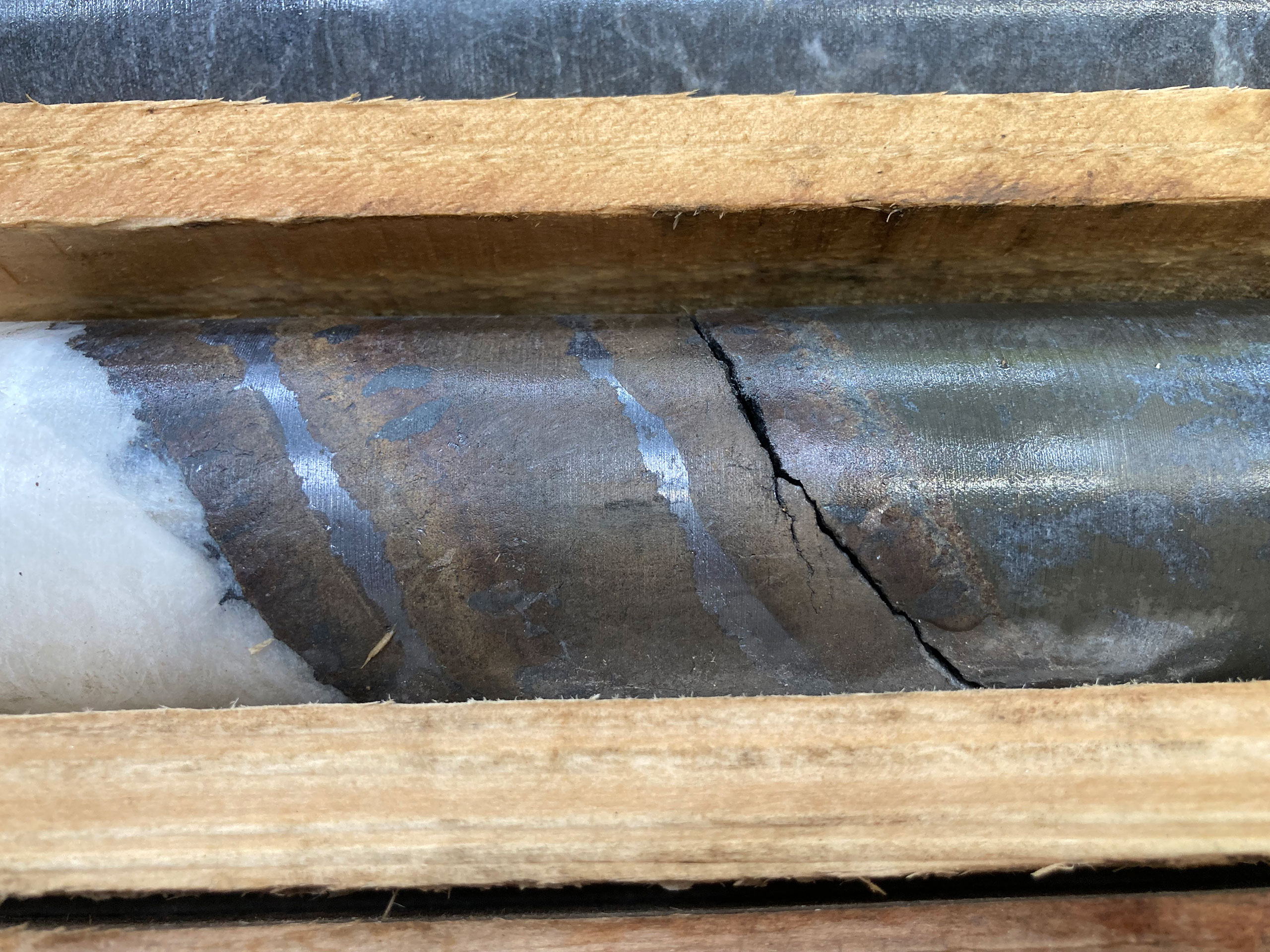
Mineralization at the Lucky Strike Zone is localized within a tabular quartz monzonite unit underlain by pyroxenites, identical to controls at the adjacent Sullivan Zone. The gold-dominant core transitions into copper-gold mineralization in the deeper footwall. Deeper footwall mineralization of 20 to 60 meters combines with the 100-meter main mineralized body to produce a continuous mineralized thickness of up to 160 meters.
Chief Exploration Officer of P2 Gold Inc., Ken McNaughton, detailed the geologic lithologies that control the gold distribution, showing that drilling targets the specific monzonite host rock to maximize intercepts:
"In general terms, we have a hanging wall of gabbro, and then we see this quartz monzonite and that's where our high grade is, generally where the best gold and copper are. Then we go into the pyroxenites, and mineralization starts to attenuate below that."
Overcoming Historical Extraction Challenges
Gabbs' development was historically hindered by the complexity of copper-gold metallurgy. Previous operators focused separately on gold or copper, limiting viability because standard cyanide leaching dissolves copper, consuming excess cyanide and preventing effective gold recovery. P2 Gold Inc. resolved this chemical barrier by integrating a sulphidization, acidification, recycling, and thickening ( SART) plant. The SART process precipitates copper out of the cyanide leach solution to produce a copper sulfide concentrate, while recycling free cyanide back to the heap leach to reduce reagent operating costs.
McNaughton commented:
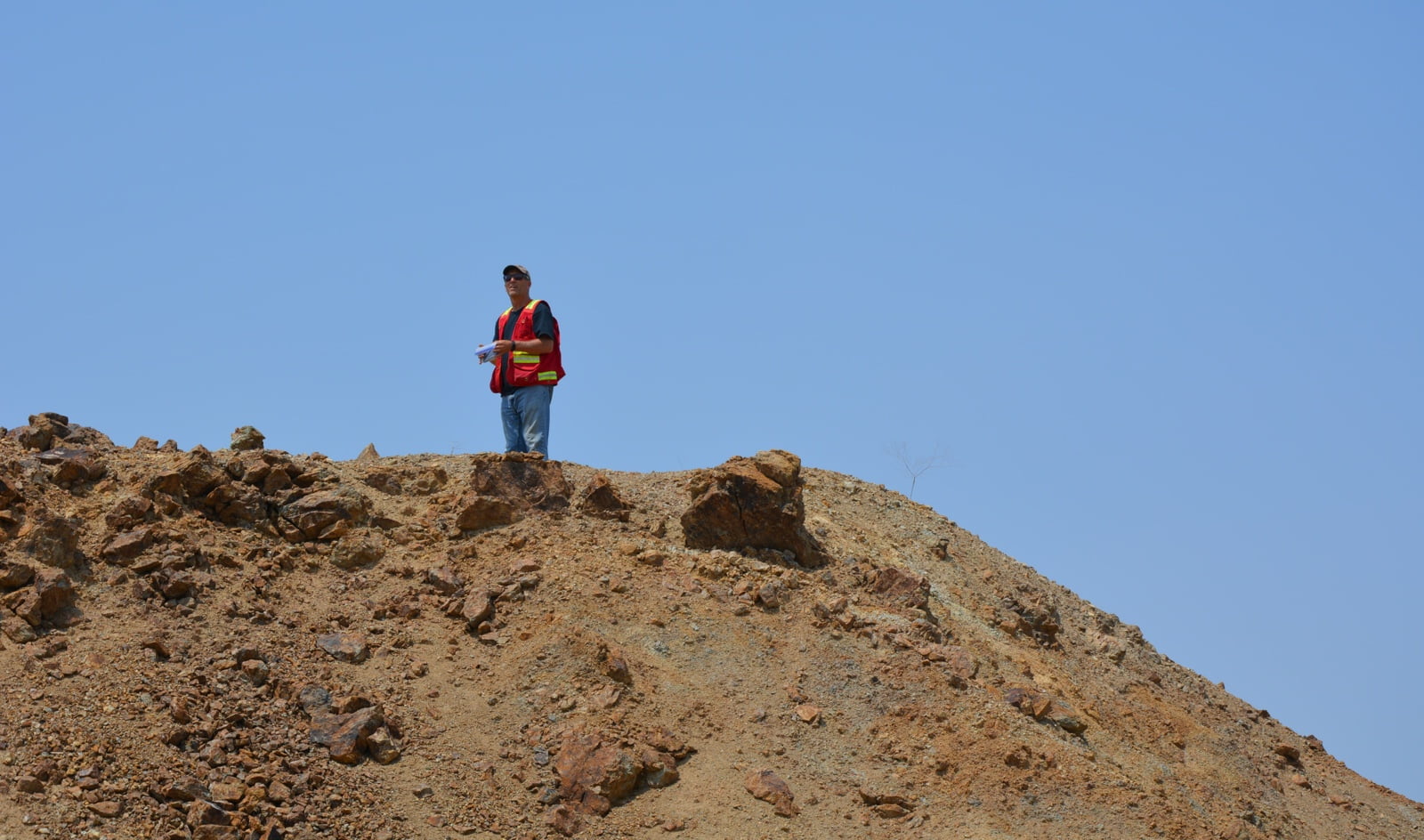
"What Gabbs is, is a copper-gold porphyry system, quite unique for this area. There are some great geological reasons why we're here, and what that gives us is the ability for scale and economics. As you look around, you can see roads, you can see power lines, you can see historical mines, you can see infrastructure. We've got water. So Gabbs is an extremely viable project that's been overlooked over the years because of the copper-gold association. But with the advent of SART technology, we're able to extract both the gold and the copper and produce a very viable mine."
Phase Three metallurgical testing established recoveries of 94.5% for gold and 79.9% for copper, improving on the 2025 preliminary economic assessment (PEA) baseline recoveries of 85% for gold and 67% for copper. Leaching kinetics indicate that 98% of gold and 85% of copper are recovered within 58 days, with total recoveries achieved in 110 to 120 days, compared to the 150-day cycle modeled in the 2025 PEA. This compressed leaching timeline reduces heap pad inventory, lowering working capital requirements and accelerating project cash flows.
Leveraging Pre-Existing Infrastructure in a Premier Nevada Jurisdiction
The Gabbs Project, located 150 miles from Reno in Nevada, features active infrastructure. Paved Highway 361 runs directly through the property, and an active electrical substation is on-site, allowing grid tie-in. The company also acquired and transferred definitive water rights for mining operations. These utilities eliminate capital requirements and permitting delays associated with building 20- to 50-mile external transmission lines, thereby supporting an expedited development pathway.
The project leverages a local workforce. The town of Gabbs, just down the road, hosts the longest continuously running magnesium mine in the United States, establishing local mining support. Nearby Hawthorne, forty-five minutes away, and Fallon, an hour's drive, supply operators and drillers, eliminating on-site camp capital requirements.
Staged Development Plan & Capital Structure Optimization
The upcoming feasibility study (FS) evaluates a revised mine sequence. The October 2025 PEA modeled a 14.2-year mine life processing 9 million tonnes per year to produce 109,000 ounces of gold and 33 million pounds of copper annually, assuming metal prices of US$2,350 per ounce of gold, US$29.00 per ounce of silver, and US$4.50 per pound of copper.
The FS increases nominal throughput to 12 million tonnes per year, advancing the mill to the third year. The revised sequence targets 14 million tonnes per year of heap leach in the first and second year, followed from the third year by 5 million tonnes per year of heap leach and 7 million tonnes per year of mill. This stages construction and pulls production forward, targeting annual output of 150,000 ounces of gold and 45 to 50 million pounds of copper.
McNaughton commented on the staged development:
"First off, we are able to drive right into an outcrop of high-grade — so we've got exposure, we've got ease of access, as you say, we've got all the infrastructure. And then really for us the economics are fantastic because we can start with a low-cost heap leach operation. There's a very large sulfide deposit below this, but we transition into that, so we're going to get two to three years of nothing but oxide, and then we can stage our development."
As of June 30, 2026, common shares totaled 278,628,579, with 7,516,000 options and 78,986,250 warrants outstanding, representing a fully diluted share count of 365,986,829. According to the March 31, 2026 financial statements, cash, prepaids, and receivables totaled $10,784,738, supplemented by an $11,625,000 placement that closed on May 25, 2026. Management and directors hold a 15.1% undiluted equity interest. The team previously brought the Brucejack mine from discovery to production in seven years, supporting targets to complete permitting by late 2027 and start operations in 2029.
Residual Technical & Operational Risks
While recent drilling expanded the western core, geological uncertainties remain. True thickness of the 158.50-meter southwest intercept is undetermined due to limited deeper drilling, and lateral open-pit margins remain unconstrained. Furthermore, mineralization along the eastern margin indicates the deposit extends outside the 2025 PEA pit limits, requiring pit-slope reconfigurations that alter stripping ratios.
Scaling SART chemistry to a commercial plant introduces risks of operational downtime and variability in reagent consumption. SART relies on precise pH controls to optimize cyanide recovery and copper precipitation; process deviations could elevate operating costs or lower recoveries below the 94.5% gold and 79.9% copper targets. Furthermore, advancing the mill start-up to the third year increases upfront capital intensity relative to the PEA. P2 Gold Inc. must secure a capital funding package for the third year of mill construction while operating the initial heap leach, representing a critical execution risk.
Investment Thesis for P2 Gold
- Secured water rights, on-site electrical substation access, and pre-existing highway infrastructure eliminate the need for twenty- to fifty-mile transmission line construction, lowering pre-construction capital requirements and compressing the permitting schedule.
- Implementing modern sulphidization, acidification, recycling, and thickening plant technology precipitates copper into a marketable concentrate and recycles cyanide, achieving recoveries of 94.5% for gold and 79.9% for copper.
- Staging mine construction with an initial low-cost heap leach pre-strips the deposit and generates cash flow to fund a seven-million-tonne-per-year milling plant in the third year, increasing total nominal throughput to 12 million tonnes per year.
- Recent reverse circulation drilling at the Lucky Strike Zone, including a southwest-trending hole that intersected 158.50 meters grading 0.37 grams per tonne of gold, extends mineralization beyond the 2025 preliminary economic assessment open-pit boundaries and supports a revised resource estimate in the third quarter of 2026.
- Executive leadership maintains a 15.1% undiluted equity interest in the company and has a documented track record of building the Brucejack mine from discovery to pouring gold in seven years, thereby lowering execution risk.
Staging production from a two-year oxide heap-leach phase into a third-year milling phase avoids large upfront capital financing, supporting the company's target of full permitting in Nevada by the end of 2027 and commercial production by 2029.
TL;DR
P2 Gold Inc. is systematically mitigating technical, metallurgical, and logistical variables at its flagship Gabbs Project in Nevada ahead of its feasibility study, which is targeted for completion in the fourth quarter of 2026. Recent reverse circulation drilling at the Lucky Strike Zone has outlined a southwest-thickening western core, with one central hole returning 158.50 meters grading 0.37 grams per tonne gold and 0.16% copper, supporting a revised mine layout that transitions from a nine-million-tonne-per-year preliminary economic assessment to an accelerated twelve-million-tonne-per-year staged operation starting in Year 3. Implementing a modern SART process recovers copper as a precipitate and recycles free cyanide, elevating metallurgical gold recoveries to 94.5% and copper recoveries to 79.9%.
FAQs (AI-Generated)
Analyst's Notes





Subscribe to Our Channel




%20(1).png)
.png)
Stay Informed






















