




P2 Gold & Gabbs: Gold-Copper Intercepts Expand Western Lucky Strike Zone


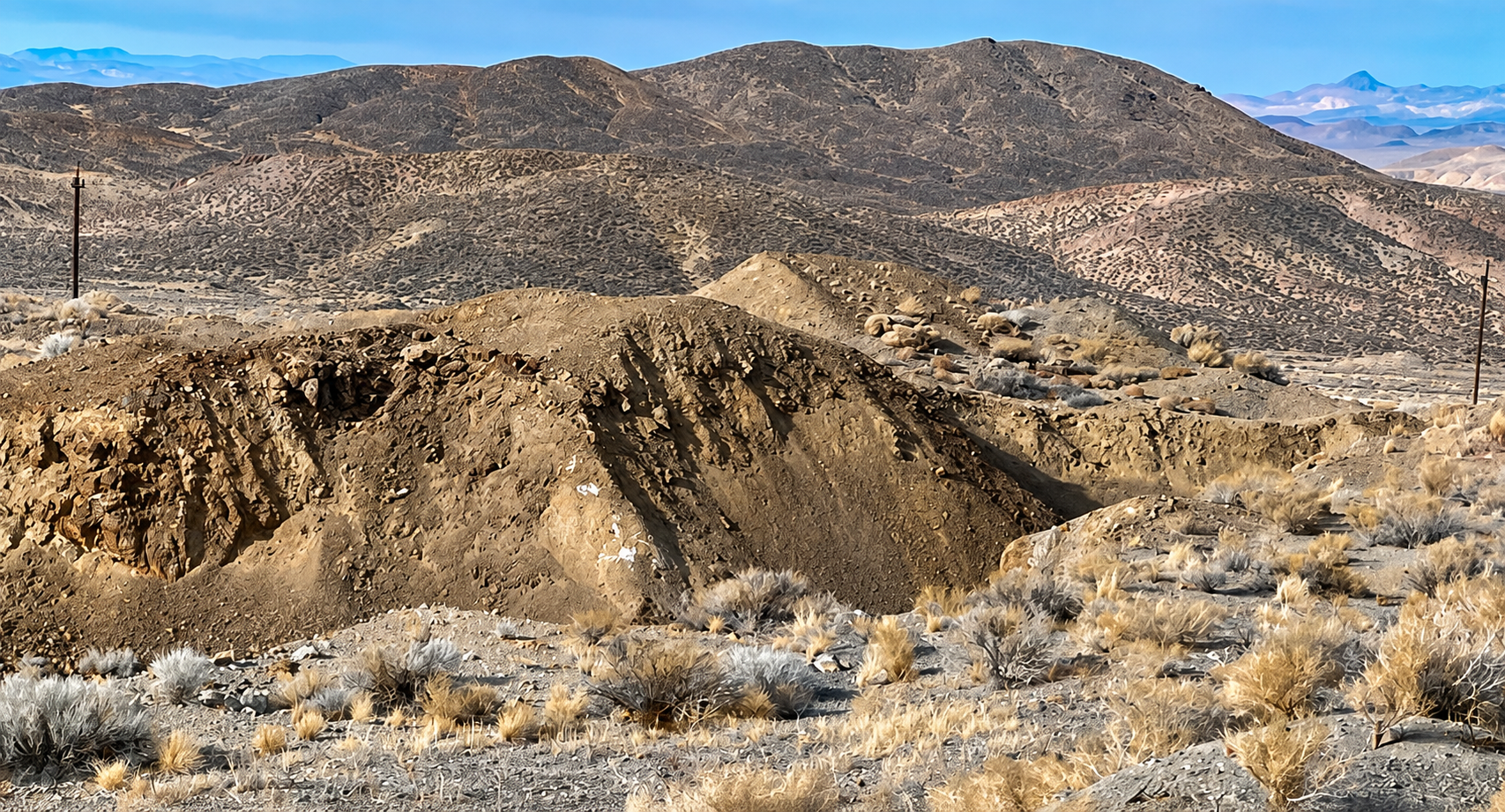
P2 Gold reports broad gold-copper intercepts at Lucky Strike, extending the higher-grade western core as Gabbs advances toward feasibility in Nevada.
- P2 Gold's latest drilling expanded the higher-grade western core of the Lucky Strike Zone toward the southwest, with additional step-out results still pending.
- The strongest western result returned 79.25 meters grading 0.78 grams per tonne gold and 0.29% copper, including 21.34 meters grading 1.28 grams per tonne gold and 0.34% copper.
- A separate southwest hole returned 158.50 meters grading 0.37 grams per tonne gold and 0.16% copper, which P2 Gold identified as the thickest mineralized interval encountered at Gabbs to date.
- P2 Gold is targeting an updated mineral resource estimate (MRE) in the third quarter of 2026, followed by completion of a feasibility study (FS) in the fourth quarter of 2026.
- The feasibility plan targets a 12-million-tonne-per-year processing rate from year three, with average annual production targeted at 150,000 ounces of gold and 45 to 50 million pounds of copper.
Lucky Strike Drilling Expands Western Higher-Grade Core
P2 Gold Inc. (TSXV: PGLD | OTCQB: PGLDF) has reported new drilling from the western half of the Lucky Strike Zone at its wholly owned Gabbs gold-copper project in Nevada, where results show the higher-grade core thickening toward the southwest. The company covers 10 reverse circulation (RC) holes from the western side of Lucky Strike and the final 4 diamond holes from its eastern margin. The results add definition to the deposit ahead of an updated mineral resource estimate (MRE) targeted for the third quarter of 2026, which is intended to provide the resource basis for a feasibility study (FS) targeted for completion in the fourth quarter.
Southwest Drilling Intersects Broad Gold-Copper Mineralization
The strongest western result returned 79.25 meters grading 0.78 grams per tonne gold and 0.29% copper from 89.92 meters downhole, including 21.34 meters grading 1.28 grams per tonne gold and 0.34% copper starting at 92.96 meters downhole. P2 Gold described the broader interval as one of the longest intervals of higher-grade gold and copper encountered at Lucky Strike to date.
A separate southwest hole returned 158.50 meters grading 0.37 grams per tonne gold and 0.16% copper from 83.82 meters downhole, including 67.06 meters grading 0.49 grams per tonne gold and 0.18% copper starting at 96.01 meters downhole. The company identified the 158.50-meter interval as the thickest mineralized interval encountered at the Gabbs Project to date, although true thickness remains to be determined.
Two additional southwest holes reinforced the broader mineralized footprint, returning 121.92 meters grading 0.47 grams per tonne gold and 0.21% copper, including 41.15 meters at 0.82 grams per tonne gold and 0.29% copper starting 76.20 meters downhole, and 67.06 meters grading 0.78 grams per tonne gold and 0.20% copper, including 42.67 meters at 1.07 grams per tonne gold and 0.28% copper starting 73.15 meters downhole. Together, the results extend the higher-grade western core toward the current drilling limit, while completed step-out holes farther southwest remain pending.
Mineralization Controls & Deposit Geometry
The latest drilling continues to show the same geological controls at Lucky Strike that P2 Gold has identified at the adjacent Sullivan Zone. Gold-copper mineralization is localized within and below a tabular quartz monzonite unit underlain by pyroxenite. Higher-grade gold and copper occur toward the core, with gold-dominant mineralization transitioning into copper-gold mineralization in the deeper footwall.
This geometry provides the geological mechanism for the substantial widths encountered in the latest program. At Lucky Strike, P2 Gold reports deeper footwall mineralization ranging from 20 meters to 60 meters thick, while the main mineralized body reaches up to 100 meters, producing a combined mineralized zone of up to 160 meters.
Chief Exploration Officer of P2 Gold, Ken McNaughton, described the recurring relationship between the host rocks and higher-grade mineralization:
"In general terms, we have a hanging wall of gabbro, and then we see this quartz monzonite, and that's where our high grade is, generally where the best gold and copper are. Then we go into the pyroxenites, and mineralization starts to attenuate below that."
Eastern Margin Drilling Adds Definition to the Open-Pit Model
The August results also include the final 4 diamond holes drilled along Lucky Strike's eastern margin. One geotechnical hole, designed to test pit-slope stability for the open-pit configuration in the 2025 preliminary economic assessment (PEA), intersected 3.05 meters grading 3.70 grams per tonne gold and 0.33% copper at 138.68 meters downhole. Another eastern hole returned 18.29 meters, grading 0.37 grams per tonne gold and 0.18% copper from 166.12 meters downhole.
The diamond program completed 29 metallurgical and slope-stability geotechnical holes and 10 exploration holes before the rig was demobilized at the end of May. Since the wider infill and expansion program began in October 2025, P2 Gold has also completed 78 RC holes, comprising 24 at Sullivan and 54 at Lucky Strike. Historical drilling has reduced the amount of greenfield discovery work required to establish the location of the known zones, while P2 Gold's drilling is being used to define their geometry, grade distribution, and boundaries.
McNaughton explained during the site visit:
"We didn't have to discover where the zones were. We've had to define and understand the geology better, but the discovery risk was off the table, and that was done 30 years ago. We've been able to take that data, recognize the potential, and then expand upon that."
P2 Gold plans further drilling in the southwest, with its immediate focus remaining on shallower mineralization in the western half of Lucky Strike. Once that area is sufficiently defined, the company plans to shift drilling toward the northeast and southeast, where mineralization remains open.
Feasibility Study Targets Higher Processing Throughput
P2 Gold's 2025 PEA modeled a 14.2-year mine life with estimated average annual production of 109,000 ounces of gold and 33 million pounds of copper, using base-case prices of US$2,350 per ounce of gold, US$29.00 per ounce of silver, and US$4.50 per pound of copper. The 2026 feasibility plan is targeting higher throughput, with heap-leach processing of 14 million tonnes per year during the first two years, followed from year three by 5 million tonnes per year through the heap leach and 7 million tonnes per year through the mill.
The resulting 12-million-tonne-per-year processing rate from year three compares with the PEA's 9-million-tonne-per-year profile and targets average annual production of 150,000 ounces of gold and 45 to 50 million pounds of copper. During the site walkthrough, McNaughton linked the proposed increase to the larger resource base, explaining that the company initially selected 9 million tonnes per year based on the resource available at the time but now sees scope for 12 million tonnes per year.
The next technical milestone is the updated mineral resource estimate (MRE) targeted for the third quarter of 2026, which will determine how the latest drilling changes the scale and classification of the Gabbs resource. The feasibility study (FS), targeted for the fourth quarter, must then establish whether higher throughput, an earlier mill start and ongoing metallurgical optimization support the proposed development plan. Until then, the resource impact of the latest Lucky Strike drilling and the economic implications of the revised processing configuration remain to be quantified.
FAQs (AI-Generated)
Analyst's Notes





Subscribe to Our Channel





Stay Informed






















