




Queensway's Non-Resource Drilling: What Three Engineering Disciplines Confirmed


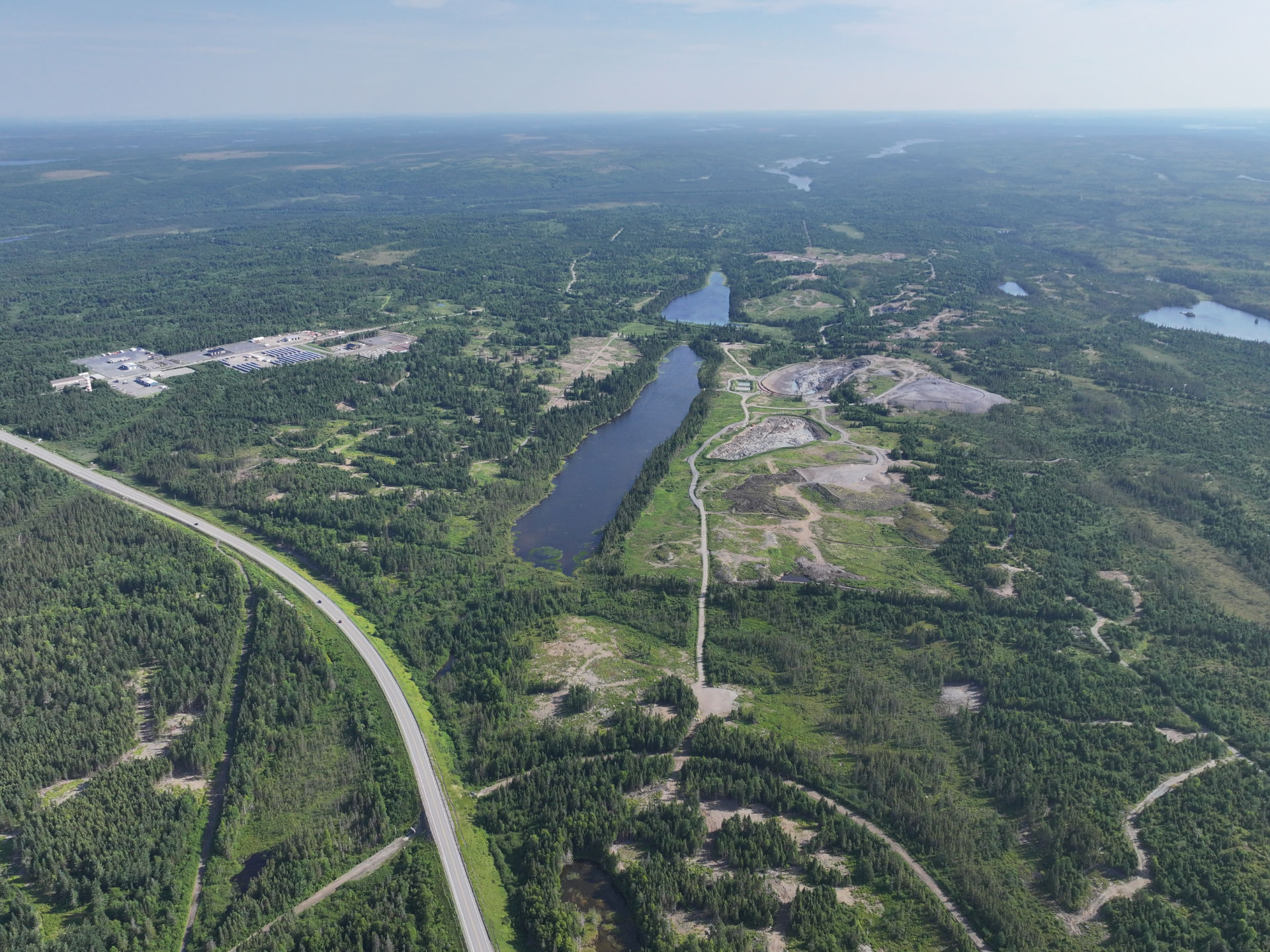
New Found Gold's Queensway pre-development drilling 87 condemnation, 20 geotechnical, and 12 hydrogeological holes, clears five infrastructure sites, and feeds Phase 1 design.
- New Found Gold has completed a pre-development drilling program at the Queensway project comprising 87 condemnation holes, 20 geotechnical holes, and 12 hydrogeological holes, none of which were directed at mineralization discovery.
- All 87 condemnation holes returned no significant assay values, confirming a clean footprint across the five proposed infrastructure sites tested.
- The geotechnical program produced feasibility-level subsurface data to support open-pit design inputs for the Phase 1 mine plan outlined in the Preliminary Economic Assessment (PEA) dated July 2025.
- The hydrogeological program targeted six named zones and included installation of surface monitoring wells, providing feasibility-level data to support the Phase 1 open-pit design.
- An updated Technical Report for Queensway, which will include an updated mineral resource estimate, is scheduled for the second half of 2026, and the pre-development dataset feeds directly into the engineering studies required to advance it.
What Has Happened
New Found Gold (TSXV: NFG | NYSE American: NFGC) has disclosed the results of a non-resource pre-development drilling program at its Queensway project, executed as part of the broader 2025 drill campaign. The program ran across three distinct engineering categories: condemnation drilling, which tested 87 diamond drill holes over 9,435 metres; geotechnical drilling, covering 20 diamond drill holes over 2,610 metres; and hydrogeological drilling, comprising 12 diamond drill holes over 1,134 metres. None of the three programs was directed at mineralization discovery. The combined dataset is described as providing the critical information required to support ongoing engineering studies for site development in advance of mining, and it supports advancement of the Phase 1 mine plan as outlined in the Preliminary Economic Assessment (PEA) published in July 2025.
Condemnation Drilling & Infrastructure Clearance
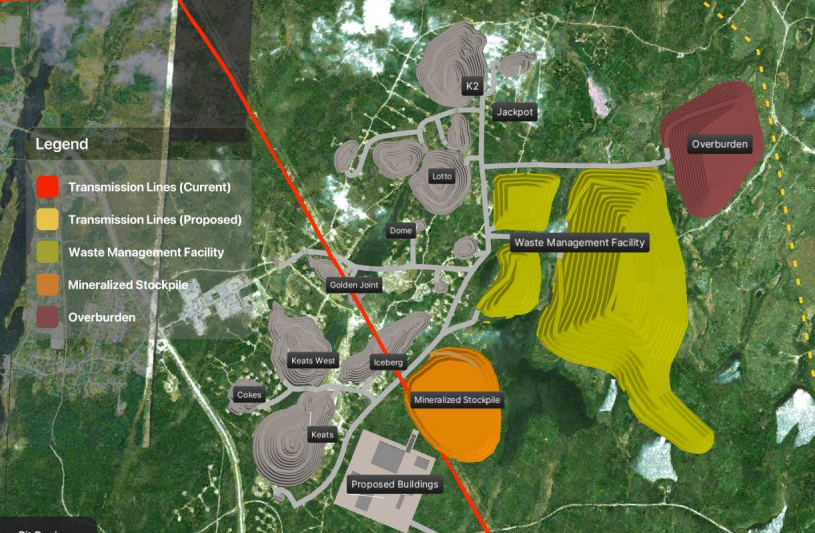
Condemnation drilling tests the ground directly beneath the proposed site infrastructure to detect mineralization. The result determines whether a planned infrastructure footprint is viable, whether economically significant mineralization underlies a proposed facility site, whether the site must be moved, or whether the infrastructure plan must be redesigned. The outcome is binary: a site either clears or it does not.
At Queensway, all 87 condemnation holes returned no significant assay values. The tested footprints covered five proposed infrastructure components: the Mineralized Stockpile, the Waste Rock Storage Facility, the Industrial Terrace, the Overburden Storage Facility, and the Waste Rock Auxiliary. Across all five, the program confirmed a clean, sterile footprint for the planned infrastructure layout.
This result cannot be assumed in advance. A condemnation program exists precisely because the presence of mineralization beneath proposed surface infrastructure is a genuine site risk in any project where the ore system is not fully mapped at depth, along strike, or laterally. The clearance of all five components removes that uncertainty from the engineering process for those specific sites.
Geotechnical & Hydrogeological Data
While condemnation drilling focused on clearing the surface infrastructure footprint, the geotechnical and hydrogeological programs collected pre-development subsurface data for the mine itself. The geotechnical program comprised 2,610 metres across 20 diamond drill holes, and the hydrogeological program covered 1,134 metres across 12 diamond drill holes
Both programs successfully provided feasibility-level data to support the Phase 1 open-pit design. This data advances the engineering work for the Phase 1 mine plan, which was initially outlined in the Preliminary Economic Assessment (PEA) dated July 2025.
As part of this engineering advancement, the hydrogeological drilling specifically targeted six zones within the project area: Iceberg East, Cokes, Keats West, Powerline, Monte Carlo, and Jackpot, and included the installation of multiple surface monitoring wells
What This Dataset Is Not
For the condemnation drilling specifically, the "no significant values" reported were the target outcome, successfully confirming the absence of mineralization beneath planned infrastructure. However, the broader pre-development program did yield assay results from elsewhere, including hydrogeological holes, which intersected gold mineralization at Iceberg East and Keats West.
The program's outputs are characterised as providing critical information to support ongoing engineering studies for site development in advance of mining, including providing feasibility-level data to support the Phase 1 open-pit design.
The pre-development dataset provides critical information to support ongoing engineering studies for site development, confirming infrastructure clearance and providing feasibility-level data for the specific components and zones required by the Phase 1 open-pit design.
What to Watch Next
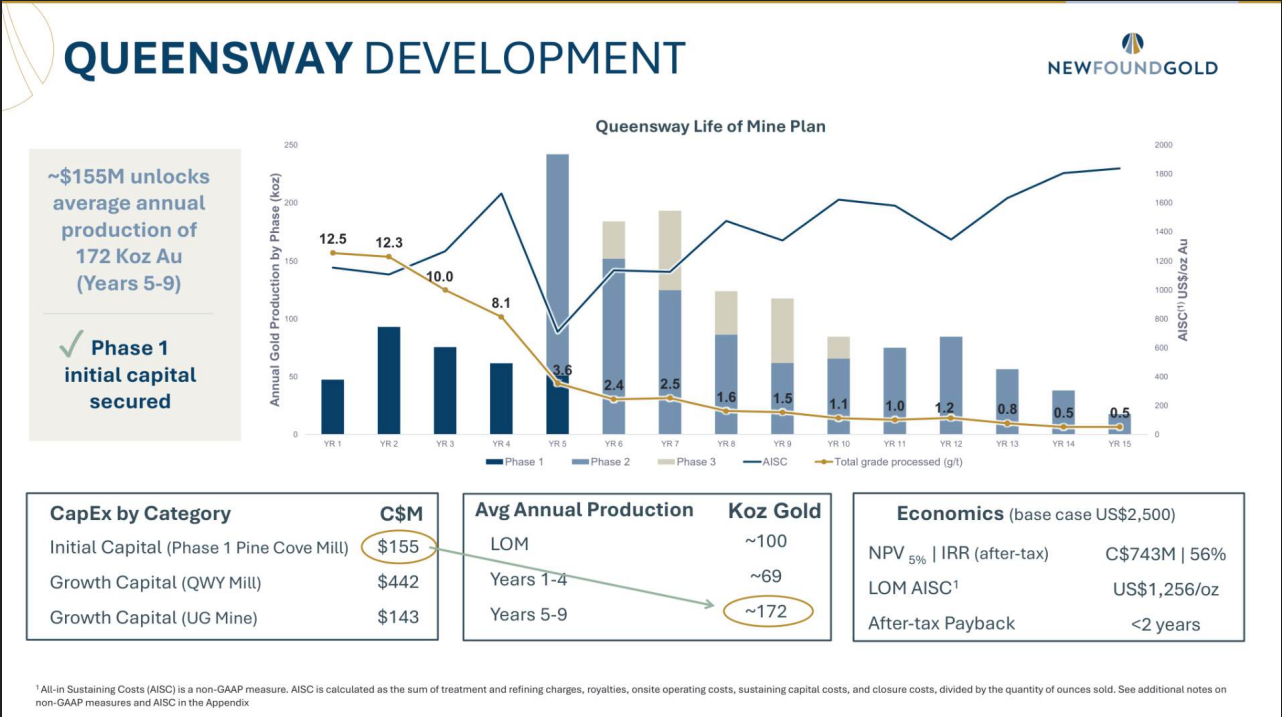
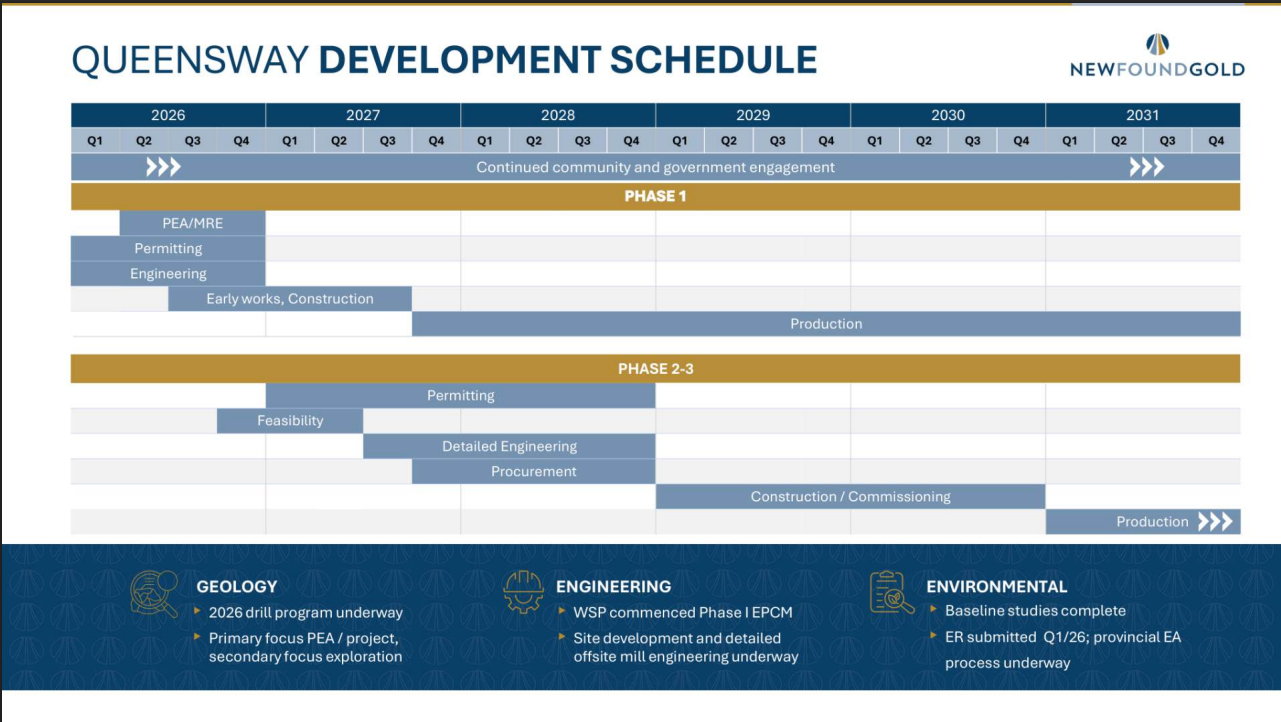
A major upcoming development milestone for Queensway is an updated Technical Report, including a mineral resource estimate, targeted for the second half of 2026. The pre-development drilling dataset feeds directly into this process. An updated Technical Report will draw on those studies to support advancing the Phase 1 mine plan as outlined in the July 2025 PEA
FAQs (AI-Generated)
Analyst's Notes





Subscribe to Our Channel

.png)

.png)




Stay Informed






















