Fed Rate Risk Pressures Gold, but Record ETF Holdings Support Recovery



Gold miners generating cash at $4,050 an ounce offer exposure to a potential rebound with less reliance on external funding.
- Spot gold rose 0.2% to $4,172.87 per ounce on October 19, as October Fed hike odds fell to 15% from 44% on October 14.
- Global gold exchange-traded fund (ETF) holdings reached a record 4,256 metric tons in September despite gold’s 8.5% decline, while net managed-money futures positions fell US$12 billion. Buying continued through the selloff.
- December Fed hike odds stood at 89% on October 19; lower odds could support gold by reducing the anticipated return advantage of interest-paying assets.
- The World Bank’s October Pink Sheet put Q3 gold at $4,268 per ounce, 5.4% below Q2, while September US energy producer prices rose 10.8% monthly, highlighting the value of cost control for unhedged producers.
- A daily gold close below $4,000 would breach an analyst-identified support level, strengthening the case for producers able to fund operations and planned spending at lower prices.
Lower October Hike Odds Lift Gold Toward $4,200
Spot gold rose 0.2% to $4,172.87 per ounce, while December US gold futures gained 0.3% to $4,193.30. Fed Chair Kevin Warsh declined to signal the next rate decision, while October hike odds fell from 44% to 15%, supporting gold by reducing the immediate risk of higher interest rates.
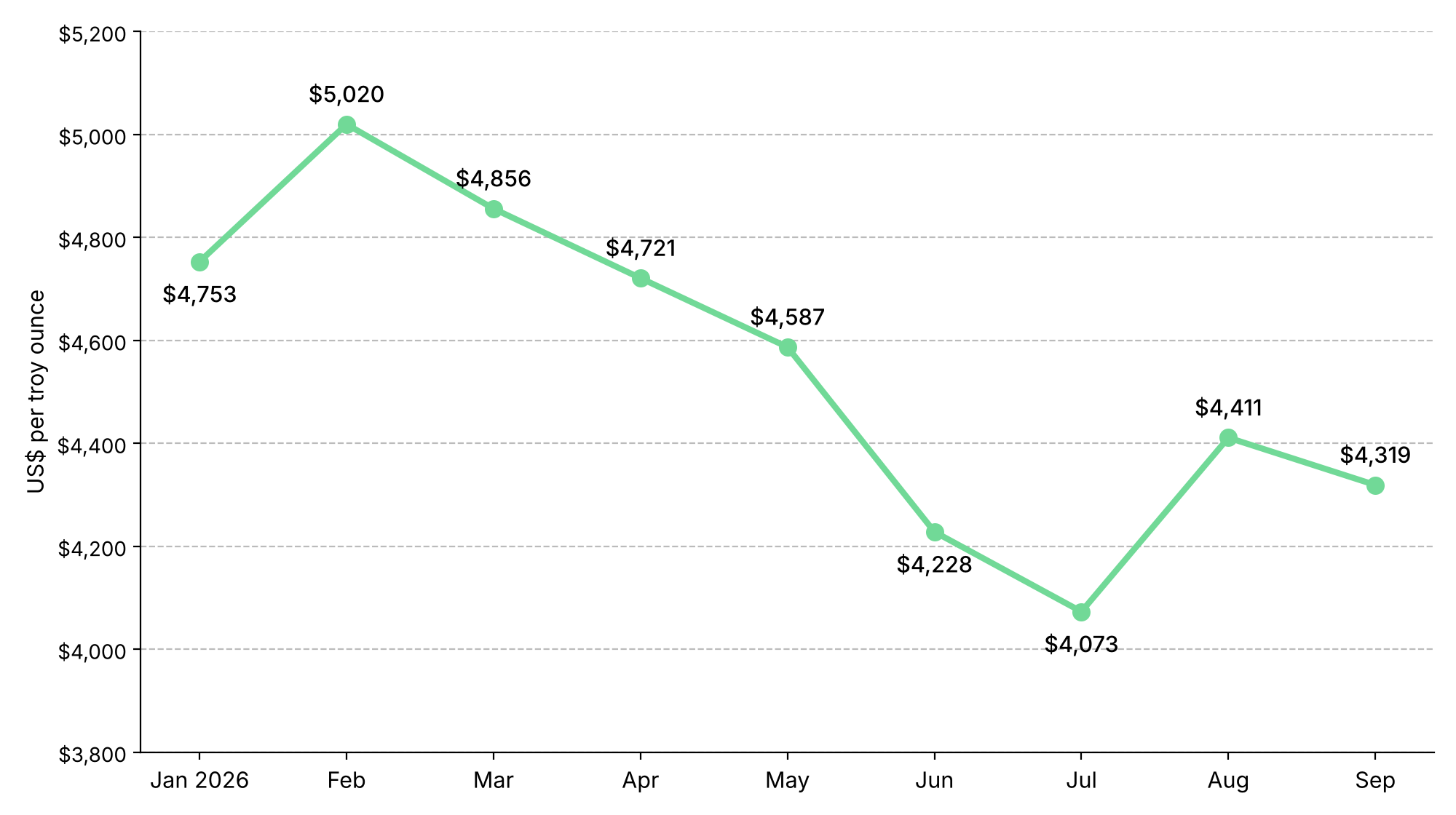
Gold remains 23% below its $5,405 record, while physically backed gold ETF holdings rose to a record 4,256 metric tons in September, showing fund buying continued through the selloff.
Higher Treasury Yields Pressure Bullion Despite ETF Buying
The Fed raised rates 25 basis points to 3.75%-4.00%, making interest-paying assets more competitive with gold. In September, net managed-money futures positions fell US$12 billion, or 84 metric tons, while the 10-year Treasury yield rose 53 basis points to 5.3%. Gold fell 8.5% despite ETF purchases of 67 metric tons, indicating buying could not offset pressure from higher yields and futures selling. Central banks added a net 39 metric tons in August, providing another source of demand without guaranteeing a price floor.
September consumer inflation reached 3.7% year over year, with gasoline up 34.2%, keeping further rate hikes in play. December hike odds remained at 89% despite oil’s retreat from a five-month high; lower odds could support gold by reducing the anticipated return advantage of interest-paying assets.
Softer Inflation Could Support Gold Prices Through Lower December Rate Risk
Lower October hike odds leave December rate risk unresolved, keeping unhedged producers’ revenue exposed to gold-price swings. Giovanni Staunovo, Analyst at UBS, said incoming inflation and employment data could matter more for gold than the October Fed meeting itself.
Alex Kuptsikevich, Chief Market Analyst at FxPro, places near-term support at $4,050 and resistance at $4,200. If Q4 gold averages within that range, unhedged producers would receive less per ounce than at Q3’s $4,268 benchmark, assuming sales track spot prices. Softer inflation could reduce hike odds and futures selling, supporting a recovery.
September’s personal consumption expenditures (PCE) inflation data, due October 29, could change December rate odds and gold-price assumptions for producer revenue. US Bureau of Economic Analysis (BEA) A daily gold close below TD Securities’ $4,000 support level would strengthen the case for producers able to fund operations and planned spending at lower prices.
Energy Inflation Favors Miners With Positive Cash Flow at $4,050 Gold
Unhedged producers’ revenue remains exposed to gold-price declines. The World Bank’s October Pink Sheet put Q3 gold at $4,268 per ounce, 5.4% below Q2. US energy producer prices rose 10.8% in September, signaling potential fuel-cost pressure for diesel-intensive mines. Price hedges can protect covered sales, depending on contract terms.
At $4,050 gold, positive cash flow after operating costs, planned capital spending, taxes and interest would indicate less reliance on external funding. Buying could cushion price declines: Ryan McKay, Director of Commodity Strategy at TD Securities, said ETF inflows could support gold around $4,000-$4,100, without guaranteeing a floor.
Gold’s 8.5% September decline highlights the value of disciplined position sizing: fixed operating costs can amplify gold-price declines in mining profits, and share-price losses can exceed bullion’s decline. Positions small enough to withstand prices below $4,000 reduce dependence on correctly timing the Fed’s decision.
Cash Flow Resilience Wins Out Amid Fed Rate Risk
Record ETF holdings and continued central bank buying support gold’s recovery case, although higher yields and futures selling can still outweigh that demand. Softer inflation could ease expectations for further Fed tightening, while energy-cost pressure reinforces the importance of cost control for mining margins.
Producers able to fund operations and planned spending at lower gold prices offer exposure to a potential rebound with less reliance on external funding. Disciplined position sizing remains essential because mining shares can amplify bullion’s losses.
Analyst's Notes





Subscribe to Our Channel









Stay Informed