




Revival Gold Posts First High-Grade Drill Results from South Mercur as Prefeasibility Study Advances



Revival Gold reports assay results from 18 drill holes at Mercur, Utah, including 4.2 g/t gold over 25 metres at South Mercur, with remaining 2025 results due by end of March.
- Drill hole RMC25-028 at South Mercur returned 4.2 g/t gold over 25 metres at 43 metres downhole, with a higher-grade interval of 9.8 g/t gold over 5.7 metres within that same intercept.
- At Main Mercur, hole RMC25-025 intersected 6.5 g/t gold over 7.1 metres at 35 metres downhole, and hole RM25-169 returned 0.79 g/t gold over 32 metres at 50 metres downhole.
- The South Mercur results are the first drill intercepts reported by Revival Gold for that area of the project.
- The 2025 drilling programme concluded in December with 115 holes completed; results from 107 have been released to date, with the final eight expected by end of March 2026.
- A 2026 drill programme is scheduled to begin in April, with all data supporting a Prefeasibility Study (PFS) targeted for release in Q1 2027.
Revival Gold Inc. (TSX.V: RVG, OTCQX: RVLGF) is a Toronto-based gold mine developer and one of the largest of its kind in the United States. The company is advancing the Mercur Gold Project in Utah and conducting mine permitting preparations and ongoing exploration at the Beartrack-Arnett Gold Project in Idaho, with an exploration and development office in Salmon, Idaho.
High-Grade Drill Results at South Mercur and Main Mercur
Revival Gold's latest assay results cover 18 drill holes from the 2025 programme at Mercur, with intercepts reported from both the South Mercur and Main Mercur areas. At South Mercur, hole RMC25-028 returned 4.2 g/t gold over 25 metres starting at 43 metres downhole, which includes a higher-grade core of 9.8 g/t gold over 5.7 metres. These are the first results Revival Gold has reported for the South Mercur area.
President and CEO Hugh Agro commented:
"Mercur was the first Carlin-style system mined in the US Great Basin and a substantial portion of the Project's historical gold production was sourced from high-grade ore. Today's near-surface drill results mark the first reported by Revival Gold for the South Mercur area. The high-grade intercepts encountered by the Company highlight the robust nature of gold zones that occur in the Mercur system and point to the exciting exploration opportunity we see ahead."
At Main Mercur, hole RMC25-025 intersected 6.5 g/t gold over 7.1 metres at 35 metres downhole. Hole RM25-169 returned a broader interval of 0.79 g/t gold over 32 metres at 50 metres downhole. A Carlin-style deposit, for those unfamiliar, is a type of sediment-hosted gold deposit common across Nevada and Utah, typically processed using heap leaching, a method where gold is recovered by applying a solution to stacked ore rather than through a conventional processing plant. The AuCN/AuFA ratio reported alongside drill results provides an indication of how much gold may be recoverable through this method.
All samples were processed at ALS Geochemistry facilities in Nevada and British Columbia, and analysed using fire assay, the industry-standard method for measuring gold content in rock samples. Technical results were reviewed and approved by the company's qualified persons, John Meyer (VP Engineering and Development) and Dan Pace (Chief Geologist).
2025 Drilling Programme Completion and Assay Results Progress
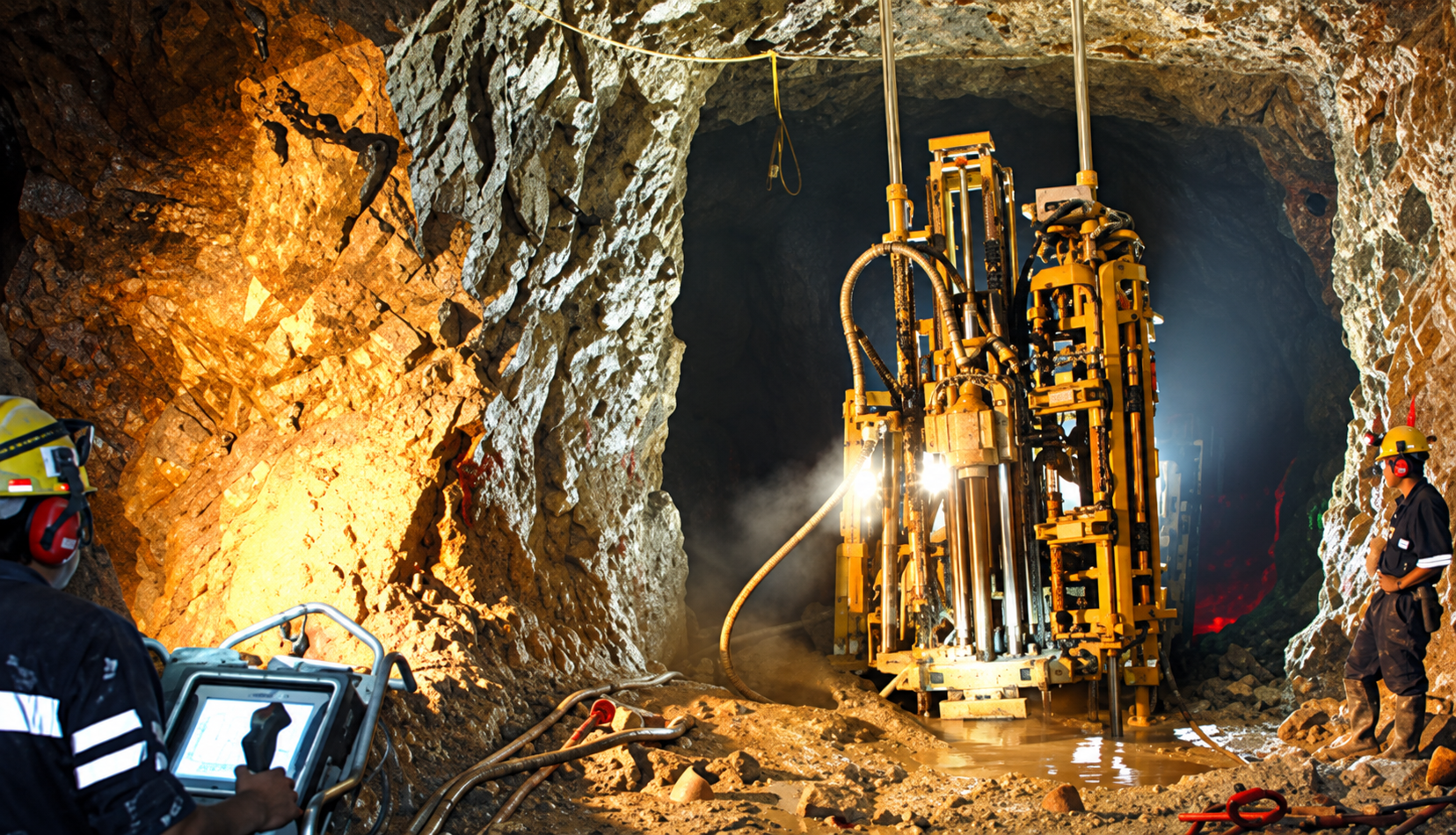
The 2025 drilling programme at Mercur concluded in December with 115 reverse circulation (RC) and core drill holes completed across the project. Reverse circulation drilling recovers rock chips to the surface for sampling, while core drilling retrieves intact cylindrical rock samples for more detailed analysis. Of the 115 holes drilled, results from 107 have now been released, with the final eight still pending laboratory assay.
President and CEO Hugh Agro noted:
"Final results from the 2025 Mercur drilling programme are expected later this month and the Company's 2026 Mercur drilling programme is scheduled to start in April."
Data collected from the full 2025 programme will support the planned Prefeasibility Study, targeting a release in Q1 2027. A PFS is an engineering and economic study that evaluates whether a project is viable prior to a development decision.
The Mercur property includes interests optioned from Barrick Resources (USA) Inc. and others, as summarised in the company's previously published Preliminary Economic Assessment.
2026 Drill Programme and Prefeasibility Study Timeline
With the 2025 programme substantially complete, Revival Gold is preparing to begin its 2026 drill programme at Mercur in April. Data from both programmes will feed into the PFS, which is targeted for release in Q1 2027. The PFS represents a key milestone on the company's stated path to restarting gold production at Mercur.
Revival Gold has set an objective to be the next gold mine developed in the US Great Basin, as outlined in its 2026 outlook. Completion of a PFS would mark a significant step in advancing the project through the development process. No further details on the scope of the 2026 drill programme have been disclosed at this time.
Conclusion
Revival Gold has reported results from 107 of 115 holes drilled at Mercur in 2025, with the remaining assays expected by end of March 2026. The results include the company's first reported intercepts at South Mercur and continued drilling at Main Mercur. The 2026 drill programme is set to begin in April, with all data directed toward the Prefeasibility Study targeted for Q1 2027.
Analyst's Notes





Subscribe to Our Channel






Stay Informed






















