




Why Investors Should Consider Atlas Salt as North America's De-Icing Market Faces Supply Constraints


Atlas Salt develops North America's first new salt mine in 30 years with $920M NPV8, 21.3% IRR, targeting 8-10 Mtpa import-dependent de-icing market.
- Atlas Salt is developing the Great Atlantic Salt Project in Newfoundland, Canada, North America's first new salt mine in nearly three decades with 4 Mtpa nameplate production capacity targeting the import-dependent de-icing market.
- The 2025 Updated Feasibility Study demonstrates compelling economics: after-tax NPV8 of $920 million, 21.3% IRR, 4.2-year payback, and average annual post-tax cash flow of $188 million over a 24.3-year mine life.
- Strategic location in top-tier jurisdiction provides competitive advantages including proximity to 11-16 Mtpa Atlantic Canada and US East Coast market, lower transportation costs, clean hydropower access, and shallow mining depth reducing capital intensity.
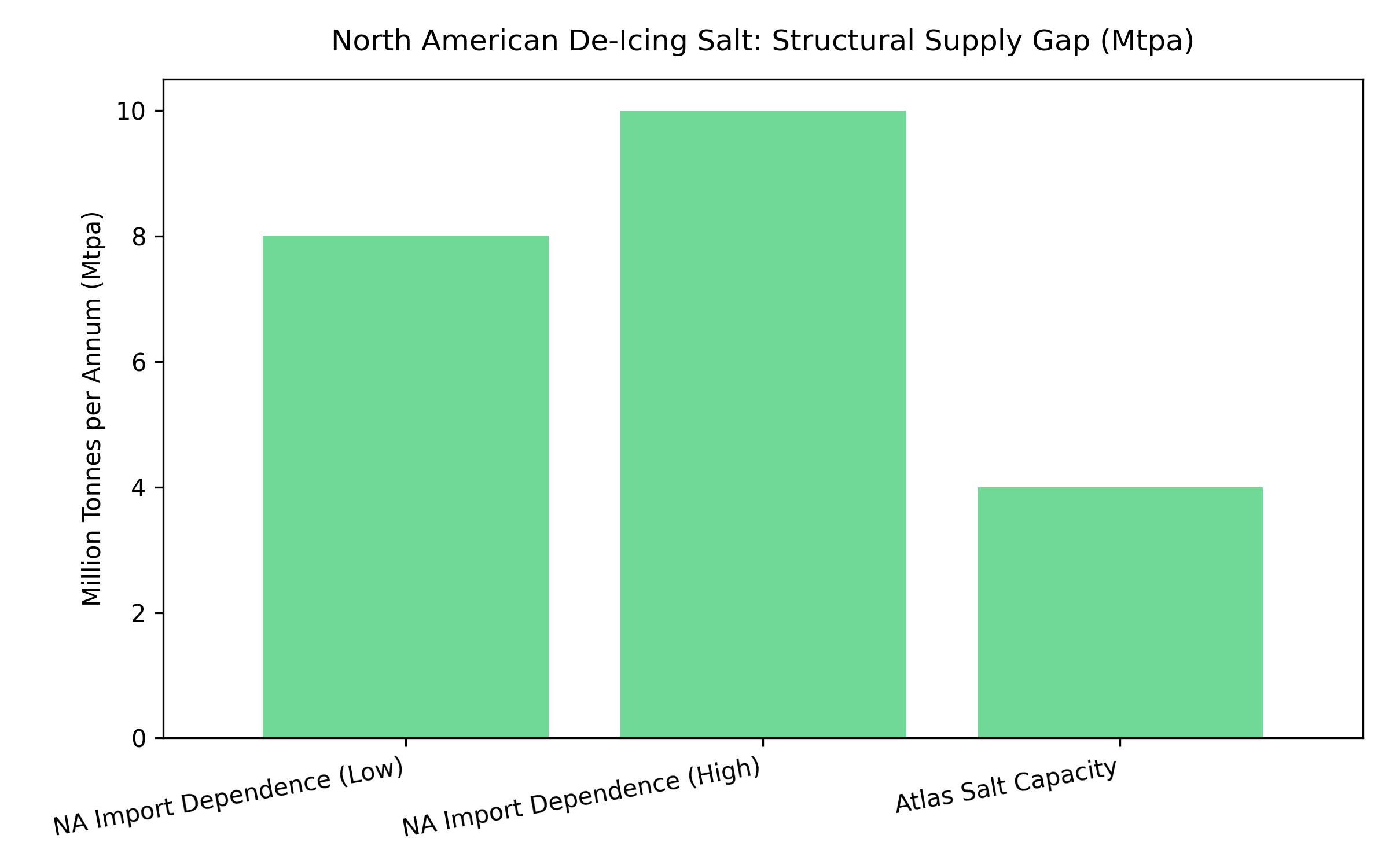
- North American de-icing salt market valued at $2.3-2.9 billion annually faces 8-10 Mtpa import dependence, with legacy mines aging and recent closures removing domestic supply amid rising demand.
- Project de-risked through environmental assessment approval, strategic partnerships with Scotwood Industries (1.25-1.5 Mtpa offtake MOU), Sandvik ($73 million equipment agreement), and Hatch (engineering lead), with production targeted by 2030.
North America's reliance on imported salt for winter road maintenance has created a strategic opportunity for domestic producers as aging infrastructure and supply chain pressures reshape the commodity landscape. Atlas Salt Inc. (TSXV:SALT) is positioned to capitalize on this dynamic with its Great Atlantic Salt Project in Newfoundland, representing the continent's first major new salt mine development in approximately 30 years.
The company's 2025 Updated Feasibility Study confirms robust project economics with after-tax net present value of $920 million at 8% discount rate, internal rate of return of 21.3%, and average life-of-mine annual post-tax cash flow of $188 million. With environmental approvals secured, strategic partnerships advancing, and a clean balance sheet, Atlas Salt offers investors exposure to an essential industrial commodity with structural demand drivers and limited new supply competition.
The investment case extends beyond financial metrics to strategic positioning: the project's shallow depth (approximately 180 meters versus 600+ meters for legacy North American salt mines), proximity to import-dependent markets, and access to clean hydroelectric power create meaningful cost and sustainability advantages that position Atlas favorably as legacy operations face increasing operational and environmental challenges.
Company Overview: Strategic Asset in Top-Tier Jurisdiction
Atlas Salt controls 2P Reserves of 95.0 million tonnes at 95.9% NaCl grade, representing one of North America's highest-purity salt deposits. The Great Atlantic Salt Project benefits from ideal geological characteristics: a homogeneous, shallow resource with average thickness of 200 meters accessible via decline mining rather than costly shaft sinking. This deposit geometry translates directly to capital efficiency and operational simplicity compared to traditional deep-shaft salt mining operations.
Newfoundland and Labrador ranked 9th globally in Fraser Institute's 2025 mining investment attractiveness assessment. Recent institutional capital flows underscore regional appeal: Equinox Gold's acquisition of Calibre Mining, Eldorado Gold's joint venture with Tru Precious Metals, and FireFly Metals' $100 million raise demonstrate sophisticated investors' confidence in the jurisdiction. The project site leverages established infrastructure including Turf Point deep water port (2 kilometers away), Trans-Canada Highway access, and St. George's electrical substation (1.4 kilometers away), significantly reducing pre-production capital requirements.
Market Context: Structural Deficit Amid Import Dependence
The global salt market reached $26 billion in 2024 with projected 4.2% compound annual growth, while North American de-icing represents 28.5-36 million tonnes annually valued at $2.3-2.9 billion. This concentration in winter road safety creates predictable, weather-driven demand that municipalities must fulfill regardless of economic cycles. Unlike discretionary minerals, de-icing salt represents essential infrastructure spending with limited substitution risk.
North America currently imports 8-10 million tonnes annually, with 67.5 million tonnes imported to the United States from 2020-2023 primarily from Chile (29%), Canada (27%), Mexico (14%), and Egypt (8%). Recent industry consolidation intensifies supply pressures. Cargill's 2021 closure of Avery Island mine removed 2.5 million tonnes per year, while remaining assets in New York and Cleveland face potential closure removing another 2 million tonnes. The December 2025 acquisition of US Salt by ContextLogic for $907.5 million at 16.5x EBITDA validates sector fundamentals and demonstrates institutional appetite.
Project Economics: Institutional-Grade Returns With De-Risked Profile
The Updated Feasibility Study shortened mine life to 24.3 years from 34 years by pulling forward production to achieve 4 Mtpa nameplate capacity, reducing reliance on long-term forecasts while increasing NPV8 by 66% to $920 million. This strategic decision prioritizes near-term value capture, addressing investor concerns regarding development-stage assets' reliance on distant assumptions.
Average life-of-mine all-in sustaining costs of $34.90 per tonne represent 18% improvement from 2023 study, while gross margins increased 5% to $74.50 per tonne. Pre-production capital of $589 million generates $4.6 billion cumulative post-tax cash flow over mine life, representing 7.8x multiple on initial investment with payback by Year 5. Conservative base case pricing of $81.70 per tonne sits below recent spot pricing of $90-110 per tonne, with each $5 increase translating to approximately $50 million incremental NPV.
Strategic Partnerships: Validating Commercial Viability
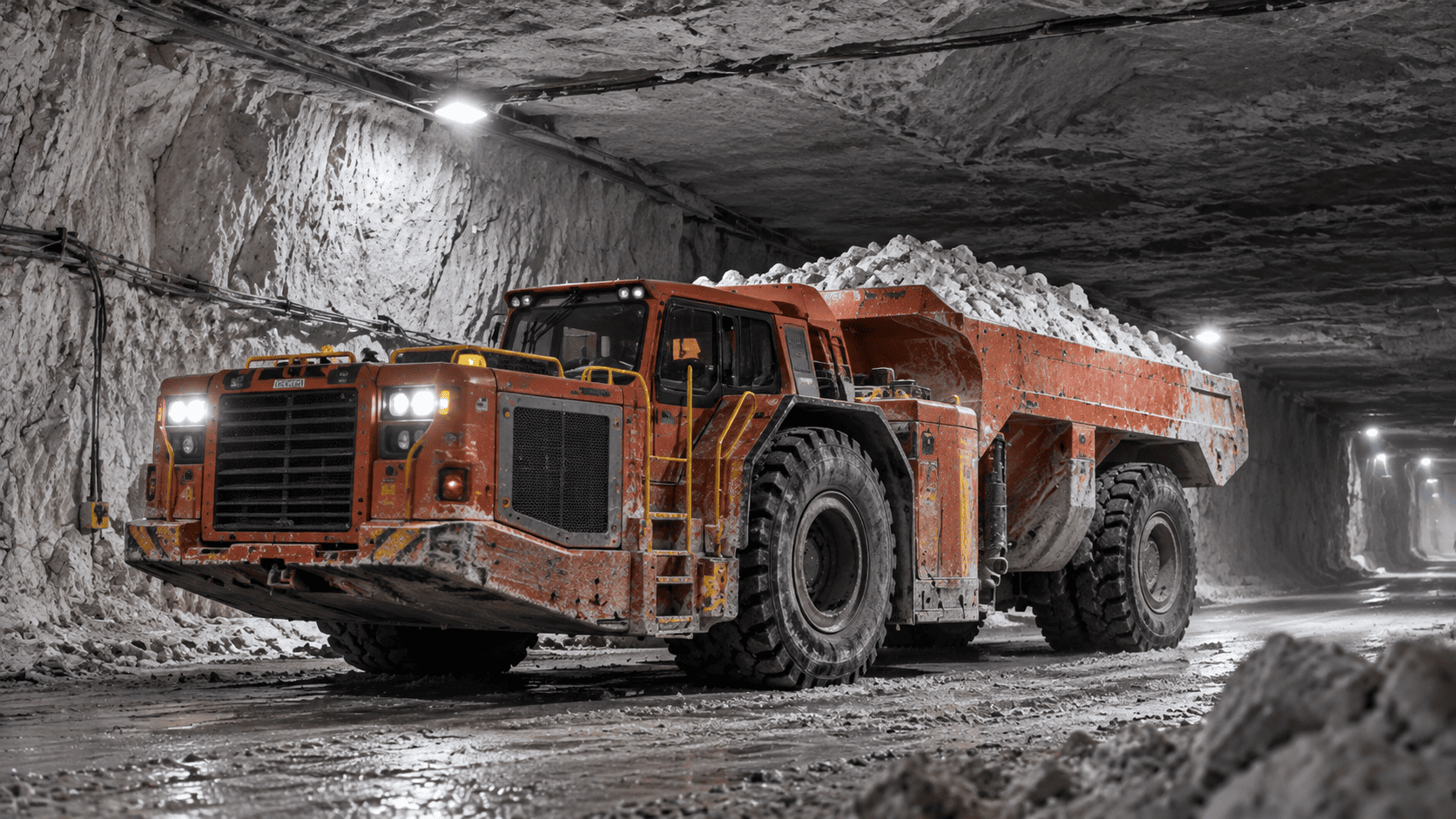
Atlas Salt executed a Memorandum of Understanding with Scotwood Industries for 1.25-1.5 million tonnes per year, representing 31-38% of production capacity. Scotwood's position as largest US distributor of packaged retail de-icing salt provides immediate market access and validates commercial assumptions. Equipment collaboration with Sandvik for $73 million in mining equipment demonstrates manufacturer confidence while potentially providing vendor financing. The November 2025 partnership with Hatch Ltd. as Lead Engineering Partner brings proven experience delivering the world's largest soft-rock mines.
Nolan Peterson, CEO, Atlas Salt Inc. mentioned their de-icing salt annually:
"Atlantic Canada, Quebec, and the U.S. East Coast consume 11 to 16 million tonnes of de-icing salt annually. Our 4 million tonnes per annum nameplate capacity directly addresses this clear market deficit. We can reach Boston in under three days, compared to over two weeks from Chile or Egypt. That proximity translates to lower costs, reduced emissions, and superior supply reliability for customers."
Competitive Advantages: Location, Costs, & Sustainability
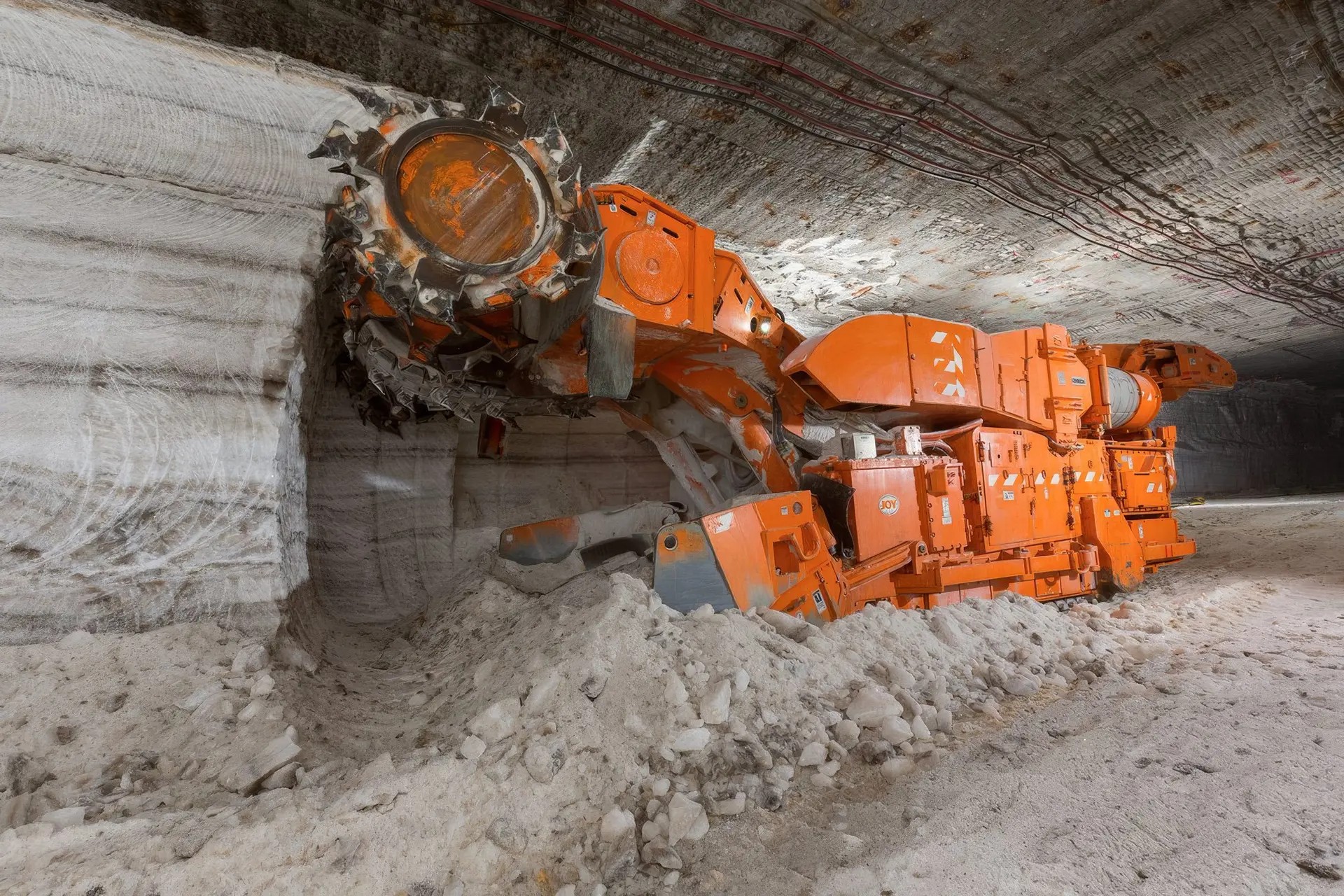
Geographic proximity creates structural advantages. Shipping time from Great Atlantic to Boston approximates 3 days versus 14+ days from Egypt or Chile, translating to 15-20% cost savings and commercial advantages including faster fulfillment and 80% lower carbon emissions per tonne delivered. The project's shallow 180-meter depth provides capital and operating benefits compared to legacy operations at 600-1,000 meters. Shallow mining enables decline access eliminating $80-120 million in shaft sinking costs while reducing haulage costs $3-5 per tonne.
Environmental performance influences procurement decisions. Scope 1 emissions of 79 tonnes annually (comparable to 4 Newfoundland households) creates GHG intensity of 950 tonnes CO2-equivalent per million tonnes, among the lowest in global mining. Fully electric underground fleet powered by hydroelectricity, zero tailings, and no chemical processing align with ESG procurement mandates. The 2024 ESG Report projects $2.7 billion in tax revenue, $1.9 billion in household spending, and 170+ long-term jobs.
The Investment Thesis for Atlas Salt
- Import dependence of 8-10 Mtpa and recent closures (Avery Island 2.5 Mtpa, potential Cleveland 2 Mtpa) create immediate absorption capacity with no competing North American projects announced.
- After-tax NPV8 of $920 million, 21.3% IRR, 4.2-year payback with $188 million average annual cash flow represents compelling returns, validated by US Salt transaction at 16.5x EBITDA.
- Shallow 180-meter depth eliminates $80-120 million shaft costs, 3-day Boston shipping reduces delivered costs 15-20%, clean hydropower creates 95% lower GHG intensity versus peers.
- Environmental approval secured April 2024, proven mine design validated at Irish Salt Mining's Kilroot operation, strategic partnerships (Scotwood, Sandvik, Hatch) reduce execution uncertainties.
- Project financing expected Q3/Q4 2026 (historically 20-30% appreciation), Scotwood offtake conversion (15-25% gains), federal permits, Early Works construction provide multiple re-rating opportunities over 18-24 months.
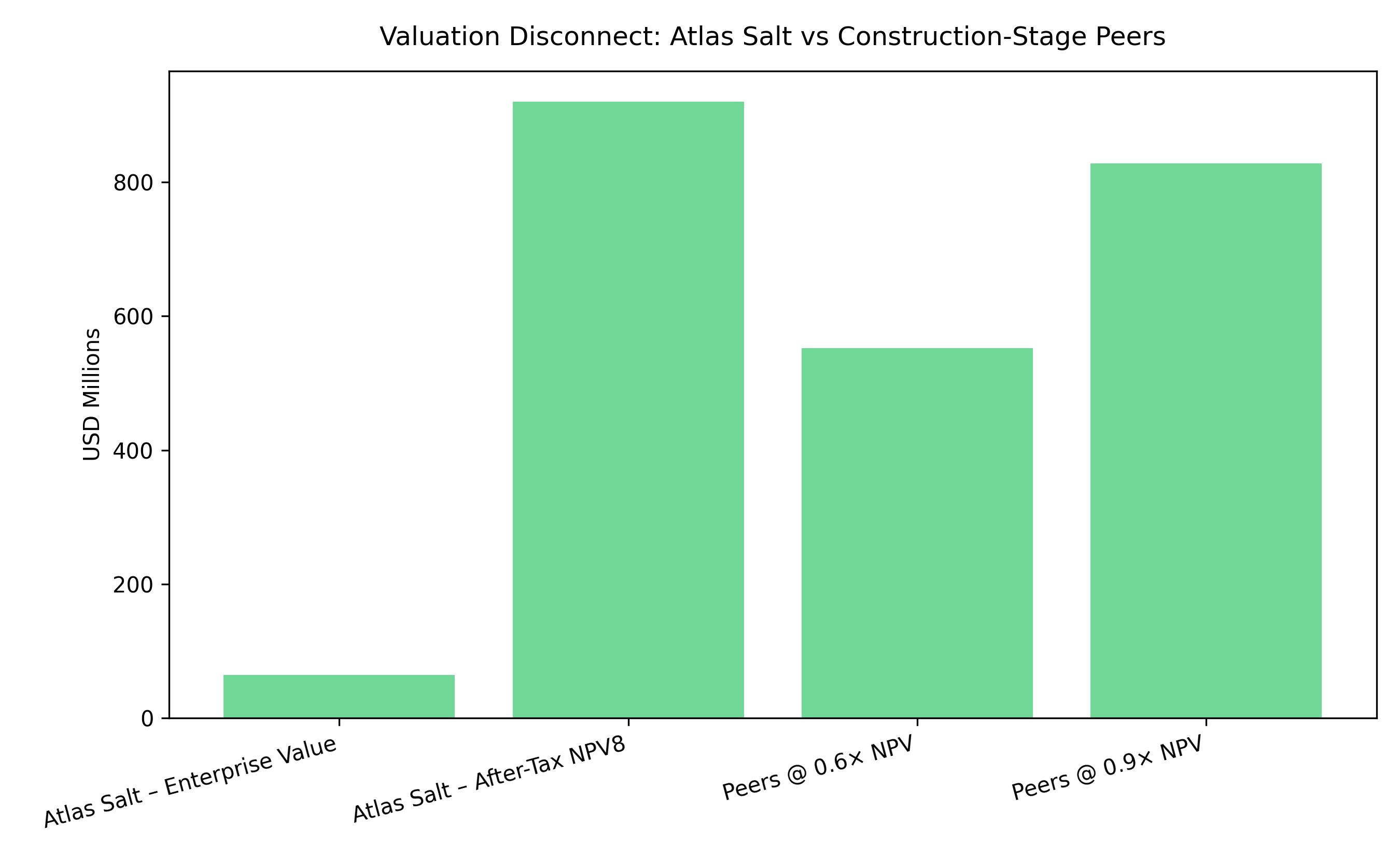
- Current enterprise value of $64 million represents 0.07x after-tax NPV versus 0.6-0.9x for construction-stage peers, suggesting 8-12x appreciation potential as milestones de-risk production assumptions.
Atlas Salt represents differentiated exposure to North America's de-icing salt market at an inflection point where aging infrastructure, import dependence, and capacity closures create structural supply tightness. The Great Atlantic Salt Project offers institutional-grade economics underpinned by world-class geology (95.0 Mt at 95.9% NaCl), strategic location (3-day Boston shipping), and cost competitiveness from shallow 180-meter depth and clean power access.
Environmental approval, strategic partnerships with Scotwood (1.25-1.5 Mtpa offtake), Sandvik ($73 million equipment), and Hatch (engineering lead) reduce development risks while preserving upside toward 2030 production. Management led by CEO Nolan Peterson (20+ years experience, former World Copper CEO advancing $1B+ assets) and VP Engineering Robert Booth ($1.5B+ mine builds for Newmont/Hudbay) with 40%+ insider ownership aligns interests with shareholders.
Current enterprise value of $64 million represents substantial discount to net asset value, with catalysts including financing (Q3/Q4 2026), offtake conversion, permits, and construction providing re-rating opportunities. Development miners historically appreciate 200-400% from feasibility through construction, with Atlas at 0.07x NPV versus 0.6-0.9x peers suggesting 8-12x potential. Recent transactions validate premium valuations: US Salt at 16.5x EBITDA and K+S Americas at 12.5x EBITDA. Applied to Atlas's projected $183 million steady-state EBITDA, comparable multiples imply $1.8-3.0 billion enterprise values versus current $64 million.
TL;DR
Atlas Salt develops the Great Atlantic Salt Project in Newfoundland, North America's first new major salt mine in 30 years, with 4 Mtpa capacity targeting import-dependent de-icing markets. The 2025 Updated Feasibility Study shows after-tax NPV8 of $920 million, 21.3% IRR, 4.2-year payback, and $188 million average annual post-tax cash flow over 24.3 years. Strategic advantages include shallow 180-meter depth (versus 600+ meters for legacy mines), 3-day Boston shipping versus 14+ days for imports, clean hydropower, and 95.9% NaCl reserves. North America imports 8-10 Mtpa annually, with recent closures removing 4.5 Mtpa while legacy operations struggle. Environmental approval secured April 2024, partnerships with Scotwood (1.25-1.5 Mtpa offtake), Sandvik ($73 million equipment), and Hatch (engineering) advance readiness for 2030 production. Current $64 million enterprise value represents 0.07x NPV versus 0.6-0.9x for construction-stage peers, with US Salt's 16.5x EBITDA acquisition validating sector premiums and suggesting 8-12x appreciation as financing, offtake, permits, and construction milestones de-risk project over 18-24 months.
FAQs (AI-Generated)
The project offers 21.3% after-tax IRR with $920 million NPV8 and 4.2-year payback, superior to typical development-stage miners averaging 15-18% IRR with 5-7 year paybacks in comparable jurisdictions.
The 180-meter depth eliminates $80-120 million in shaft sinking costs and reduces operating expenses by $3-5 per tonne compared to legacy mines operating at 600-1,000 meter depths.
Scotwood Industries, the largest US packaged retail de-icing salt distributor, signed an MOU for 1.25-1.5 million tonnes annually representing 31-38% of planned production, demonstrating third-party market validation.
Recent closures (Cargill's Avery Island removing 2.5 Mtpa and potential Cleveland shutdown eliminating another 2 Mtpa) combined with no new mines since 2001 have created structural supply deficits.
Three-day shipping to Boston versus 14+ days from Chile or Egypt reduces delivered costs by 15-20% while cutting carbon emissions by 80% per tonne, creating both economic and ESG advantages.
Analyst's Notes





Subscribe to Our Channel





Stay Informed


