




Canada’s Tax Proposal Could Lift Salt Mine Returns by Bringing Deductions Forward



Canada's proposed Mega Deduction could lift salt mine NPV by advancing deductions, but eligibility, taxable income and cost schedules decide the gain.
- Canada’s proposed Productivity Mega Deduction would let qualifying salt mine developers deduct eligible assets acquired on or after September 15, 2026, when those assets become available for use. Qualifying Canadian development expenses incurred from that date could also be deducted sooner.
- The Department of Finance Canada projects that the economy-wide marginal effective tax rate would fall from 13.0% under existing 2026 measures to 6.4% under the proposal.
- The Income Tax Act classifies a deposit whose principal extracted mineral is halite as a mineral resource. The proposed exclusion for industrial mineral mines therefore requires project and asset-level analysis before assigning a tax benefit.
- Earlier deductions raise a mine’s present value when they reduce tax payments sooner. Limited taxable income during construction could delay that cash benefit.
- A revised after-tax valuation requires eligible costs, asset-use dates, expected taxable income, and a funded construction schedule. Without those inputs, the proposal does not establish a measurable change in project returns.
Canada’s Tax Proposal Could Lift Salt Mine Values by Advancing Deductions
Mine construction often requires spending before production generates taxable income. Standard depreciation spreads deductions for some assets over later years. If an earlier deduction reduces tax payable sooner, it increases the present value of after-tax cash flows without changing salt prices, output, or operating costs.
Canada proposed the Productivity Mega Deduction (PMD) on September 15, 2026. It would permanently allow immediate deductions for a broad range of eligible assets when they become available for use, as well as qualifying Canadian development expenses. The Department of Finance Canada’s September 15 backgrounder estimates that roughly two-thirds of capital investment across the economy could qualify. Because the measure remains proposed, it does not establish a revised value for any mine.
The Department of Finance Canada projects that the PMD would lower Canada’s economy-wide marginal effective tax rate (METR) on new investment from 13.0% under existing 2026 measures to 6.4% under the proposal. METR accounts for tax rates, deductions, and credits when measuring the tax burden on an additional investment; it is not a mine’s corporate tax rate. A change to a salt project’s net present value (NPV) would require its qualifying costs and the years in which deductions reduce tax payable.
Proposed Asset & Development Rules Could Bring Salt Tax Deductions Forward
Under capital cost allowance (CCA), businesses deduct many asset costs over several years, which can delay tax savings. The proposed PMD would allow eligible assets to be deducted when they become available for use and qualifying Canadian development expenses (CDE) to be deducted under a separate rule. The distinction determines which parts of a mine’s construction budget could receive earlier deductions.
Proposed Asset Rules Could Bring Mine Equipment Tax Savings Forward
The draft generally limits immediate expensing to eligible property acquired on or after September 15, 2026, and applies ownership and prior-use conditions. If qualifying mine equipment becomes available for use, deducting its cost sooner than under ordinary depreciation could bring tax savings forward when the deduction offsets taxable income.
The proposal excludes assets including buildings in specified tax classes, certain vehicles, and some intangible property, so total construction spending cannot be treated as immediately deductible. A project schedule separating eligible equipment from excluded costs and showing when each asset enters use would make any estimated tax benefit more credible. www.canada.ca
Proposed Tax Rules Could Advance Deductions for Eligible Mine Development
The Income Tax Act (ITA) includes certain costs of bringing a new mine in a Canadian mineral resource into production within Canadian development expenses (CDE). Examples include eligible land clearing, overburden removal, and underground entry construction. Under the draft PMD, qualifying CDE incurred on or after September 15, 2026, could be deducted in the year incurred, bringing tax savings forward if the deduction reduces tax payable sooner.
Underground entry work may qualify as CDE, while mobile equipment and surface facilities can fall under different asset rules. Eligibility also depends on which taxpayer incurs each cost and when it is incurred. A cost schedule broken down by expenditure type, taxpayer, and date is therefore needed before estimating any change to the mine’s after-tax value. laws-lois.justice.gc.ca
Halite’s Legal Status & Mine Exclusions Keep Salt Tax Eligibility Open
The ITA classifies a deposit whose principal extracted mineral is halite, the mineral form of rock salt, as a mineral resource. That classification means qualifying preproduction work at a new Canadian rock salt mine may meet the CDE definition and receive earlier deductions under the proposed PMD.
Industrial-Mine Rules & Asset Classes Require Cost-by-Cost Tax Review
The draft PMD excludes an industrial mineral mine and rights to remove industrial minerals from one. The Income Tax Regulations (ITR) define an industrial mineral mine to exclude a mineral resource, while the ITA includes a qualifying halite deposit within its mineral-resource definition. The exclusion therefore does not automatically settle a rock salt mine’s eligibility; its assets and expenses still require separate classification before any effect on after-tax NPV can be estimated.
Profitable Salt Sales & Long Mine Lives Can Increase Tax Savings’ Value
The US Geological Survey (USGS) identifies ice control and chlorine and caustic soda production as uses for salt, giving a proposed mine distinct customer markets to assess. Access to those customers matters for tax timing: earlier deductions reduce current tax payments only if the business has taxable income against which to use them.
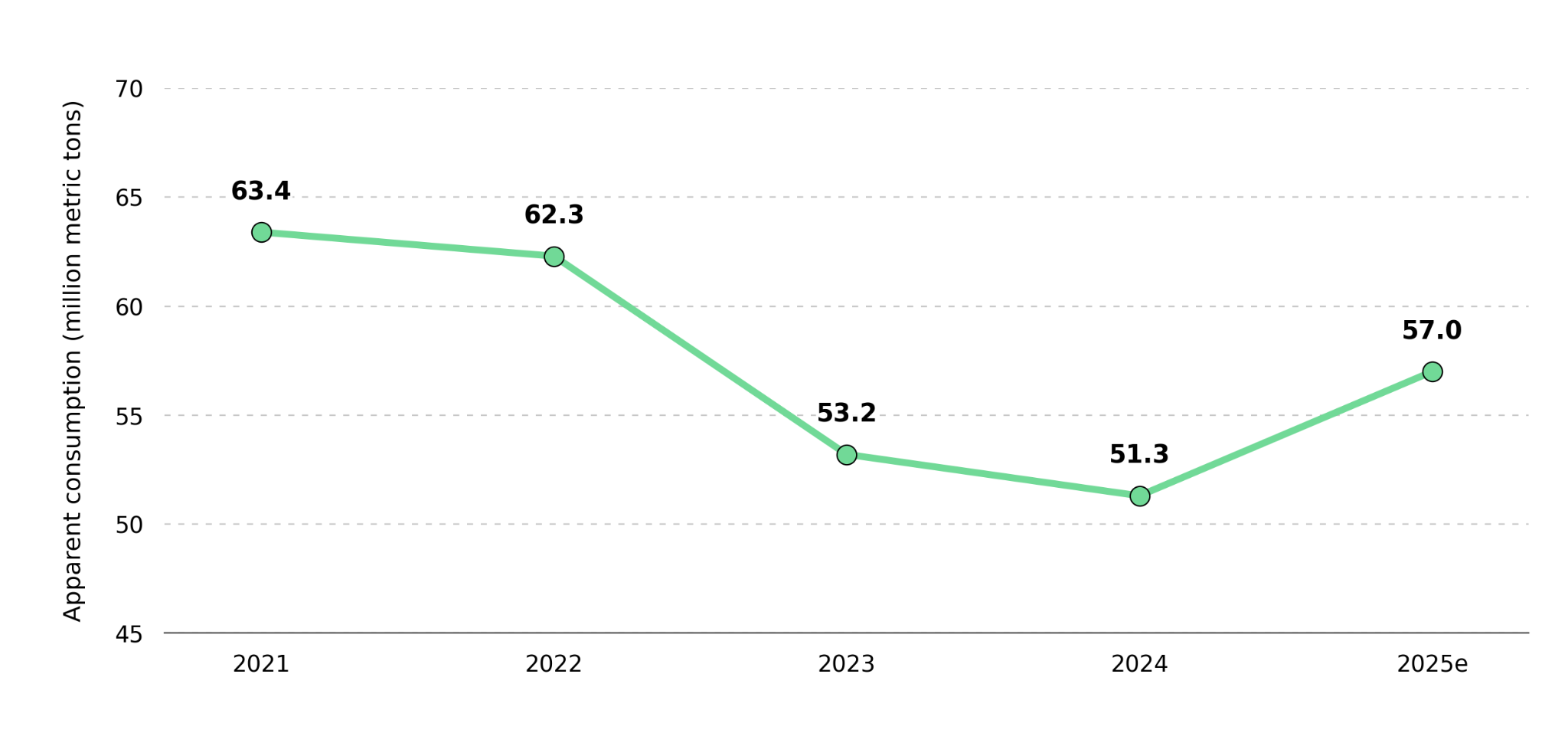
Chemical feedstock and road salt serve different buyers, so a road salt mine’s revenue forecast should reflect its intended customers and saleable output. The PMD changes the timing of qualifying deductions without increasing customer demand. Holding assumed sales volumes and salt prices constant therefore isolates its potential effect on after-tax cash flow.
NPV gives earlier cash flows more weight, so a qualifying deduction can raise a mine’s after-tax value if it reduces tax payments sooner. Construction delays or a slow production ramp-up can postpone taxable income and the resulting tax savings, even when a mine is planned to operate for decades.
Taxable Income & Loss Timing Determine Whether Salt Tax Savings Arrive
Under the proposed PMD, an eligible deduction reduces taxable income rather than reimbursing a developer for an asset’s cost. If a mine has no tax to pay during construction, the deduction creates no immediate cash saving; its benefit depends on when it can reduce tax payable under applicable rules.
Start-Up Losses & Unused Deductions Can Delay Salt Tax Savings
To illustrate the Department of Finance Canada’s September 15, 2026, proposal, assume C$100 of qualifying costs, a 25% tax rate, and enough otherwise taxable income to use the full deduction immediately. The C$100 deduction would then reduce current tax by C$25. Receiving the same C$25 saving years later would give it a lower present value. These amounts are illustrative, not project estimates.
If the developer cannot use the deduction in the spending year, it does not receive the illustrated C$25 as a current-year tax saving. Any benefit depends on whether and when the deduction or resulting loss reduces tax under applicable rules. Recording C$25 as construction-year cash without that tax capacity would overstate after-tax NPV.
Compass Minerals operates the Goderich rock salt mine in Ontario. Under the proposed Productivity Mega Deduction, it could deduct qualifying equipment acquired on or after September 15, 2026, when that equipment becomes available for use. Because Goderich already produces salt, Compass could realize a cash-tax benefit sooner than a developer awaiting production, if its Canadian taxpayer has taxable income to offset. The size and timing of any benefit remain unknown without an asset-level spending and tax schedule.
Cost & Tax-Use Schedules Test Whether Salt Mine NPV Improves
To test the PMD’s effect, a mine model must classify each cost by tax category and year, identify who owns the asset, and record when it enters use. It must show when deductions and available tax losses reduce cash taxes under current rules and the proposal. Keeping salt prices, output, operating costs, and the discount rate identical in both cases isolates the proposed tax treatment’s effect on NPV.
Earlier after-tax cash flows can raise a project’s internal rate of return (IRR), a return measure based on the timing of its costs and receipts. The economy-wide METR projection and a mine’s total construction budget cannot establish a project-level IRR change. Published feasibility estimates remain the baseline until an updated model shows eligible costs and the years in which deductions reduce tax.
Construction Plans & Financing Progress Can Clarify Salt Tax Timing
As a mine enters construction, purchase contracts, ownership terms, and planned equipment-use dates allow its costs to be tested against the proposed PMD rules. Financing commitments and completed works also help assess whether the production schedule used in its feasibility study remains achievable.
Target Road Salt Markets & Financing Interest Support Funding Talks
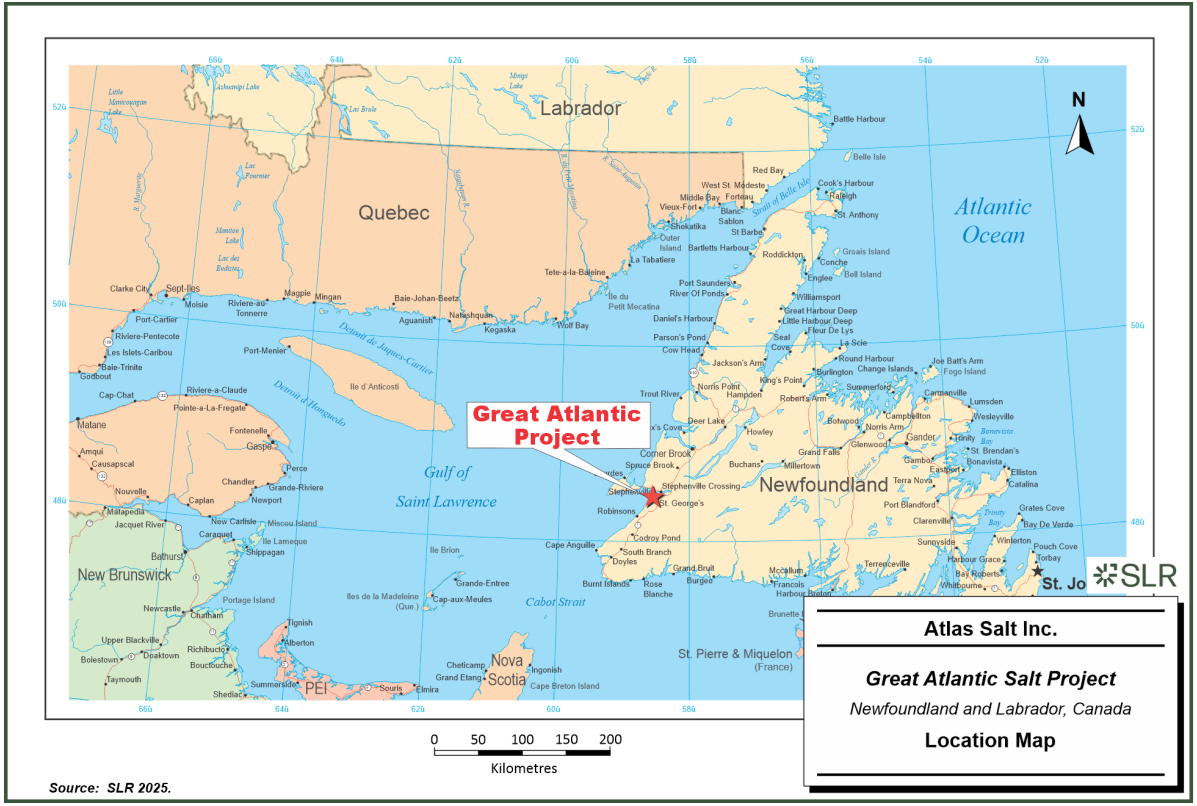
Atlas Salt’s Great Atlantic project in western Newfoundland is designed to produce 4.0 million tonnes of road salt annually over a 25-year mine life. Its 2025 Updated Feasibility Study estimates C$920 million in after-tax net present value (NPV) at an 8% discount rate and a 21.3% after-tax internal rate of return (IRR). Inclusion in the Canada Investment Summit Prospectus raised the project’s visibility among potential funding partners, while more than C$300 million in nonbinding financing letters of interest supports efforts to assemble construction financing.
Nolan Peterson, Chief Executive Officer of Atlas Salt, links Canada's recent tax changes to growing lender interest in domestic mine financing:
“They are seeing the message from the government, the changes to the tax code, the accelerated depreciation, capital development expense, bringing it in line with flow-through financing on the CEE basis. All of these are showing that maybe it's time for everybody to become a little bit more excited about investing in project financing in the Canadian market.”
Final Tax Rules & Project Disclosures Will Clarify Salt Tax Benefits
Across Canadian salt developments, the PMD could raise after-tax NPV if qualifying deductions reduce cash taxes sooner. The size of that effect depends on the final law, the share of planned spending that qualifies, and when each mine earns taxable income. Until developers disclose those inputs in cash-tax schedules, the proposal cannot support a calculated increase in project value.
The Investment Thesis for Salt
- If enacted as drafted, the PMD would bring deductions for qualifying mine-development costs and eligible equipment forward, potentially lowering after-tax development costs.
- Developers without taxable income during construction may realize those tax savings later, so mine valuations must reflect when deductions can be used.
- Faster deductions do not raise salt revenue or reduce an asset’s purchase price, so capital spending must still meet the mine’s required return.
- Comparing current-law and proposed-rule tax schedules with unchanged salt prices and output isolates any change in after-tax NPV and IRR.
Canada’s proposed PMD could improve salt mine returns if qualifying deductions reduce tax payments sooner, without changing salt price or production assumptions. Halite’s classification as a mineral resource allows that possibility to be tested, but the announcement establishes no project-level gain. Published feasibility figures should remain the valuation baseline until a revised model demonstrates earlier cash-tax savings alongside a workable construction and financing plan.
TL;DR
Canada’s proposed Productivity Mega Deduction could allow eligible salt mine equipment and development costs to be deducted sooner. Halite’s classification as a mineral resource makes the proposal relevant to rock salt mines, but each cost still needs a separate eligibility review. The government’s projected drop in the economy-wide marginal effective tax rate from 13.0% to 6.4% is not a forecast for any mine. Earlier deductions improve after-tax value only if they reduce taxes sooner; construction-stage losses may delay the benefit. Final rules and a revised project tax model are needed before changing published feasibility estimates.
FAQs (AI-Generated)
Analyst's Notes





Subscribe to Our Channel










Stay Informed


