




Salt Producers Face Margin & Financing Risk as Capital Leaves Winter Volumes



A 90% El Niño outlook raises winter salt volume risk as higher costs, specialty demand, logistics, and financing reshape sector economics.
- The National Oceanic and Atmospheric Administration's Climate Prediction Center raised the probability of a very strong El Niño for the 2026 to 2027 winter above 90% in its August 24, 2026 update, increasing the risk of lower Midwest and Northeast snowfall and fewer municipal de-icing salt tons called off under winter contracts.
- Higher per-unit production and distribution costs are already compressing salt margins before the 2026 to 2027 winter begins, increasing downside if a milder season reduces de-icing volumes.
- Stronger 2026 salt volumes and earnings guidance partly reflect the harsher prior winter, creating a tougher comparison if the coming season delivers lower snowfall and weaker municipal demand.
- Capital is moving toward specialty salt markets tied to water-softening and food-grade demand, reducing reliance on commodity rock salt volumes that fluctuate with winter weather.
- New salt supply is increasingly being underwritten by logistics economics, with rail and freight optimization offering potential cost advantages that do not depend on snowfall in any single season.
Very Strong El Niño Raises De-Icing Salt Volume Risk as Municipal Call-Offs Weaken
El Niño matters to the salt market because lower snowfall across major US de-icing regions can reduce municipal contract tonnage, directly limiting winter sales volumes for producers exposed to highway salt demand.
The National Oceanic and Atmospheric Administration's Climate Prediction Center said in its August 24, 2026 diagnostic that El Niño conditions were strengthening, with a greater than 90% probability of a very strong event during the 2026 to 2027 winter, increasing the risk of weaker snowfall-driven de-icing demand. Historically, El Niño winters shift the dominant storm track north and concentrate more precipitation over the southeastern US and California while reducing snowfall across the Midwest and Northeast, the largest US markets for highway de-icing salt.
Because de-icing salt contracts are typically priced at a fixed rate per ton delivered, lower snowfall primarily reduces the number of tons municipalities call off under those contracts rather than the realized price per ton, directly lowering winter sales volumes.
Early Salt Contracts Carry Higher Volume Risk as El Niño Odds Rise
Winter salt tenders are commonly negotiated during the summer and early fall, before actual snowfall is known, so contracts set before the August 24 Climate Prediction Center update can carry tonnage assumptions based on a harsher winter than the 2026 to 2027 forecast now indicates.
Contracts signed in June or July had less opportunity to incorporate the stronger El Niño signal, while tenders still open in September can adjust expected de-icing tonnage before winter procurement closes. Municipalities that set tonnage assumptions before the August forecast remain exposed to actual snowfall outcomes, because suppliers recognize the volume effect only as contracted tons are called off during the winter season.
Higher Salt Costs & El Niño Volume Risk Pressure Producer Margins
Recent producer results show that cost pressure is already affecting salt margins before the 2026 to 2027 winter begins, while the El Niño forecast introduces a separate risk to de-icing volumes.
Higher Salt Costs Compress Margins Before El Niño Tests Winter Volumes
Compass Minerals reported Salt segment external sales of $173.9 million for the fiscal third quarter ended June 30, 2026, disclosed on August 15, 2026, while higher per-unit production and distribution costs reduced adjusted EBITDA margin year over year despite stable realized pricing. A milder 2026 to 2027 winter could reduce de-icing salt volumes without lowering the production and distribution costs already weighing on margins, creating downside from both weaker volume and elevated unit costs.
Harsher Prior Winter Lifts Salt Guidance as El Niño Raises Comparison Risk
K+S AG raised its full-year 2026 EBITDA guidance to €680 million to €760 million from €630 million to €730 million after Industry+ sales volumes, including de-icing salt, reached 1.47 million metric tons in the second quarter of 2026 versus 1.31 million metric tons a year earlier, linking the higher outlook partly to stronger volume. Management attributed the stronger 2026 outlook partly to higher sales volumes following the harsher prior winter and to price increases implemented across several product groups.
The higher guidance therefore reflects, in part, volume generated by the harsher 2025 to 2026 winter rather than evidence that similar de-icing demand will continue into 2026 to 2027, and lower snowfall under the current forecast could make the recent guidance increase a weaker indicator of the segment’s next winter performance.
El Niño Risk Redirects Salt Capital Toward Specialty Markets & Freight Advantages
Recent capital commitments are increasing exposure to specialty salt and logistics-led new supply, shifting the growth case away from relying solely on snowfall-driven de-icing volumes..
Rail Logistics Could Lower Delivered Salt Costs & Reduce Winter Weather Dependence
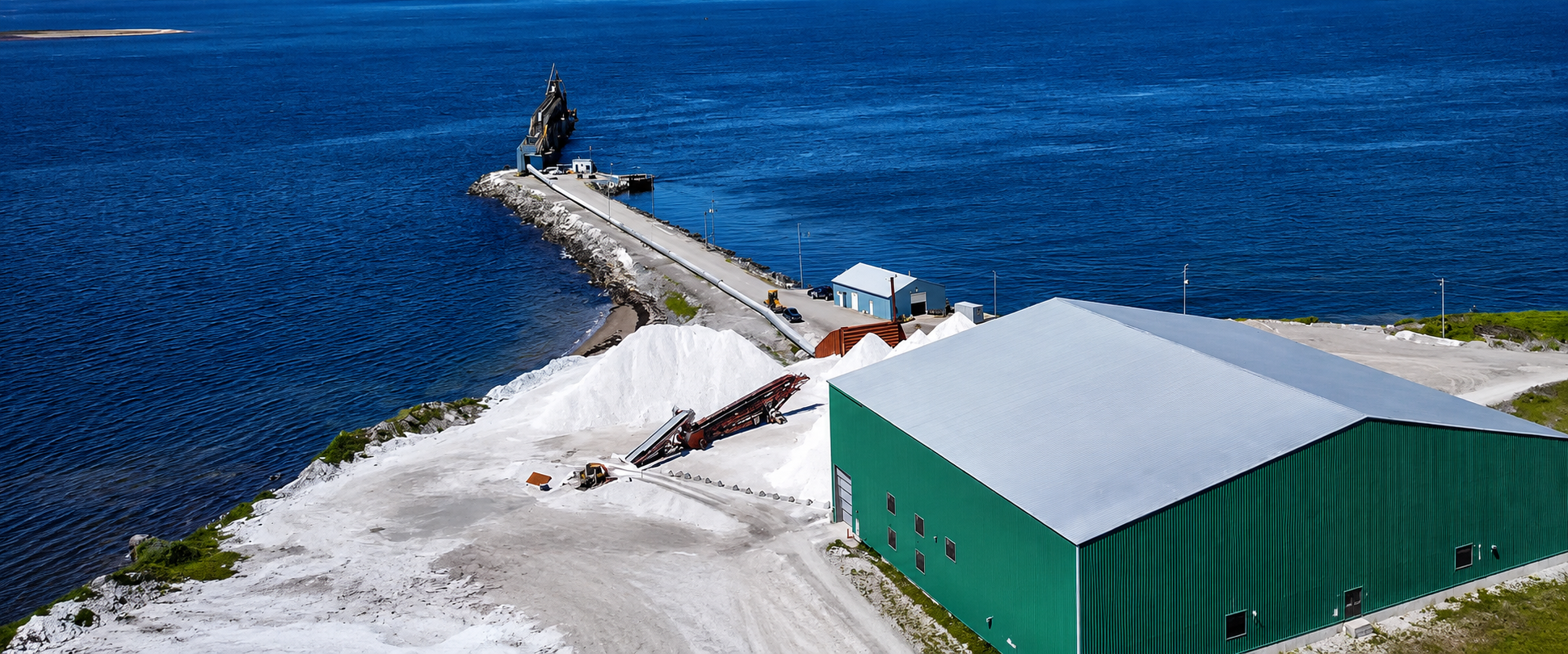
Atlas Salt, a development-stage company, is targeting 4.0 million tons of annual production at the Great Atlantic Salt Project in Newfoundland and Labrador. The project’s 2025 updated feasibility study reports AISC of $34.90 per ton free-on-board at Turf Point and an after-tax NPV8% of $920 million, establishing the project’s published mine-and-port cost base before downstream freight. The $34.90-per-ton AISC ends at Turf Point and excludes marine freight and inland delivery to the final customer, with the feasibility study assuming that most inland transportation would occur by truck.
On August 20, 2026, Atlas Salt signed a non-binding memorandum of understanding with Canadian National Railway Company (CN) to evaluate rail movement, railcar requirements, and marine-to-rail transload arrangements that could expand inland distribution options for the Great Atlantic Salt Project. The rail study addresses inland transportation costs excluded from the project’s $34.90-per-ton AISC, so any net logistics savings demonstrated against the feasibility study’s trucking assumption would represent a potential improvement to project economics not included in the published $920 million NPV8%.
Nolan Peterson, Chief Executive Officer of Atlas Salt, highlighted the cost discipline behind the study:
"Logistics is the single largest driver of delivered cost in the de-icing salt business, and we are systematically engineering every leg of our supply chain to maximize our competitive advantages. Collaborating with a partner of CN's caliber to explore building out the rail component of our strategy is an important step, and it reflects the disciplined, cost and value-focused approach we are taking across the Project."
The project’s competitive case relies partly on its freight position against salt imported from Egypt and Chile, giving the feasibility-study economics a cost driver that can persist across multiple winters rather than relying on snowfall in the 2026 to 2027 season.
Rates, Chinese Demand & European Supply Add New Drivers to Salt Economics
Fed policy, Chinese industrial activity, and European supply availability affect salt economics through financing costs, non-de-icing demand, and regional supply conditions, adding drivers that are separate from winter snowfall.
Higher Rates Raise Salt Refinancing Costs & Development-Stage Funding Risk
The Fed’s August 28, 2026 Jackson Hole symposium precedes the September 16 Federal Open Market Committee rate decision, which will influence borrowing and refinancing conditions for salt companies carrying debt or funding new projects. Compass Minerals carried $716.6 million of total debt after its recent reduction, while K+S AG issued a €320 million convertible bond partly to finance the Qemetica acquisition, leaving both exposed to financing conditions even though their sensitivity to US rates differs.
Atlas Salt remains directly exposed to financing conditions because funding for the Great Atlantic Salt Project has not been finalized, leaving the project’s cost of capital sensitive to prevailing interest rates. Higher prevailing rates could increase borrowing costs for the project and reduce financial returns, while any net logistics savings demonstrated through the CN rail evaluation could lower delivered costs and partly offset that pressure.
Chinese Chlor-Alkali Activity Supports Salt Demand Beyond Winter De-Icing
More than half of global salt consumption is tied to industrial chemical production, including the chlor-alkali chain, giving salt a demand base that can remain active even when weaker snowfall reduces highway de-icing volumes.
Industrial salt demand is driven by chemical production rather than snowfall, so chlor-alkali output and operating rates provide a separate signal for determining whether changes in salt demand originate from industrial consumption or winter de-icing volumes.
European Salt Supply Tightens as Ukrainian Tonnage Remains Offline
The Artyomsol rock salt operation at Soledar in Donetsk Oblast has remained outside Ukrainian-controlled supply since January 2023, removing a former source of rock salt from Ukrainian and broader European markets. Against that tighter regional supply backdrop, K+S AG’s acquisition of Qemetica’s sites in Poland and Germany adds European production capacity without relying on the return of pre-2023 Ukrainian rock salt supply.
The Investment Thesis for Salt
- Realized salt pricing has remained firm, but lower snowfall under the current El Niño forecast could reduce municipal contract call-offs, making winter tonnage rather than realized price the more immediate revenue risk.
- Higher per-unit production and distribution costs, rather than weaker realized pricing, drove the recent Salt segment margin decline, leaving cost control as a separate risk even if winter snowfall supports de-icing volumes.
- Capital allocation is expanding exposure to specialty and food-grade salt markets, adding demand tied to water softening and food applications rather than relying solely on weather-sensitive highway salt volumes.
- Development-stage supply is being assessed on long-term production and logistics economics rather than a single winter forecast, while potential rail savings could improve inland distribution costs beyond those captured in published feasibility-study AISC.
- Financing conditions remain relevant across the sector, with higher borrowing costs increasing refinancing risk for leveraged producers and potentially raising the cost of capital for development-stage projects that have not finalized funding.
- The September 10, 2026 Climate Prediction Center update is the next key test, because a meaningful change in the very strong El Niño probability could alter winter tonnage assumptions while remaining tenders are still being finalized.
Contracts and 2026 guidance partly reflect the harsher 2025 to 2026 winter, while the current El Niño forecast raises the risk of lower de-icing tonnage in 2026 to 2027, increasing the value of revenue and cost drivers that are less dependent on snowfall. Compass Minerals has reduced debt while still facing Salt segment cost pressure, K+S AG is adding specialty-salt exposure through Qemetica, and Atlas Salt is emphasizing long-term production and logistics economics that are less dependent on snowfall in any single season. The Climate Prediction Center’s September 10, 2026 update is the next actionable signal, because a meaningful change in the El Niño outlook would alter winter tonnage assumptions before actual snowfall begins to determine municipal salt call-offs.
TL;DR
A greater than 90% probability of a very strong El Niño raises the risk of lower Midwest and Northeast snowfall, reducing municipal de-icing salt call-offs rather than necessarily weakening realized prices. Producers also face higher production and distribution costs, while stronger 2026 volumes partly reflect the harsher prior winter. Capital is shifting toward specialty salt and logistics-led supply, where industrial demand and freight savings can reduce dependence on a single winter. Financing costs, Chinese chlor-alkali activity, and European supply constraints add further variables, while the September 10 Climate Prediction Center update is the next key signal for winter tonnage assumptions.
FAQs (AI-Generated)
Analyst's Notes





Subscribe to Our Channel


.jpg)

Stay Informed


