Serabi Gold’s Record Production Validates Execution as Gold Prices Stay Elevated: Implications for Cash-Generating Mid-Tier Producers


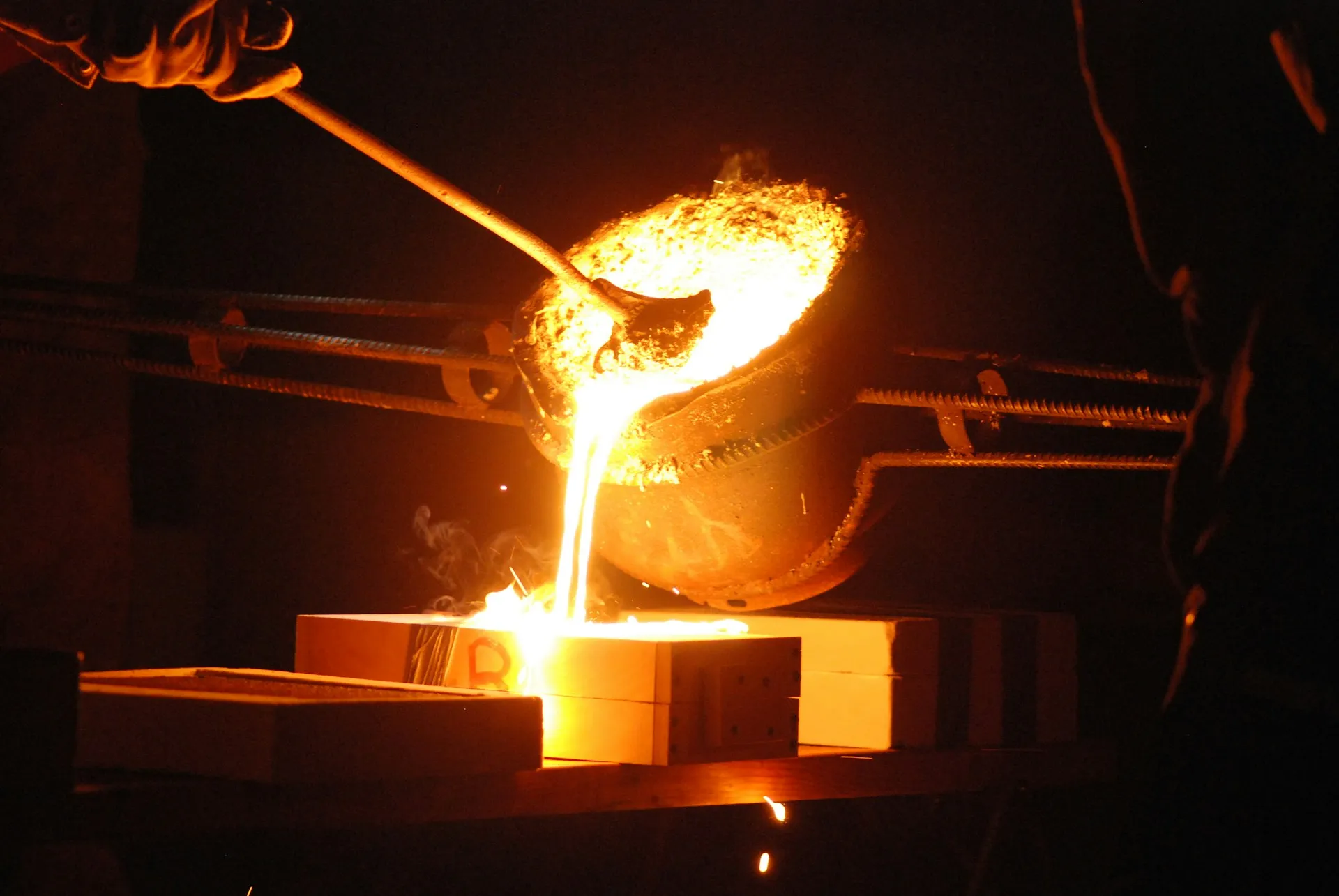
Serabi Gold's record 44,169oz production in 2025 and 53,000-57,000oz 2026 guidance showcase execution leverage as gold prices reward cash-generating producers.
Gold's Macro Backdrop Has Shifted from Optionality to Execution
The investment case for gold equities has evolved materially over the past eighteen months. With gold prices at record levels driven by geopolitical uncertainty, tariff volatility, and defensive capital rotation, the market is no longer rewarding exploration optionality alone. Investors are increasingly sifting companies that offer price exposure and those demonstrating cash flow visibility through operational delivery.
From Price Exposure to Cash Flow Visibility
Gold's sustained strength reflects a convergence of macroeconomic factors including central bank accumulation, currency hedging demand, and institutional reallocation away from duration-sensitive assets. Yet for equity investors, metal price appreciation only matters to the extent it translates into realized margins and distributable cash flow. This distinction has become central to how the market prices gold producers.
Margin visibility, all-in sustaining cost discipline, and balance-sheet resilience are increasingly driving valuation multiples. Companies demonstrating operating leverage through consistent production growth and cost control are attracting capital that previously chased exploration narratives.
Why Production Delivery Matters More at the Top of the Cycle
Many producers failed to translate the 2011-2012 gold price cycle into durable shareholder returns, often because capital discipline eroded as prices rose. Cost inflation, project overruns, and aggressive M&A diluted the margin benefits that elevated prices should have delivered.
The current environment rewards operators capable of converting higher prices into free cash flow rather than reinvesting all gains into expansion without clear return metrics. This setup favors companies with established infrastructure, predictable mine plans, and the ability to fund growth internally.
Record Production as a Signal of Operational Maturity
Record output from an established operation signals mine plan accuracy, grade control consistency, and plant availability. These factors collectively reduce operational risk and compress the discount applied to forward estimates.
When a producer delivers record annual production, particularly when accompanied by sequential quarterly improvement, the market interprets this as confirmation of management credibility. It reflects successful execution across multiple operational vectors including ore scheduling, equipment reliability, logistics coordination, and workforce productivity.
The market increasingly treats sustained production delivery as a risk-compression signal, justifying lower discount rates on projected cash flows. This dynamic is especially relevant for mid-tier producers where execution uncertainty historically commanded a valuation discount relative to larger peers.
Serabi Gold as a Case Study in Execution Delivery
Serabi Gold announced record gold production for 2025 on January 15, 2026, reporting 44,169 ounces produced during the year. This represents an 18% increase from the 37,500 ounces produced in 2024, with strong fourth-quarter momentum reflecting contributions from both the Palito complex and the Coringa ramp-up. Zone diversification across the asset base reduced single-source dependence while the transition away from stockpile processing toward higher-grade run-of-mine feed improved metallurgical predictability.
Michael Hodgson, Chief Executive Officer of Serabi Gold, outlined the company’s production trajectory:
"Going from 38,000 ounces last year, 45,000 this year, 60,000 the year after."
Cost Structure Leverage: When Fixed Costs Meet Higher Throughput
Understanding margin expansion in gold mining requires distinguishing between fixed and variable cost components. Infrastructure, administrative overhead, and sustaining capital represent largely fixed costs that do not scale linearly with production. When throughput increases against this fixed base, unit costs decline, creating operating leverage that amplifies the margin benefit of higher gold prices.
Understanding AISC Dynamics at Higher Throughput
All-in sustaining cost captures both direct operating expenses and the capital required to maintain productive capacity. For producers operating below nameplate capacity, incremental ounces often carry minimal marginal cost, driving substantial AISC reduction without requiring new infrastructure investment.
This dynamic creates asymmetric upside for producers demonstrating production growth within existing facilities. At stable gold prices, AISC compression translates directly into EBITDA margin expansion.
Ore Sorting as a Margin Multiplier
Serabi's deployment of ore sorting technology represents a structural efficiency gain. The ore sorter at Coringa was commissioned in December 2024 and successfully processed stockpiled low-grade ore throughout 2025. Operations will transition to processing only run-of-mine ore in 2026, which should further improve feed grade consistency.
Michael Hodgson explained the operational mechanics:
"We don't high-grade the mine. We take the ore out of the mine, we put it through two ore sorters, we're just upping that feed grade going into that plant, and that gets us to 60,000 ounces."
Forward Guidance as a Confidence Indicator
Production guidance serves multiple functions beyond providing a forecast range. When management raises guidance following delivery against prior targets, the signal to investors extends beyond the revised number itself. It reflects confidence in mine continuity, equipment reliability, and grade reconciliation between resource models and actual production.
Why Higher 2026 Guidance Matters
For 2026, Serabi has set official production guidance of 53,000-57,000 ounces of gold, representing potential growth of 20-29% over 2025 production. The company's longer-term growth strategy targets 60,000 ounces as part of its phased expansion plans.
Production Growth vs Capital Intensity
A critical distinction separates producers funding growth through internal cash flow from those relying on equity issuance. Organic, self-funded expansion preserves shareholder value by avoiding dilution at prices that often fail to capture the full value of growth projects.
Michael Hodgson addressed the company's capital position:
"I suppose the challenge at the moment is we don't need any money. We're generating so much money... We can fund all of that from cash flow. We can fund the plant growth out of cash flow when we come to do it."
Exploration at Producers: Resource Growth Without Binary Risk
Exploration within producing operations carries fundamentally different risk characteristics than greenfield discovery. Brownfield drilling near existing infrastructure benefits from established geological models and can convert inferred resources to indicated categories at lower cost per ounce than standalone exploration projects.
Brownfield Drilling as a Valuation Lever
For mid-tier producers, brownfield exploration serves as a mechanism for mine-life extension without requiring the capital intensity of new project development. Serabi completed a 30,000-meter brownfield exploration program in 2025 and has planned another 30,000-meter program for 2026, focused on growing the resource base rather than merely replenishing depletion.
Strategic Implications of Resource Expansion
Serabi's stated ambition to grow resources to 1.5-2.0 million ounces by 2026 is official public guidance, forming Phase 2 of the company's strategic plan. At that scale, the company becomes relevant to a broader investor base and potentially attractive to consolidators. Phase 3 targets a commercial production run-rate exceeding 100,000 ounces per annum, potentially by 2028.
Michael Hodgson outlined the exploration trajectory:
"We're aiming by the end of 2026 to grow our resource from one to 1.5 million ounces, hopefully beyond. That will have a resource, but a reserve base inside it, that can support a mining rate of 100,000 ounces per year."
Early drilling results have supported this ambition:
"We found an entirely new body. It's like a repetition of the zone work that we had. It's double the size. That's just an illustration, literally after the first three months of drilling."
Balance Sheet Strength in a High-Gold-Price Environment
As of December 31, 2025, Serabi reported cash of $49.2 million and a net cash position of $42.1 million after accounting for interest-bearing loans and lease liabilities. This insulates the company from refinancing risk during potential price corrections while providing capacity for opportunistic investment without dilutive capital raises.
Capital Allocation Discipline as a Re-Rating Driver
Serabi's approach to capital allocation reflects the trade-offs facing cash-generative producers. Funding organic growth internally, maintaining flexibility for permitting outcomes and opportunistic M&A, and evaluating shareholder return mechanisms all compete for capital deployment priority.
Michael Hodgson articulated the company's framework:
"We are looking at capital returns for shareholders. At the same time, we're always looking for M&A that makes sense. We always use this expression: disciplined approach on that... Don't overpay, and don't just do a deal for the sake of it."
Jurisdiction, Permitting & Risk Calibration
Federal-level policy debates and Amazon-related environmental narratives can overshadow the state-level frameworks that govern mining permits in regions like Pará, where Serabi benefits from an effective tax rate of 15.25% due to development incentives.
Serabi operates in a niche within Brazilian mining that offers differentiated competitive positioning. Michael Hodgson noted the structural context:
"I learned the other day that Brazil only has 31 underground mines, which for a country of that size is hard to even imagine… We are the best underground miners in Brazil, because there aren't many others. "
The final installation licence for Coringa remained pending as of November 2025, representing both a valuation overhang and a potential catalyst upon approval.
Valuation Context: When Execution Closes Multiple Gaps
Small and mid-tier gold producers historically trade at discounts to larger peers, reflecting liquidity constraints, execution uncertainty, and perceived operational risk. Sustained delivery against guidance, combined with production growth and balance sheet improvement, provides the clearest pathway to multiple expansion.
Serabi's benefits from dual tailwinds: record gold prices and a favorable Brazilian Real to US Dollar exchange rate, both of which enhance realized margins for a Brazilian producer selling into dollar-denominated markets.
The Investment Thesis for Serabi Gold
- Record production confirms operational reliability and reduces downside risk for investors seeking cash flow visibility rather than exploration optionality.
- Higher forward guidance signals management confidence in mine plans, grade reconciliation, and cost control through multiple production cycles.
- Fixed-cost leverage within existing infrastructure enables outsized margin expansion at current gold prices without proportional capital investment.
- Organic, self-funded growth minimizes dilution risk and enhances free cash flow yield relative to peers relying on equity issuance.
- Brownfield exploration extends mine life and supports resource growth without the binary discovery risk inherent in greenfield programs.
- Jurisdictional familiarity, underground mining expertise, and infrastructure maturity lower execution uncertainty relative to development-stage comparables.
Gold prices may fluctuate, but execution compounds value over cycles. Serabi Gold illustrates how operators convert macro tailwinds into measurable financial outcomes through production growth, cost control, and balance sheet strength. The relevant signal is not the commodity headline but the demonstrated ability to deliver against guidance, fund growth internally, and scale margins responsibly. As markets increasingly reward certainty over speculation, producers demonstrating consistent execution remain best positioned for sustainable re-evaluation.
TL;DR
Serabi Gold delivered record 2025 production of 44,169 ounces, up 18% year-over-year, with 2026 guidance targeting 53,000-57,000 ounces. The company's $42.1 million net cash position enables self-funded growth without shareholder dilution. Ore sorting technology and higher-grade run-of-mine feed are driving cost structure improvements and margin expansion. A 30,000-meter brownfield exploration program supports the company's ambition to grow resources to 1.5-2.0 million ounces by year-end 2026, with a longer-term target of 100,000 ounces annual production. In today's gold market, execution certainty and free cash flow visibility are increasingly rewarded over exploration optionality.
FAQs (AI-Generated)
With gold at record prices, investors are prioritizing companies that convert price exposure into realized margins and distributable cash flow. The 2011-2012 cycle taught markets that price appreciation alone doesn't guarantee shareholder returns if capital discipline erodes
Infrastructure, administrative costs, and sustaining capital don't scale linearly with production. When throughput increases against this fixed base, unit costs decline, creating operating leverage that amplifies margin benefits at elevated gold prices.
Organic, internally-funded growth preserves shareholder value by avoiding dilution at prices that often undervalue growth projects. Producers generating sufficient cash flow can expand without relying on capital markets.
Brownfield drilling near existing infrastructure benefits from established geological models, known metallurgy, and existing processing facilities, converting resources at lower cost per ounce than standalone exploration projects.
Strong balance sheets insulate companies from refinancing risk during potential price corrections while providing capacity for opportunistic investment without dilutive capital raises.
Analyst's Notes





Subscribe to Our Channel



Stay Informed