




Sovereign Metals: Dual Critical Minerals Play


.webp)
Malawi rutile-graphite project offers low-cost, low-carbon supply amid tightening markets
- Sovereign Metals' Kasiya project in Malawi hosts 18.0 million tonnes of contained rutile, more than double the nearest competitor, positioning the company to address acute supply constraints in titanium feedstock markets.
- The venture demonstrates robust financial metrics with a post-tax NPV of US$1.537 billion, 36% IRR, and operating costs of US$320 per tonne, requiring US$372 million in initial capital for a 25-year mine life.
- Natural rutile from Kasiya carries a carbon footprint 20-33 times lower than synthetic alternatives, aligning with decarbonization mandates across titanium dioxide pigment and welding industries worth US$12.038 billion over project life.
- Co-production of 23.4 million tonnes of contained graphite (among world's largest resources) provides additional revenue with minimal incremental cost, targeting battery anode markets experiencing supply concentration risks.
- With expanded scoping study complete, offtake agreements secured with major end-users including Chemours and Mitsui, and pre-feasibility study underway, the project demonstrates significant de-risking ahead of construction decisions.
Why This Discovery Matters Now
Global critical minerals supply chains face mounting pressure as electrification and decarbonization initiatives accelerate demand while geopolitical tensions expose concentration risks. Two commodities exemplify this challenge: natural rutile, where production has declined significantly over the past decade despite no major discoveries in half a century, and flake graphite, where industry reports indicate battery-grade anode material production remains highly concentrated. Against this backdrop, Sovereign Metals Limited has advanced the Kasiya project in Malawi, which simultaneously addresses both supply gaps through what company executives characterize as a transformational discovery of co-located rutile and graphite mineralization.
The investment case extends beyond resource scale to encompass environmental credentials increasingly valued in supply chains. Natural rutile requires no energy-intensive upgrading processes that synthetic alternatives demand, delivering titanium feedstock with dramatically lower carbon emissions per tonne. This attribute resonates across industries facing scope 3 emissions scrutiny, from architectural coatings to aerospace titanium. Similarly, the graphite co-product emerges from gravity separation rather than the drill-blast-grind approach typical of hard-rock deposits, offering cost and environmental advantages as battery manufacturers seek responsibly sourced materials.
Sovereign's progression through feasibility studies, supported by offtake commitments from established industry participants, suggests the project has moved beyond conceptual stages toward potential production. For investors evaluating exposure to battery metals and industrial minerals, understanding how Kasiya's dual-commodity model addresses specific market failures provides context for assessing the company's development timeline and capital requirements against comparable projects reaching production globally. The company's shares trade on both the Australian Securities Exchange and London's AIM market, providing access for institutional and retail investors across multiple jurisdictions.
Management Track Record & Shareholder Structure
Sovereign Metals Limited operates as an ASX and AIM dual-listed mineral exploration and development company focused exclusively on its Malawi portfolio. The company maintains a market capitalization of A$245 million as of 1 February 2023, with institutional backing including an 11.7% position from Sprott Asset Management, a specialist resource investment manager. Management holds approximately 10% of shares outstanding, with technical founder Julian Stephens (3.3%) serving as managing director following the discovery that established Kasiya's resource scale through systematic exploration beginning in 2018. Additional significant shareholders include Ian Middlemas at 3.4% and Mark Savage at 3.1%, demonstrating board and management alignment with shareholder interests.
The company's operational footprint centers on central Malawi where it controls a large tenement package accessed by existing infrastructure including rail connections to the deepwater port at Nacala, Mozambique. Sovereign has established in-country technical capabilities including metallurgical laboratories equipped for mineral processing test work and employs over 45 full-time Malawian staff, more than 50% in professional roles according to company disclosures. This local presence supports both ongoing resource definition drilling and community engagement programs that have secured government endorsement, including public recognition of the Kasiya discovery in presidential addresses to international forums such as the United Nations General Assembly.
Financial positioning as of 31 December 2022 showed A$11.1 million in cash with no debt, supporting ongoing pre-feasibility work and permitting processes. The company recently announced plans to demerge standalone graphite exploration assets into a separate entity, NGX Limited, allowing Sovereign to concentrate resources on advancing Kasiya toward construction while providing shareholders exposure to earlier-stage graphite opportunities through the spun-out vehicle. Sovereign shareholders will receive 1 NGX share for every 11 Sovereign shares held, with a priority offer to subscribe for additional shares at $0.20 per share. This corporate simplification reflects management's focus on de-risking the primary asset ahead of development decisions anticipated in 2024.
Project Economics: US$1.5 Billion NPV on US$372 Million Capex
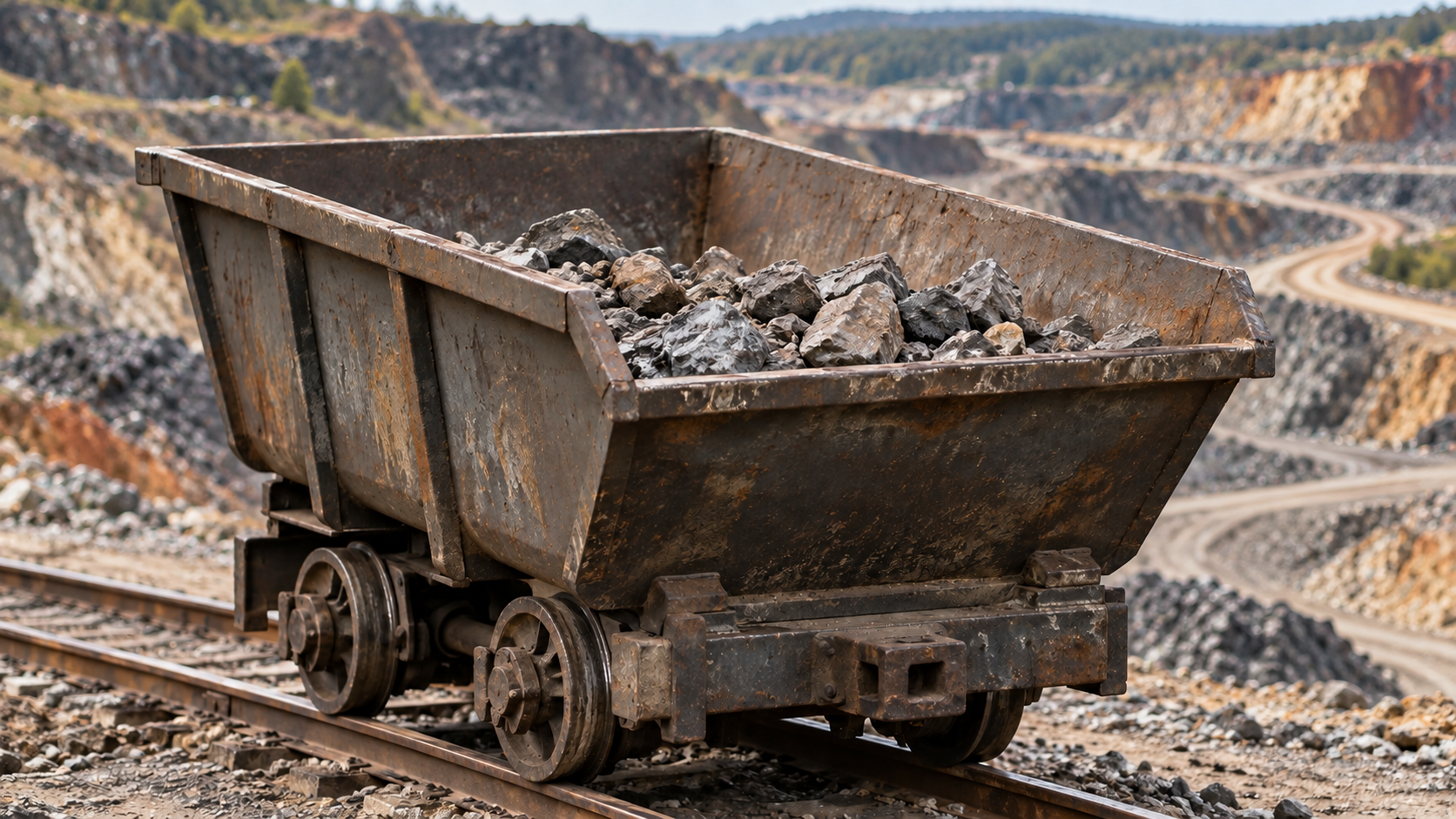
The Kasiya deposit represents the world's largest rutile resource at 18.0 million tonnes of contained titanium dioxide, established through a JORC-compliant mineral resource estimate of 1,775 million tonnes grading 1.01% rutile announced on 5 April 2022. This tonnage exceeds the combined resources of the next two largest rutile-dominant deposits by more than 120%, marking the first significant discovery in this commodity class since the 1970s. The mineralization occurs in a near-surface saprolite weathering profile extending to 25 meters depth across a laterally extensive blanket covering multiple square kilometers, amenable to hydraulic mining methods requiring no blasting or crushing. The deposit contains 662 million tonnes in the indicated category and 1,113 million tonnes in the inferred category, providing substantial mine life flexibility for production planning.
Metallurgical testing has validated a conventional gravity-based processing flowsheet achieving 98% rutile recovery to produce a concentrate grading 96.0% TiO2, meeting premium natural rutile specifications demanded by chloride process pigment producers. The co-located graphite mineralizes in the same horizon at 1.32% total graphitic carbon, with flotation testing demonstrating 62% recovery to concentrates averaging 96.3% carbon across predominantly jumbo and large flake size categories. This dual recovery occurs through sequential processing where graphite reports to the low-density fraction from spiral gravity circuits before rutile concentration, requiring incremental rather than duplicative capital and operating expenditure. The graphite product shows 5.4% in super jumbo flakes, 25.1% in jumbo, 30.9% in large, and 10.9% in medium size categories, commanding premium pricing in specialty applications.
The June 2022 expanded scoping study quantified project economics based on a two-stage development processing 12 million tonnes of ore annually for five years before expansion to 24 million tonnes annually for the remaining mine life, delivering average throughput of 21.6 million tonnes per annum over the full 25-year operation. This approach generates life-of-mine revenue of US$12.038 billion against total operating costs of US$320 per tonne of combined product, delivering average annual EBITDA of US$323 million. Initial capital requirements of US$372 million fund stage one construction, with stage two expansion self-funded from operating cash flow, resulting in a post-tax net present value of US$1.537 billion at an 8% discount rate and 36% internal rate of return, metrics that rank among the strongest in the undeveloped mineral sands sector globally. Average life-of-mine production reaches 242,000 tonnes per annum of rutile and 155,000 tonnes per annum of graphite.
Addressing Critical Supply Gaps in Titanium & Battery Markets
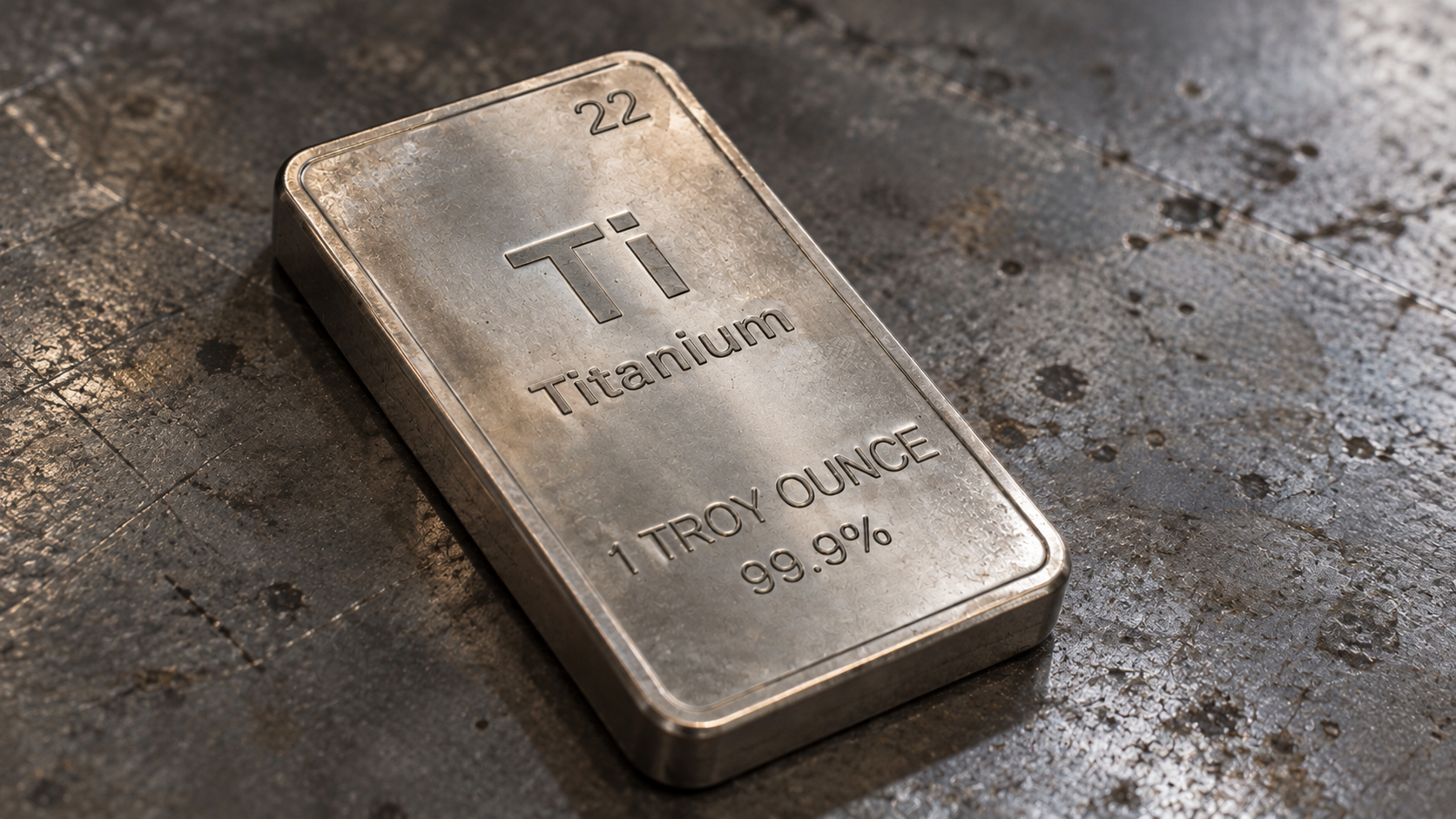
Natural rutile markets face structural supply deficits as legacy coastal deposits in Australia and Africa approach depletion while no replacement projects have achieved construction. Global natural rutile production has declined approximately 45% from 2016 levels according to industry analysis presented by Sovereign Metals, forcing titanium dioxide pigment producers to substitute with ilmenite-derived feedstocks requiring energy-intensive upgrading to synthetic rutile or chloride slag. This substitution carries economic penalties, with natural rutile trading at US$2,070 per tonne versus US$350 for ilmenite based on Ruidow spot prices, alongside environmental consequences through the carbon intensity of upgrading processes.
"One of the most significant supply crises in the world of natural resources has emerged and is accelerating in the natural rutile space. No major discoveries in over 50 years, two major western mines likely coming offline in the near term, limited new supply, and no pipeline of significant projects."
Kasiya's average production of 242,000 tonnes per annum of rutile would represent a substantial portion of current global natural rutile supply, providing titanium industries with access to the purest natural feedstock form at a point when regulatory pressure and corporate sustainability commitments incentivize lower-carbon supply chains. Life cycle assessment conducted by Minviro Limited quantified Kasiya's scope 1 and 2 emissions at 0.1 tonnes CO2-equivalent per tonne of rutile versus 2.0 tonnes for titania slag and 3.3 tonnes for synthetic rutile, with scope 3 benefits of 35% to 48% lower emissions in downstream pigment production according to the company's environmental analysis. The project generates zero waste in upgrading processes since natural rutile requires no beneficiation, compared to significant waste streams from ilmenite processing to synthetic rutile or titanium slag.
The graphite component addresses different but parallel supply security concerns in battery materials markets. Kasiya's 155,000 tonnes average annual graphite production would emerge as a co-product at incremental operating cost of US$140 per tonne FOB, positioning among the world's lowest-cost sources while meeting specifications for battery anode precursor material through high crystallinity and purity characteristics validated in metallurgical programs. The coarse flake distribution particularly suits spherical graphite production for battery anodes, where larger starting material yields higher conversion efficiency. The deposit's 23.4 million tonnes of contained graphite ranks among the world's largest flake graphite resources based on peer company disclosures.
Path to Production: De-Risking Through Feasibility & Offtake
Sovereign is executing a pre-feasibility study targeting completion in mid-2023, with mineral resource drilling ongoing to convert inferred classifications to indicated and measured categories. The company has completed extensive aircore drilling across the Kasiya deposit area, with assays defining grade continuity supporting mine planning optimization. Concurrent metallurgical test work addresses process design refinement, particularly around hydro-mining parameters in the saprolite material and flotation circuit configuration for graphite recovery optimization across the full particle size distribution. Engineering studies are evaluating equipment selection, plant layout, and infrastructure requirements to refine capital cost estimates for the feasibility-level analysis.
Environmental and social impact assessment processes are advancing toward submission of permit applications under Malawi's mining regulatory framework. Sovereign has conducted baseline studies across hydrology, biodiversity, air quality and socioeconomic factors, while community consultation programs have established relationships with traditional authorities and local stakeholders. The company secured support from the Government of Malawi, which has publicly endorsed the project's significance to national development objectives and designated mining as a priority economic sector. Estimated contributions of US$2.7 billion in taxes and royalties over the 25-year mine life position Kasiya as potentially significant to the country's economic development according to company projections.
Commercial discussions have yielded memoranda of understanding with three established end-users securing offtake commitments for 75,000 tonnes of annual rutile production. Mitsui & Co has agreed to market 30,000 tonnes per annum focusing on Asian titanium dioxide producers, Chemours committed to 20,000 tonnes per annum for its chloride pigment operations, and Hascor International Group contracted for 25,000 tonnes per annum serving welding flux markets. These agreements provide revenue certainty for approximately 31% of planned steady-state rutile output while validating product specifications against commercial requirements. Graphite marketing efforts target battery anode and industrial applications, with the company emphasizing the coarse flake distribution that commands premium pricing in specialty markets. Additional offtake discussions continue with other major pigment producers and graphite consumers to secure binding agreements ahead of project financing.
Valuation Gap: Trading at 0.16x NPV Versus Peer Multiples
The investment proposition rests on exposure to two commodities experiencing supply constraints driven by different but reinforcing factors: physical scarcity in rutile markets versus reported geographic concentration in graphite supply chains. Kasiya's resource scale in both minerals, combined with favorable cost positioning at US$320 per tonne and environmental credentials demonstrating 0.1 tonnes CO2-equivalent per tonne of rutile produced, suggests potential to capture premium pricing as end-users value supply security and carbon footprint reduction. The dual-product structure provides revenue diversification while the co-product nature of graphite recovery limits downside exposure if battery materials markets soften, as rutile economics independently support project viability based on the scoping study results.
Project execution risks center on capital raising requirements totaling US$372 million for initial construction, development timeline extension, and operational delivery in a jurisdiction without established large-scale mining precedent. While Malawi offers political stability as a Commonwealth member with transparent governance frameworks, infrastructure dependencies include rail capacity to Nacala port and grid power availability for processing operations. Sovereign is evaluating renewable energy integration including on-site solar to achieve targeted carbon-neutral operations, which would enhance product positioning but requires coordination with Malawi's electricity utility and potentially independent power producers.
Valuation metrics place Sovereign at a significant discount to development-stage peers in both mineral sands and graphite sectors when normalized for NPV-to-market capitalization ratios. The A$245 million enterprise value (as of 1 February 2023) compares to US$1.537 billion post-tax NPV at 8% discount rate, implying approximately 0.16 times NPV compared to multiples of 2 to 10 times for comparable lithium and gold projects at similar study stages based on industry observations. This discount suggests the market ascribes substantial probability to development risks or timeline delays. Key catalysts for potential rerating include pre-feasibility study completion demonstrating improved economics, binding offtake agreements covering majority production, project financing commitments from development finance institutions or strategic investors, and environmental permit approvals enabling construction commencement.
The Investment Thesis for Dual Critical Minerals
- Position for rutile price appreciation as legacy producers deplete and no alternative projects can match Kasiya's 18.0 million tonne resource or 242,000 tonne annual production profile.
- Target titanium dioxide producers facing scope 3 emissions mandates who will pay premium pricing for feedstock delivering 35-48% lower downstream emissions versus synthetic alternatives.
- Gain exposure to battery anode supply chain diversification spending through co-product model delivering 155,000 tonnes per annum at incremental US$140 per tonne cost.
- Allocate to dual-commodity projects where graphite provides upside optionality while rutile economics generating US$323 million average annual EBITDA independently justify development.
- Exploit Malawi's underutilized Nacala rail corridor and deepwater port capacity, enabling lower logistics costs than greenfield projects requiring dedicated infrastructure investment.
- Monitor pre-feasibility study completion, binding offtake expansion beyond current 75,000 tonne commitments, and US$372 million financing announcements as de-risking events.
TL;DR
Sovereign Metals' Kasiya project in Malawi hosts the world's largest rutile resource (18.0Mt contained) and one of the largest graphite deposits (23.4Mt contained), addressing supply deficits in both critical minerals through a low-cost operation (US$320/tonne) with exceptional economics (US$1.537B NPV8, 36% IRR). The company has secured offtake agreements totaling 75,000 tonnes annually (31% of planned production) with established industrial consumers including Mitsui, Chemours, and Hascor, validating product specifications and market positioning. With pre-feasibility study underway and initial capital requirements of US$372 million for a 25-year mine life producing average 242,000 tpa rutile and 155,000 tpa graphite, the project offers exposure to decarbonization and battery materials themes at 0.16x NPV-to-market capitalization versus higher peer multiples.
FAQs (AI-Generated)
Kasiya combines the world's largest rutile resource (18.0Mt) with one of the largest graphite deposits (23.4Mt) in a single location, enabling co-production through sequential processing delivering 242,000 tpa rutile and 155,000 tpa graphite at combined US$320 per tonne operating cost.
Natural rutile contains 96% TiO2 compared to ilmenite requiring energy-intensive upgrading, delivering 0.1 tonnes CO2e per tonne versus 2.0-3.3 tonnes for synthetic alternatives while trading at US$2,070 per tonne versus US$350 for ilmenite based on spot pricing.
Graphite recovery occurs through incremental flotation circuits processing the low-density fraction from rutile gravity separation, adding US$140 per tonne in operating costs while generating additional revenue from 155,000 tpa production with minimal capital duplication.
Capital raising capacity to fund US$372 million initial construction, permitting approval timelines in Malawi's regulatory framework, securing binding offtake agreements beyond current 75,000 tonne commitments, and operational execution represent primary risk factors.
The A$245 million market capitalization implies 0.16x NPV-to-market cap based on US$1.537 billion post-tax NPV8 versus 2-10x multiples for comparable lithium and gold projects at similar feasibility stages, suggesting rerating potential as de-risking milestones are achieved.
Analyst's Notes





Subscribe to Our Channel



Stay Informed


