




Kasiya DFS Returns US$2.2 Billion PreTax Value as Western Titanium & Graphite Supply Chains Reach Structural Limits


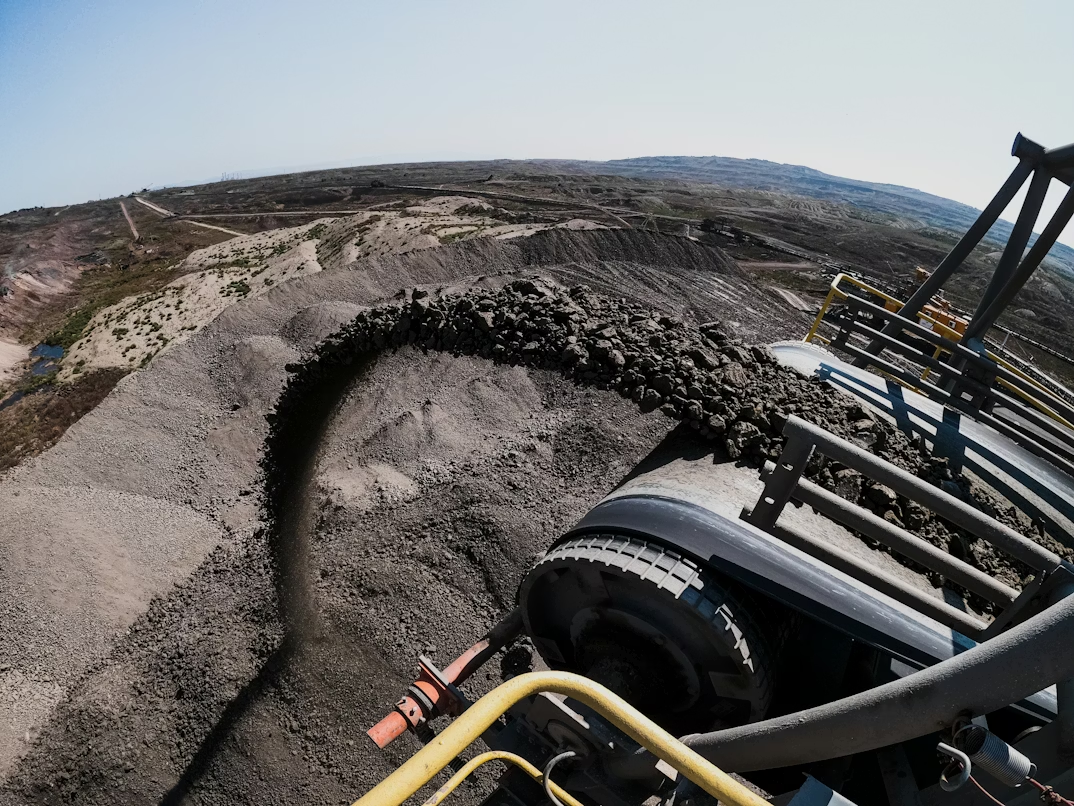
Kasiya DFS delivers a US$2.2 billion pretax NPV and 23.4% pretax IRR, positioning it as the only project capable of addressing both Western titanium and graphite supply crises.
- The Kasiya Definitive Feasibility Study (DFS) returns a pretax net present value at an 8% real discount rate (NPV8%) of US$2.2 billion and a pretax internal rate of return (IRR) of 23.4%, with an incremental graphite operating cost of US$216 per tonne established below the Chinese weighted-average cash cost range of US$257 to US$288 per tonne.
- Kasiya hosts the world's largest known natural rutile deposit and the second-largest known flake graphite deposit within a single soft, free-dig saprolite orebody in Malawi, making it the only known deposit globally where graphite is produced as a byproduct of a primary rutile operation.
- The US and the EU have both formally designated titanium and graphite as critical minerals; the US Department of Commerce (DOC) has separately determined that imports of titanium sponge threaten national security, and the US produces no titanium sponge domestically.
- Rio Tinto holds an 18.5% strategic stake and an option to become project operator covering exclusive marketing rights to 40% of annual production, while signed offtake memoranda of understanding (MOU) with Mitsui & Co. and Traxys North America cover over 50% of Phase 1 rutile output and up to 80,000 tonnes per annum of graphite, respectively.
- The path to a mining licence runs through an Environmental and Social Impact Assessment (ESIA) submission targeted for the second quarter of 2026, but Malawian fiscal terms, including a proposed supernormal profits tax (SPT) and a statutory government equity right under the 2023 Mines Act, remain unresolved at DFS completion.
Critical Mineral Designations & Supply Chain Policy
The US and EU have each formally designated titanium and graphite as critical minerals, a classification that carries direct consequences for procurement policy, export controls, and industrial financing across defence and clean energy supply chains. The US Department of Commerce (DOC) has applied additional pressure, concluding that titanium sponge imports threaten to impair national security.
The policy response has moved beyond designation. The US government has established a US$12 billion Project Vault initiative to secure critical mineral supply chains. Combined tariff and antidumping duties on Chinese graphite anode materials now reach 160%, and a 93.5% antidumping duty on natural and synthetic graphite battery anodes has been separately extended. These measures reflect a regulatory determination that dependency on Chinese graphite processing is inconsistent with the battery manufacturing buildout underway across Europe and North America.
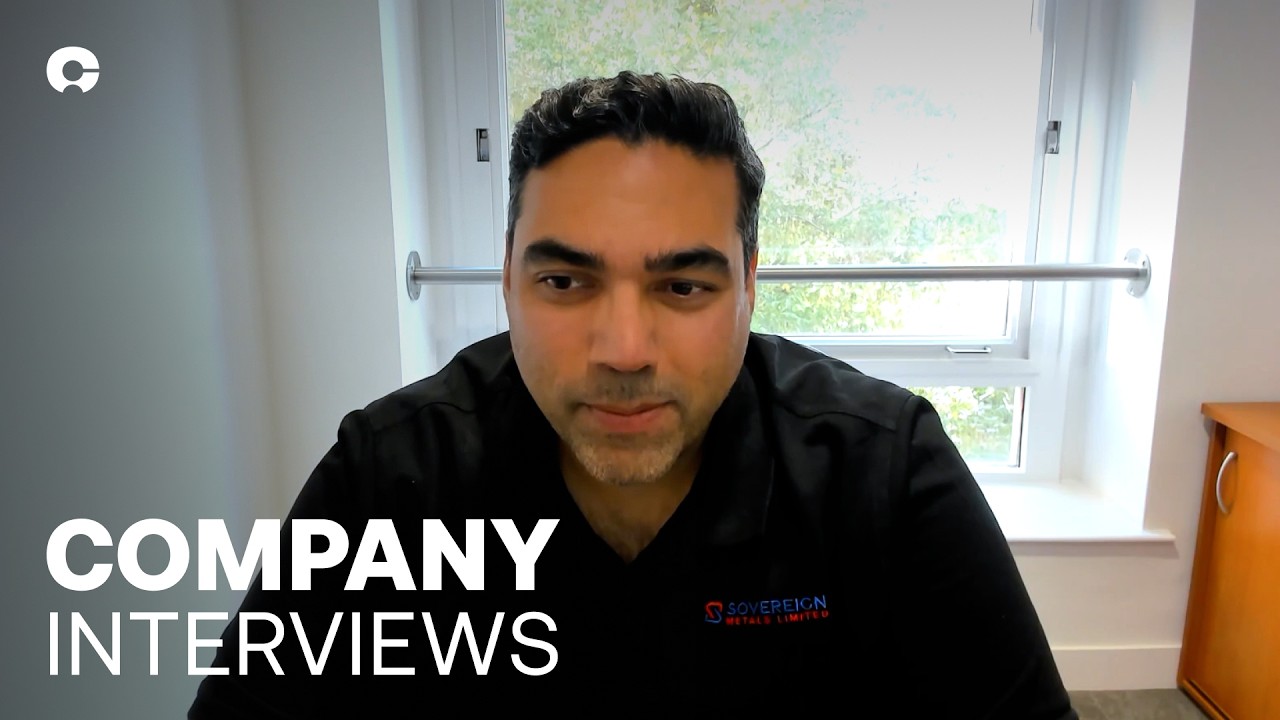
Managing Director and Chief Executive Officer of Sovereign Metals (ASX: SVM | AIM: SVML), Frank Eagar, links the Traxys offtake agreement to US market access under the Project Vault initiative:
"Having someone like Traxys there, part of Project Vault, is very meaningful going into the US market."
US Titanium Supply Chain Exposure
The structural character of the US titanium supply chain problem is precise: the US produces no titanium sponge domestically and is therefore 100% reliant on imports. Imports reached a record 44,000 tonnes in 2025, exceeding the prior record of 40,300 tonnes set in 2023. Over 70% of that supply originates in Japan, a single-country concentration that leaves US aerospace and defence procurement exposed to disruptions in Japanese production capacity or feedstock availability.
Japanese titanium sponge producers depend on reliable natural rutile feedstock to manufacture aerospace and defence-grade sponge. The primary rutile supply position is tightening independently of trade policy: Sierra Rutile's Area 1 Mine is expected to deplete within two to three years, and Energy Fuels' Kwale Mine has ceased operations. The combination of rising US import volumes and a contracting primary rutile supply base creates a feedstock access problem that cannot be resolved within existing supply arrangements.
A Stanford study traced a major US defence prime manufacturer's titanium supply chain 13 tiers deep to Chinese mines, roads, and trucks, surfacing a concentration risk that bilateral contract terms do not capture. Sovereign Metals is positioned as the only large-scale primary producer of natural rutile globally at a moment when the existing primary rutile supply base is in structural decline.
Graphite Supply Concentration & Demand Trajectory
China controls approximately 77% of global natural graphite production and processing output, a share that extends to 67% of natural graphite processing locations and 69% of synthetic graphite processing locations worldwide. Against that supply concentration, the demand trajectory poses a compounding challenge for Western battery manufacturers seeking supply outside Chinese supply chains: global natural graphite demand totalled approximately 1.6 million tonnes in 2023, with lithium-ion batteries accounting for approximately 63% of consumption. By 2035, total demand is forecast to approach 10 million tonnes, with the battery sector accounting for more than 70% of that consumption.
Natural graphite demand for batteries is projected to rise from approximately 1.1 million tonnes in 2021 to 4.2 million tonnes by 2035, driven by non-Chinese gigafactories seeking lower-cost, lower-carbon anode feedstocks. The cost arithmetic governing that shift is direct: Kasiya's Definitive Feasibility Study (DFS) establishes an incremental graphite operating cost of US$216 per tonne, positioned below the Chinese weighted-average cash cost range of US$257 to US$288 per tonne, and Kasiya is the lowest-cost graphite producer globally among projects at or beyond the pre-feasibility stage.
Eagar references an incremental graphite operating cost of US$240 per tonne from the earlier optimised prefeasibility study (the figure used at the time of this interview, since revised to US$216 per tonne in the DFS) against the Chinese weighted-average cost curve:
"I think we are in a competitive position; what brings Kasiya to the fore is that incremental operating cost of $240 a tonne. We've seen the cost curves of average Chinese production. They can't compete at that price."
Kasiya's Deposit Scale & Dual Commodity Structure
Kasiya hosts the world's largest known natural rutile deposit and the second-largest known flake graphite deposit within a single soft, free-dig saprolite orebody in Malawi. It is the only known deposit globally where graphite is produced as a byproduct of a primary rutile operation. That configuration is the structural feature that allows a single capital deployment to address two independently declared Western supply chain vulnerabilities: the rutile addresses the titanium sponge feedstock gap, and the graphite addresses the battery anode supply concentration outside China.
The saprolite ore character eliminates the need for drilling, blasting, crushing, and milling from the processing flowsheet, resulting in a simple, low-energy extraction and beneficiation pathway. At steady state, operating at 24 million tonnes per annum throughput, Kasiya is projected to produce 222,000 tonnes per annum of natural rutile and 275,000 tonnes per annum of natural flake graphite. Phase 1, covering years 1 through 4 at 12 million tonnes per annum, is projected to deliver approximately 140,000 tonnes of graphite per annum. The initial mine life is 25 years, with potential for extension beyond that term.
Product qualification establishes commercial relevance at both ends. Testing by Toho Titanium in Japan confirmed that Kasiya rutile is suitable for high-performance aerospace and defence applications, the end-use categories where supply chain assurance commands the highest premium. Downstream testing of the graphite product confirmed performance equivalent to that of products from BTR New Material Group, the leading Chinese battery anode manufacturer.
DFS Economics & Cost Position
The DFS returns a pretax net present value at an 8% real discount rate (NPV8%) of US$2,204 million and a pretax internal rate of return (IRR) of 23.4%. The payback period from first production is 6.2 years on an unlevered, pretax free cash flow basis. Post-tax conceptual NPV at the same discount rate ranges from US$1,065 million to US$1,448 million, depending on fiscal assumptions, a spread of US$383 million that directly quantifies the financial exposure to the unresolved Malawian fiscal negotiations, where neither the proposed supernormal profits tax (SPT) nor the statutory government equity right has been finalised.
Phase 1 capital to first production totals US$727 million. Phase 2 expansion capital stands at US$511 million, and life-of-mine (LOM) sustaining capital at US$431 million, bringing total LOM capital expenditure to US$1,670 million. The operating cost structure is US$450 per tonne of product sold, free on board Nacala.
Strategic Partnerships & Project Financing
Rio Tinto, which holds an 18.5% strategic stake in Sovereign Metals, provided technical oversight for the DFS. Rio Tinto holds an option to become the project operator, a role that would grant it exclusive marketing rights to 40% of annual production. That combination of equity participation, technical involvement at the study phase, and a commercial option represents a level of principal commitment that shapes how third-party lenders and offtake counterparties assess project execution risk.
The offtake and infrastructure framework has developed in parallel. A memorandum of understanding (MOU) signed with Mitsui & Co. in March 2026 covers up to 70,000 tonnes per annum of natural rutile concentrate, representing over 50% of Phase 1 production. A separate MOU with Traxys North America, signed in February 2026, covers up to 80,000 tonnes per annum of graphite and is linked to the US government's Project Vault initiative. A non-binding MOU with a European-backed private equity fund covers the development and construction of the 132kV transmission line connecting Kasiya to the hydropower grid, estimated at approximately US$40.7 million. The International Finance Corporation (IFC), the private sector lending arm of the World Bank Group, holds rights under a collaboration agreement to act as a lender, a mandated co-lead arranger, or an investor in project financing.
Eagar identifies the IFC collaboration agreement as the anchor of the project finance structure:
"You'll also be aware that we've got the collaboration agreement with the International Finance Corporation (IFC) in place. So that's on the project finance side of things."
The IFC mandate, alongside Rio Tinto's equity position and Mitsui & Co.'s and Traxys' offtake coverage, addresses the strategic equity, principal offtake, and development finance axes that project lenders require before advancing to a formal financing engagement.
Permitting, Fiscal Terms & Development Pathway
An Environmental and Social Impact Assessment (ESIA) submission to the Malawi Environmental Protection Agency (MEPA) is targeted for the second quarter of 2026, followed by a formal Mining Licence application. The ESIA submission is the immediate gating item on the development timeline; its approval initiates the permitting sequence that leads to a construction decision.
Malawian fiscal terms for large-scale mining remain the principal unresolved condition at the DFS completion stage. Recent Mining Development Agreements negotiated with other companies in Malawi have waived the standard Resource Rent Tax (RRT), but the government has proposed an SPT in its place. No fiscal stability agreement has been finalised, which is why the DFS presents primary economics on a pretax basis. Under the 2023 Mines Act, the Government of Malawi has the right to negotiate equity ownership in large-scale mining projects, typically structured as a 10% nondilutive stake; that right remains unresolved.
The Investment Thesis for Sovereign Metals
- Kasiya is the only known deposit globally where graphite is produced as a byproduct of a primary rutile operation, meaning a single capital programme simultaneously addresses the Western titanium sponge feedstock deficit and the demand for battery-grade natural flake graphite outside Chinese supply chains, two supply chain vulnerabilities that have each received formal critical mineral designation and, in the case of titanium, a national security determination.
- The Definitive Feasibility Study's pretax net present value of US$2.2 billion at an 8% real discount rate against Phase 1 capital to first production of US$727 million implies a value-creation profile that must be assessed in the context of unresolved Malawian fiscal terms, where the post-tax conceptual net present value range of US$1,065 million to US$1,448 million represents the spread between a negotiated outcome and one that is not.
- The US produces zero titanium sponge domestically, recorded a record import volume of 44,000 tonnes in 2025 sourced over 70% from a single country, and the US Department of Commerce has formally determined that those import conditions constitute a national security threat, creating a policy imperative for alternative natural rutile feedstock supply that Kasiya's product qualification with Japanese aerospace and defence-grade sponge producers directly addresses.
- Rio Tinto's 18.5% equity stake, technical participation in the Definitive Feasibility Study, and operator option covering 40% of annual production supply a level of strategic endorsement that reduces perceived execution, construction, and commercial risk for project lenders evaluating a first-generation operation of this scale.
- Signed offtake memoranda of understanding with Mitsui & Co. covering over 50% of Phase 1 natural rutile production and Traxys North America covering up to 80,000 tonnes per annum of graphite provide demand-side anchoring ahead of the formal financing process, while the International Finance Corporation collaboration agreement establishes development finance access from a multilateral institution whose participation typically structures the wider lender syndicate.
- Resolution of Malawian fiscal terms, encompassing both the proposed supernormal profits tax and the statutory government equity right under the 2023 Mines Act, is the primary variable between the pretax Definitive Feasibility Study economics and a bankable post-tax investment case; that negotiation is the single condition most directly within government control and, once resolved, will determine whether post-tax net present value converges toward US$1,448 million or US$1,065 million.
TL;DR
Kasiya is the only known deposit where graphite is produced as a byproduct of a primary rutile operation, positioning it as the sole project capable of simultaneously addressing Western supply chain vulnerabilities in both minerals. The completed DFS establishes a pretax NPV8% of US$2.2 billion and a pretax IRR of 23.4%, with Phase 1 capital of US$727 million. Rio Tinto's 18.5% stake and operator option, the IFC collaboration agreement, and signed offtake terms with Mitsui & Co. and Traxys North America address the principal axes required for project financing. The immediate gating catalyst is an ESIA submission to the MEPA, targeted for the second quarter of 2026. Whether post-tax returns settle toward the upper or lower bound of the US$1,065 million to US$1,448 million conceptual post-tax NPV range depends on the resolution of the proposed SPT and the government's statutory equity right under the 2023 Mines Act.
FAQs (AI-Generated)
security threat creates binding pressure to restructure the supply chain, not merely diversify it. Natural rutile is the preferred feedstock for producing aerospace and defence-grade titanium sponge, and synthetic alternatives carry cost and processing penalties at scale. Kasiya has completed the DFS and confirmed product suitability for those end-use specifications, positioning it as a present solution at the moment the policy determination compels action.
Kasiya is the only known deposit globally with this configuration, arising from the geological characteristics of its soft, free-dig saprolite orebody, where both rutile and flake graphite are present and recoverable through the same processing flowsheet. The commercial implication is that the graphite operating cost is incremental to the rutile cost base rather than representing a standalone project cost structure, which is the mechanism that produces an incremental graphite operating cost of US$216 per tonne and positions Kasiya below the Chinese weighted-average cash cost range.
Rio Tinto's option to become project operator, if exercised, would grant it exclusive marketing rights to 40% of annual production and bring its construction management capabilities, logistics experience, and established customer relationships directly into the project's execution structure. The option is held alongside an 18.5% equity stake and follows Rio Tinto's technical oversight of the DFS, meaning the commercial and operational relationship is already substantive prior to any exercise of the option.
The post-tax conceptual NPV8% ranges from US$1,065 million to US$1,448 million, depending on fiscal assumptions, a spread of US$383 million that directly quantifies the financial exposure to the negotiation. The principal open items are a proposed SPT, which would replace the standard RRT that has been waived for other operators under recent Mining Development Agreements, and the Government of Malawi's statutory right under the 2023 Mines Act to negotiate a typically 10% nondilutive equity stake. Resolution of these terms is the precondition for expressing the DFS economics on a post-tax basis.
The immediate dated catalyst is the ESIA submission to the MEPA, targeted for the second quarter of 2026, which, upon approval, initiates the formal Mining Licence application process. Fiscal term negotiations with the Government of Malawi are a parallel condition whose resolution is required before a bankable post-tax investment case can be presented to project lenders. Progress on both fronts, together with any advancement of the formal project financing process or expansion of the offtake framework beyond the existing MOU, represents the principal near-term catalyst set.
Analyst's Notes





Subscribe to Our Channel



.png)


.png)
Stay Informed


