




Bulk Sample Permit Expected March 2026 as Amex Advances Toward Q3 2027 Gold Production



Amex targets Q3 2027 gold production from high-grade Quebec project. Bulk permit due March 2026. Pre-production revenue funds phase 1 capex. 100K+ oz/yr by 2028.
- Amex Exploration is transitioning from exploration to production, with bulk sample permit expected in March 2026, enabling construction to begin immediately with first gold production of 20-23,000 ounces targeted for Q3 2027
- Three-phase development strategy mitigates financial and technical risk, with phase one targeting over 100,000 ounces annually by 2028, supported by high-grade mineralisation of approximately 10 grams per ton fully diluted
- Strong financial position with $30+ million in treasury following a $37.25 million raise, with bulk sample estimated at $40 million and pre-production revenue of $68 million plus bulk sample proceeds expected to largely cover phase one capex of $146 million
- Favorable economics demonstrated in preliminary assessment showing AISC of $1,165 per ounce, with infrastructure from bulk sample phase directly applicable to production, reducing effective phase one capital requirements
- Expansion potential secured through Ontario First Nations agreement signed in early March 2026, enabling exploration of prospective ground with two drill rigs planned to test historical targets in parallel with production development
Amex Exploration is executing a strategic pivot from pure exploration to near-term gold production, leveraging its extensive land position of over 500 square kilometers in Quebec's prolific Abitibi Greenstone belt. In a recent interview, President and CEO Victor Cantore outlined the company's accelerated timeline toward commercial production, with critical permits expected imminently and first gold targeted within 18 months. This transition represents a significant inflection point for the company, particularly as gold prices remain elevated and larger producers actively pursue acquisition targets in the sector.
Imminent Bulk Sample Permit
The immediate catalyst for Amex Exploration centers on the bulk sample permit, which Cantore characterised as effectively "test mining." Originally anticipated within three to six months of application, the company remains on schedule with permit approval expected in March 2026. Upon receipt, Amex plans to immediately commence construction and blasting activities.
Cantore emphasised the significance of the bulk sample design: "The bulk sample is actually going to be the same size as the production size." This approach eliminates the need for subsequent expansion, allowing the company to transition seamlessly from bulk sampling to full production while awaiting the complete exploitation permit for phase one.
Three-Phase Development Strategy
Amex has structured its development into three distinct phases, a decision driven by risk management considerations. This phased approach leverages two critical advantages: the high-grade nature of the mineralisation and the project's strategic location within established mining infrastructure. By breaking the project into manageable segments, the company can minimise both financial exposure and technical execution risk while maintaining operational flexibility.
The first production milestone is scheduled for the third quarter of 2027, when the bulk sample is expected to yield 20,000 to 23,000 ounces. Phase one commercial production follows in 2028, with the preliminary assessment indicating annual output exceeding 100,000 ounces. Cantore noted that the company is working to optimise these figures in the forthcoming feasibility study, suggesting potential upside to current projections.
High-Grade Economics
The project's high-grade profile represents a significant economic advantage. Cantore indicated current estimates show approximately 10 grams per ton on a fully diluted basis, with expectations this figure may increase. At current gold prices exceeding $5,000 per ounce, each gram carries substantial value, making transportation economics highly favorable even over distances of several hundred kilometers.
Regarding processing, Amex is negotiating with multiple mill operators, providing optionality that strengthens the company's bargaining position.
The feasibility study will incorporate blended pricing scenarios and sensitivity analyses for various transportation distances, though Cantore emphasised that given the grade profile, transportation costs represent a minimal burden on project economics.
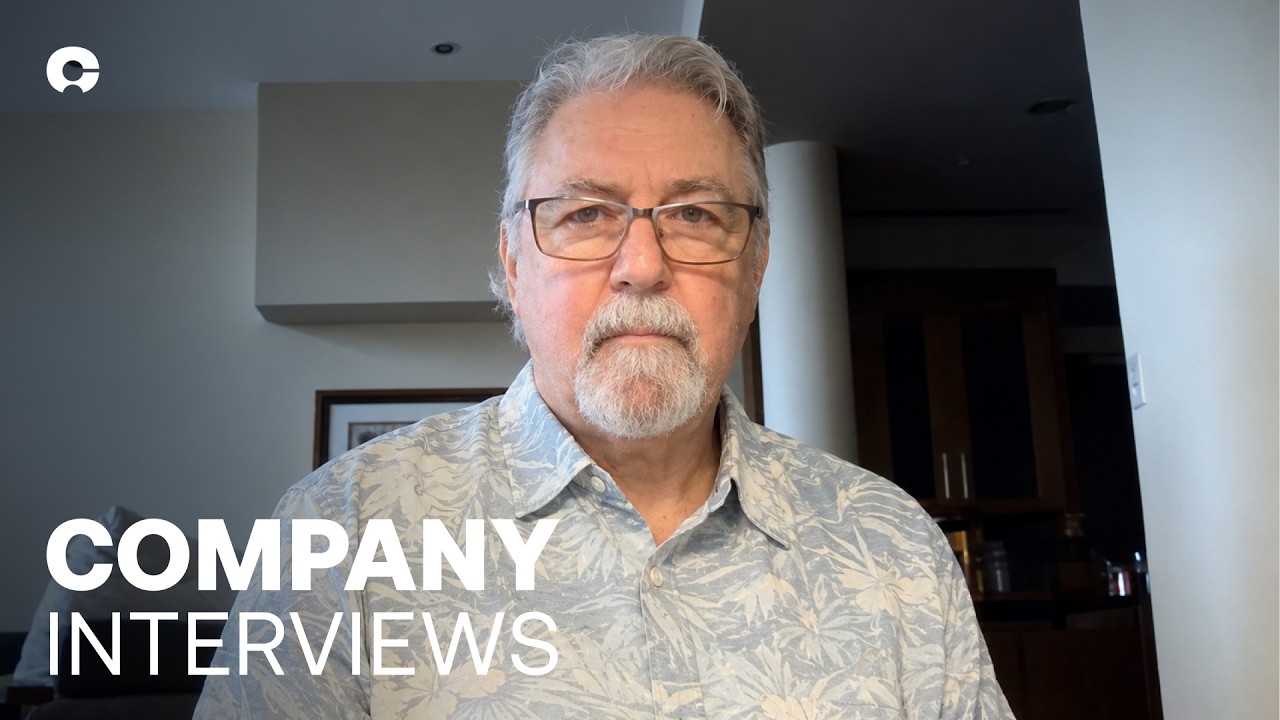
Interview with Victor Cantore, President and CEO, Amex Exploration
Funding the Development
Amex currently maintains approximately $30 million in treasury following a $37.4 million financing, of which $25 million was raised through flow-through shares designated for exploration and $12 million in hard dollars available for discretionary deployment. This capital position provides flexibility regarding the timing of future financings.
The bulk sample phase carries an estimated cost of approximately $40 million, inclusive of transportation, milling, and infrastructure development. Critically, Cantore noted that $20 to $25 million of this expenditure represents infrastructure that will serve phase one production, effectively reducing the net phase one capital requirement from the preliminary assessment figure of $146 million.
Pre-production revenue provides additional financial support. Cantore stated: "It's contemplated getting $68 million from there plus your bulk sample. That pretty much covers your entire $146 million for your capex of your phase one." This revenue is generated prior to reaching commercial production, defined as 600 tons per day throughput, while the company ramps up from lower tonnage rates.
Production Economics
The preliminary assessment established key economic parameters that frame investor expectations. All-in sustaining costs are projected at $1,165 per ounce, providing substantial margins at current gold prices. The current life of mine stands at 17.5 years, though the company is working to concentrate production into a shorter timeframe to enhance net present value calculations.
The initial feasibility study will focus on a four to five-year mine life for phase one, currently modeled at four years of production. Cantore suggested this compressed timeline, combined with the relatively modest capital intensity and high-grade nature of the deposit, should prove "very beneficial for all the shareholders."
Ontario Expansion Potential
Parallel to production development, Amex continues advancing its exploration strategy. On 2nd March 2026, the company announced an exploration agreement with First Nations on the Ontario side of its land package, a significant milestone that unlocks additional prospective terrain. Cantore indicated permits from the Ontario government are pending, with plans to deploy two drill rigs immediately upon approval.
Historical sonic drilling in the area identified targets that previous operators overlooked due to their focus on base metals and sulfides rather than gold mineralisation. Amex's mining engineers and geologists have identified what Cantore described as a "mirror image" of the Quebec mineralisation on the Ontario side, suggesting significant expansion potential beyond the current resource base.
M&A Environment and Corporate Strategy
The interview acknowledged the active merger and acquisition environment in the gold sector, with major producers increasingly pursuing earlier-stage development projects. When asked about potential acquisition interest, Cantore emphasised the company's dual-track approach:
"We're going to continue going on two paths. One is production, the one is exploration. And we're going to fight for our shareholders. That's for sure. I want the maximum value for our shareholders."
This positioning suggests management's intent to advance the project sufficiently to demonstrate value through de-risked development milestones and operational proof points, while remaining open to strategic alternatives that maximise shareholder returns. The company benefits from supportive major shareholders while maintaining focus on the broader shareholder base.
The Investment Thesis for Amex Exploration
- Near-term production catalyst with bulk sample permit expected March 2026, providing clear timeline to first gold production in Q3 2027 and minimising execution risk through phased development approach
- High-grade economics with ~10 g/t fully diluted grade driving favorable transportation costs, processing flexibility, and AISC of $1,165/oz against gold prices exceeding $5,000/oz
- Capital efficiency through infrastructure reuse from bulk sample to phase one, with pre-production revenue and bulk sample proceeds ($68M + $80-100M estimated) substantially covering phase one capex of $146 million net of infrastructure
- Significant operating leverage to gold prices with production ramping to 100,000+ oz annually by 2028, generating substantial free cash flow at current metal prices with limited dilution risk given strong treasury position
- Resource expansion potential through Ontario First Nations agreement unlocking parallel geological targets while maintaining focus on advancing Quebec project through feasibility and construction
- Strategic positioning in active M&A market with development timeline and grade profile attractive to mid-tier and major producers seeking near-term production growth in established jurisdiction
- De-risked permitting pathway in Quebec mining jurisdiction with bulk sample permit imminent and strong community relationships established, reducing political and social license risk
Macro Thematic Analysis
The gold sector is experiencing a structural shift as elevated prices above $5,000 USD per ounce incentivise producers to accelerate development timelines and advance projects previously deemed sub-economic. Major producers face declining reserve lives and increasing replacement costs, driving aggressive M&A activity particularly targeting high-grade deposits in established mining jurisdictions. Amex Exploration's transition from explorer to near-term producer positions the company at the intersection of these trends.
The three-phase development strategy allows capital-efficient advancement while the high-grade profile (~10 g/t) ensures robust economics even with conservative gold price assumptions. Quebec's Abitibi belt provides infrastructure advantages and permitting certainty that reduce execution risk. As Cantore noted regarding the bulk sample approaching production scale:
"...So sometime - we have it scheduled right now - sometime in 2028...we should be in line for over 100,000 ounces."
TL;DR: Executive Summary
Amex Exploration is advancing its high-grade Quebec gold project toward production with bulk sample permit expected March 2026, enabling first gold production of 20-23,000 ounces by Q3 2027 and ramping to 100,000+ ounces annually by 2028. The company's three-phase development strategy leverages ~10 g/t grades and strategic infrastructure reuse to achieve capital efficiency, with pre-production revenue and bulk sample proceeds substantially covering phase one capex of $146 million while maintaining a $30+ million treasury. Parallel exploration expansion through Ontario First Nations agreement adds significant resource growth potential alongside near-term production de-risking.
FAQ's (AI Generated)
Elevated gold prices create compelling economics for the high-grade deposit, enabling capital-efficient development. The phased approach mitigates risk while the strategic Quebec location provides infrastructure advantages and permitting certainty for accelerated production timelines.
The bulk sample uses production-scale infrastructure (ramps and declines), enabling seamless transition to phase one. This approach eliminates need for subsequent expansion while generating 20-23,000 ounces and pre-production revenue that partially funds phase one capex.
Phasing minimises upfront capital requirements, allows operational learnings between phases, and leverages shared infrastructure. High grades and strategic location enable this approach, reducing both financial exposure and technical execution risk while maintaining operational flexibility.
Multiple mill operators provide optionality, strengthening negotiating position. High grades (~10 g/t) make transportation economics favorable even over several hundred kilometers. Feasibility study will detail blended costs and sensitivity analyses across different processing scenarios.
Management pursues dual strategy advancing both production and exploration to maximise shareholder value. Strong major shareholders provide support while board remains focused on achieving fair valuation through de-risked milestones and operational proof points.
Analyst's Notes





Subscribe to Our Channel









.jpg)
Stay Informed






















