




Abcourt Mines Profitable in Q4: Targets Increase to 50,000 Oz/Year Gold Production



Abcourt Mines delivers profitable Q4 gold production at Sleeping Giant, backed by a Glencore offtake deal and a clear ramp-up plan targeting 50,000 oz/year.
- Abcourt Mines has achieved first profitable gold production at its 100%-owned Sleeping Giant mine in Quebec, delivering 837 ounces in Q4 2025 with mill recovery rates consistently exceeding 96% since commissioning.
- The Sleeping Giant mill is operating at less than 20% of its 800 tonnes-per-day nameplate capacity, presenting a significant throughput ramp-up opportunity that requires no major additional capital expenditure as the infrastructure is already in place.
- Glencore has entered as both lender and offtake partner, refinancing Abcourt's start-up debt from 16% to 7% interest and providing a total US$30 million facility, with gold and silver deliveries commencing February 2025 and a right of first participation in future financings.
- A phased on-site sleep camp programme with Phase 2 commissioning by end of March 2026 and Phase 3 by June 2026 combined with a formal miner training partnership with Val-d'Or's mining school, is directly addressing the workforce constraints that limit underground throughput growth.
- Beyond Sleeping Giant, Abcourt holds 14 additional projects including the polymetallic Abcourt-Barvue property (8–10 million tonnes at 3% zinc and 55 g/t silver), the Flordin gold project with 20,000 metres of planned drilling, and the Discovery project carrying an existing 5 g/t gold resource estimate.
Abcourt Mines (TSXV:ABI) has completed the transition from development-stage junior to operating gold producer. The company's 100%-owned Sleeping Giant mine and mill in the Abitibi region of Quebec produced its first gold in August 2025, with commercial gold sales commencing in September. For Q4 2025, the operation delivered 837 ounces of gold enough to generate a profit from mining activities, a milestone that few junior companies at this stage achieve.
The path to production involved an extensive refurbishment of the Sleeping Giant mill through 2025 and into 2026. Upgrades included re-lining all three grinding mills (two ball mills and a rod mill) addressing internal rust, and replacing bearings on one of the ball mills. Since commissioning, gold recovery at the mill has consistently exceeded 96%, a strong performance metric that demonstrates the infrastructure is functioning at a high level. As CEO Pascal Hamelin notes, the mill itself was never the constraint. The focus going forward is on growing the underground mining rate to feed a mill that is currently operating well below capacity.
Throughput Ramp-Up: The Central Value Driver
The Sleeping Giant mill has a nameplate capacity of approximately 800 tonnes per day. In Q4 2025, the operation processed close to 3,000 tonnes per month, less than 20% of total mill capacity. This gap between current output and potential capacity represents the core investment thesis. Hamelin has set an interim target of 5,000 tonnes per month, which he projects will deliver approximately 800 ounces per month and sustain profitability. The more significant near-term target is 10,000 tonnes per month by autumn 2026, which would yield approximately 2,500 ounces monthly.
At that level, Abcourt would be generating meaningful free cash flow sufficient to service the Glencore debt, fund exploration across the broader asset portfolio, and self-finance continued underground development. Hamelin describes 30,000 ounces per year as Phase 1 of the production plan, achievable by late 2026 or early 2027. Phase 2 envisions throughput of 500 tonnes per day, with an ultimate target of 800 tonnes per day and approximately 50,000 ounces per year. The progression is dependent on building underground mining capacity through workforce expansion and training, not on any major additional capital expenditure.
Sleep Camp Expansion and Workforce Development
One of the key operational catalysts Hamelin identifies is the construction of an on-site sleep camp, addressing a longstanding logistical challenge. Historically, miners commuted from towns for hours in northern Quebec amidst winter conditions. The camp removes that barrier, enabling Abcourt to attract and retain miners who might otherwise find the commute impractical.
Phase 1 of the sleep camp was commissioned in September 2025, complete with a kitchen and common areas. Phase 2, comprising 36 additional rooms, arrived on site and is scheduled for commissioning by end of March. Phase 3 for a further 37 rooms, is already on order and expected to be commissioned by June 2026. All rooms are configured as single-occupancy with a private bathroom which is a competitive differentiator in a labour market where accommodation quality influences recruitment decisions.
Alongside the physical infrastructure, Abcourt has launched a formal training programme, partnering with the mining school in Val-d'Or to hire graduates with mining certificates and pair them with experienced mentors. Hamelin acknowledges that newly qualified miners require two to three months of mentored underground experience before operating independently. The company has been onboarding new personnel weekly since January 2025, and as of the interview, headcount had reached approximately 140 across the mine and corporate office.
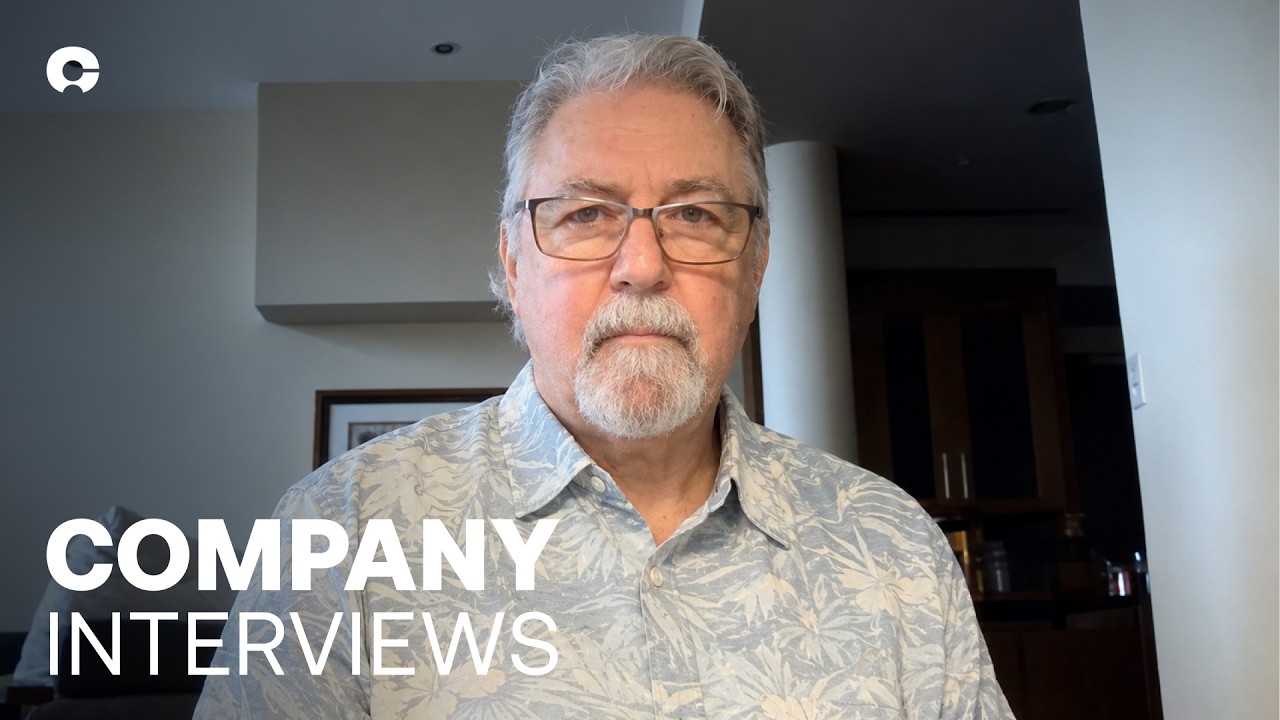
Interview with Pascal Hamelin, President & CEO of Abcourt Mines Inc.
Glencore Partnership: Debt Refinancing and Strategic Alignment
In a notable development for a company of Abcourt's size, Glencore has entered the picture as both a lender and an offtake partner. The relationship began after Abcourt had already secured an initial US$12 million loan from Nebari in July 2025 to fund mine start-up. Glencore subsequently approached the company, refinancing that debt at significantly more favourable terms, reducing the interest rate from approximately 16% to 7% and providing additional capital to support growth, bringing total debt to US$30 million.
In exchange, Glencore holds offtake rights on Abcourt's gold and silver production, with deliveries commencing February 2025. Glencore also retains a right of first participation in future financing rounds, giving Abcourt a credible institutional backstop for future capital requirements. Hamelin is direct about the strategic rationale:
"They (Glecore) want to buy our metals. They want to get into the precious metals sector so it's a good start, good way to start. We started delivering gold and silver in February."
The debt terms provide a reasonable operational runway. The first year is interest-only, with principal repayments beginning February 2027, spread across four years. Given Abcourt's production ramp-up trajectory, Hamelin is targeting sufficient free cash flow well ahead of that repayment schedule.
Portfolio Beyond Sleeping Giant
While Sleeping Giant is the operational focus commanding roughly 90% to 95% of management attention, Abcourt holds a portfolio of 14 additional projects. Exploration has already commenced at Flordin with 20,000 metres of planned drilling. The Discovery project, 10 kilometres west of Flordin, already carries an existing resource estimate grading 5 g/t gold. The Abcourt-Barvue Property in hosts a historical resource of approximately 8-10 million tonnes grading 3% zinc and 55g/t silve, a polymetallic asset that aligns with Glencore's broader interest in base and critical metals.
Hamelin also flagged the Aldermac copper project, a historic mine where tailings contain cobalt, gold, silver, zinc, and residual copper. At Sleeping Giant itself, over 4 million tonnes of tailings from 40 years of gold-only recovery may contain meaningful concentrations of zinc and copper a potential source of incremental future revenue that the company plans to assess through multi-element assaying.
With over one million metres of historical drill data on file, Hamelin is also exploring the application of artificial intelligence tools to identify targets that the geological team has not yet had time to evaluate manually. While he stops short of committing to an AI-driven exploration strategy, the comment signals an awareness of how data-rich assets can be reappraised with modern analytical tools.
Life of Mine and Market Signalling
Current mine planning supports a seven-year life of mine at Sleeping Giant, a figure Hamelin is actively working to extend. Diamond drilling has been increased from approximately 1,200 metres per month to a target of 3,000 metres per month, with the purpose of converting inferred resources to indicated status to support engineering and mine design. The declared objective is a life of mine in excess of 10 years.
For institutional and retail investors evaluating a junior producer, a sub-10-year mine life limits re-rating potential. Extending to 10-plus years, combined with a growing production profile, would reposition Abcourt as a more durable mid-tier producer candidate.
The Investment Thesis for Abcourt Mines
- Proven production at low cost of entry. Abcourt achieved profitability in its first full quarter of gold sales, validating the Sleeping Giant operation and demonstrating that the asset can generate positive cash flow even at subdued throughput levels.
- Significant mill utilisation upside. The mill operates at less than 20% of nameplate capacity. Growing throughput to the 800 tonnes per day target requires no major capital expenditure as the infrastructure is already in place. The value driver is underground development and workforce scaling, both of which are underway.
- Glencore as validation and capital backstop. Glencore's participation as both lender and offtake partner provides institutional credibility, favourable refinancing terms, and a committed buyer for production. The right of first participation in future financings substantially reduces execution risk on the growth strategy.
- Management alignment. Officers and directors own approximately 37% of the company, funded through years of equity raises without diluting external shareholders excessively. This level of insider ownership is meaningfully above average for junior mining companies and aligns incentives directly with shareholders.
- Portfolio optionality beyond the core mine. Fourteen additional projects including polymetallic assets with Glencore interest, an existing gold resource at Discovery, and historic tailings with critical mineral content provide exploration upside that is not currently priced into the operational narrative.
- Improving macro backdrop. Gold prices remain elevated, and the Abitibi region of Quebec is one of the world's most established and mining-friendly jurisdictions, reducing permitting and political risk. Abcourt's silver byproduct and potential zinc and copper exposure provide additional leverage to the broader critical minerals demand cycle.
- Actionable consideration. Investors should monitor monthly production updates for evidence of the throughput ramp from 3,000 to 10,000 tonnes per month. Confirmation of Phase 2 and Phase 3 sleep camp commissioning, along with quarterly drill results at Flordin, will serve as key near-term catalysts for re-rating.
Quebec Gold Producers in a High-Price Environment
The gold price environment in 2025 has materially changed the calculus for junior and emerging producers. With gold trading at historically elevated levels, the economics of previously marginal underground mining operations have improved substantially, and smaller high-grade mines that struggled to justify operating costs in prior cycles are finding renewed relevance. Abcourt Mines and the Sleeping Giant operation sit directly within this thematic.
The Abitibi Greenstone Belt which straddles the Quebec-Ontario border and hosts some of the world's most prolific gold camps continues to attract capital and operating interest. The region offers mature mining infrastructure, an established labour pool, proximity to processing facilities, and a stable regulatory environment, making it one of the most attractive jurisdictions globally for gold development and production.
Major producers are facing declining grades at existing mines, rising operating costs, and a multi-year pipeline deficit from underinvestment in exploration during the 2014–2018 downturn. This creates a sustained demand from mid-tier and senior producers for acquisition targets and production growth, positioning high-grade emerging producers in established jurisdictions as strategic assets.
Abcourt, with a 96% recovery mill already operating and a throughput expansion plan funded from cash flow rather than equity dilution, is positioned to capture an outsized share of the gold price upside as production scales. The involvement of Glencore in the precious metals offtake space signals a broadening of institutional interest in gold and silver supply chains. This trend, combined with continued geopolitical demand for Western-jurisdiction production, supports a durable premium for assets like Sleeping Giant.
TL;DR
Abcourt Mines is a newly profitable Quebec gold producer operating the Sleeping Giant mine at less than 20% of its mill's full capacity. The infrastructure is built, the Glencore offtake and debt facility is in place, and the path to 50,000 ounces per year runs through workforce growth and underground development. The company's mill is capable of processing 800 tonnes per day against current throughput of less than 160 tonnes per day, the gap between current performance and potential capacity represents a substantial and tangible value unlock. With 37% insider ownership, a 96% mill recovery rate, and 14 additional projects in the portfolio, the investment case centres on a straightforward operational ramp-up in one of the world's premier gold jurisdictions.
Frequently Asked Questions (FAQs) AI-Generated
The company achieved profitability in Q4 2025 even at low throughput at approximately 3,000 tonnes per month because the Sleeping Giant mill operates at over 96% gold recovery and the grade of the deposit is historically strong at around 10 grams per tonne. At 800 ounces per month, operations cover costs. As throughput increases toward 10,000 tonnes per month, the operation is expected to generate meaningful free cash flow.
Glencore is one of the world's largest commodity traders and mining companies. Its decision to provide a US$30 million debt facility, take an offtake position on gold and silver production, and retain a right of first participation in future financings is a material endorsement of the asset's quality and Abcourt's management team. It also provides a committed buyer for production and a credible institutional backstop — reducing the risk that the company will need to raise equity capital at dilutive prices to fund growth.
Underground mining is labour-intensive, and the Sleeping Giant mine's remote location in northern Quebec has historically made it difficult to attract and retain skilled miners. Commutes of up to four hours in harsh winter conditions limited the workforce Abcourt could maintain. By constructing an on-site camp with private rooms and amenities, the company is removing one of the primary constraints on throughput growth — without which the mill expansion plan could not be executed.
A sub-10-year mine life is generally considered a limiting factor for re-rating potential, as it restricts the long-term production visibility that institutional investors require. Abcourt is addressing this by tripling its diamond drilling rate — from 1,200 to 3,000 metres per month — to convert inferred resources to indicated status and expand the resource base. The declared target is a mine life of over 10 years, which management believes would constitute a significant positive signal for the market.
While gold and silver from Sleeping Giant are the current revenue drivers, Abcourt's broader portfolio includes meaningful polymetallic exposure. The Abcourt-Barvue property hosts a historical resource grading 3% zinc and 55 g/t silver. The Aldermac project contains tailings with cobalt, copper, gold, and silver. Sleeping Giant's own 4-million-tonne tailings stockpile is being assessed for zinc and copper content. Glencore's interest in these assets extends beyond precious metals, and multi-element assaying programmes are underway across several properties.
Analyst's Notes





Subscribe to Our Channel






.jpg)
Stay Informed






















