Standard Uranium Advances Fully Funded June Drill Campaign at Davidson River


Standard Uranium's June drill program tests Davidson River flagship with breakthrough gravity tech. $15M market cap, 6K-12K meters funded, surrounded by billion-dollar producers.
- Standard Uranium's CEO Jon Bey reports strong investor demand for uranium exploration across Europe and Asia, driven by growing recognition of nuclear power's role in meeting 24/7 clean energy needs
- The company operates three active joint venture agreements on non-core assets, generating cash flow while maintaining 25% ownership and allowing focus on the flagship Davidson River project
- New passive seismic technology from Australia's Fleet Space, combined with gravity surveys, has overcome previous exploration challenges caused by 150 meters of glacial till masking gravity signatures at Davidson River
- Fully funded 6,000-meter drill program (potentially doubling to 12,000 meters) commencing first week of June, with scintillometer technology enabling near-instant preliminary results during drilling, prior to lab assay results.
- At $15 million market cap surrounded by billion-dollar companies in the southwest Athabasca Basin, the company presents significant discovery upside with limited downside, targeting 200-500 meter depths at $500 CAD per meter
The uranium sector has experienced a dramatic transformation over the past several years, evolving from a market where investors asked "What's uranium used for?" to sophisticated discussions about small modular reactors, permitting timelines, and First Nations agreements. Standard Uranium, an exploration company focused on Saskatchewan's Athabasca Basin, finds itself well positioned as it prepares to drill its flagship Davidson River project with new technological capabilities and a fully funded exploration program.
Strategic Positioning in the Athabasca Basin
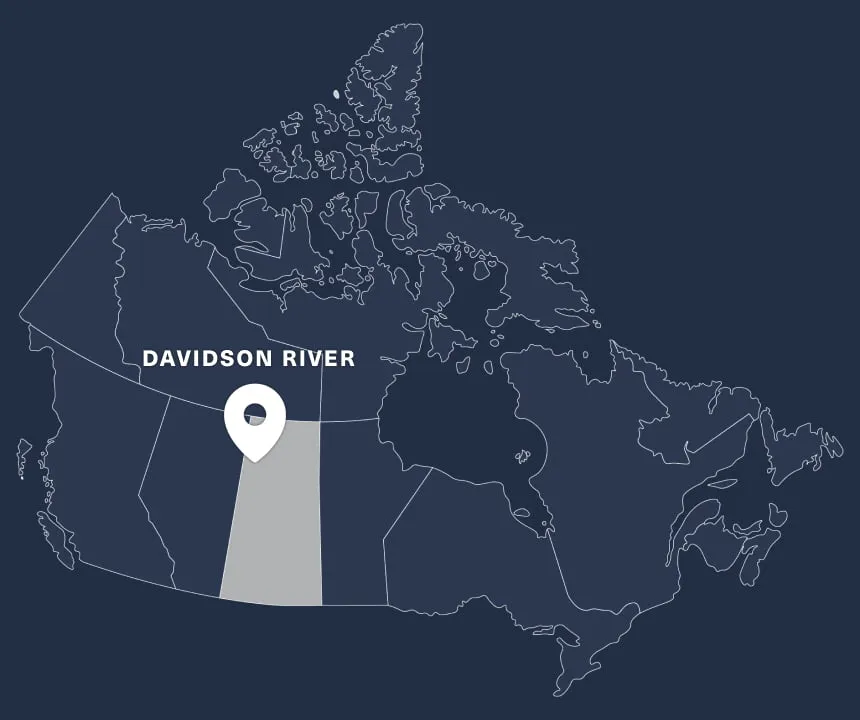
Standard Uranium was founded in 2017 around the Davidson River project and went public in 2020. The company operates in the southwest corner of the Athabasca Basin, surrounded by billion-dollar companies including NexGen, Paladin, Denison, Cameco, and Orano. This geographic positioning is significant - the area represents what CEO Jon Bey believes "is going to be the hottest uranium district in the world in my opinion over the next decade."
The company's market capitalisation of $15 million CAD stands in stark contrast to its neighbours and the scale of its land package. This valuation gap creates what Bey characterises as an asymmetric risk opportunity:
"The downside risk is extremely low. If we hit, you look at what happened to F3 Uranium - two or three years ago. They hit their JR zone and they went from a 10 million to 150 million market cap within six months."
The Prospect Generator Business Model
Recognising the challenges new entrants face in the Athabasca Basin - including difficult permitting, multi-year First Nations negotiations, and limited drilling contractors - Standard Uranium pivoted to a prospect generator model in 2023. This strategic shift occurred as uranium spot prices surged from $50 to $110 in six months following Sprott's SPUT fund creation, triggering an influx of new companies seeking projects.
The company currently operates three joint venture agreements on non-core assets, with partners typically earning 75% ownership over three years while Standard retains 25%. Partners pay cash, shares, operating fees, and all exploration costs. Bey explains the benefits:
"It keeps cash flow coming in. The First Nations get paid, the vendors get work, our geologists are actually doing the work, so they're working all year round. We keep all that data."
This model has proven financially sustainable. When Arrow, a JV partner on the Sun Dog project near Uranium City, shifted focus to U.S. projects, Standard recovered 100% ownership along with all exploration data. The company currently has additional projects under confidentiality agreements with potential partners.
Davidson River: The Flagship Asset
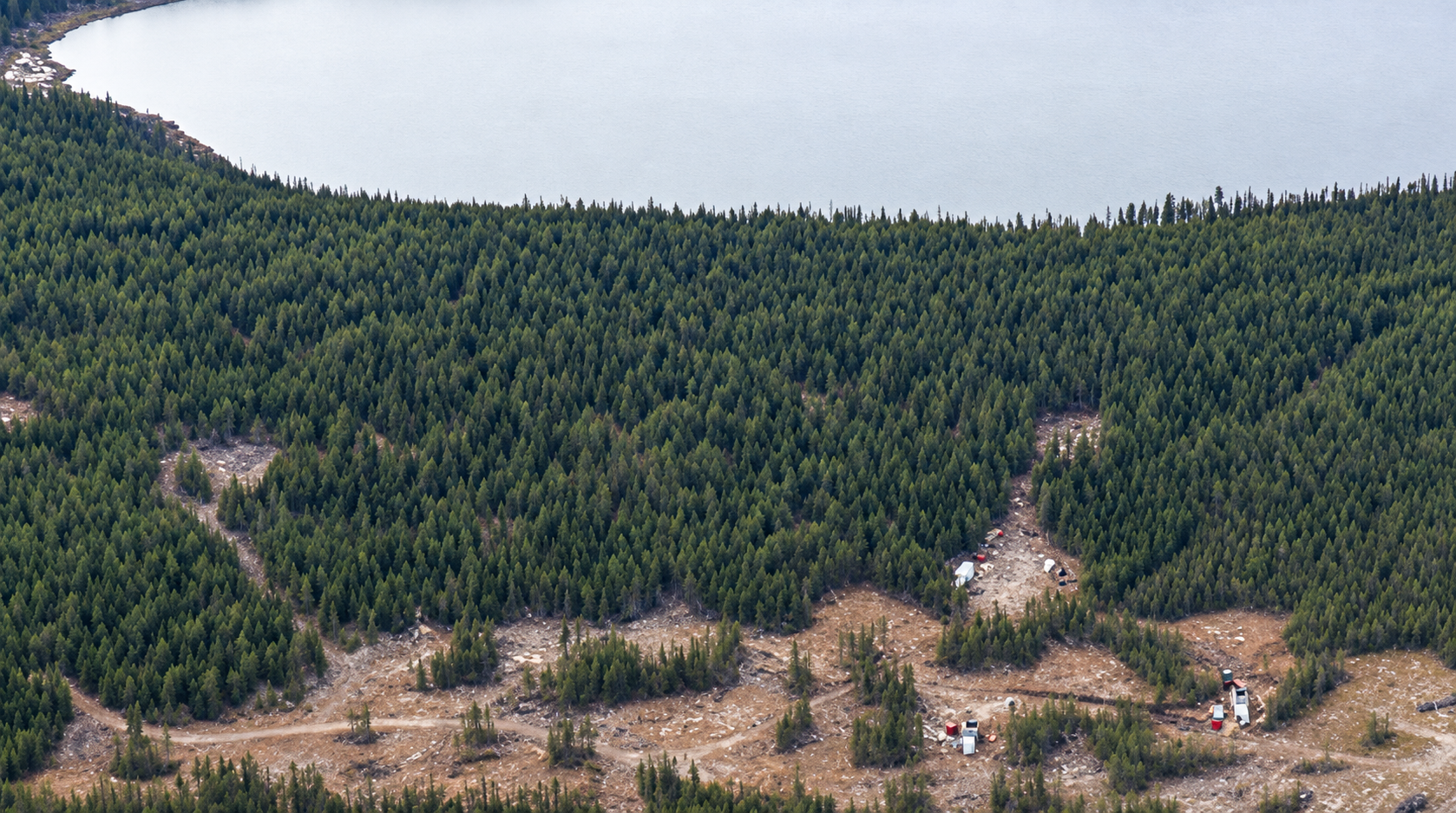
Davidson River has remained the company's core focus despite earlier challenges. The primary obstacle was obtaining reliable gravity data - a critical exploration tool used by NexGen in their discovery. Bey notes that Standard's project differs because "it sits under about another 150 meters of glacial till and the gravity was being masked."
The breakthrough came in early 2025 when Fleet Space, an Australian company, approached Standard to demonstrate their passive seismic technology. This system combines ambient noise tomography (ANT) and horizontal-to-vertical spectral ratio (HVSR) passive seismic methods. When run simultaneously with gravity surveys, the technology can mathematically remove the overburden signal, allowing gravity to function effectively despite the glacial till.
Fleet Space funded the survey as part of their effort to open the southwest region for their technology. The results now provide Standard with what Bey describes as "beautiful gravity maps overlaying on top of those conductors." These conductors, identified through previous TM, VTEM, and ZTEM geophysical surveys, indicate locations where uranium mineralisation could occur in basement-hosted rocks.
Interview with Jon Bey, CEO, Standard Uranium
Multi-Layered Targeting Approach
Standard's targeting methodology for the upcoming drill program incorporates multiple data layers beyond the new gravity surveys. The company has analysed previous drill results showing evidence of graphite in the system and radioactive signatures indicating uranium movement, though high-grade discoveries have not yet been made.
Additionally, Standard deployed machine learning algorithms trained on publicly available data from Paladin and NexGen projects. By overlaying this AI-generated analysis with the new gravity data and historical drilling information, the company has identified what they consider high-quality drill targets at depths between 200 and 500 meters.
The relatively shallow target depths contribute to cost efficiency. Bey states the all-in drilling cost runs approximately $500 CAD per meter, making the exploration program economically attractive compared to deeper basement-hosted uranium projects elsewhere.
The Upcoming Catalyst: June Drill Program
Standard has secured funding for 6,000 meters of drilling, with investors interested in doubling the program. Drills begin spinning in the first week of June, creating a three-month window of potential news flow through August.
A significant advantage for uranium explorers is the ability to obtain near-instant results. Bey explains:
"We have our geologists on site during the drill program. The core comes out, they can shoot it with the scintillometer and get instant assay results and downhill probe results. So if we get into something juicy, we can halt and put a news release out immediately."
While laboratory assays take months to return, scintillometer readings provide reliable early indications of significant mineralisation, allowing for rapid market communication if discoveries are made.
Capital Strategy and Exit Optionality
Bey emphasises that Standard Uranium is not pursuing mine development. The company's objective is to "make an exploration discovery, build it up to probably feasibility stage, package it up, and then sell that off." This strategy aligns with shareholder value creation through project de-risking rather than operational complexity.
Multiple large companies have signed confidentiality agreements to monitor Standard's progress. Bey confirmed the company has rejected several offers, waiting for "the right company with the right offer." This patient approach is enabled by the cash flow from JV agreements, avoiding the desperation mergers that have characterised some junior uranium companies during difficult market periods.
Looking forward, Bey notes that several large institutional funds currently consider Standard too small for investment but have the company "on their radar to position once that discovery is made and that will allow us to scale rapidly."
Market Context and Investor Appetite
The interview reveals a fundamentally transformed investment landscape for uranium. Bey recently returned from Hong Kong and Singapore where "mining's back in favour" with investors specifically interested in uranium alongside gold, silver, and copper. The driver is widespread recognition of energy demands and nuclear power's unique ability to provide baseload clean energy 24/7.
Bey contrasts this with the market environment just two years prior, when basic questions about uranium's uses dominated investor meetings. Today's discussions have evolved to sophisticated topics including small modular reactors, permitting processes, First Nations relationships, and capital allocation strategies.
For Standard Uranium, the binary nature of exploration creates both risk and opportunity. As Bey acknowledges:
"If you drill and you have a discovery, your share price takes off. If you don't have a discovery, they don't see everything that goes on behind. All they see is no discovery."
The company has been building toward this moment for eight years, assembling the right data, securing funding, and positioning for what management believes is the optimal time to test Davidson River with the most advanced targeting information available.
Conclusion
The uranium sector revival reflects a fundamental recognition that decarbonisation goals cannot be achieved without nuclear baseload power. As Bey observes,
"People are well aware of the energy demands around this world. They're hearing the stuff about clean energy. They want to know that clean energy can be fuelled by 24/7 power and that it's nuclear."
Unlike intermittent renewables, nuclear provides constant output essential for industrial operations and emerging AI infrastructure. The shift from "What's uranium used for?" to detailed discussions about small modular reactors and permitting demonstrates investor sophistication around nuclear's infrastructure role. Spot prices surging from $50 to $110 in six months during 2023 validated this thesis, triggering major capital inflows. The Athabasca Basin, with its high-grade basement-hosted deposits, represents the premium asset class within global uranium supply.
TL;DR
Standard Uranium enters a fully funded 6,000-meter (potentially 12,000-meter) drill program in June on its Davidson River flagship project in Saskatchewan's Athabasca Basin, armed with breakthrough gravity technology that overcomes previous exploration barriers. At a $15 million CAD market cap surrounded by billion-dollar uranium producers, the company presents asymmetric discovery upside similar to F3 Uranium's 15x appreciation following their JR zone hit, while a sustainable JV business model on non-core assets eliminates funding desperation and maintains 25% exposure to partner-funded exploration across multiple projects.
FAQ's (AI Generated)
Analyst's Notes





Subscribe to Our Channel




Stay Informed