




The Battery Metals Investment Case: Critical Minerals Powering The Energy Transition


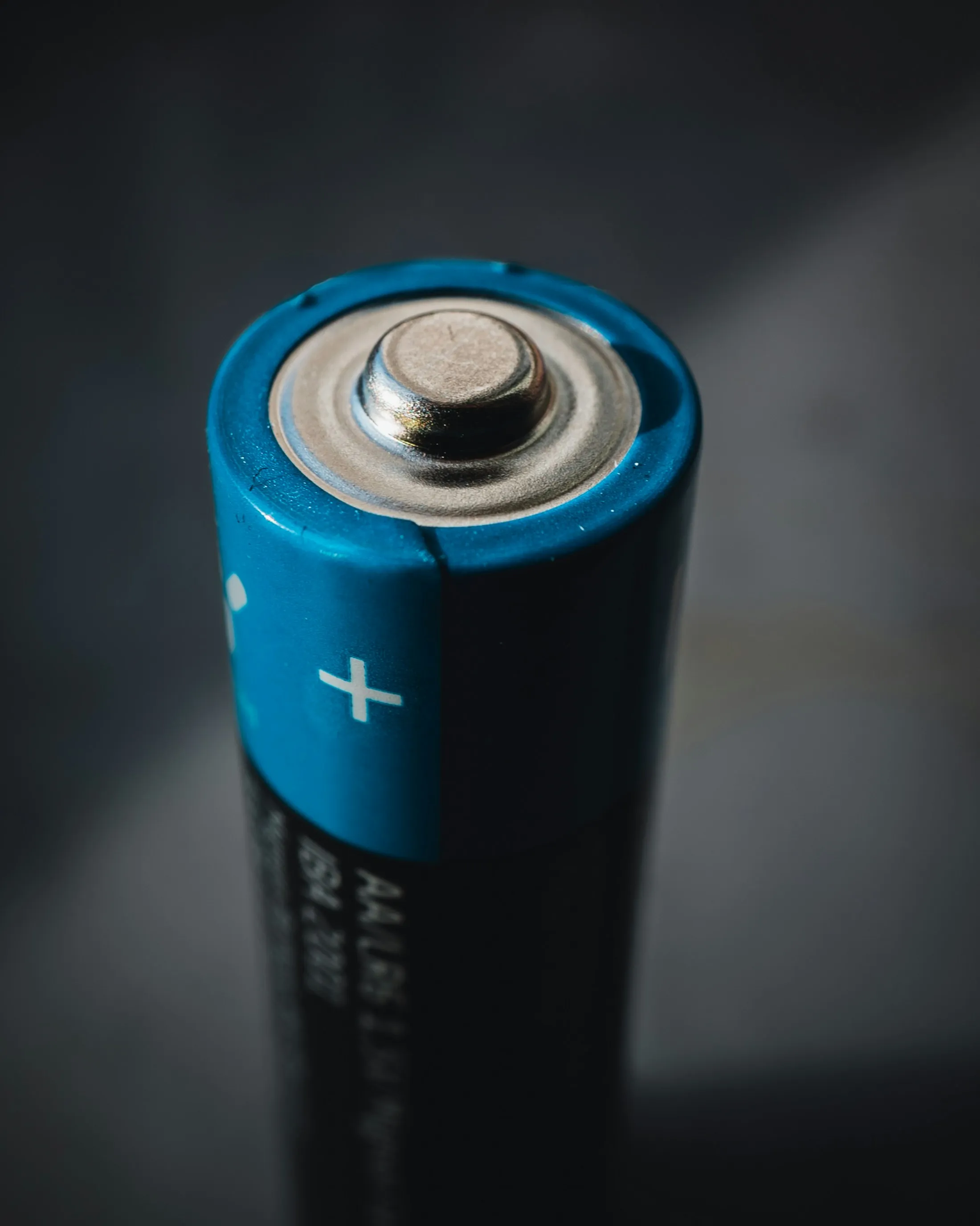
Battery metals offer compelling value as EV adoption drives demand against geopolitically concentrated supply, with Western jurisdictions commanding premiums for security.
- Lithium demand rose by nearly 30% in 2024, while demand for nickel, cobalt, graphite and rare earths increased by 6-8%, driven primarily by electric vehicle adoption. Electric vehicles now account for nearly 90% of lithium demand, up from 64% in 2020, with global EV sales expected to exceed 20 million units in 2025. The energy sector accounted for 85% of total battery metals demand growth over this period.
- Indonesia accounted for over half of nickel mining in 2023, while China is responsible for 80% of graphite mining and over 90% of refining. The average market share of the top three refining nations for key energy minerals rose from around 82% in 2020 to 86% in 2024, creating vulnerabilities that Western governments are addressing through diversification initiatives and domestic production incentives.
- Indonesia's share of mined nickel production has risen from 16% in 2017 to around 50% in 2023, with Indonesia's total nickel pig iron production reaching approximately 1.85 million tonnes in 2024 and expected to reach around 2 million tonnes by 2025, accounting for 53.5% of global primary nickel production. This dominance creates both supply security concerns and pricing power dynamics.
- Recent market action demonstrates ongoing volatility, with lithium carbonate futures in China experiencing dramatic swings. Exchange regulatory measures imposing stricter trading rules and supply-side signals from production restarts contributed to a 9% single-session drop to ¥91,020/tonne after peaking at ¥102,500/tonne. Despite near-term corrections, underlying demand tied to electrification remains robust as battery gigafactory construction accelerates globally.
- Western governments are prioritizing supply chain diversification through comprehensive policy frameworks. The U.S. Inflation Reduction Act, Canada's Critical Minerals Strategy, and Australia's Modern Manufacturing Initiative provide tax credits, loan guarantees, and offtake support for domestic battery metal production, reducing project financing risk and creating government-backed demand for Tier-1 jurisdictional assets.
The Battery Metals Imperative
The global transition to electrified transportation and renewable energy storage is creating structural demand for critical minerals essential to battery production. Nickel, lithium, graphite, copper, and tin have emerged as foundational commodities enabling the shift away from fossil fuels, positioned at the intersection of climate policy, technological innovation, and supply chain security. The investment thesis for battery metals rests on fundamentals distinct from traditional commodity cycles. Policy-driven demand supported by government mandates and emissions regulations provides visibility extending through 2030, while supply responses remain constrained by permitting timelines, capital intensity, and geopolitical concentration.
Global Trends Driving Battery Metals Demand
The electrification of transportation represents the primary demand catalyst for battery metals, with penetration rates exceeding forecasts. EV sales surged past 7 million units in the first half of 2025, a 28% year-over-year increase, with the International Energy Agency projecting full-year sales could approach 20 million units. Major automotive markets have established regulatory timelines phasing out internal combustion engines by 2035, creating policy certainty driving massive capital investment across automotive supply chains.

Battery chemistry evolution reshapes demand profiles for individual metals. Nickel-rich cathode chemistries maximize energy density and vehicle range, driving nickel intensity per vehicle upward. Batteries, the heart of every electric vehicle, rely heavily on lithium, cobalt, nickel, manganese, and graphite as key cathode and anode materials. Each EV requires approximately 50-100 kilograms of graphite depending on battery size, while copper content increases dramatically versus combustion vehicles due to electric motors, battery systems, and charging infrastructure.
Energy Storage & Grid Applications
Grid-scale energy storage is emerging as a complementary demand driver, with battery installations required to manage intermittency from renewable generation. Battery energy storage system installations are set to increase from 205 GWh in 2024 to 520-700 GWh by 2030, a 2.5-3.5x increase. Residential and commercial storage applications add another demand layer, with home battery systems gaining adoption in markets with high electricity costs or time-of-use pricing. These distributed storage applications utilize similar lithium-ion chemistries to EVs, competing for the same battery metal supply.
Supply Chain Reshoring Imperatives
Geopolitical tensions have elevated supply security to strategic priority for Western governments and automakers. In 2023, Australia, Chile and China mined about 85% of global lithium, with almost 65% refined in China and another 25% in Chile. Indonesia accounted for over half of nickel mining, while the Democratic Republic of Congo was home to almost two-thirds of the world's cobalt mining. The U.S. Inflation Reduction Act's domestic content requirements for EV tax credits, Canada's Critical Minerals Strategy, and the European Union's Critical Raw Materials Act all prioritize domestic or allied-nation sourcing, creating structural demand for battery metal projects in stable jurisdictions at premium prices.
Supply Challenges: Commodity-Specific Constraints
The nickel market is experiencing supply transformation as Indonesian production dominates global output. In 2023, Indonesia accounted for 53.1% of the global nickel supply and was projected to reach 2.1 million metric tons by the end of 2024. However, this creates market vulnerabilities. The global primary nickel market is expected to remain oversupplied in 2025, with production from Indonesia forecast to expand further despite challenges like tight nickel ore availability and potential royalty rate hikes.
.png)
Battery sector dynamics add complexity, as the battery sector saw a shift in preferences from nickel-rich nickel-manganese-cobalt batteries toward nickel-free lithium-iron-phosphate batteries, driven by price competitiveness. Despite this, the battery sector is expected to increase nickel consumption to 543,000 tonnes in 2025, making up 15.2% of global consumption. Nickel sulphide deposits in stable jurisdictions command premiums as automakers seek long-term, low-carbon supply agreements outside concentrated Asian supply chains.
Lithium: Price Volatility Masking Structural Growth
Lithium markets navigate the aftermath of speculative excess. Recent price action illustrates ongoing volatility, with lithium carbonate futures experiencing dramatic swings following exchange regulatory measures and production restart announcements. A major mine with potential output of approximately 46,000 tonnes per year, roughly 3% of projected global supply, exemplifies how quickly brownfield supply can respond to price signals.
Despite near-term volatility, lithium prices dropped nearly 20% in 2024, reaching similar prices to late 2015 levels, despite lithium demand in 2024 being about six times bigger than in 2015. The IEA warns that low prices could discourage future investments and might cause supply shortages for lithium and nickel by 2030. Greenfield lithium projects face extended permitting timelines and infrastructure development requirements, meaning supply responses to sustained higher prices will lag by years.
Graphite and Other Critical Minerals
Graphite supply is even more concentrated, with China responsible for 80% of mining and over 90% of refining. Natural flake graphite must undergo purification, spheronization, and coating processes to meet battery anode specifications, requiring specialized facilities and technical expertise concentrated in China. Western graphite projects must demonstrate integrated processing capability to produce battery-qualified material, adding capital intensity and technical risk beyond conventional mining operations.
Company Case Studies
Canada Nickel's Zero-Carbon Nickel Production (TSXV:CNC)
Canada Nickel is advancing the Crawford Nickel Sulphide Project in Ontario's Timmins region, positioning the asset as potentially one of the world's first zero-carbon nickel mines. The company recently secured an oversubscribed financing to advance engineering, permitting, and development activities.
As CEO Mark Selby stated their offering options:
"The Offering is oversubscribed. The Underwriters intend to fully exercise the Over-Allotment Option… If the Over-Allotment Option is exercised in full, the gross proceeds of the Offering will be C$15.0 million."
The proceeds support steps toward a construction decision targeted for 2026.
Crawford ranks as the world's second-largest nickel reserve and is expected to become the third-largest nickel sulphide operation globally based on feasibility study production rates. The deposit contains over 1.7 billion tonnes of reserves supporting a 41-year mine life, with life-of-mine cash costs of US$0.39/lb positioning Crawford in the first quartile globally. Updated FEED optimization improved after-tax NPV to US$2.8 billion with IRR exceeding 17%.
The decarbonization strategy through carbon sequestration, demonstrating 1.5 million tonnes CO₂ storage annually through IPT carbonation with potential scaling to 10-15 million tonnes via NetCarb Alliance, could position Crawford as a supplier of zero-carbon nickel to automakers with stringent emissions requirements. The broader Timmins Nickel District encompasses 42 km² with multiple discoveries including high-grade intercepts at Bannockburn showing 3.95% nickel over 4 metres, suggesting district-scale growth potential beyond Crawford alone.
Sovereign Metals (AIM:SVML) : Rutile-Graphite By-Product Economics
Sovereign Metals is developing what it describes as the world's largest known rutile resource and second-largest known flake graphite resource in southeastern Africa. As the company notes:
"Kasiya holds 17.9 Mt of contained rutile (world's largest) and 24.4 Mt of contained graphite (world's second-largest)."
The unique aspect is that graphite emerges as a natural by-product of rutile mining, creating economics distinct from standalone graphite projects.
The Optimised Pre-Feasibility Study demonstrates pre-tax NPV of US$2.32 billion with 27% IRR, supporting steady-state production of 246,000 tonnes per annum rutile and 265,000 tonnes per annum graphite. Processing advantages stem from soft saprolite ore enabling simpler methods than hard-rock graphite peers, producing higher carbon concentrate at 96-98% versus typical 94-95%, while achieving up to 57% large-jumbo flake commanding premium prices.
The by-product economics create competitive advantages, with incremental graphite production cost of US$241/tonne sitting below Chinese weighted average cost of US$257/tonne, positioning Sovereign in the lowest-cost quartile on global cost curves. A successful 6-month pilot operation mining 170,000 cubic meters validated the full production chain, informing feasibility parameters and de-risking execution. With Definitive Feasibility Study expected in Q4 2025, Sovereign is advancing toward financing and construction decisions.
Fitzroy Minerals (TSXV:FTZ): Dual-Track Copper Strategy
Fitzroy Minerals pursues a dual-track copper strategy in Chile's premier copper belt, combining fast-track oxide development for near-term cash flow with deeper sulphide exploration for long-term scale. The company recently appointed a technical advisor who emphasized the strategic value of this approach.
As President and CEO Merlin Marr-Johnson stated their management:
"I am also delighted that Fitzroy management has outlined a fast-track route to non-operated copper production at Buen Retiro, which could give the Company sufficient cash flow to self-fund exploration in future years."
The company holds approximately C$11M in cash supporting an ~C$8M exploration budget. The oxide project spans over 1.4 km of continuous copper mineralization with predominantly leachable minerals enabling low-cost heap leach processing. Brownfields status provides permitting advantages, while nearby hydrometallurgical infrastructure offers potential toll-processing solutions reducing capital intensity. Preliminary Economic Assessment is underway.
The sulphide project targets a large-scale copper-molybdenum-gold-rhenium porphyry system with initial drilling confirming 200 metres at 0.46% copper with higher-grade sub-zones. Multiple kilometre-long geophysical and geochemical anomalies across the 18,000 hectare land package suggest substantial exploration upside. By-product metals including rhenium, a scarce element used in superalloys, could materially enhance project economics. Strategic positioning between two major producing districts in a region with established infrastructure provides development advantages.
Rome Resources (LSE:RMR): High-Grade Tin Discovery
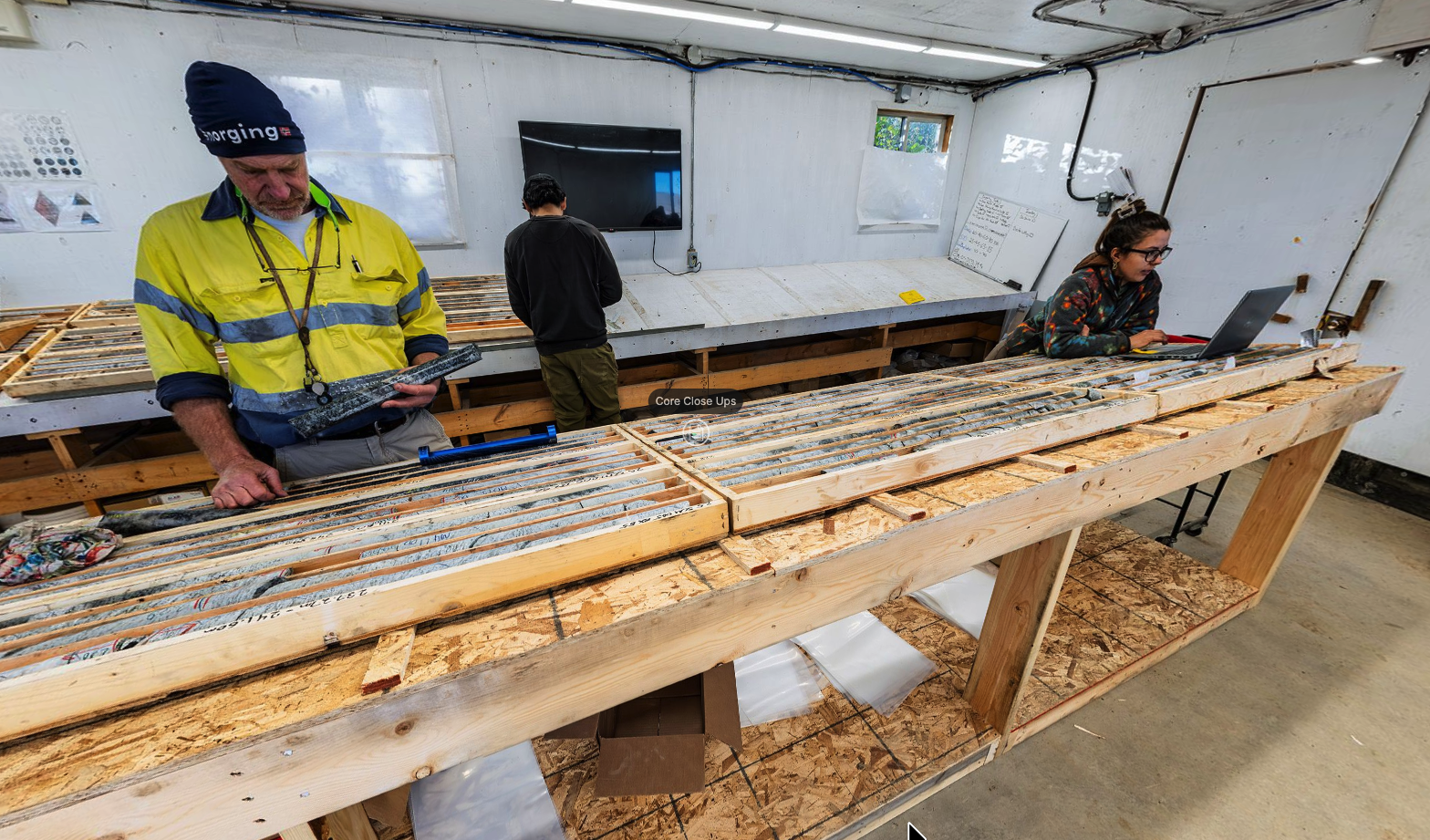
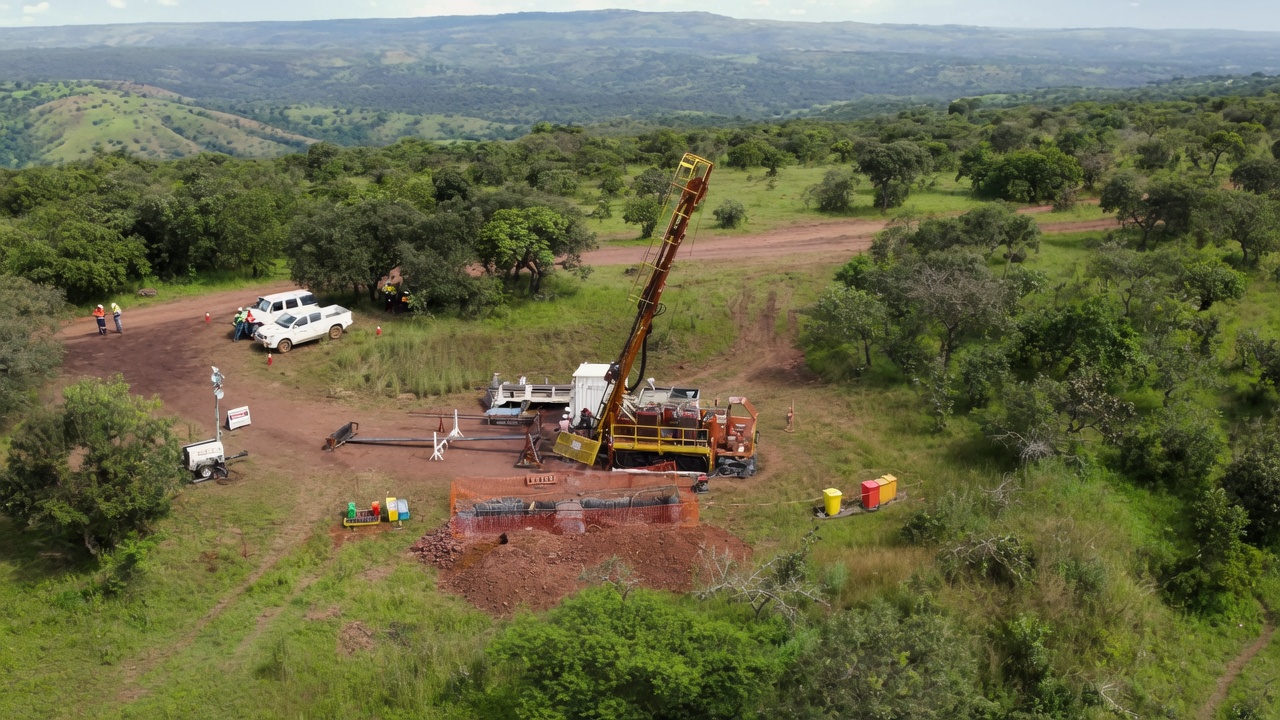
Rome Resources advances high-grade tin-copper-zinc-silver discoveries in the Democratic Republic of Congo's eastern region, located 8 km from one of the world's highest-grade producing tin mines. The company recently announced a £200,000 placement to fund additional drilling related to ongoing tin discoveries, highlighting continued support for exploration of critical minerals in a district with demonstrated world-class grades.
The asset portfolio centers on two prospects: a tin-copper-zinc-silver system at Mont Agoma and a high-grade tin-only system at Kalayi. Over 5,000 metres across 26 holes have been drilled by mid-2025 with first resource models initiated for both targets. Mont Agoma hosts polymetallic mineralization with geochemical and drill data indicating large undrilled deeper zones representing expansion potential, while Kalayi features high-grade plunging tin shoots across a 2-km-long soil anomaly.
Tin's supply-demand fundamentals support the exploration thesis, with the metal identified as highly leveraged to electrification through solar panel manufacturing, electronics, and specialized battery applications. Global tin demand is forecast to grow up to 40% by 2030 driven by technology adoption. Rome operates three drill rigs with on-site core logging and XRF facilities, plus approximately 1,000 kg of metallurgical samples shipped for beneficiation testwork to understand multi-metal recovery potential. With continued drilling momentum and resource modeling underway, Rome represents early-stage exposure to high-grade tin discovery in a district with demonstrated production history.
The Investment Thesis for Battery Metals
- Supply chain security premiums favor projects in Canada, Australia, and stable jurisdictions over lower-cost but geopolitically risky alternatives. Western automakers and governments increasingly prioritize supply reliability and ESG credentials over marginal cost advantages, supporting valuation premiums for Tier-1 assets even with higher operating costs.
- Battery metal developments advancing with automaker offtake agreements, government loan guarantees, or critical minerals program participation demonstrate external validation and reduced financing risk. Projects lacking strategic alignment face higher hurdles securing project finance and may trade at discounts despite strong technical fundamentals.
- Nickel, lithium, graphite, copper, and tin each face distinct supply-demand dynamics and price cycles. Portfolio allocation across multiple commodities provides downside protection when individual metals experience corrections while maintaining upside exposure to electrification's broad-based critical mineral demand.
- Advanced-stage projects with completed feasibility studies and near-term construction decisions offer less execution risk but potentially lower return multiples, while earlier-stage exploration and resource definition plays provide higher risk-adjusted returns for patient capital willing to accept development timeline uncertainty and permitting risk.
- As automakers face increasing pressure to reduce Scope 3 emissions across supply chains, battery metals produced with renewable energy and carbon sequestration capabilities command premiums. Projects demonstrating low-carbon production pathways gain competitive advantages in customer qualification processes beyond pure cost competitiveness.
- Given China's dominance in processing and its significant role in mining certain battery metals, policy shifts around production quotas, export restrictions, or environmental enforcement can rapidly tighten supply and drive price movements. Regulatory developments in Indonesia for nickel and China's domestic lithium market interventions create asymmetric risk-reward scenarios.
The battery metals investment case rests on secular electrification trends creating durable demand growth across nickel, lithium, graphite, copper, and tin, while supply responses remain constrained by permitting timelines, capital intensity, and geopolitical concentration. This supply-demand imbalance, amplified by Western governments' strategic prioritization of supply chain security, creates a favorable multi-year environment for projects in stable jurisdictions even if near-term prices experience volatility. Policy support through tax credits, loan guarantees, and domestic content requirements materially de-risks project financing for advanced-stage assets aligned with government critical minerals strategies.
Investor approaches should emphasize jurisdictional quality and strategic positioning over pure resource metrics. Projects in Canada, Australia, and other Tier-1 jurisdictions benefit from nearshoring premiums as automakers prioritize supply security, while developments with automaker partnerships or government backing demonstrate external validation reducing execution risk. Portfolio construction across multiple battery metals provides diversification, as individual commodities experience distinct price cycles. Lithium's recent volatility contrasts with nickel's structural deficit and graphite's processing bottlenecks, suggesting uncorrelated return profiles.
The four case study companies exemplify different risk-reward profiles within battery metals: Canada Nickel offers large-scale nickel sulphide development with zero-carbon differentiation and district growth potential; Sovereign Metals provides unique rutile-graphite by-product economics with near-term DFS completion; Fitzroy Minerals balances near-term oxide cash flow against sulphide exploration upside in established copper districts; and Rome Resources represents early-stage high-grade tin discovery with resource growth potential but elevated jurisdictional and exploration risk. For investors seeking exposure to the energy transition through tangible supply-demand fundamentals and reduced geopolitical vulnerability, battery metals in quality jurisdictions present compelling opportunities as electrification transitions from policy aspiration to physical infrastructure reality.
TL;DR
Battery metals present compelling investment opportunities as electric vehicle adoption and energy storage drive structural demand growth across nickel, lithium, graphite, and copper. Supply constraints persist from geopolitical concentration with Indonesia controlling over 50% of nickel and China dominating graphite processing, while Western governments prioritize supply chain diversification through reshoring incentives. Canada Nickel advances zero-carbon nickel production with district-scale potential, Sovereign Metals offers unique rutile-graphite by-product economics, Fitzroy Minerals balances copper oxide development with sulphide exploration in Chile, and Rome Resources pursues high-grade tin discovery in the DRC. Projects in Tier-1 jurisdictions with strategic partnerships command premiums as automakers secure long-term supply, creating favorable outlook for quality battery metal assets despite price volatility.
FAQs (AI-Generated)
Top battery metal stocks span multiple commodities and development stages. Canada Nickel offers large-scale nickel sulphide development with zero-carbon production differentiation in Ontario. Sovereign Metals provides unique rutile-graphite by-product economics with near-term feasibility study completion. Fitzroy Minerals balances copper oxide development for near-term cash flow against sulphide exploration upside in Chile. Rome Resources represents early-stage high-grade tin discovery exposure. Portfolio construction should balance established jurisdictions with development timelines matching investor risk tolerance.
Indonesia accounts for over 50% of global nickel production, creating both opportunities and risks. Indonesian dominance has driven oversupply and price weakness, but also creates supply security concerns for Western automakers. Projects in Canada and Australia command premiums as automakers seek diversified supply outside Indonesia. Indonesian production costs and regulatory changes significantly influence global nickel pricing, making Indonesian policy decisions critical market catalysts affecting all nickel investments.
Lithium experienced dramatic price swings with futures dropping 9% in single sessions following exchange trading curbs and production restart announcements. Despite near-term volatility, underlying demand from EV adoption and energy storage remains robust. Investors should focus on projects with strong economics sustainable across price cycles, strategic partnerships providing offtake security, and development timelines allowing price normalization before production decisions.
Graphite supply is highly concentrated with China controlling 80% of mining and over 90% of refining. Western graphite projects must demonstrate not just mining economics but integrated processing capability to produce battery-grade material, requiring specialized purification, spheronization, and coating facilities. This processing bottleneck creates opportunities for projects with demonstrated metallurgical pathways and strategic partnerships, but also increases capital intensity and technical risk versus conventional mining.
Government policies are critical, with the U.S. Inflation Reduction Act, Canada's Critical Minerals Strategy, and EU programs providing tax credits, loan guarantees, and domestic content requirements creating structural demand for Tier-1 jurisdictional projects. These policies reduce project financing risk and create nearshoring premiums allowing higher-cost Western projects to compete against lower-cost Asian alternatives. Policy support transforms economics for advanced-stage developments aligned with government critical minerals strategies.
Analyst's Notes





Subscribe to Our Channel







.png)
.png)



Stay Informed


