Tokenized Gold Reaches $6 Billion as Younger Buyers Signal New Demand


Digital access could attract fresh capital, while lending income may improve gold’s appeal when returns justify fees and borrower risk.
- The October 19 World Gold Council (WGC) and Boston Consulting Group (BCG) report valued tokenized gold at $6 billion, five times its late-2024 value.
- Around 65% of latent digital gold demand comes from first-time gold buyers, suggesting adoption could bring additional capital into the market.
- Willingness to buy digital gold reached 73% among 25–34-year-olds, identifying younger buyers as a potential source of demand.
- The broader digital gold market could reach $160 billion–$170 billion by 2031 under the report’s base case, conditional on improvements in trust, access, costs and product usefulness.
- Gold lending can generate income, but its appeal depends on returns after fees, borrower risk and redemption terms.
Digital Ownership Extends Gold’s Demand Story
The WGC/BCG report extends the discussion from official purchases to private ownership. It has estimated that first-time gold buyers account for around 65% of latent digital gold demand suggests growth could expand the pool of gold owners rather than depend entirely on transfers from existing holdings.
This distinction matters because moving money between gold products does not necessarily increase aggregate gold demand. Broader ownership would strengthen the recovery case if purchases attract money previously held outside gold, although survey interest alone does not establish that those flows will occur.
Younger Buyers Could Expand Gold Ownership
Tokenized gold’s market value rose from $1.2 billion in late 2024 to $6 billion, showing growth in a segment that remains small relative to the wider gold market. Digital gold also includes vaulted holdings accessed through digital accounts, so tokenized products represent only part of the opportunity.
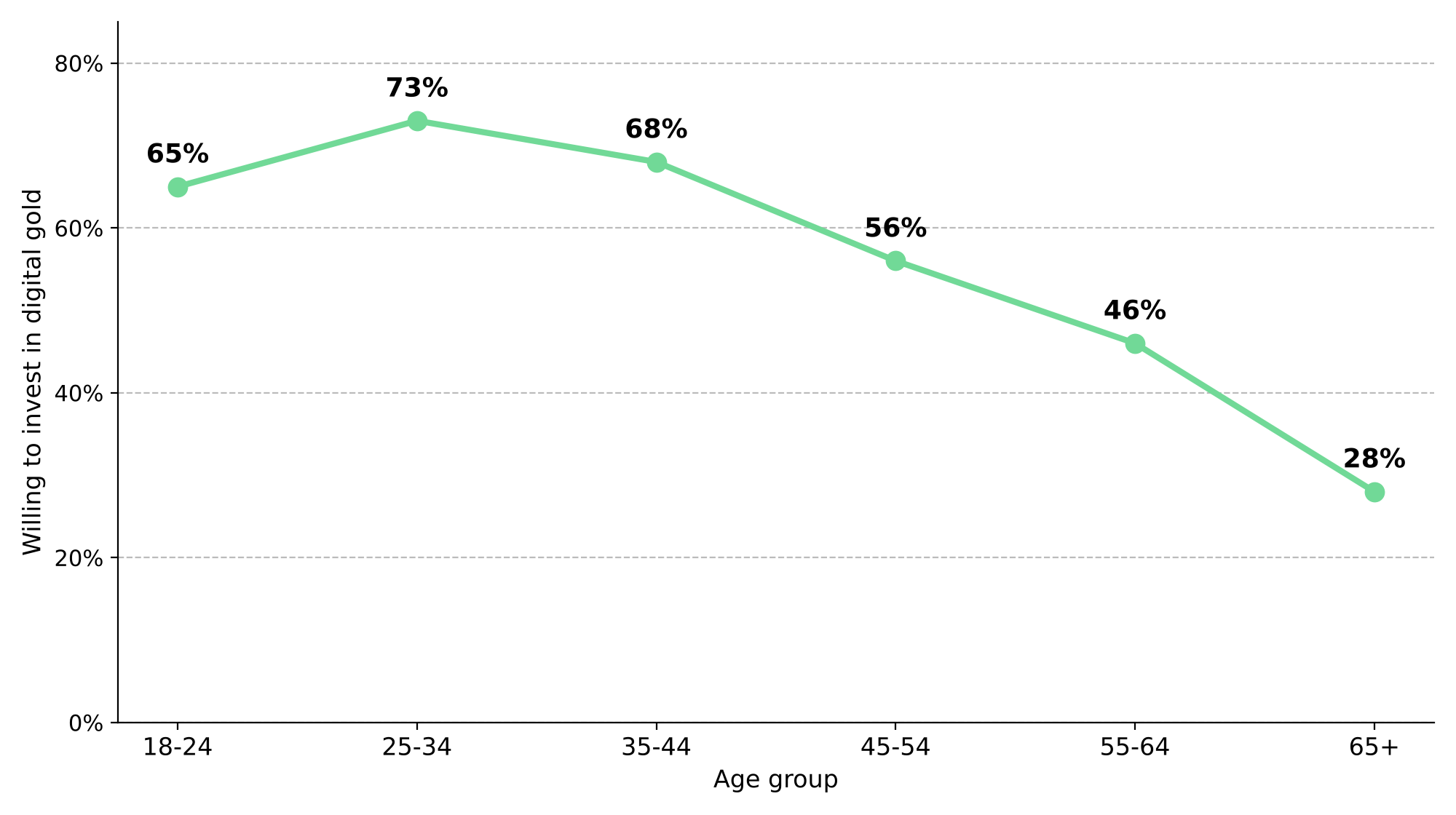
The WGC/BCG survey of 12,365 respondents found willingness to buy digital gold highest among 25-34-year-olds, at 73%. That interest identifies a potential source of future buying, provided products offer the access, costs and safeguards prospective buyers require.
Lending Income Could Reduce Gold’s Holding Cost
Higher Treasury yields increase the income forgone by holding gold that pays no interest. Lending can offset part of that cost by generating income from existing holdings, although the benefit depends on fees and the risks involved.
Paxos Labs’ PAXGy generates income through lending to institutional borrowers using reserves backed by Paxos Gold (PAXG). The structure links returns to borrowing demand and repayment, adding credit exposure alongside exposure to gold prices.
Borrowing against gold serves a different purpose. Demand to post Tether Gold (XAUT) as collateral repeatedly reached Aave’s supply cap in early 2026, demonstrating interest in using gold holdings to obtain loans. That activity does not establish that gold holders earned lending income.
Tokenization therefore creates additional uses for gold without automatically making it more competitive with Treasuries. A meaningful comparison requires net returns, redemption terms and potential losses to be assessed alongside the income available from bonds.
Trust & Net Returns Will Determine Adoption
The WGC/BCG base case projects a $160 billion-$170 billion digital gold market by 2031, assuming progress on trust, access, costs and product usefulness, with gold prices unchanged. The scenario describes conditional market growth rather than a forecast for bullion prices.
Clear custody arrangements and enforceable redemption rights help buyers assess what they own and how they can recover it. For lending products, borrower repayment and access to liquidity also determine whether advertised income becomes a realized return.
Borrower defaults, custody failures, fraud or software exploits can reduce or eliminate the value of a position. These exposures mean a higher advertised yield does not, by itself, establish a better return after allowing for risk.
The report does not demonstrate that gold lending consistently offsets Treasury yields after fees. The stronger adoption case rests on products that combine useful access with transparent costs and risks that buyers can evaluate.
Broader Ownership Could Strengthen Gold’s Recovery Case
Central bank buying provides a foundation for gold’s contrarian recovery case, while digital ownership could broaden the sources of demand. Lending income may strengthen the appeal of selected holdings when net returns justify the additional exposure. The strongest continuation of yesterday’s thesis is that gold could attract fresh capital through wider access and useful products, giving a recovery more than one source of support without requiring an immediate decline in interest rates.
Analyst's Notes





Subscribe to Our Channel








Stay Informed