Nasdaq’s 4.5% Selloff Strengthens Gold’s Defensive Appeal



Gold's relative stability during equity losses highlights diversification benefits, while production growth and cost control support gold miners' cash flow.
- Nasdaq fell 4.48% in the week ending October 16, 2026, while gold gained 0.07%, highlighting its potential to diversify portfolios during equity-market selloffs.
- US annual inflation rose to 3.7% in September 2026, yet the 10-year Treasury yield fell 17 basis points during the week ending October 16 as equity losses increased demand for government bonds.
- Gold gained 21% from December 2007 to February 2009 during the global financial crisis, illustrating its potential to offset stock-market losses in diversified portfolios.
- Producers generate revenue from ounces sold, while higher sales volumes and lower costs per ounce can strengthen operating margins and cash flow.
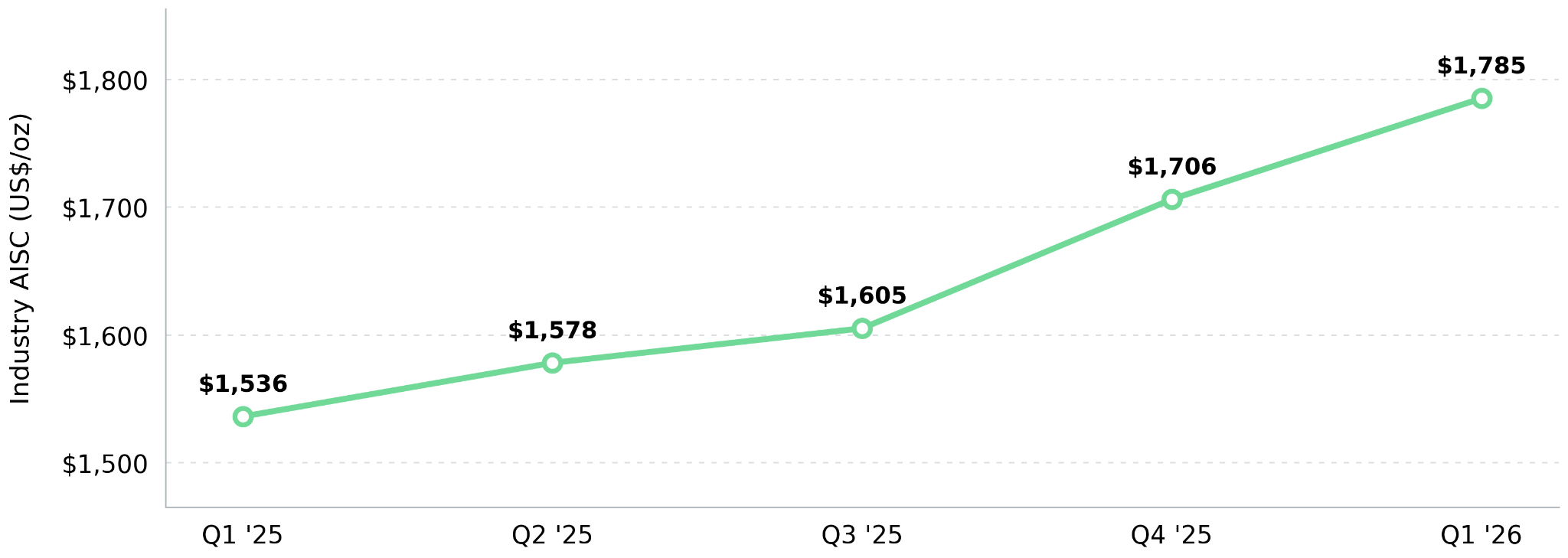
- World Gold Council (WGC) recorded a 16% annual increase in all-in sustaining costs (AISC) to US$1,785 per ounce in the first quarter of 2026, highlighting the importance of cost control in protecting gold-mining margins.
Nasdaq Selloff Reinforces Gold’s Diversification Role
WGC recorded a 4.48% decline in the Nasdaq Composite during the week ending October 16, while the London Bullion Market Association (LBMA) Gold Price PM benchmark gained 0.07% to US$4,189 per ounce. The 10-year US Treasury yield also fell approximately 17 basis points, indicating stronger demand for government bonds despite accelerating inflation. Gold's relative stability highlights its potential to cushion equity-market losses in diversified portfolios, despite remaining 4.1% lower year to date through October 16.
Gold's correlation with US equities becomes more negative during severe stock-market declines, meaning the metal has been less likely to fall alongside equities during these periods. Gold also recorded positive returns during major equity-market pullbacks in 2022 and 2025, while gaining 21% between December 2007 and February 2009 during the global financial crisis. These historical patterns demonstrate how gold can provide a separate source of portfolio returns during equity-market stress, reducing dependence on stock-market performance.
Higher Inflation Tests Gold’s Appeal Against Treasuries
The US Bureau of Labor Statistics (BLS) reported that Consumer Price Index (CPI) inflation rose to 3.7% in September 2026 from 3.4% in August, with a 0.6% monthly increase. Its October 15 Producer Price Index (PPI) release showed a 1.3% monthly increase, the largest since March 2022, bringing annual producer inflation to 6.3%. Higher inflation can encourage the Fed to maintain elevated interest rates, increasing the appeal of interest-bearing assets relative to gold, which pays no interest.
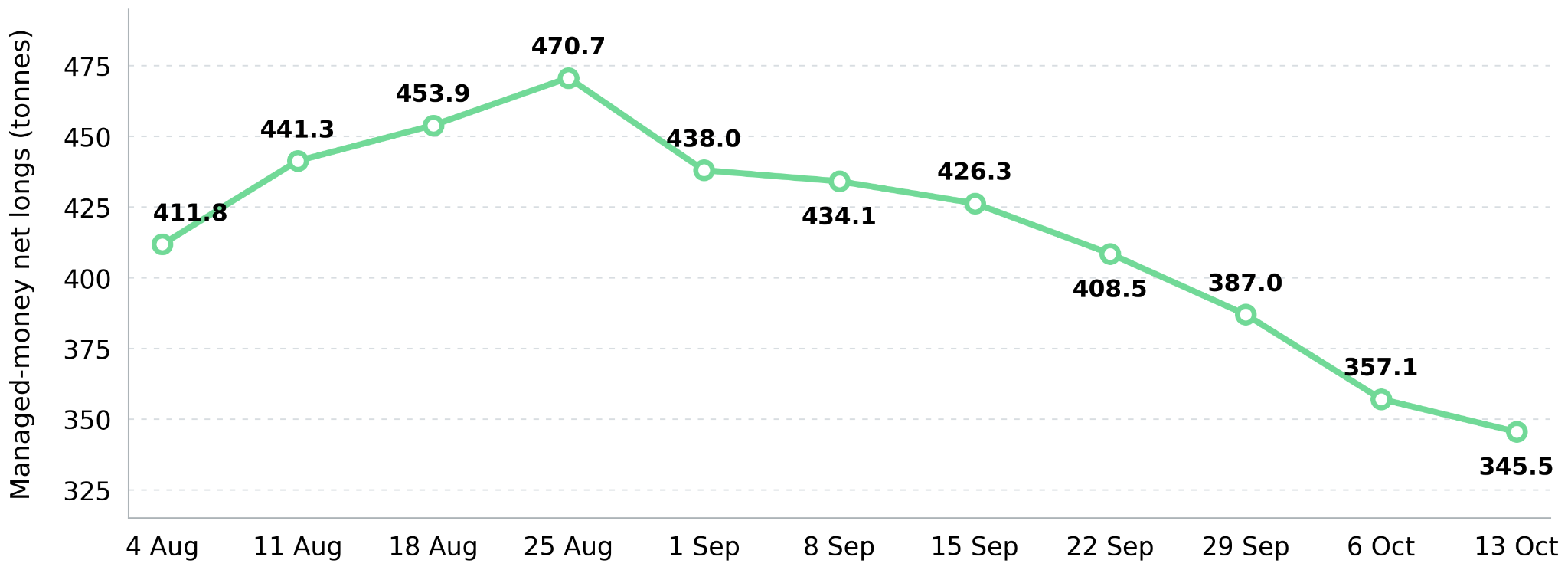
Stronger demand for US Treasury bonds could compete with gold for defensive capital, while falling yields reduce the opportunity cost of holding bullion. Inflows into physically backed exchange-traded funds (ETFs) accelerated, particularly in North America, even as Commodity Exchange (COMEX) managed-money net long positions declined from 357.1 metric tons on October 6 to 345.5 metric tons on October 13. These movements indicate stronger demand through gold-backed funds alongside reduced bullish positioning in gold futures, highlighting the different ways market participants responded to equity-market uncertainty.
Gold Price Stability Supports Existing Mine Revenue
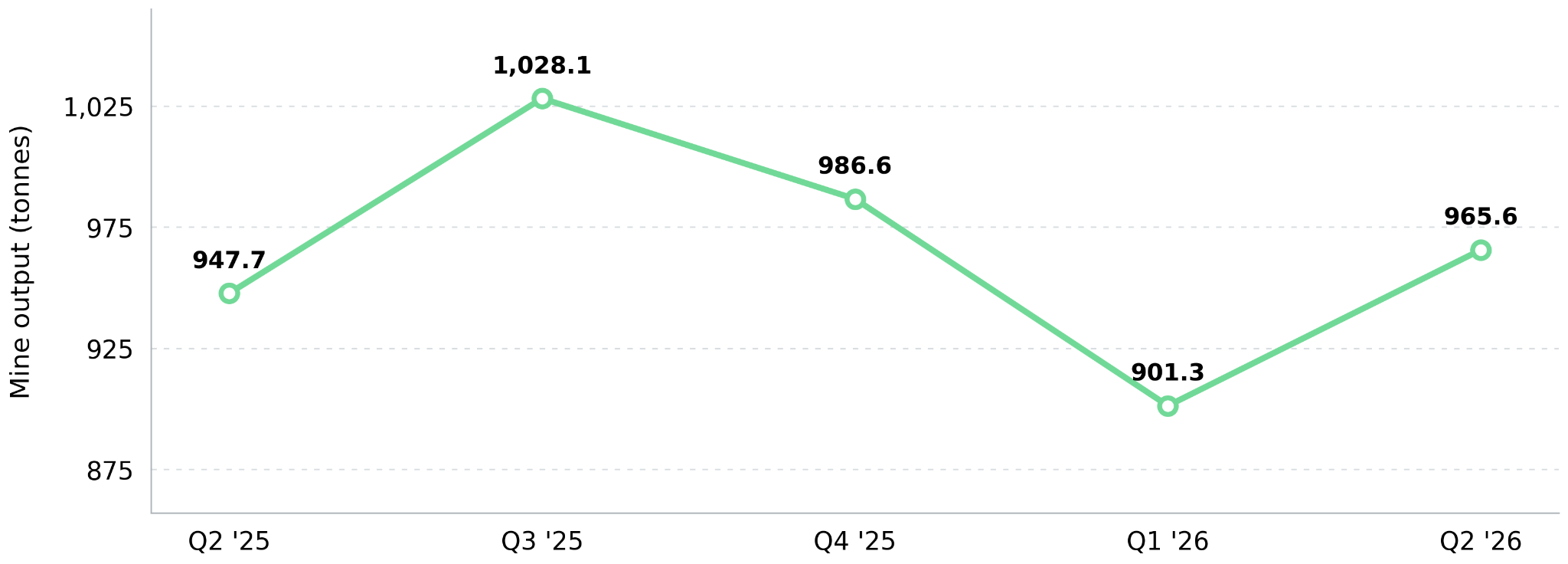
Gold's relative stability during the Nasdaq selloff highlights the value of existing production, which generates revenue through physical gold sales. WGC reported global mine output of 965.6 metric tons in the second quarter of 2026, up 2% year over year, while first-half production rose 3% to 1,867 metric tons. Against this modest supply growth, producers increasing their own output can expand gold sales without relying solely on higher gold prices.
Higher Gold Sales Support Flexible Mine Expansion
Mineros S.A. produced 62,565 ounces of gold in the third quarter of 2026, up 14% year over year, while gold sales rose 11.7% to 61,281 ounces. Stronger production in Nicaragua and Colombia supported a second increase in its 2026 gold production guidance to 235,000-245,000 ounces, strengthening its potential to generate revenue from higher gold sales volumes.
Higher gold sales can also support production growth when they generate sufficient cash flow for reinvestment. During equity-market uncertainty, producers that use internally generated cash to expand processing capacity can increase future output while reducing their reliance on external financing.
TRX Gold produced 29,650 ounces of gold in fiscal 2026, up 57% year over year, including a record 8,173 ounces in its fourth quarter. The company is expanding processing capacity at its Buckreef mine in Tanzania, with plans to finance the expansion primarily through internally generated cash flow. Higher production and increased processing capacity could strengthen future gold sales and support continued growth with less dependence on external financing.
Stephen Mullowney, Director and Chief Executive Officer of TRX Gold, explains how gold prices influence mining investment decisions:
“Given the change in gold price, it makes more sense to do an open pit longer and then go underground thereafter. It gets you the same profitability through your open pit as you would get underground and it also defers the underground CapEx.”
New Gold Production Establishes Revenue Streams
Newly operating gold mines can establish revenue streams as production begins, with initial sales demonstrating the ability to deliver physical metal to market. These sales can also provide cash for further processing improvements as operations advance toward sustained commercial production.
Early Gold Sales Support Production Ramp-Ups
New Found Gold achieved commercial production at its Hammerdown mine in Newfoundland on August 19, 2026. During the third quarter, it produced 4,863 ounces of gold and sold 6,035 ounces at an average realized price of US$4,310 per ounce. The company is advancing processing upgrades aimed at lowering costs and improving gold recovery, which could support higher production and stronger cash generation as operations expand.
Keith Boyle, Director and Chief Executive Officer of New Found Gold, explains how initial gold production supports future output:
“It's a 20,000 to 25,000 oz a year producer at a $2,500 all-in sustaining cost. This first quarter of commercial production was just under 5,000 ounces, at the bottom of that range as we ramp up production.”
Gold sales can begin before a mine achieves commercial production, establishing an early revenue stream during the ramp-up period. As output becomes more consistent, these sales can help fund further operational improvements and reduce reliance on external financing.
Cabral Gold completed its first sale of more than 2,400 ounces of gold from its Cuiú Cuiú Phase 1 operation in Brazil in September 2026, at an average net realized price exceeding US$4,200 per ounce. With ore preparation and stacking now operating 24 hours per day, the company is targeting commercial production in the fourth quarter of 2026. The initial sale confirms its ability to deliver gold to market, establishing a revenue stream as production increases.
Higher AISC Makes Cost Control Key to Mine Margins
Average gold-mining AISC increased 16% year over year to US$1,785 per ounce in the first quarter of 2026, while record gold prices helped support industry margins and cash generation. This reinforces the value of increasing mine output while controlling costs per ounce, allowing producers to retain more cash from gold sales and reinvest in future production growth.
Mine Output Gains Support Cash Flow Amid Rising Costs
West Red Lake Gold Mines increased second-quarter 2026 gold production at its Madsen Mine in Ontario by 51% to 8,576 ounces. Gold sales rose 34%, lifting revenue 17% to C$49.0 million, while all-in sustaining costs (AISC) declined 30% to US$3,284 per ounce sold. The mine generated C$9.7 million in positive free cash flow, demonstrating stronger financial performance alongside higher production.
Shane Williams, President and Chief Executive Officer of West Red Lake Gold Mines, explains how higher gold prices expand mineable material:
“The gold price is also a factor. As gold prices increase, the cut-off grade can decrease, making more material economically viable to mine and allowing us to switch to long-hole mining.”
Improving mine efficiency is only one measure of financial performance, as strong earnings and cash reserves also support continued production growth. Producers with sufficient liquidity can expand processing capacity and increase output while limiting the need for additional financing.
Serabi Gold is targeting more than 53,000 ounces of gold production in 2026 from its Palito and Coringa operations in Brazil, supported by Coringa's production ramp-up and planned processing expansion. The company reported US$44.4 million in first-half earnings before interest, taxes, depreciation, and amortization (EBITDA), alongside US$65.7 million in cash and no debt as of June 30, providing financial flexibility to fund further production growth.
US$800M Cash Flow Forecast Highlights Mine Growth Potential
Beyond supporting existing operations, cash flow from producing mines can help finance higher production and advance new gold projects. This allows producers to pursue growth with less reliance on external financing, provided their operations generate sufficient cash after operating and sustaining expenses.
Integra Resources produced 16,379 ounces of gold at its Florida Canyon mine in Nevada during the second quarter of 2026, up approximately 30% from the previous quarter. Its updated feasibility study projects average annual production of 82,000 ounces and approximately US$800 million in after-tax free cash flow over an eight-year mine life. The projected cash generation could support further improvements at Florida Canyon and help advance its DeLamar gold project.
Reliable Gold Production Supports Self-Funded Growth
Gold's relative stability during the October Nasdaq selloff reinforces its diversification role, while inflation and competition from Treasury bonds continue to influence bullion demand. For producers, the financial benefit depends on the prices received for gold sales, production volumes, and the costs required to sustain operations. These factors determine how effectively gold's market performance translates into mining-company revenue and cash flow.
Higher output at established mines and initial sales from newly operating projects provide opportunities to expand revenue. However, the 16% annual increase in industry AISC to US$1,785 per ounce in the first quarter of 2026 highlights the importance of controlling costs as production grows. Producers that maintain reliable output, protect operating margins, and generate cash after capital spending have greater capacity to finance mine expansions and advance additional deposits without relying heavily on external funding.
The Investment Thesis for Gold
- Gold's historically more negative correlation with US equities during severe selloffs can help offset stock-market losses in diversified portfolios.
- Operating gold mines generate revenue from ounces sold, allowing financial performance to be assessed through actual production and sales rather than future discoveries alone.
- Higher mine output and improved metallurgical recovery can increase saleable gold ounces, supporting revenue growth without relying solely on higher gold prices.
- Rising all-in sustaining costs increase pressure on mine margins at a given gold price, making reliable throughput, grade control, and disciplined sustaining capital spending important to profitability.
- Positive free cash flow and strong balance sheets give producers greater capacity to expand existing mines and advance additional deposits with less reliance on debt or share issuance.
- Comparing actual mine cash flow with feasibility-study forecasts helps assess how much gold-mining valuations depend on existing operations versus future production, capital spending, and gold-price assumptions.
Gold's defensive appeal strengthens its role in diversified portfolios while creating opportunities for companies producing the metal. As inflation, interest rates, and demand for defensive assets continue to influence bullion prices, established producers and newly operating mines can benefit from reliable sales, improving production efficiency, and disciplined capital allocation. The broader investment opportunity lies in companies capable of converting gold production into sustained cash generation, providing a financial foundation for expansion and long-term growth.
TL;DR
During the week ending October 16, 2026, the Nasdaq fell 4.48% while gold gained 0.07%, reinforcing its role as a portfolio diversifier. US inflation reached 3.7% in September, while declining Treasury yields reflected demand for defensive assets. For gold miners, higher production, improved recovery, and disciplined cost management can strengthen revenue and cash flow. Established producers are expanding operations through internally generated funds, while newly operating mines are establishing revenue streams through initial gold sales. With industry all-in sustaining costs rising 16% annually, reliable output, operating efficiency, and financial strength remain central to sustaining margins and funding future growth.
FAQs (AI-Generated)
Analyst's Notes





Subscribe to Our Channel












Stay Informed