Two Discoveries, One Balance Sheet: The New Capital Allocation Test for Uranium Juniors


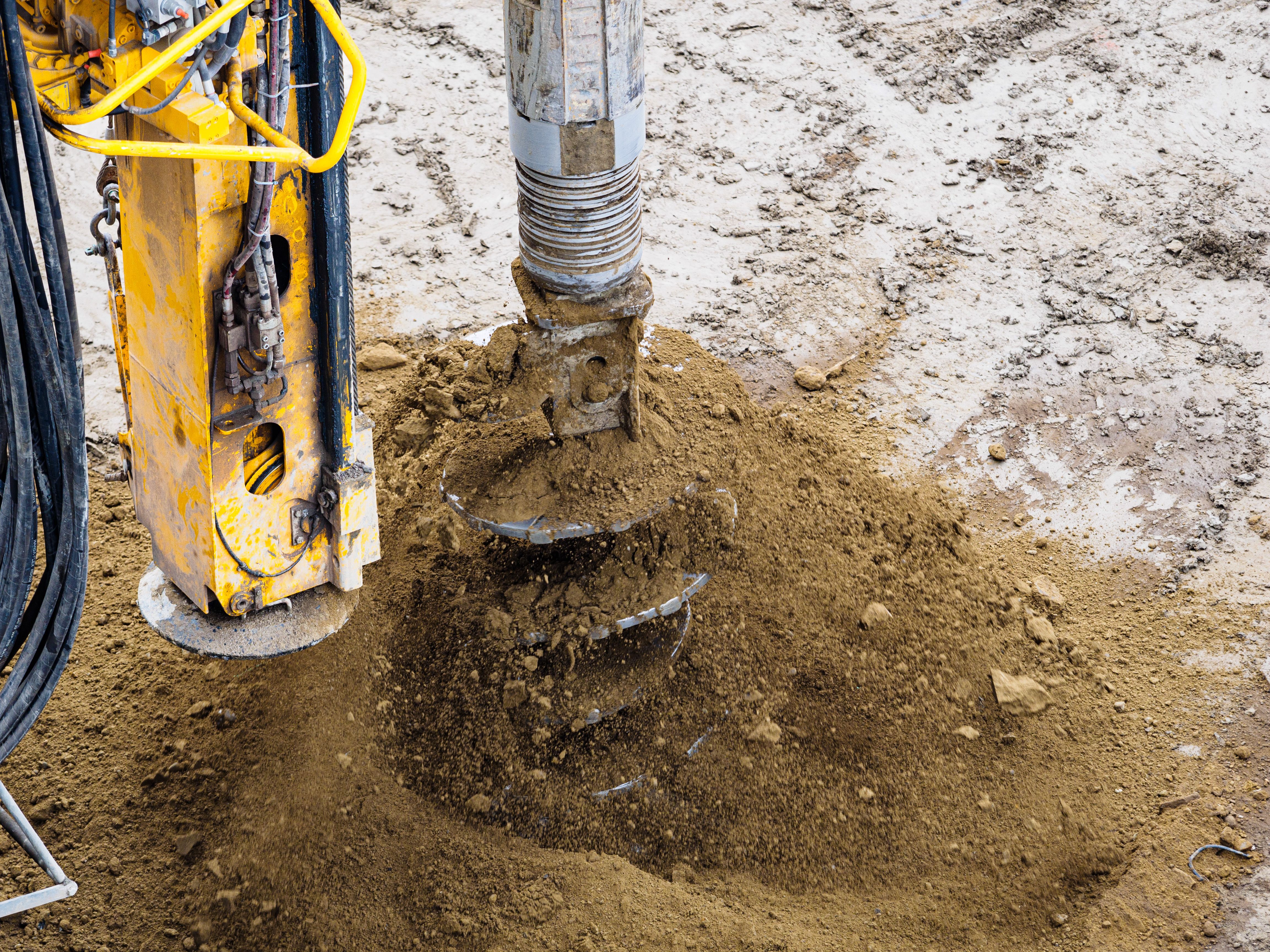
ATHA Energy's dual discoveries at Angilak shift the investment focus from drill results to capital allocation, with a key trade-off study set to shape future value.
- A new capital allocation problem is emerging for well-financed junior explorers: choosing between multiple simultaneous district-scale discoveries rather than advancing a single flagship asset.
- ATHA Energy Corp. is testing this dynamic at its Angilak Uranium Project in Nunavut, where two separate corridors, Lac 50 and the Mineralised RIB Corridor (MRC), are both producing mineralised intercepts from the same 2026 drill program.
- A C$63 million financing, closed in the First Quarter of 2026 and funding a minimum 24-month runway, has allowed the company to drill widely across its land package before committing to a single target, a departure from the traditional stage-gated junior model.
- Lac 50 has an established conceptual exploration target and has approximately 24% of its 21-kilometre corridor drill-tested; the MRC is earlier-stage but has produced thicker individual intercepts and carries 2 of the company's 3 drill rigs.
- A formal internal trade-off study, due once the 2026 program concludes, will determine which corridor receives priority for the next, more expensive round of delineation capital, making that decision, not the next assay result, the key near-term catalyst for investors to watch.
The Problem Most Juniors Never Have
The junior exploration model has a built-in simplicity that investors have come to rely on. One flagship asset, one resource narrative, one clear line from discovery through to a feasibility study (FS). Capital is scarce, so the decision of where it goes is rarely in question.
That simplicity is starting to break down for a subset of better-funded explorers. When a company raises enough capital to test a district before it has to choose a single target within it, and that district turns out to host more than one mineralised system, it inherits a decision traditional juniors never had to make: which discovery gets the next dollar, and on what basis.
At Angilak, ATHA Energy Corp. (TSXV: SASK | FRA: X5U | OTCQX: SASKF) is now working through exactly that problem. Both corridors under drill test are producing mineralised intercepts. Neither has a defined resource. And by the company's own account, a formal trade-off study at year-end will determine which one gets priority for the delineation dollars that follow. For investors, that trade-off study, not the next assay result, is the event to watch.
Why This Is a New Kind of Decision
Historically, a junior explorer's capital allocation problem was sequencing within a single deposit: where to step out, how tight to space the drill grid, when to commission a resource estimate. The question was never which deposit.
That changes when financing outpaces the traditional stage-gating of junior capital. ATHA's C$63 million strategic financing, closed well before a maiden resource exists at Angilak, is funding what management describes as a minimum 24-month runway.
Chief Executive Officer (CEO) and Director of ATHA Energy, Troy Boisjoli, said the raise came from an investor base that typically does not back companies at this stage, citing Queen's Road Capital (QRC) and its Chairman and CEO, Warren Gilman, through whom a large percentage of the financing was raised:
“We don't fit the typical profile that QRC invests in. We aren't as advanced; we aren't in as advanced a stage. Typically, he's closer to FS than to maiden resource, and certainly not pre-resource in almost all instances. But Warren saw the same things we saw, that this is the opportunity to build out scale in a basin that is completely under-explored.”
That kind of capital lets a company drill wide before it drills tight, testing the outer edges of a mineralised structure before committing to the close-spaced grid needed to define a resource. The trade-off is that wide-net drilling across a large land package tends to yield more than one result worth following, leaving a company with two live discoveries and the challenge of deciding how to split scarce delineation capital between them.
Lac 50 vs. MRC: The Trade-Off in Practice
The two corridors at Angilak are not identical opportunities, and the differences are exactly what a trade-off study weighs. Lac 50 has the head start on definition. The corridor extends roughly 21 kilometres along strike, with approximately 24% drill-tested to date, and the company has already established a conceptual exploration target of 60.8 million to 98.2 million pounds of uranium oxide at an average grade of 0.37% to 0.48%. That figure remains conceptual, and the company is explicit that there has been insufficient exploration to define a mineral resource, and that there is no certainty that further drilling will result in one. A representative 2026 result at Lac 50 came from a hole drilled 4 kilometres along strike from the known deposit, which intersected 11.5 metres of composite mineralisation, including 1.6 metres of near-continuous high-grade material.

The MRC tells a different story. Discovered in 2025, it is an earlier stage and has not yet produced a published exploration target comparable to Lac 50's. What it has produced is thickness: the widest intersection reported so far in the corridor returned 37 metres of composite mineralisation, and the company has allocated 2 of its 3 drill rigs there against 1 at Lac 50, a split that reflects genuine uncertainty about which corridor offers the faster or larger path to a resource rather than a settled internal priority.
Neither asset's advantage settles the question of which is the better next dollar. Lac 50 offers a head start on definition and a partially de-risked corridor; the MRC offers thicker intercepts and a heavier 2026 drilling commitment but less certainty about ultimate scale. That is precisely why the company is running a formal internal study rather than defaulting to whichever asset generates the better headline.
What the Trade-Off Study Actually Decides
Delineation drilling, the tighter grid spacing required to convert an exploration target into a resource estimate, costs materially more per metre than the widely spaced step-out holes used in 2026. Spending that budget on the wrong corridor, or splitting it evenly between the two, would slow progress toward a resource in either corridor. Boisjoli was direct about the stakes, describing the internal process that will weigh Lac 50 against the MRC once 2026 results are complete:
“What is the best opportunity for that next round of investment that allows us to meet our objectives as quickly as possible.”
For investors modelling this stock, or others like it, the trade-off study is worth pressure-testing rather than taking on faith. The first question is sequencing: whether the company plans to delineate one corridor fully before starting the other, or to advance both in parallel at a slower pace. That choice shapes how quickly either asset can reach a milestone the market can value, and it carries a direct capital-intensity implication, since Lac 50 and the MRC are not equally expensive paths to a resource. The relative cost of advancing each toward definition should inform which one the company prioritises first.
Timeline is the next test: management has guided to a resource stage in 2027 if results continue to track as they have, and investors should ask what would cause that to slip and by how much. There's also an optionality angle: keeping both corridors partially open may hold value beyond an in-house resource estimate, for example toward a future partner or transaction, even if it slows either one's path to a standalone resource. None of this shows up in an assay table. It shows up only in how management frames the trade-off once results are in.
Reading the Land Package, Not Just the Drill Hole
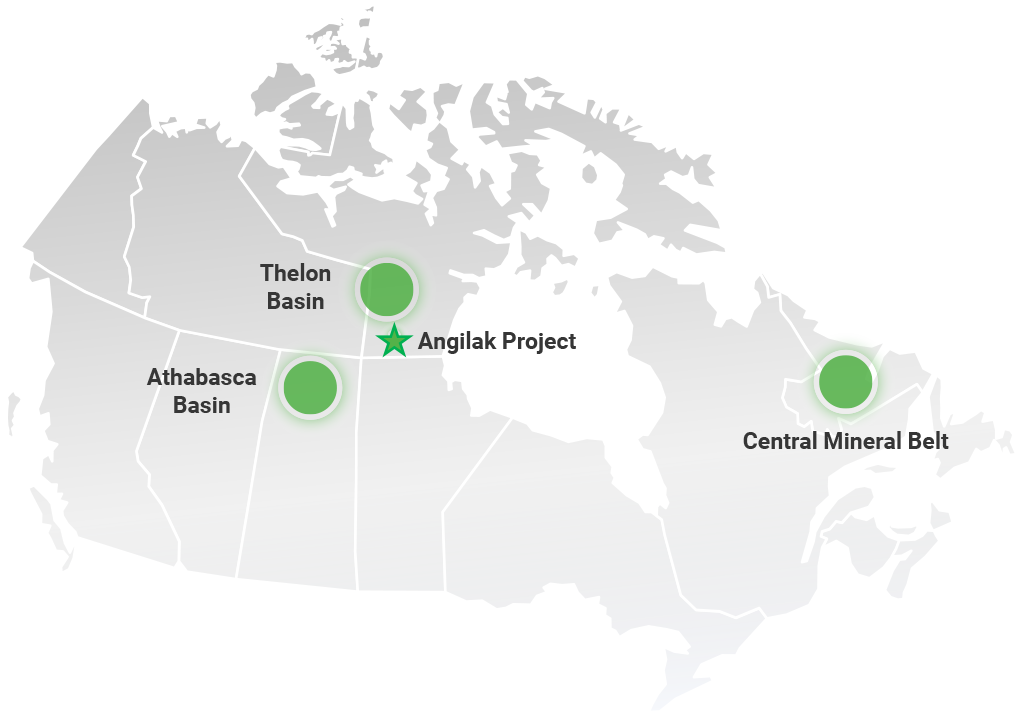
The context for this decision sits in ATHA's broader portfolio structure. Angilak's two corridors are not the company's only assets: ATHA also holds a 10% carried interest in Athabasca Basin exploration lands operated by NexGen Energy and IsoEnergy in Saskatchewan, as well as post-discovery ground in the Central Mineral Belt of Labrador. Saskatchewan ranked 3rd globally for mining investment attractiveness in the Fraser Institute's 2025 survey, and Newfoundland and Labrador ranked 14th, according to the company's July 2026 corporate presentation, underscoring that the Angilak trade-off is playing out against a backdrop of otherwise favourable jurisdictional exposure elsewhere in the portfolio.
That matters for how investors should size the Angilak decision within the overall investment case. However the trade-off between Lac 50 and the MRC resolves, the carried-interest optionality in Saskatchewan remains intact, but the pace of that resolution directly affects the timeline at Angilak, which the company identifies as its flagship project.
The Broader Signal for the Sector
ATHA's situation is a preview of a decision more juniors will face as early-stage financing rounds grow larger relative to a company's stage of development. A single big raise no longer guarantees a single-target story. It increasingly funds wide-net exploration across a land package large enough to produce more than one credible system, handing the company a capital allocation decision that used to belong only to mid-cap and senior explorers with multi-asset portfolios.
For investors, the practical shift is in what to track. Individual intercepts still matter as evidence of continuity and scale. But the more consequential signal is how transparently management explains its choice between competing discoveries once the data is in. A company that can clearly justify its trade-off, on cost, timeline, and optionality, warrants more confidence than one that advances a single asset without disclosing the reasoning behind the decision.
The resolution of that trade-off, and the clarity with which management communicates it, will be a real-time test of how disciplined capital allocation looks as more junior explorers raise enough capital to generate multiple discoveries before committing to a single target.
FAQs (AI-Generated)
Analyst's Notes





Subscribe to Our Channel

.jpg)





Stay Informed