Verdera Energy's +$20 Million Raise to Fund Multi-Project Advancement Strategy for New Mexico High-Grade Uranium Projects


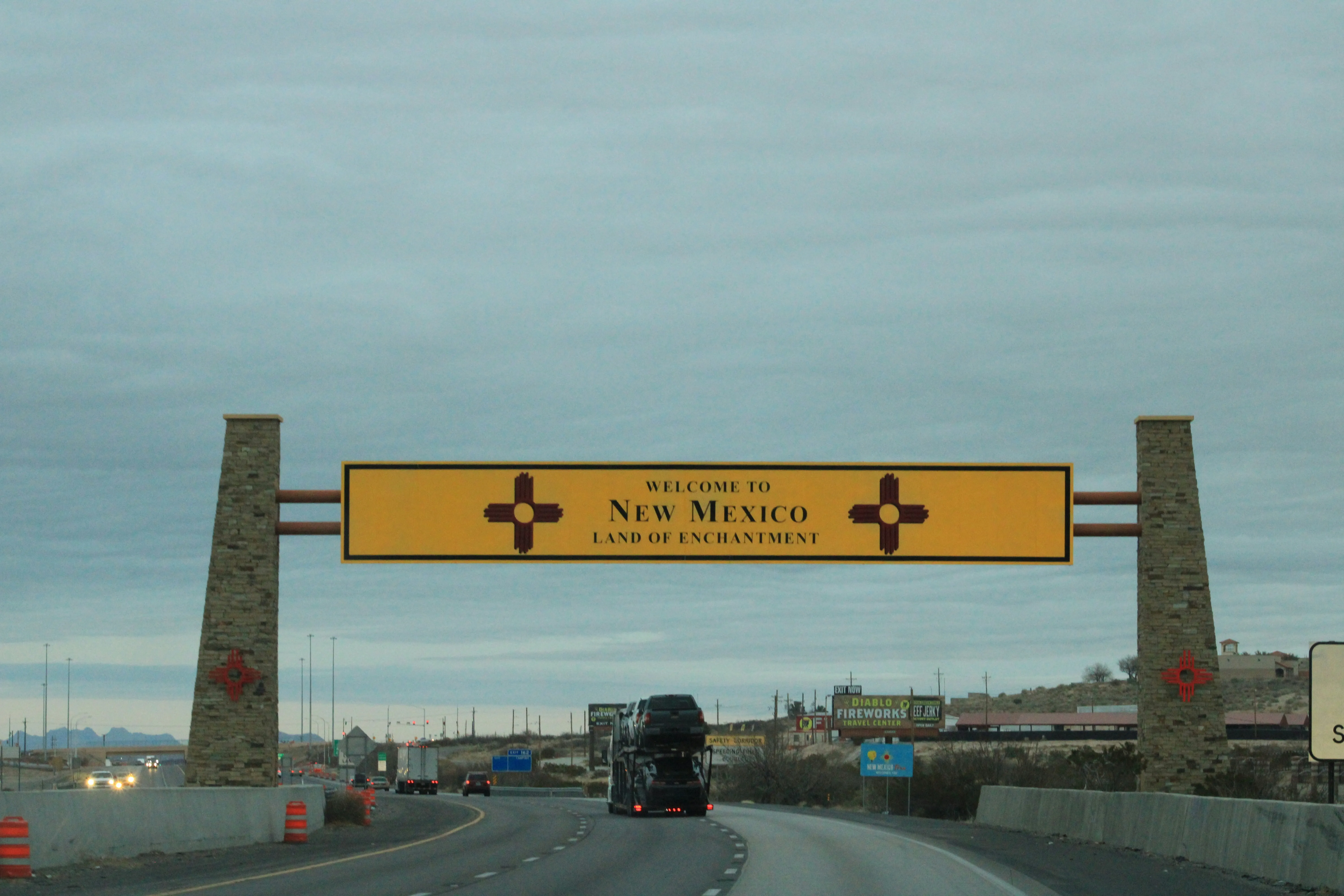
Verdera Energy consolidates New Mexico uranium potential with 88M lbs historical resources, highest-grade US ISR project, 90% of state data, $20M raise, TSXV listing.
- Verdera Energy has spun out 400 square miles of New Mexico mineral rights representing the state's largest uranium land holding, 88 million pounds (Mlbs) of historical uranium resources across four ISR projects, and control of approximately 90% of all uranium exploration data in New Mexico.
- The company is advancing a $20 million qualifying transaction led by Haywood and SCP Resource Finance at $1.00 per subscription receipt, anchored by the Crownpoint-Hosta project's NI 43-101 compliant resource of 28 Mlbs, with TSXV listing under symbol "V" expected imminently.
- West Largo hosts approximately 20 Mlbs of historical resources at 0.3% U₃O₈ grade, making it the highest-grade ISR project in the United States and potentially offering superior project economics through lower operating costs per pound versus industry-standard deposits at 0.05-0.15% grades.
- Verdera maintains a strategic relationship with 14% shareholder enCore Energy, providing access to production-focused technical expertise particularly for satellite central processing plant configurations and ISR methodologies developed through enCore's Texas operations.
- New Mexico accounts for 40% of historical US uranium production and hosts America's only enrichment facility, with four uranium projects now enrolled in the FAST-41 federal permitting programme as domestic supply security priorities intensify following the 2024 ban on Russian uranium imports.
Verdera Energy has emerged as a focused vehicle for developing New Mexico's uranium potential, following its spin-out from production-oriented enCore Energy. The company controls 400 square miles of mineral rights across New Mexico - the largest land holding in the state - alongside 88 Mlbs of known and historical uranium resources distributed across four in-situ recovery projects.
Whilst enCore concentrates on near-term production from its Texas operations, the New Mexico portfolio requires dedicated development resources. CEO Janet Lee Sheriff explained the parent company's logic:
"These assets aren't exploration assets, but similar to what they did with Nuclear Fuels when they spun out their exploration assets in Wyoming, they wanted to spin out these assets into Verdera."
New Mexico's uranium credentials extend beyond historical production volume. The state has accounted for 40% of all uranium produced in the United States, establishing both geological prospectivity and jurisdictional familiarity with uranium development. Furthermore, New Mexico hosts the only enrichment facility in the United States, creating existing nuclear fuel cycle infrastructure that could provide strategic advantages for future production.
Under the separation terms, enCore receives cash consideration and 50 million Verdera shares, with 35 million distributed to enCore shareholders and 15 million retained, giving the parent company approximately 14% of the new entity.
Crownpoint & Hosta Anchors Qualifying Transaction
Verdera's path to public markets centres on its most advanced asset, the Crownpoint-Hosta project, which serves as the qualifying transaction for the reverse takeover with POCML7. This project carries a NI 43-101 compliant resource of approximately 28 Mlbs, providing the technical foundation required for TSXV listing. Haywood and SCP Resource Finance are leading a $20 million financing, with the company expecting to confirm its listing date within the coming week and commence trading under the symbol "V."
The $20 million raise provides substantial working capital relative to typical exploration-stage uranium developers, positioning Verdera to advance multiple projects simultaneously rather than pursuing sequential, capital-constrained development. Sheriff indicated the company's near-term priorities would focus on modernising historical resources and executing drill programmes across its two most advanced projects. The capital allocation strategy balances resource definition, exploration upside, and permitting advancement across a portfolio that benefits from decades of prior industry investment.
Interview with Janet Lee Sheriff, Director & CEO of Verdera Energy
West Largo Delivers Highest-Grade ISR Project in United States
Among Verdera's four major projects, West Largo stands out for both grade and advancement. The asset hosts approximately 20 Mlbs of historical resources at an average grade of 0.3% U₃O₈, which Sheriff characterised as the highest grade ISR project in the United States.This grade substantially exceeds typical ISR deposits, which commonly operate at grades between 0.05% and 0.15%, potentially offering superior project economics through reduced processing volumes and lower operating costs per pound recovered.
The West Largo project benefits from its location entirely on private land, eliminating certain permitting complexities associated with federal or state surface rights. Sheriff outlined first-year plans:
"We want to modernise it. That will be in the first year. So we've got a few million dollars dedicated to that. It's all on private land. It is a solid drill programme conducted by an oil and gas company. So we have the ability to expand that as well."
The historical drilling was executed by established oil and gas operators during the 1970s uranium boom which brought rigorous technical standards to their exploration programmes, though the resources they defined were calculated using cutoff grades appropriate to that era's uranium prices and recovery technologies. Modernising these resources to current NI 43-101 standards whilst applying contemporary ISR recovery assumptions could potentially expand reported tonnages whilst providing investors with resources calculated to recognised international standards.
Ambrosia Lake: The Dual-Track Development Opportunity
The Ambrosia Lake project represents Verdera's most complex asset, offering potential for both ISR development and leveraging historical conventional mining infrastructure. The property's southern 30% was historically held by Verdera's predecessor entities, whilst BHP operated the northern 70% through conventional underground mining. This legacy creates what Sheriff described as a dual-track permitting process to look at future work but also a drill programme for ISR there.
enCore Energy's retained involvement becomes particularly relevant for Ambrosia Lake development. Sheriff noted that enCore brings a strong technical team especially on our Ambrosia Lake project, with specific expertise in remote satellite CPP (Central Processing Plant)—referring to central processing plant configurations that allow multiple wellfields to feed a single processing facility. This technical partnership provides Verdera access to operational expertise without maintaining duplicate infrastructure or personnel.
The dual-track approach allows Verdera to pursue ISR development whilst preserving optionality around conventional mining methods, should project economics, permitting pathways, or uranium prices favour alternative extraction methods. Given the substantial historical investment in Ambrosia Lake infrastructure and the extensive drilling database, this flexibility could prove valuable as the project advances through feasibility studies.
Data Holdings Create Strategic Competitive Advantage
Beyond its project portfolio, Verdera controls an exceptional data package. Through its acquisition and relationships, the company holds the majority of URI (Uranium Resources Inc.) data and the Kerr McGee database, together representing approximately 90% of all uranium exploration data in New Mexico.
This data consolidation creates multiple strategic advantages: it substantially de-risks exploration across Verdera's existing landholdings by providing geological, geochemical, and drilling information that can guide targeting decisions and reduce unsuccessful drilling; allows the company to identify additional acquisition or joint venture opportunities across New Mexico's uranium districts using proprietary information unavailable to competitors,and it creates potential for database monetisation through joint ventures, option agreements, or data licensing to other operators seeking New Mexico exposure.
Permitting Landscape Shows Federal-State Coordination
New Mexico presents a complex regulatory environment as a non-agreement state, meaning uranium permitting involves both state and federal oversight rather than delegated state authority as exists in Wyoming, Texas, Utah, and Colorado. This dual jurisdiction historically created longer permitting timelines, though recent federal initiatives and improving state-federal coordination suggest evolving dynamics.
Four New Mexico uranium projects now participate in the FAST-41 (Fixing America's Surface Transportation Act) programme, designed to streamline federal permitting for infrastructure projects of national significance. Sheriff explained:
"If you apply and you're qualified, you get in. It's there to help streamline the federal permitting process, which is very important and necessary."
Beyond federal mechanisms, Sheriff has worked to build state-level support through the Clean Energy Association of New Mexico, formed in partnership with General Atomics' Grants Energy subsidiary. This industry group focuses on educating communities and regulators about ISR technology, addressing concerns rooted in New Mexico's historical experience with conventional uranium mining. Sheriff acknowledged these legacy issues directly:
"New Mexico was a large producer, 40% of all uranium produced in the US. More resources than any other state and was all conventional mining and it left some legacy issues, and they're valid."
The association's efforts include hosting a spring conference on nuclear energy in New Mexico and conducting ongoing community engagement. One of Verdera's sections hosted a successful ISR pilot project that both validated technical feasibility and demonstrated successful restoration to original use category, providing tangible evidence that ISR methodologies differ substantially from conventional mining approaches.
The Investment Thesis for Verdera Energy
- Dominant New Mexico land position captures jurisdiction with 40% of historical US uranium production: Verdera's 400 square miles of mineral rights and control of 90% of state exploration data creates barriers to competition whilst providing exploration upside across multiple districts within America's seventh-largest uranium producing region globally.
- West Largo's 0.3% grade offers superior project economics versus typical ISR deposits: As the highest-grade ISR project in the United States, West Largo's approximately 20 Mlbs of historical resources could deliver meaningfully lower operating costs per pound versus industry-standard deposits operating at 0.05-0.15% grades, potentially supporting robust margins even during weaker uranium price environments.
- $20 million qualifying transaction provides extended runway versus exploration-stage peers: The Haywood and SCP financing at $1.00 per subscription receipt delivers working capital sufficient to simultaneously advance multiple projects, modernise historical resources to NI 43-101 standards, and execute drill programmes without near-term dilution pressure.
- Strategic relationship with 14% shareholder Encore Energy provides technical expertise without overhead: Access to production-focused parent company's operational knowledge, particularly for satellite CPP configurations and ISR methodologies, allows Verdera to leverage Encore's Texas production experience whilst maintaining focused New Mexico development mandate.
- Four projects enrolled in FAST-41 federal permitting programme signal improving regulatory pathway: Federal government's designation of domestic uranium as critical for energy independence, combined with streamlined permitting mechanisms and improving state-federal coordination, suggests New Mexico's historical permitting challenges may be moderating as domestic supply chain priorities intensify.
- ISR methodology addresses environmental concerns whilst accessing extensive historical conventional mining database: Verdera's exclusive focus on in-situ recovery technology differentiates operations from New Mexico's legacy conventional mining, whilst decades of historical drilling by major oil and gas companies provides geological data that would cost hundreds of millions to replicate today.
- Multiple near-term catalysts from listing through resource updates and drill results: TSXV listing under symbol "V" expected within weeks, followed by West Largo resource modernisation in first year, Ambrosia Lake drilling programme, and potential advancement of Nose Rock and additional projects from comprehensive database.
Domestic Uranium Supply Security Drives New Mexico Re-Evaluation
The United States nuclear fuel cycle faces a strategic vulnerability: despite operating the world's largest commercial reactor fleet with 94 operating units generating approximately 20% of domestic electricity, the country produces less than 5% of the uranium required to fuel these reactors. This dependence on imports—historically sourced from Kazakhstan, Russia, Canada, and Australia—has drawn increasing policy attention as geopolitical tensions have highlighted supply chain fragility for strategic materials.
Federal recognition of this exposure has manifested through multiple mechanisms. The FAST-41 permitting programme explicitly includes uranium projects, acknowledging their infrastructure significance. The Department of Energy has committed funding to establish domestic enrichment capacity and support uranium production. Most directly, the Prohibiting Russian Uranium Imports Act, signed into law in 2024, bans Russian uranium imports with limited waivers, eliminating a source that previously supplied approximately 20% of US reactor requirements.
Beyond avoiding import exposure, domestically produced uranium commands premium pricing from utilities seeking supply security and compliance with emerging domestic content requirements. New Mexico's re-emergence as a uranium district benefits directly from these dynamics.
"With the push for domestic energy and domestic independence in the nuclear fuel cycle, New Mexico is vital to the US in order to meet those goals." - Verdera Energy CEO Janet Lee Sheriff
The convergence of supply security imperatives, favourable policy mechanisms, technological appropriateness, and infrastructure presence suggests New Mexico may experience sustained uranium development activity regardless of spot price volatility. For companies like Verdera controlling dominant land positions with advanced assets, this creates development pathways driven by strategic supply considerations rather than purely speculative uranium price movements.
TL;DR
Verdera Energy consolidates New Mexico uranium development opportunity through spin-out from enCore Energy, controlling 400 square miles of mineral rights, 88 million pounds of historical resources, and 90% of state exploration data. The $20 million qualifying transaction finances advancement of four ISR projects including West Largo (highest-grade ISR project in United States at 0.3% U₃O₈) and Crownpoint-Hosta (28 million pound NI 43-101 resource). Strategic partnership with 14% shareholder enCore provides operational expertise whilst New Mexico's 40% share of historical US uranium production, existing enrichment infrastructure, and FAST-41 programme participation position the jurisdiction for re-emergence amid domestic supply security imperatives following 2024 Russian uranium import ban. TSXV listing under symbol "V" expected within weeks, with first-year priorities focused on resource modernisation and drilling programmes.
Frequently Asked Questions (FAQs) AI-Generated
Verdera exclusively employs in-situ recovery (ISR) technology rather than conventional underground or open-pit mining methods used historically in New Mexico. ISR circulates leaching solutions through ore bodies in place, eliminating surface disturbance, tailings generation, and many environmental impacts associated with conventional mining. One of Verdera's sections hosted a successful ISR pilot project that validated technical feasibility and demonstrated restoration to original use category, providing evidence that ISR methodologies differ substantially from legacy mining approaches that created community concerns.
Through its acquisition and relationships, Verdera controls the majority of URI (Uranium Resources Inc.) data and the Kerr McGee database, together representing approximately 90% of all uranium exploration data in New Mexico. This consolidation de-risks exploration across existing landholdings by providing geological, geochemical, and drilling information to guide targeting decisions, allows identification of additional acquisition or joint venture opportunities using proprietary information unavailable to competitors, and creates potential for database monetisation through joint ventures, option agreements, or data licensing to other operators seeking New Mexico exposure.
As a non-agreement state, uranium permitting in New Mexico involves both state and federal oversight rather than delegated state authority as exists in Wyoming, Texas, Utah, and Colorado. This dual jurisdiction historically created longer permitting timelines. However, four New Mexico uranium projects now participate in the FAST-41 programme designed to streamline federal permitting for infrastructure projects of national significance. Combined with improving state-federal coordination and community engagement through the Clean Energy Association of New Mexico, the regulatory pathway shows signs of modernisation as domestic supply chain priorities intensify.
EnCore Energy retains approximately 14% of Verdera through 15 million shares, creating alignment whilst providing access to production-focused technical expertise. EnCore brings operational knowledge particularly relevant for Ambrosia Lake development, including expertise in remote satellite central processing plant (CPP) configurations that allow multiple wellfields to feed a single processing facility. This technical partnership provides Verdera access to operational expertise developed through enCore's Texas ISR production without maintaining duplicate infrastructure or personnel.
The company plans to dedicate several million dollars to modernising West Largo's historical resource to current NI 43-101 standards whilst applying contemporary ISR recovery assumptions, potentially expanding reported tonnages. West Largo will also see drilling to expand the resource base. Ambrosia Lake will pursue a dual-track approach combining permitting processes with an ISR drill programme, leveraging enCore's technical expertise. The Crown Point-Hosta project serves as the qualifying transaction with its existing 28 million pound NI 43-101 resource, whilst the comprehensive database allows identification of additional opportunities across the portfolio including projects like Treeline and Nose Rock.
Analyst's Notes





Subscribe to Our Channel







Stay Informed