West Wits Mining Pours First Gold, Grades Beat DFS & Expansion Study Imminent


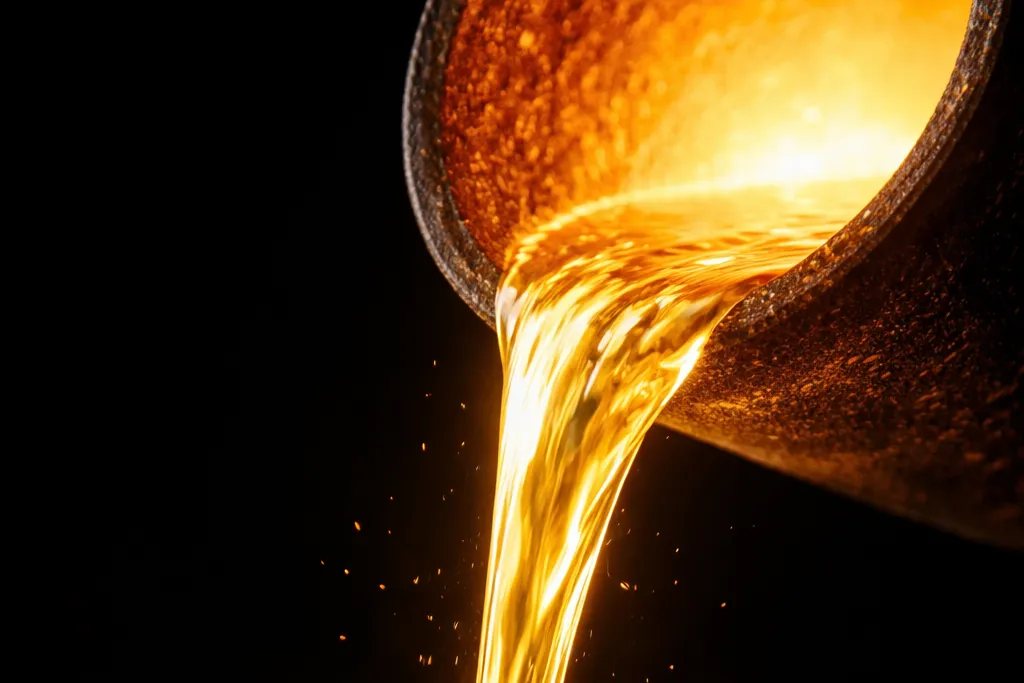
West Wits Mining pours first gold at Tuala Shallows, targeting 70Koz/yr steady state with grades ahead of DFS, strong funding, and a 200Koz expansion study due June.
- West Wits Mining has achieved its first gold pour at the Qala Shallows project in South Africa's Witwatersrand Basin, marking the company's transition from development-stage junior to producing gold company with a clear ramp-up path to 70,000 oz per annum steady-state production.
- Early operational results are tracking ahead of the Definitive Feasibility Study, with mined grades and bottle roll test recoveries both exceeding study assumptions, providing an encouraging early signal on unit economics during the ramp-up phase.
- The company entered production fully funded following an unsolicited A$27.5 million equity raise in January, with approximately 25% of project funding expected to come from early gold revenue, and the first drawdown under the lending facility now being prepared.
- A closed-loop hydropower system already reduces diesel dependency to approximately 8% of operating costs, with grid power connection expected set to reduce costs further, reinforcing an all-in sustaining cost target of approximately US$1,300/oz.
- A scoping study targeting a step-change expansion to 200,000 oz per annum commenced in February and is expected to be completed by June, providing a defined near-term catalyst that could materially reframe the scale of the investment opportunity.
West Wits Mining (ASX:WWI) has reached a significant operational milestone with the first gold pour at its Qala Shallows project in South Africa's Witwatersrand Basin. The achievement marks the transition from development-stage junior to producing gold company, a transition that management has structured around capital discipline, early cash flow generation, and a deliberate ramp-up strategy designed to minimise risk while building toward steady-state production of 70,000 ounces per annum.
Rather than committing to a full processing plant build from day one, West Wits has opted for toll treatment, concurrent construction and mining, and a phased funding structure that leans on early gold revenue to reduce dependence on equity dilution. The decisions made in the lead-up to and through first pour will now be tested during the ramp-up phase over the coming two years.
Operational Performance v DFS Assumptions
Early results at Qala Shallows are tracking ahead of the Definitive Feasibility Study in several key areas. Grades being mined are coming in above DFS projections, and bottle roll tests on current material are indicating better recoveries than assumed in the study. These are early-stage results subject to the normal variability of production ramp-ups, but they represent a positive data point for investors assessing execution risk.
The conventional breast mining stoping method used at Qala Shallows suits the geometry of the ore body and draws on well-established South African hard rock mining practice. The mechanised trackless development fleet provides the flexibility to accelerate advance rates when required, which is particularly valuable during the ramp-up period when catching up on any short-term delays is critical.
The expected ramp-up pathway includes a period of teething issues around cycle discipline, workforce learning curves, and ground conditions, all of which are characteristic of early-stage underground production. Management's focus is on establishing operational rhythm quickly to avoid these initial constraints becoming structural delays.
"If we go through these teething problems, we don't want to fall behind. We have a contingency plan to catch up and get back on that profile." - Rudi Deysel, Managing Director & CEO of West Wits Mining
Toll Treatment & Concurrent Development
The production model at Qala Shallows centres on toll treating ore at an existing nearby plant with spare capacity, rather than constructing a dedicated processing facility at this stage. This decision was driven explicitly by the desire to reach cash-flow breakeven as quickly as possible while keeping upfront capital to a minimum.
The toll treatment agreement is with Sibanye-Stillwater, whose processing circuit is well-suited to hard rock, run-of-mine material at the grades West Wits is delivering. Deysel noted that the ore quality being delivered is materially better than much of what Sibanye is currently feeding through its circuits, which carries implications for both parties. Better feed grade and more compatible material supports improved recoveries for Sibanye and reduces the cost-plus toll treatment fee for West Wits over time. As volumes increase, the company expects to secure a dedicated processing circuit, which will further improve metal accounting precision and unit economics.
Mining and surface infrastructure construction have been running concurrently, a deliberate scheduling decision that compresses the timeline to first revenue. This approach introduces some execution complexity but allows the operation to generate ore stockpiles and initial gold revenue before all permanent surface infrastructure is in place.
Interview with Rudi Deysel, MD & CEO of West Wits Mining
Energy, Infrastructure and Operational Resilience
Energy management has been one of the more operationally nuanced aspects of the early production phase. The site currently relies on diesel-powered generators, which account for approximately 8% of operating costs, a figure Deysel described as relatively low by industry comparison, in part due to the hydropower system already in use on site.
The hydropower system utilises the local water table, processed through a purification plant and circulated in a closed-loop arrangement. This reduces fresh water consumption, supports effluent management within a small environmental footprint, and meaningfully reduces diesel dependency relative to operations that rely entirely on fossil-fuel power. Grid power connection is expected in Q4 2026, at which point diesel consumption and its associated cost burden will fall further.
To manage the period of diesel dependency and protect the production ramp-up from supply disruption, the company proactively expanded its on-site diesel storage from 40,000 litres to 63,000 litres and secured a forward supply of approximately 100,000 litres, providing roughly four months of operational buffer.
Deysel was direct about the current limitations around underground mobile equipment, noting that while electric vehicle options for underground use have been explored, practical constraints around the technology mean diesel-powered trackless equipment remains the realistic medium-term solution. The company is in discussions with OEMs on this topic for future planning purposes.
Capital Discipline
West Wits entered the current production phase from a well-capitalised position following an unsolicited A$27.5 million equity raise in January. The timing proved fortuitous given subsequent volatility in equity markets. The company is fully funded through to consistent production and is preparing for its first drawdown under its lending facility, with conditions precedent being worked through systematically.
Approximately 25% of project funding is expected to come from early gold revenue generated during the ramp-up period. This means maintaining the production profile is not purely an operational objective asit is also a financial one. Cash flow from early tonnes directly supports the drawdown schedule and reduces pressure on the equity buffer.
Deysel was clear about the board's capital allocation philosophy, emphasising a preference for demonstrating profitability over rapid asset accumulation.
"We want to drive positive cash flow and show good profit."
This orientation toward shareholder value through operational performance rather than portfolio growth represents a relatively conservative stance for a junior gold producer, and one that management sees as foundational to long-term credibility with investors.
Safety, ESG and Community Standards
West Wits made an early commitment to safety infrastructure, putting standard operating procedures, mine standards, and training programmes in place before the first blast. The company joined the Mineral Council of South Africa prior to commencing operations, with the Council directly involved in drafting the site's safety procedures.
The operation launched with proximity detection systems (PDS) compliant with the latest Level 9 regulations, a standard that many existing operations are still in the process of converting to. This places West Wits ahead of the curve on a key underground safety requirement from day one.
The closed-loop water system, reduced diesel footprint, and compact mine design reflect a broader commitment to ESG considerations that management sees as operationally and reputationally important.
Expansion Pathway
The longer-term growth ambition at West Wits is a step-change increase in production toward 200,000 oz per annum. A scoping study examining the option scenarios for this expansion has commenced at which point the company will have a clearer view of the feasibility study direction and capital requirements. As Deysel explained,
"We need to to finalize our scoping study so that we understand the option scenarios. That scoping study started in the beginning of February. We expect that we will have that study done by June this year."
The Investment Thesis for West Wits Mining
- First gold pour achieved: The company has transitioned from developer to producer, removing construction execution risk and validating the project's operational model.
- Early performance ahead of DFS: Grades and recoveries are tracking above study assumptions, which, if sustained, would support better unit economics than currently modelled.
- All-in sustaining cost guidance of approximately US$1,300/oz is well below current gold prices, offering material margin at spot.
- Fully funded through consistent production with A$33 million equity raised and debt facilities in place, reducing near-term dilution risk.
- Toll treatment model minimises upfront capital and accelerates cash flow generation, reducing the time to debt repayment and reinvestment capacity.
- Grid power connection expected in Q4 will reduce operating costs by eliminating a significant portion of diesel consumption, improving margin without volume growth.
- Scoping study for 200,000 oz per annum expansion due June: A clear near-term catalyst with defined timeline that could materially re-rate the asset.
- Board philosophy favours profitability over growth: Management is focused on demonstrating operating margins and generating free cash flow rather than acquiring assets to inflate market capitalisation.
- Investors should monitor ramp-up progress against the stated production profile, advance rates, and the scoping study results as key near-term milestones for assessing execution quality.
South Africa's Witwatersrand Basin remains one of the most prolific gold-bearing geological formations on Earth, having produced more gold than any other region in history. Yet the country's gold mining industry has spent much of the past two decades in structural decline, burdened by aging deep-level infrastructure, rising energy costs, labour complexity, and the operational legacy of a previous era of mining. What is emerging now, however, is a new cohort of producers approaching the Basin's remaining resources with modern methods, disciplined capital structures, and operational frameworks built for today's cost environment rather than the assumptions of a generation ago.
Gold continues to trade at elevated levels against a backdrop of persistent geopolitical uncertainty, central bank accumulation, and ongoing questions about the long-term trajectory of fiat currency purchasing power. For low-cost producers with clear production growth pathways, the current price environment offers significant margin expansion potential that was simply not available during the decade of sub-US$1,500 gold.
West Wits Mining's closed-loop hydropower system and planned grid connection represent exactly this kind of operational differentiation. As Deysel summarised the company's approach:
"We are really looking at how we approach this project: low cost base, good cash flow and the type of profit projects. And maybe don't go to big, too quick. Rather be serious miners and be seen as good value driver and a company with good values."
The broader investor case for selective exposure to South African gold producers rests on the combination of deep geological endowment, improving regulatory clarity, and the availability of experienced technical talent at a cost base that is competitive globally. Energy has emerged as a critical differentiator across the South African mining sector. Operations that can reduce their dependency on grid instability and diesel price exposure through hydropower, solar, or eventual grid connections tied to independent power producers are building structural cost advantages that will compound as energy markets remain volatile.
TL;DR
West Wits Mining has poured its first gold at Qala Shallows in South Africa, transitioning from developer to producer with a plan to reach 70,000 oz per annum over two years. Early grades and recoveries are ahead of the DFS. The company is fully funded, has an AISC target of around US$1,300/oz, and is running a scoping study for a potential expansion to 200,000 oz per annum due by June. Management is focused on cash flow and profitability, not asset accumulation.
Frequently Asked Questions (FAQs) AI-Generated
Qala Shallows is West Wits Mining's flagship gold project, situated in South Africa's Witwatersrand Basin — historically the world's most prolific gold-producing geological formation. The project is targeting steady-state production of 70,000 oz per annum and is ramping up following its first gold pour.
The company is toll treating ore at a nearby Sibanye-Stillwater facility rather than building its own processing plant at this stage. This approach minimises upfront capital expenditure and accelerates the path to cash-flow breakeven. As ore volumes increase, the company expects to secure a dedicated processing circuit, which will improve metal accounting and unit cost management.
Yes. Following an unsolicited A$27.5 million equity raise in January, the company is fully funded through to consistent production. Approximately 25% of project funding is expected to come from early gold revenue during the ramp-up. The company is now preparing for its first drawdown under its existing lending facility.
The primary near-term risks are operational: maintaining advance rates underground, managing the workforce learning curve and cycle discipline, and sustaining the production profile that underpins the debt drawdown schedule. The company has contingency plans in place on both the capital and operational sides. Grid power delivery in Q4 is also a milestone worth monitoring, as it will reduce diesel-related cost exposure.
Management has identified a pathway to 200,000 oz per annum production, representing a near three-fold increase over the current steady-state target. A scoping study examining the option scenarios for this expansion commenced in February 2025 and is expected to be completed by June, after which the company will define the direction for a full feasibility study.
Analyst's Notes





Subscribe to Our Channel




Stay Informed