




Why $92 Brent Matters Less Than a 12% Distillate Shortfall


Brent nears $92, but a 12% distillate shortfall and high refinery utilization keep diesel supply tight and mine fuel costs at risk.
- Brent rose 0.55% to $91.52 per barrel on August 19, 2026, extending a fourth straight gain after rising 4.5% over the previous three sessions.
- US crude inventories fell 328,000 barrels in the week ending August 14, 2026, while distillates fell 2.797 million barrels after a 596,000-barrel draw the prior week, signaling tighter diesel supply than crude.
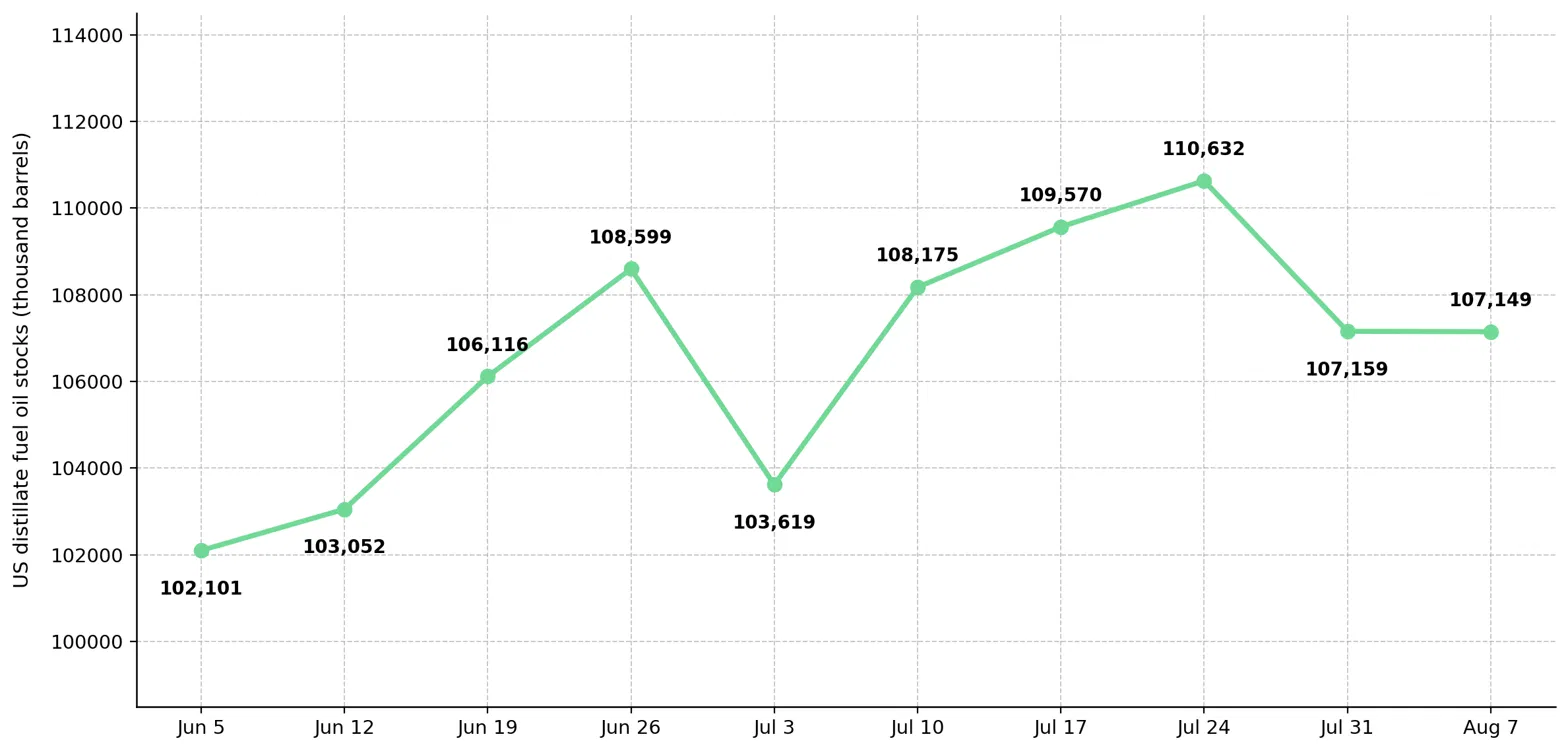
- US distillate stocks stood at 107.149 million barrels on August 7, 2026, roughly 12% below the five-year average and the lowest comparable level in at least five years, signaling tight diesel supply.
- Saudi Arabia began offering crude cargoes sourced outside the Hormuz chokepoint on August 18, 2026, following the UAE and helping keep crude supply moving despite shipping constraints.
- A distillate build above 112 million barrels in the August 19, 2026 US Energy Information Administration (EIA) report would signal rebuilding product cover and lower diesel cost pressure.
Crude Cargoes Shift Outside Hormuz & Limit Brent’s $92 Risk Premium
Brent rose to $91.52 per barrel for a fourth consecutive gain as stalled US-Iran talks kept supply disruption risk priced into crude. Brent gained 4.5% over the previous three sessions while West Texas Intermediate (WTI) traded near $85, showing the geopolitical risk premium across both benchmarks. President Donald Trump said no negotiations were underway with Tehran and the naval blockade remained in effect, keeping near-term oil supply risk elevated.
Producers are finding alternative routes that reduce the crude supply risk implied by the Hormuz disruption. Saudi Arabia is offering crude sourced outside the Hormuz chokepoint, following the UAE, while other Middle Eastern producers continue moving oil through the strait. Refined products lack the same workaround because rerouted crude still requires available refining capacity.
Refinery Throughput Trails 2025 by 5 Mb/d & Tightens Refined-Product Supply
Rerouting crude bypasses shipping constraints but does not replace lost refining capacity. Global refinery throughput reached 80.9 million barrels per day in July, nearly 5 million below year-earlier levels, while third-quarter estimates fell another 370,000 barrels per day, tightening refined-product supply. Rerouted crude still requires available refinery capacity, while damaged or idled plants cannot be replaced within a quarter, keeping diesel supply constrained.
Inventory data point to tighter distillate supply than crude or gasoline. US crude inventories fell 328,000 barrels while distillates dropped 2.797 million barrels after a 596,000-barrel draw the prior week, reinforcing tighter diesel supply. Gasoline inventories rose 1.076 million barrels over the same period, isolating the shortage in distillates rather than across refined products.
96.2% Refinery Utilization Limits Rebuilds & Supports Distillate Pricing
High refinery utilization limits how quickly distillate inventories can rebuild. US refineries operated at 96.2% of capacity while producing 5.3 million barrels of distillates per day, leaving limited room to raise output. Limited spare refining capacity reduces the ability to convert available crude into additional diesel.
Retail Diesel Falls 1.7% & Contract Lags Delay Mine Cost Relief
Diesel supports ore movement at mines, so low distillate inventories increase fuel cost risk for mining operations. US distillate stocks stood at 107.149 million barrels, below comparable early-August levels from 2021 through 2025, which ranged from 111.490 million to 140.511 million barrels.
Falling diesel benchmarks could lower mine fuel costs, but contract lags delay the benefit. US retail diesel fell to $5.257 per gallon from $5.348, while New York Harbor ultra-low sulfur diesel fell to $3.910 from $4.161 per gallon. Remote mine sites often buy delivered fuel on contracts linked to rack prices, so lower benchmarks may take time to reach site costs, while a second straight distillate draw raises the risk that the price decline stalls.
Distillate inventory direction remains unconfirmed until the EIA report. Before changing fuel assumptions, assess fixed-price contracts, variable-price contracts, and available on-site storage against the risk of another distillate draw.
112 Million Barrels Sets the Threshold for Mine Fuel Cost Relief
Distillate stocks roughly 12% below the five-year average and 96.2% refinery utilization are keeping diesel supply tight. While those conditions persist, strong distillate refining margins support diesel prices and raise fuel costs for diesel-intensive operations.
A sustained distillate build above 112 million barrels would mark the first clear reversal in current diesel tightness. If stocks stay above that level for two consecutive weeks while refinery utilization remains above 95%, product supply would be rebuilding despite high refinery runs, reducing diesel refining margins and mine fuel cost pressure.
Check the EIA distillate inventory line before the crude headline because diesel supply is the key signal for fuel costs. Reassess fuel budgets only after distillate inventories rise for two consecutive weeks.
Analyst's Notes





Subscribe to Our Channel





Stay Informed


